Another excerpt from *Gödel’s Interbellum*

Interwar Europe through the Eyes of Kurt Gödel

Although the story of Kurt Gödel’s discovery in late 1947 of a logical contradiction in the United States Constitution has been retold many times, the content of this discovery is often discounted as nonsense or as highly improbable.[1] This assessment, however, ignores Gödel’s Central European background and the dramatic constitutional histories of Central European states during the interbellum period, for during his years at the University Vienna (1924-1940)–first as a student and then as a lecturer–Gödel would have noticed that every single constitutional democracy in Central Europe ended in dictatorship.[2]

Although Gödel lived only 15 years in Vienna, in many ways those were the most productive and important years of his life. In summary, Kurt Gödel had matriculated at the University of Vienna in the fall of 1924, and by the summer of 1929, he had completed his doctoral thesis logically proving the completeness of the first-order predicate calculus. (Gödel’s dissertation was approved by his academic advisors on 6 July 1929,[3] and he was granted his Ph.D. on 6 February 1930.[4]) He then proved his now-famous “incompleteness theorem” in 1931, and finally obtained his Habilitation as well as the right to lecture in 1933.[5] In the words of fellow Austrian scholar Karl Sigmund, “Kurt Gödel spent barely fifteen years in Vienna … However, the years [in Vienna] … constituted his formative period. He was deeply affected by the extraordinary cultural and intellectual following of what has been called ‘Vienna’s Golden Autumn,’ and he may one day be seen as its most prestigious scion.”[6] Vienna is where Gödel attended university and received his doctoral degree, where he attended the philosophical discussions of the Vienna Circle, where he met and his wed his wife Adele, where he did his most important and original work, where he made landmark contributions in the fields of logic and mathematics.

To sum up, Vienna was not only Gödel’s primary residence from 1924 to 1940; it was also the grand capital city where Gödel came of age. But what many students of Gödel’s life and work fail to mention is that Vienna–the imperial capital of the former-Austro-Hungarian Empire–must have also offered Gödel a perfect vantage point from which to observe, even casually, the degeneration of constitutional democracies into constitutional dictatorships across Europe. In the fall of 1924, when the young Gödel began his studies at the University of Vienna, the vast majority of states in Europe were parliamentary democracies. But by the time Gödel and his wife Adele left their beloved Vienna fifteen years later in January 1940, thirteen European democracies had become dictatorships and every single constitutional democracy in Central Europe, Gödel’s corner of the world, had become a constitutional dictatorship.[7] In the words of two eminent European historians, “[Central] Europe was strangled by various dictatorships: some fascist/Nazi dictatorships, some puppet, and a variety of semi-fascist or right-wing nationalist and royalist authoritarian regimes.”[8]

Did Gödel have the time or the inclination to take notice of these dramatic anti-constitutional moments occurring across Europe during his days at the University of Vienna? How could he not have? Although “Gödel devoted himself intently on his studies … he was not asocial,”[9] for “he spent a good deal of time in the coffeehouses that were then so central to Viennese intellectual and cultural life.”[10] So it is certainly possible, perhaps even probable, that Gödel read about these extra-constitutional coups in one of Vienna’s leading newspapers or that he overheard talk about these dramatic events in one of his favorite coffeehouses.

Source: F. E. Guerra-Pujol, “Gödel’s Interbellum” (revised draft, 2023); footnotes below the fold:

Continue reading
Posted in Uncategorized | Leave a comment

Preview of *Gödel’s Interbellum*

Below is the introduction to my paper “Gödel’s Interbellum: Interwar Europe through the Eyes of Kurt Gödel” (footnotes omitted; emphasis added):

“One of the great unsolved mysteries of constitutional law is ‘Gödel’s loophole‘. In brief, the great logician Kurt Gödel reportedly discovered a deep flaw in the United States Constitution, a logical contradiction that could lead to a constitutional dictatorship. In a previous work, I conjectured what the substance of this loophole might be. Here, by contrast, I will address a different constitutional question: how plausible is Gödel’s loophole as a practical matter? More to the point, how likely is it that a would-be dictator could exploit Gödel’s constitutional loophole in these turbulent times? It turns out, very likely, if the constitutional history of interwar Central Europe is any guide. By way of example, by the time Gödel was awarded the right to lecture at the University of Vienna in March 1933, democracy had died in at least nine or ten states in interbellum Europe, depending on whether Atatürk’s Turkey is classified a dictatorship: Hungary under Admiral Horthy, Italy under ‘Il Duce’ Benito Mussolini, Lithuania under President Smetona, Poland under First Marshal Piłsudski, Portugal under Prime Minister Salazar, Spain under Captain General Primo de Rivera, and Yugoslavia under King Aleksandar had all become constitutional dictatorships.”

Bonus video: “Chaos and Classicism: The Interwar Period” by Professor Atina Grossmann:

Posted in Uncategorized | Leave a comment

Prequel to *Gödel’s Loophole*

My most downloaded work of all time, Gödel’s Loophole, describes the logician Kurt Gödel’s discovery of a logical contradiction in the United States Constitution, a discovery he reportedly made while he was studying for his U.S. citizenship exam in 1947. To celebrate the 10-year anniversary of the publication of my loophole paper, I wrote a “prequel” titled Gödel’s Interbellum. My prequel surveys the demise of three Central European democracies through the eyes of Gödel: King Aleksandar’s “January 6” dictatorship in the Kingdom of Yugoslavia in 1929, Austrian Chancellor Engelbert Dollfuß’s declaration of the “self-elimination of Parliament” in March of 1933, and King Carol’s seizure of emergency powers in Romania in 1938. In short, I conjecture that Gödel was not only aware of these dramatic events in his corner of the world (Central Europe); I also surmise that the possibility of a self-coup–what I refer to as a “recursive” transfer of power–must have informed Gödel’s discovery of a loophole in the U.S. Constitution.

Bonus video: MetaMaths video on “Gödel’s constitutional Loophole”:

Posted in Uncategorized | Leave a comment

GUILTY!

My colleague Dan Markel was murdered in his own home in Tallahassee, Florida on 18 July 2014. Yesterday, a jury found Markel’s brother-in-law, Charlie Adelson, guilty of conspiring to murder Markel.

Wendi Adelson, you’re next! One of the things we learned from Charlie’s trial is that his sister Wendi (Markel’s evil ex-wife) knew about the murder plot and did nothing to stop it from happening.

Posted in Uncategorized | 1 Comment

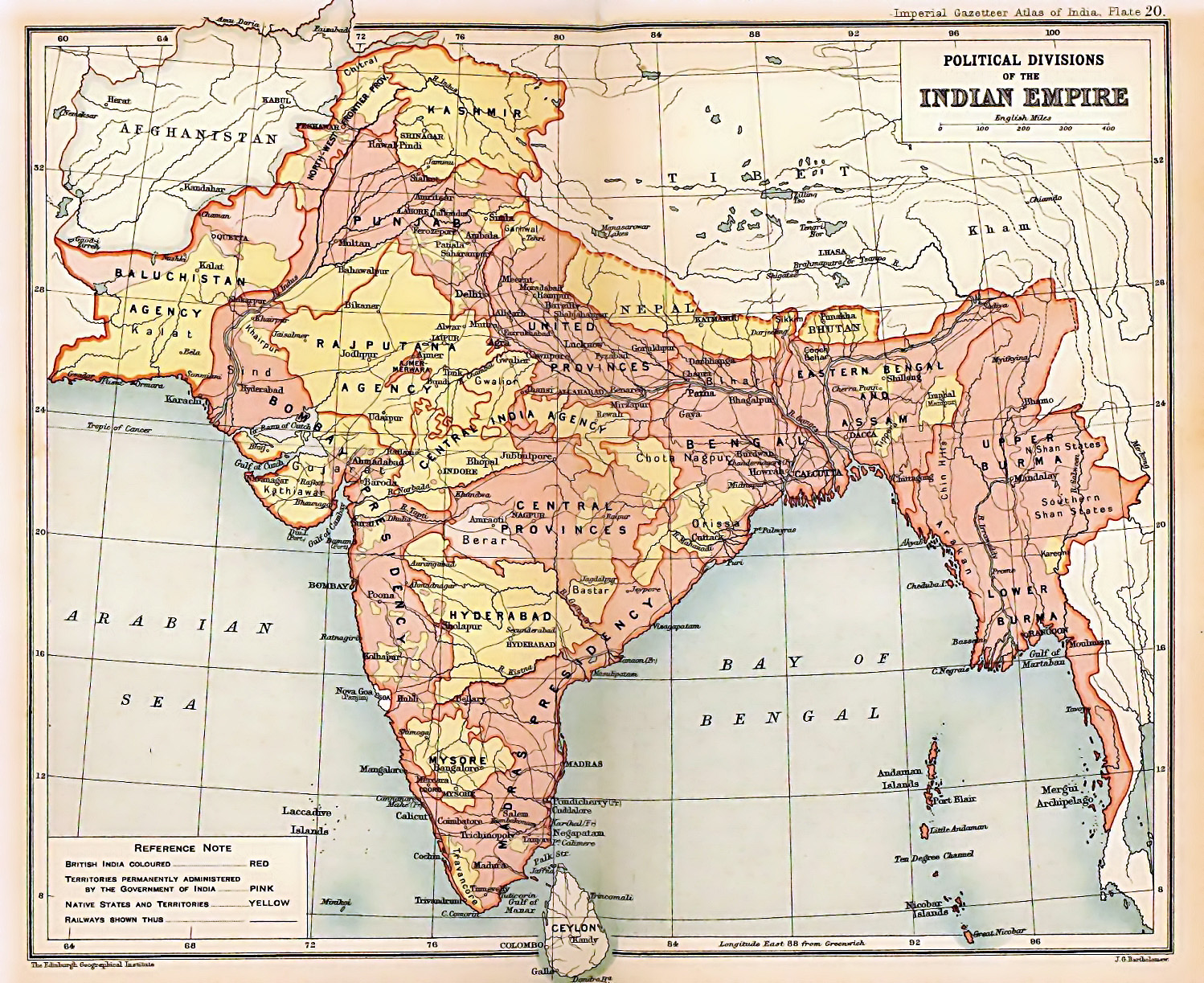
Monday map: *Political Divisions of the Indian Empire* (circa 1909)

File:British Indian Empire 1909 Imperial Gazetteer of India.jpg
Source: Wikimedia Commons (see here)
Posted in Uncategorized | 2 Comments

Tyler Cowen Webinar on *The Changing State of AI*

Posted in Uncategorized | Leave a comment

Sunday song: *Sunset*

Posted in Uncategorized | Leave a comment

Demolition of Redhill Close

I am reblogging this recent post “Redhill Close SIT Estate Walks into History” from one of my favorite specialty blogs, Remember Singapore:

By October 2023, a large part of Redhill Close estate has been bulldozed, with only a couple of blocks left standing. Another old Singapore …

Redhill Close SIT Estate Walks Into History
Posted in Uncategorized | Leave a comment

The Effective Altruist’s Slippery Slope

Check out this devastating critique of the so-called “effective altruism” movement (or EA, for short) by Sophie McBain (@SEMcBain), a writer for the New Statesmen who interviewed many EA leaders, including Larissa Hesketh-Rowe, the CEO of the Centre for Effective Altruism from May of 2018 to February of 2019, i.e. before the downfall of EA’s prime pecuniary benefactor, Sam Bankman-Fried. Below is an extended excerpt from Ms McBain’s excellent essay, describing how so many effective altruists fell down a money-grubbing slippery slope of their own making:

… Hesketh-Rowe told me that “once the community got more money, there were more discussions of, ‘Well, if you can save time by spending money, maybe you should. Maybe you should take a taxi instead of taking the bus or the train. Get a nicer desk, spend more to move closer to work – if it’s going to make you more productive.’” It wasn’t a unique business philosophy, but how did it fit with EA’s principles? “The line of reasoning isn’t completely wrong, but that’s what makes it risky,” said Hesketh-Rowe. “You need strong character, a good culture and leadership to navigate it, otherwise it’s too easy to accidently drift in the direction of corruption.”

This is how the movement that once agonised over the benefits of distributing $1 de-worming pills to African children ended up owning two large estates: the $3.5m Chateau Hostačov in the Czech Republic, purchased in 2022 by the small EA-affiliated European Summer Program on Rationality with a donation from Bankman-Fried’s FTX Foundation; and Wytham Abbey, a 15th-century manor house near Oxford, bought for £15m to host EA retreats and conferences. Wytham Abbey, which is undergoing restoration, was purchased by the Effective Ventures Foundation (the UK umbrella group for EA) using a £17m grant from Open Philanthropy (the US EA foundation set up by Moskovitz and Tuna).

On the EA forum, several people have questioned the “optics” of this purchase: “You’ve underestimated the damage this will do to the EA brand,” wrote one in late 2022. “The hummus and baguettes signal earnestness. Abbey signals scam.”

For what it’s worth, I presented my own classical liberal critique of these obnoxious elite do-gooders in a previous post, which I am reblogging below.

Posted in Uncategorized | 2 Comments

A modest academic proposal for the ordering of co-authors

The order of co-authors on an academic article or scientific paper are most often arranged either alphabetically or by the amount of their respective contributions to the paper. (See here, for example.) Why not instead arrange co-authors randomly or, better yet, by each author’s degree of belief in the results of the paper? As it happens, this latter option is what Andy Clark and David Chalmers chose for their “Extended Mind” paper, which was published in the journal Analysis, 58:1 (Jan., 1998), pp. 7-19.

Hat tip: Glen Whitman
Posted in Uncategorized | Leave a comment


