
What really caused the extinction of the dinosaurs? (Alternative caption: Big Bang #2)

What really caused the extinction of the dinosaurs? (Alternative caption: Big Bang #2)
Among economists and lawyers, the moral hazard problem or MHP has become a textbook illustration of what the late great philosopher of science and language Thomas S. Kuhn once referred to (somewhat enigmatically) as a disciplinary matrix, exemplar, or paradigm, i.e. a concrete “puzzle-solution” employed as a prototypical model or archetypal example by most members of an entire discipline or field. (See, e.g., Kuhn, The Structure of Scientific Revolutions, p. 11.) But what exactly is a “moral hazard”?
For its part, Wikipedia defines this term as “a situation where an economic actor has an incentive to increase its exposure to risk because it does not bear the full costs of that risk.” Alas, this standard definition begs three key questions: (1) what are “costs” and “risks”?; (2) what are the reasons why an agent may want to avoid internalizing the costs of such risks?; and (3) which of those reasons, if any, are morally justified? Enter my colleagues David Rowell and Luke B. Connelly, who wrote a history of the term moral hazard (see also here for an ungated version). Below is a summary of their work:
This article traces the origins of the term “moral hazard” by going back in time to consider the earliest known developments of insurance as well as touching on a range of literatures as diverse as the theological and probability literatures and, latterly, the economics literature. Not surprisingly, we find that the concept of moral hazard developed with insurance markets. More importantly, we also show that the use of the term in the early insurance industry literature was ambiguous and, viewed from the vantage point of the modern economist, was used to describe not only moral hazard—as that term is understood by economists—but also the distinct phenomenon of adverse selection.
However the term is defined, aren’t government bailouts a classic example of the moral hazard problem? Also, what other examples of MHP, if any, keep you awake at night?

Have you made your “ofrenda” yet? More details here, via Ayana Archie (NPR).

Is bitcoin a bubble? This excellent paper by Peter Garber, which was published in the Journal of Political Economy (JPE) way back in 1989, has made me adjust my bitcoin priors. In brief, I used to believe bitcoin was just a fad (see here and here, for example), but now Garber’s work has made me rethink whether the very concept of a “bubble” is a coherent or meaningful one. That said, even if bitcoin were not a bubble, that still leaves two other possibilities: either the bitcoin blockchain began as a prank or practical joke or it’s an outright scam or Ponzi scheme. Change my mind!
Postscript: Professor Garber’s work has passed the test of time (see here, for example), but I seriously doubt whether the same will be said of most of the formal and technical “blackboard economics” papers being published today. In fact, if I were editor of the JPE, I would henceforth banish all equations to the appendices.
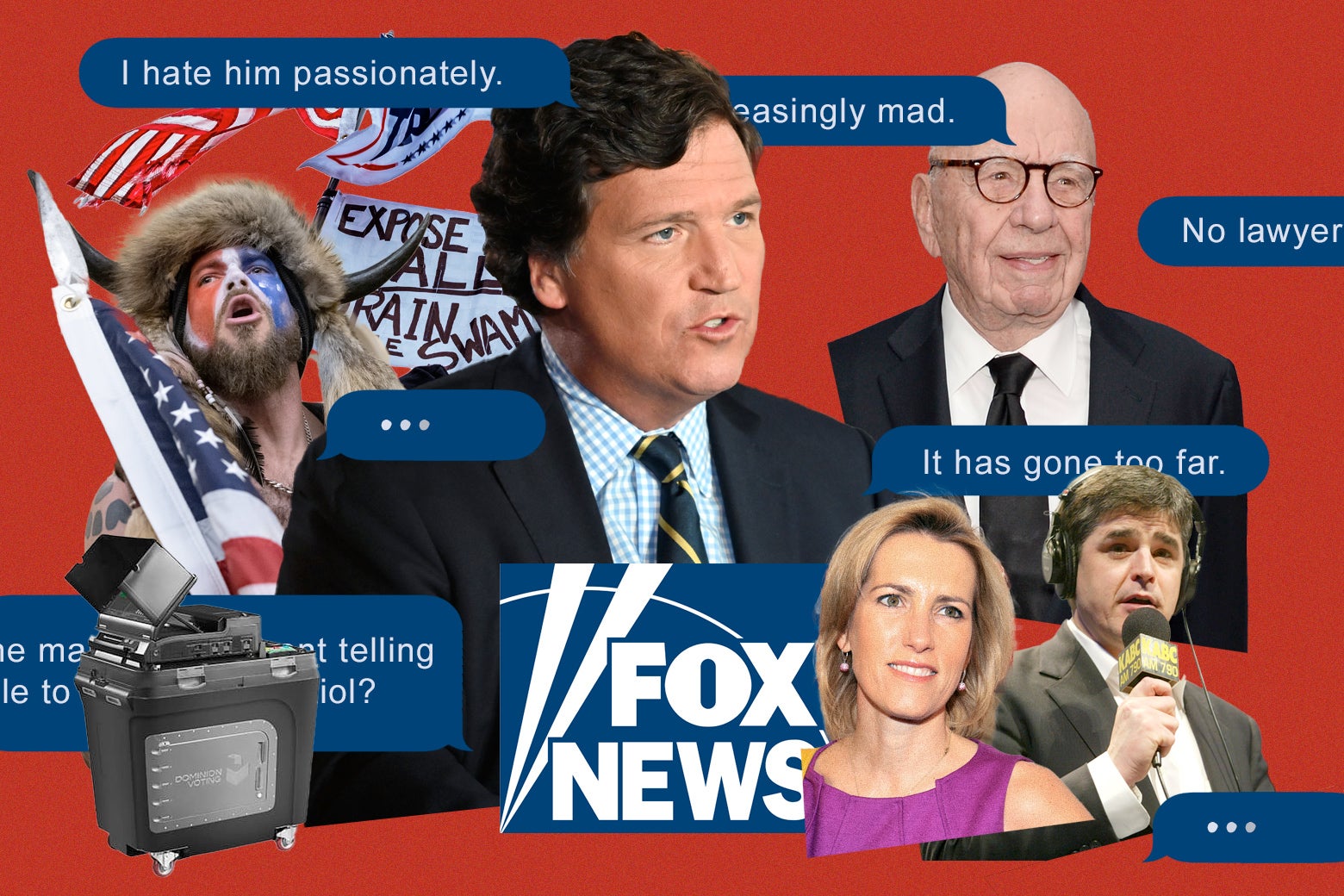
That is the subtitle of this titillating Tucker Carlson post-mortem by … wait for it! … none other than Mr Carlson’s former media rival and arch-nemesis Brian Stelter, who himself was unceremoniously fired from CNN in 2022. (Oh, the irony!) Spoiler Alert: Mr Stelter’s “untold” tale is just a mere rehash of publicly available information; see, for example, this NY Times report from May of 2023. Although he is able to weave together a string of salacious anecdotes to tell a compelling story of pure Icarian hubris, while also compiling a plethora of possible reasons for Mr Carlson’s abrupt and unexpected downfall, Mr Stelter’s final verdict is banal at best: “It wasn’t one thing. It was everything.” In other words, no one — no one, that is, except evil media genius and legendary Lothario Rupert Murdoch (the former chairman of Fox News) — knows the real reason why the once mighty Tucker was toppled from his prime-time perch.
That is the title of this thought-provoking op-ed by Jonathan Pollard. Here is an extended excerpt: “It would be prudent for [the Israeli] government to announce its decision to clear and annex Gaza …, so as to remove any ambiguity about what its intentions are with regard to the area. Perhaps most importantly, such a declaration will also give our soldiers the confidence to know that their efforts will not be surrendered at some negotiating table at the conclusion of the war. That kind of reassurance is the least we can do for our brave men and women who will be fighting on our behalf.” What would Thomas Schelling say? Also, whether or not it is to Israel’s advantage to announce what her ultimate goals in Gaza are (beyond the rescue of the hostages and the capture or elimination of the evil criminals who carried out the horrendous 7 October attacks), what other viable options does she have at this point? Discuss …

Trick or treat! (hat tip: Gary Leff)
Postscript (via The Verge): Trick or treat! One year later, Twitter is worth less than half of what megalomaniac Elon Musk paid for it.
Via Ben Orlin’s fun blog Math with Bad Drawings:

This list goes against everything I’ve been taught about good writing. Good writing, they say, is vivid and sensory. It involves punchy verbs, …
A Brief Collection of Math Metaphors in Literature










Welcome to the online home of the IASS
Hopefully It’s Interesting.
In Conversation with Legal and Moral Philosophers
Relitigating Our Favorite Disputes
PhD, Jagiellonian University
Inquiry and opinion
Life is all about being curious, asking questions, and discovering your passion. And it can be fun!
Books, papers, and other jurisprudential things
Ramblings of a retiree in France
BY GRACE THROUGH FAITH
Natalia's space
hoping we know we're living the dream
Lover of math. Bad at drawing.
We hike, bike, and discover Central Florida and beyond
Making it big in business after age 40
Reasoning about reasoning, mathematically.
I don't mean to sound critical, but I am; so that's how it comes across
remember the good old days...
"Let me live, love and say it well in good sentences." - Sylvia Plath
a personal view of the theory of computation
Submitted For Your Perusal is a weblog wherein Matt Thomas shares and writes about things he thinks are interesting.
Logic at Columbia University
Just like the Thesis Whisperer - but with more money
the sky is no longer the limit
Technology, Culture, and Ethics
Just like the horse whisperer - but with more pages
Poetry, Other Words, and Cats

 prior probability