Mark my words, very few people will remember this — not even the ads! — two years from now. I’m with these guys: https://www.npr.org/2018/02/10/584757764/there-is-a-competition-to-avoid-learning-who-won-the-super-bowl-for-some-reason

Mark my words, very few people will remember this — not even the ads! — two years from now. I’m with these guys: https://www.npr.org/2018/02/10/584757764/there-is-a-competition-to-avoid-learning-who-won-the-super-bowl-for-some-reason
Alternate title: Dierdre McCloskey’s list of 108 fictional market failures
Are “market failures” real? Or are they make-believe entities (like the aether in physics) invented by economists to justify their preferred public policies and all manner of nefarious and ultimately counter-productive regulations?
As it happens, I recently discovered this long and rambling but devastating takedown of economics authored by the legendary Dierdre N. McCloskey (ungated version here). Among other things, Professor McCloskey not only rattles off a comprehensive and chronological list of 108 alleged market failures that economists have identified or invented in order to justify public regulation of economic activity, beginning with Thomas Malthus’s now-debunked population theory and concluding with Thomas Piketty’s jury-rigged world inequality database; she also shows how these putative or fictional market failures are essentially the equivalent of intellectual moral panics among the economists who peddle them.
For my part, while I agree with the spirit, if not the letter, of McCloskey’s scathing critique of contemporary economics, I have but one quibble with her list of imaginary market failures: “the failure to define property rights …” (See Item #53 on page 12 of the ungated version.) Properly speaking, from my law professor perspective, the failure to define property rights is what I like to call a “legal failure” — a shortcoming of the legal system that makes it much harder for people to truck, barter, and trade. I first presented my theory of legal failure in my contribution to the 2014 book Economics of the Undead (see here), and more recently, I applied my theory to outer space (here).
:max_bytes(150000):strip_icc()/Market-Failure-V3-ab96ad16afee413ea84ce9c9fe30038d.jpg)
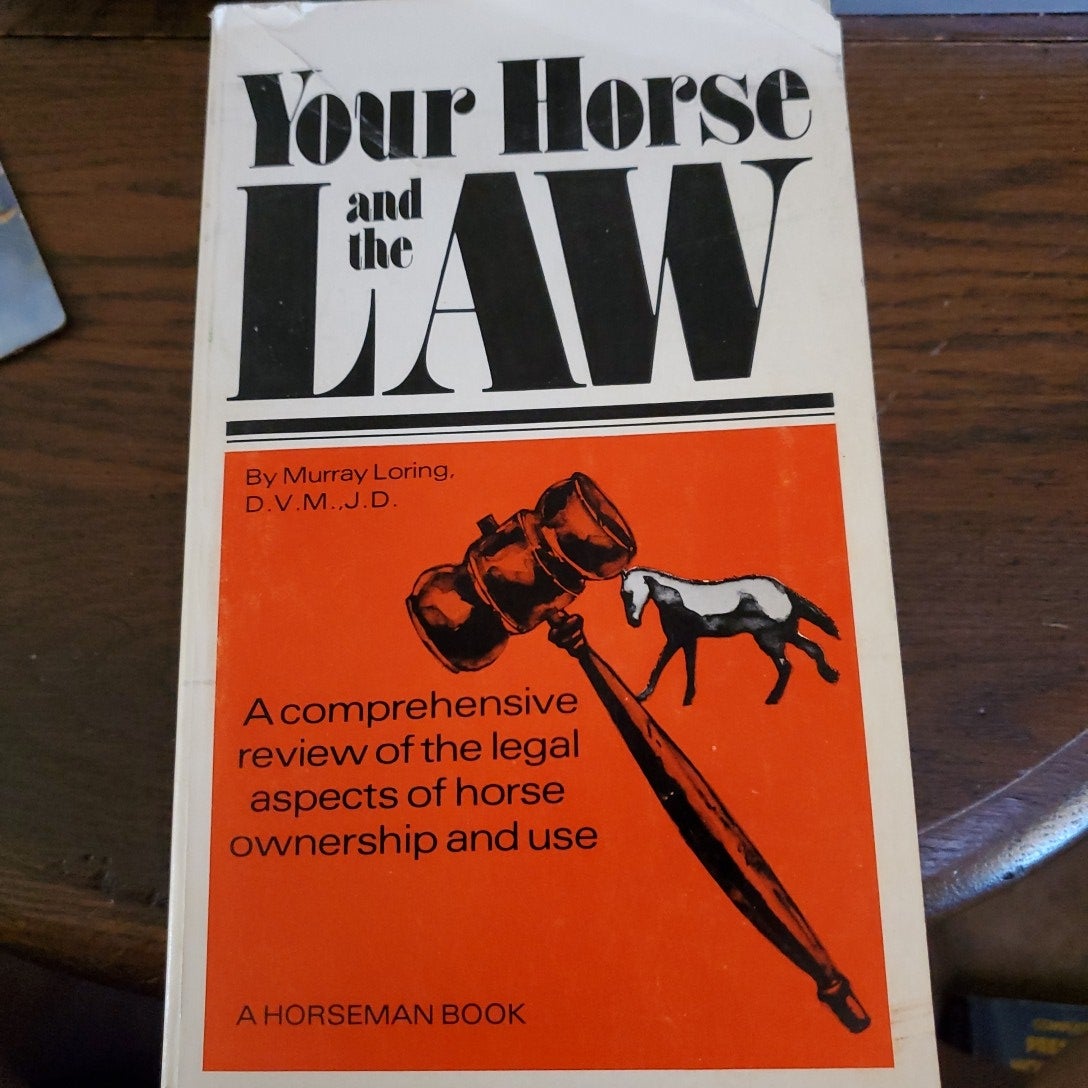
What a glorious time to be alive! Another book that caught my attention during the “Faculty Authors’ Celebration” at my home institution last week was A Republic of Scoundrels: The Schemers, Intriguers, and Adventurers Who Created a New American Nation, which was co-edited by historians David Head and Timothy Hemmis. (Professor Head teaches history at my home institution, the University of Central Florida.) Perhaps a new Lin-Manuel Miranda musical is in the works?
Earlier this week, my home institution, the University of Central Florida (UCF), hosted its fourth biennial “Faculty Authors’ Celebration” to honor professors who have published literary works in the previous two years, and among my favorite works to be showcased at this wonderful event was the beautiful book Smothered and Covered: Waffle House and the Southern Imaginary by my colleague and new friend Ty Matejowsky, who teaches anthropology at UCF. (Check out his bio here.)
Note: I will feature a few other works that caught my attention in the next day or two, before I begin my promised review (see here) of Everyday Freedom: Designing the Framework for a Flourishing Society by Philip K. Howard.
“Adam Smith wrote and lectured on a wide variety of topics during his lifetime—astronomy, jurisprudence, moral philosophy, the origins of languages, and, of course, political economy, just to name a few—but what does Smith have to say, if anything, about the relationship between law and liberty? As it happens, law professor Robin Paul Malloy and political theorist Paul Sagar both address this key question in their respective works, Law and the Invisible Hand (Cambridge University Press, 2022) and Adam Smith Reconsidered (Princeton University Press, 2022)”. Thus begins my joint book review of Malloy and Sagar’s works!

I have three updates to report:

Below I describe the development and evolution of my retrodiction market model, beginning in the spring of 2021 up to the present:
ACT I: CONSPIRACY THEORY COURTS
1. Spring 2021. In April 2021, I propose a “Conspiracy Theory Court” at a symposium on “Alternative Realities, Conspiracy Theory, and the Constitutional and Democratic Order” (April 16, 2021). The conspiracy theory court would try disputed conspiracy theories (conspiracy theory trials) and provide verdicts. People would be allowed to place bets on the outcomes of these trials.
2. Summer 2021. I read about a new prediction market called Kalshi on Tyler Cowen’s Marginal Revolution blog. (Kalshi is launched in July 2021.)
3. Fall 2021. In September 2021, I re-propose my “Conspiracy Theory Court” idea at the 12th annual meeting of the Association of Law Property & Society (ALPS) (September 25, 2021). During Q & A, a colleague proposes converting my proposed “Conspiracy Theory Court” into a popular game show or reality TV series in order to reach a wider audience. A few weeks later, sometime in October 2021, I receive an email from Professor Steven Brams, who makes an ingenious proposal to me: scrap the conspiracy theory courts and just keep the market.
ACT II: CONSPIRACY THEORY CONTRACTS
4. Spring 2022. I rework my original proposal: I replace my “conspiracy theory court” with “conspiracy theory contracts.” I include a sketch of my “conspiracy theory contracts” idea in my then work-in-progress “The Gödel Conspiracy”. In April 2022, “The Gödel Conspiracy” is published online in volume 15 of the Journal of Law and Public Policy.
5. Fall 2022. I present my revised proposal to economist Tyler Cowen; he objects on lack of liquidity grounds (email correspondence dated Nov. 2, 2022). Then, in November 2022, I present my revised idea (“conspiracy theory contracts”) at the 13th annual Constitutional Law Colloquium at Loyola Law School in Chicago (November 4-5, 2022). I meet David Schraub at the colloquium, and we begin corresponding; among other things; Schraub points out the beauty contest problem.
6. Winter 2023. In January 2023, I submit a new paper titled “Truth Markets” to the Journal of Free Speech Law. In doing a literature review for my new draft, I discover two previous speech market proposals — “Truth Bounties: A Market Solution to Fake News” by Yonathan Arbel and Michael Gilbert as well as “A Market for Truth to Address False Ads on Social Media” by Marshall Van Alstyne — but I reject these proposals because they would require external experts (Arbel & Gilbert) or fact-checkers (Van Alstyne) to determine the truth of disputed ads or claims. My submission is reviewed by two referees but is unjustly rejected because the contracts in my proposed market have no firm resolution date.
ACT III: BELIEF CONTRACTS
7. Spring 2023. I rework my original proposal by replacing my “conspiracy theory contracts” with all-purpose “belief contracts,” and in March 2022, I then present my modified “belief contracts” idea at the 16th annual International Conference on Contracts (KCON XVI) at Texas A&M University (March 17-18, 2023). I meet Yonathan Arbel (co-author of Arbel & Gilbert 2022) at KCON XVI, and we begin corresponding.
8. Summer 2023. A federal court enjoins the U.S. Commodity Futures Trading Commission (CFTC) from closing PredictIt’s event contract market. See Clarke et al. v. CFTC, No. 22-51124 (5th Cir., July 21, 2023), available here: https://perma.cc/NU48-AV3X.
9. Fall 2023. I explore the possibility of substituting “belief contracts” with “dominance assurance contracts.” (See, e.g., Alexander Tabarrok, The private provision of public goods via dominant assurance contracts, Public Choice, Vol. 96 (1998): 345-362.) However, I reject dominance assurance contracts as not feasible/unworkable because an expert is still required to determine if the conditions set forth in the contract have been met. Next, I present my “belief contracts” idea at the JLPP Fall Symposium on “Free Speech and the U.S. Constitution” (Nov. 17, 2021), where I receive detailed and helpful feedback from professors Michael Smith and Charles Reid.
RESOLUTION: A.I. TO THE RESCUE
10. Winter 2024. Vitalik Buterin posts “The promise and challenges of crypto + AI applications” to his website on January 30, 2024—just two days before my draft is due! I discover Buterin’s post via Tyler Cowen’s Marginal Revolution blog on January 31, 2024, and I request an extension of time to revise my paper and submit my draft to the JLPP on February 5, 2024.
Via tumblr, I am sharing the full video of Tracy Chapman and Luke Combs singing “Fast Car” at the Grammys before this clip gets taken down by our evil copyright overlords; see here and here, for example. Hat tip: Kottke








Welcome to the online home of the IASS
Hopefully It’s Interesting.
In Conversation with Legal and Moral Philosophers
PhD, Jagiellonian University
Books, papers, and other jurisprudential things
Ramblings of a retiree in France
BY GRACE THROUGH FAITH
Natalia's space
hoping we know we're living the dream
Lover of math. Bad at drawing.
We hike, bike, and discover Central Florida and beyond
Making it big in business after age 40
Reasoning about reasoning, mathematically.
I don't mean to sound critical, but I am; so that's how it comes across
remember the good old days...
"Let me live, love and say it well in good sentences." - Sylvia Plath
a personal view of the theory of computation
Logic at Columbia University
Just like the Thesis Whisperer - but with more money
the sky is no longer the limit
Technology, Culture, and Ethics
Just like the horse whisperer - but with more pages
Poetry, Other Words, and Cats