
Here is an edited excerpt (without the footnotes) from our latest paper “Misappropriation and The Old Man and the Sea,” which we shall be presenting at the Cuban Research Institute at FIU this Friday:
“The Old Man and the Sea” is Hemingway’s most famous novel. It is the one work specifically mentioned by the Swedish Academy in its citation awarding Hemingway the 1954 Nobel Prize for literature. Furthermore, from a financial perspective, “The Old Man and the Sea” resulted in very lucrative publishing and movie deals for Ernest Hemingway. The editors of Life magazine, for example, paid the writer a lump sum of $40,000 up front for the rights to his story. The novella was also published by the New York publisher Charles Scribner’s & Sons and has sold millions of copies worldwide … According to one scholar, the novella still earns $100,000 a year in foreign royalties. In addition, Warner Brothers turned Hemingway’s story into a major motion picture and paid Hemingway $150,000 for the screen rights to his novella. Yet at no time would Hemingway, his publishers, or the movie studio compensate any of the humble men who in one form or another helped Hemingway create the literary and film versions of “The Old Man and the Sea”–Carlos Gutiérrez, Gregorio Fuentes, and Anselmo Hernández García (pictured below).
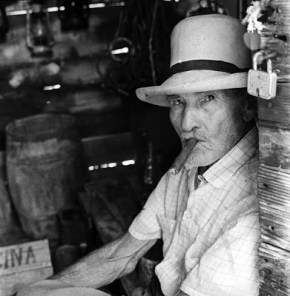
You can find a first draft of our paper here.







 prior probability
Hi my name is Steven Delgado my mother is Janet Hernandez she is the daughter of the son of anselmo Hernandez which is my grandfather his name is rigoberto Hernandez we’ve here in key west fl I thought it was interesting to see my great grand father here and I be always heared in my family he was the one the story was based on and he was good friends with Hemingway and his wife thank you so much for your time
What an honor to make your acquaintance. Anselmo was not only a great Cuban; he was a great man and the original “Old Man of the Sea”. Here is a draft of my paper: https://papers.ssrn.com/sol3/papers.cfm?abstract_id=2569619
Pingback: OMAS seen from various angles | prior probability
I cannot dispute your claim as to the compensation of royalties to Carlos Gutiérrez and Anselmo Hernández García, but if you do a bitmore research u would know that upon hemingway’s departure from Cuba, he willed Pilar to Fuentes “to do with as he wished”, hardly a case of forgetting his friend.
Thanks for bringing Hemingway’s will to my attention! I will look into this and report back soon …
Update: I found a transcription of Hemingway’s last will and testament (dated 17 Sept 1955) — see: https://www.megadox.com/Ernest-Hemingway-Last-Will-and-Testament — where he leaves his entire estate to his 4th wife.
I too traced down my sources re. hemingway’s desires regarding Pillar. In the book Hemingway’s Boat, Paul Hendrickson, 2011, Trade edition, under the chapter: Coda On the Curious Afterlife of Pilar, pages 659-650, Hendrickson makes the case that it MAY have been in a subsequent letter dated the same day as his will written but not made public and possibly the same letter that his wife mary referred to in her statement regarding gifting the boat to Fuentes. Based on Hendrickson’s personal view, there MAY be some doubt as to how fuyents received the boat, again no factual evidence either way and open to personal interpretation. I choose to believe that Hemingway did in fact give Mary the OK to grant Fuentes possession of Pillar, unfortunately, he could not afford the upkeep AND the strong hand of the Castro Regime brought him to “donating” the boat to the Cuban People.
Great book, and excellent research! I will be sure to add these facts regarding Gregorio to my “Old man and the sea” paper, which is now titled “Finding Santiago” and which I will revise soon.
Thank you sir for an interesting commentary; good luck with your paper and unlike Santiago, may the “whole fish” be admired.