
How does law get started? We presented and critiqued some game theory models of law and cooperation in our previous posts (June 10 and June 11). It turns out that the problem of group cooperation was first illustrated by our intellectual hero David Hume (pictured below) with this memorable example: “Two neighbours may agree to drain a meadow, which they possess in common; because it is easy for them to know each others mind; and each must perceive, that the immediate consequence of his failing in his part, is, the abandoning the whole project. But it is very difficult, and indeed impossible, that a thousand persons should agree in any such action; it being difficult for them to concert so complicated a design, and still more difficult for them to execute it; while each seeks a pretext to free himself of the trouble and expen[s]e, and would lay the whole burden on others.” (Hume’s Treatise of Human Nature, Clarendon Press (2nd edition, 1978), p. 538.) In short, getting a thousand people to drain a common meadow will be just as difficult as getting a thousand people to hire a sheriff or create a common government.
But what if, instead of draining a particular meadow at a particular time, the neighbors want to build a general meadow-draining business? If there are only two neighbors, they could form a partnership or a limited liability company or a privately-owned corporation. But this business firm solution could work even if there are a thousand neighbors! In fact, modern-day business corporations can have thousands–even millions–of shareholders. Corporations thus solve Hume’s metaphorical meadow-draining problem by separating ownership and control–the many (the shareholders) and the few (management). Now, what if, instead of creating a business to drain meadows, the neighbors created a business to produce and enforce laws? Maybe the world of big business–specifically, the legal structure of corporations–provides a clue to solving Hume’s meadow-draining problem. We will explore this ingenious solution in our next post.
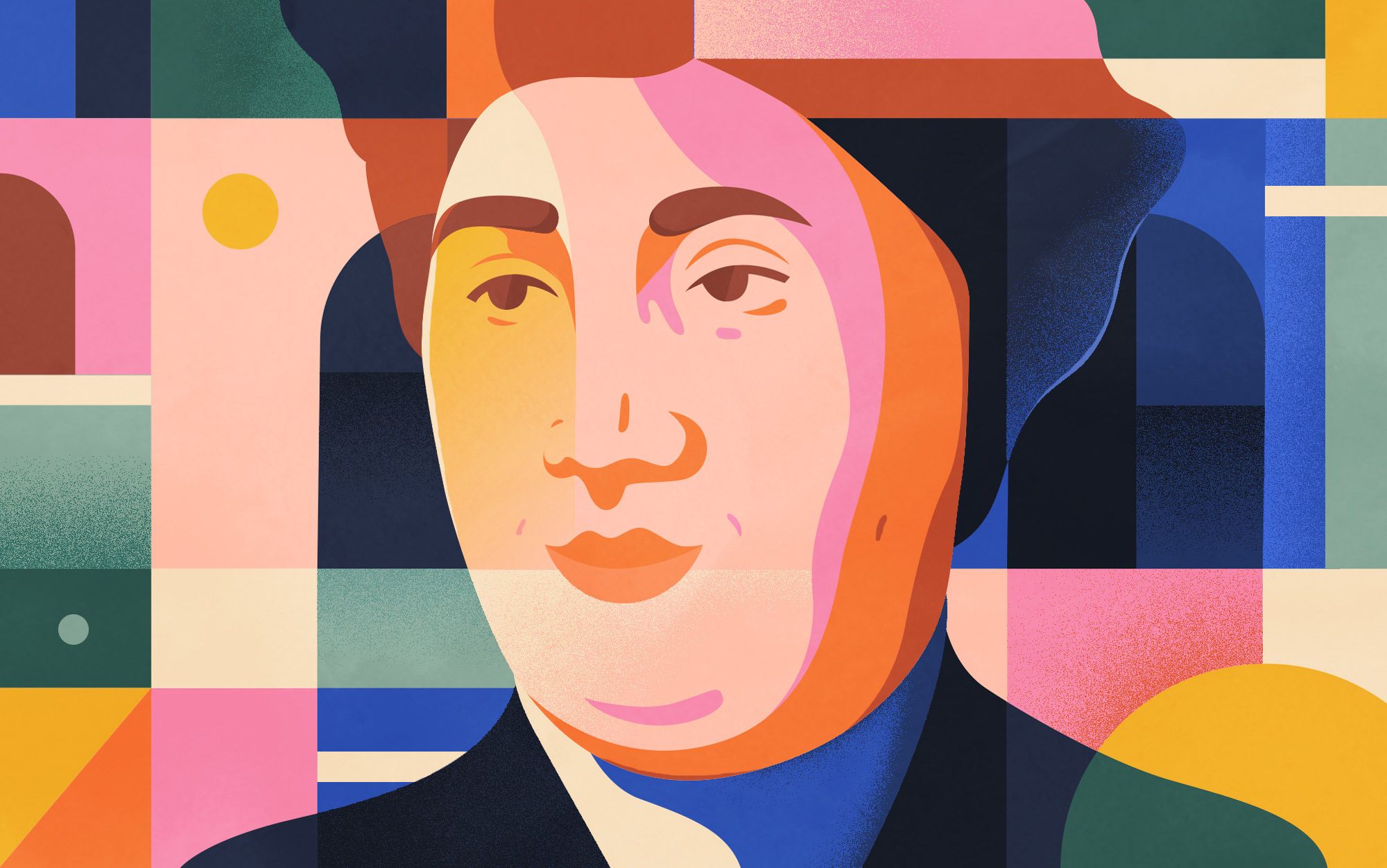
Illustration of David Hume by Petra Eriksson







 prior probability
Pingback: Law as protection racket: some remarks on the origins and evolution of group cooperation (continued) | prior probability