
Update (9/25): Professor Landsburg wrote up a thoughtful and excellent explanation of his position here (see comment #12). Because I am busy preparing for two different talks this weekend and two sets of law lectures thereafter (one on Monday; the other on Tuesday), I will return to this theoretical question later next week.
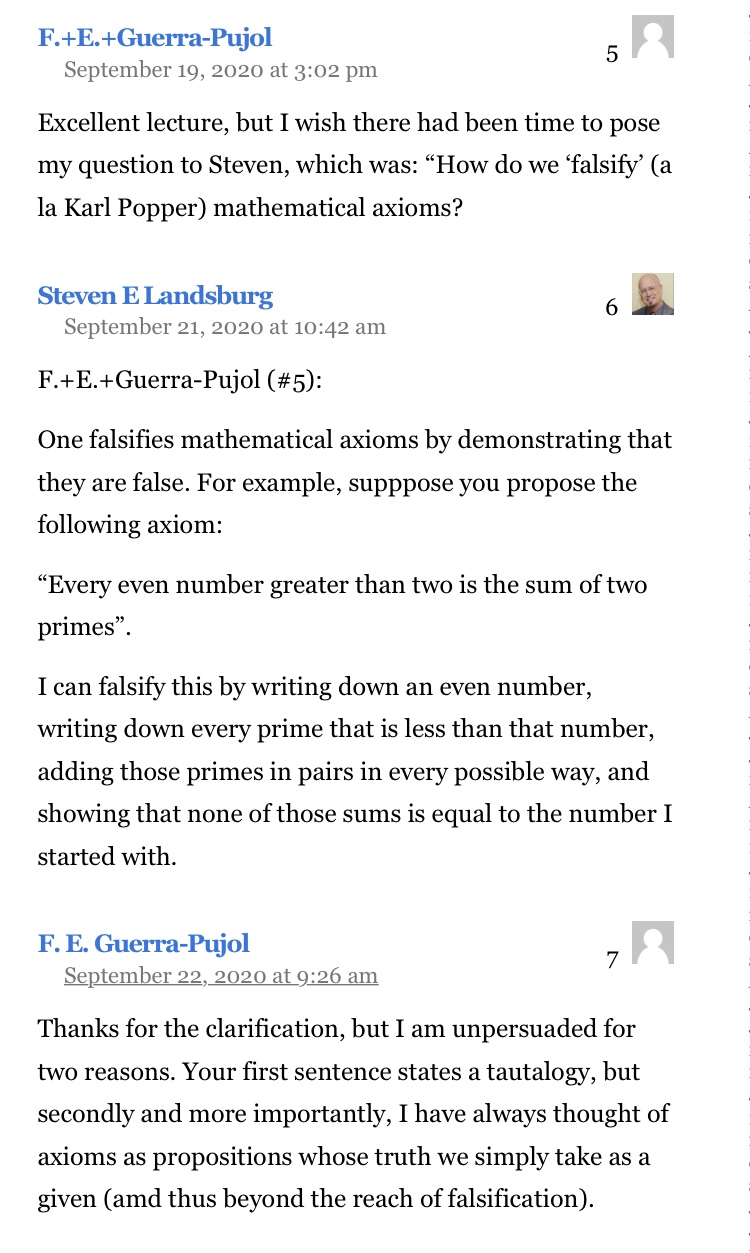
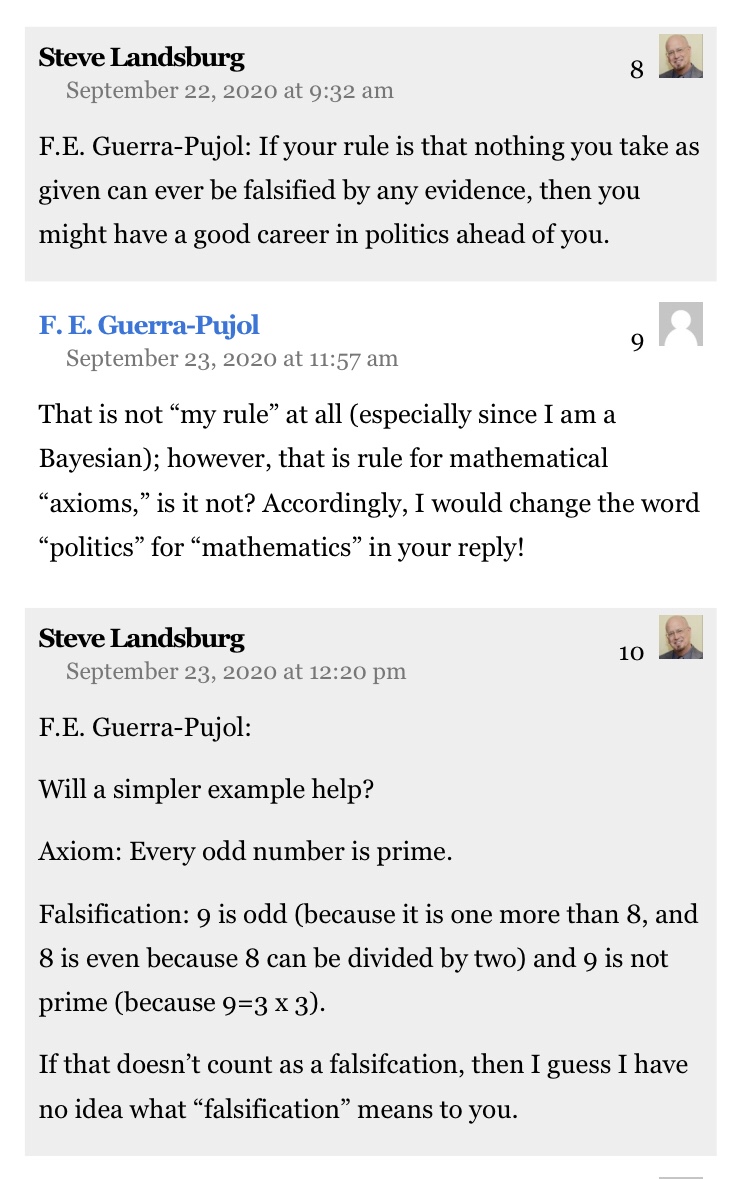
My colleague and friend Steven E. Landsburg says “yes” (see below); I, however, say “no” because axioms, by definition, are assumed to be true. Who’s right? Professor Landsburg or me?










 prior probability
If it can’t be proven, it can’t be falsified. I thought that was implied in the very definition of axioms?
Same here!