
Alternate Title: Critique of Baude & Paulsen (2023), Part 1
By way of background, my colleagues William Baude and Michael Stokes Paulsen recently posted to SSRN a 126-page law review article titled “The Sweep and Force of Section Three”. Among other things, Professors Baude and Paulsen claim that the disqualification clause in Section 3 of the 14th Amendment is “self-executing”, so that former president Donald J. Trump and others involved in the infamous January 6 fiasco are automatically prohibited from holding any federal office.
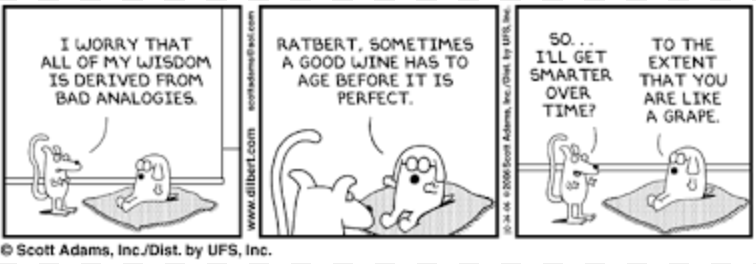
Alas, the meat and potatoes of their self-execution argument boils down to two false analogies. One is to the bright-line “age, citizenship, and residency” requirements set forth in the qualification clause in Article II, Section 1 of the Constitution. (This particular parallel is off the mark because it is presumably way easier to produce a certified birth certificate than to adjudicate whether the events of J-6 rose to the level of an insurrection or rebellion.) The other faulty comparison they make is to the 13th Amendment, which categorically declares the demise of slavery in the United States. (Again, this is a false analogy because the existence of the antebellum institution of slavery and the existence of a rebellion or insurrection are two different matters.)
In short, Professors Baude and Paulsen want you to believe that the Disqualification Clause in Section 3 of the 14th Amendment operates in the same way that the age, citizenship, and residency requirements in Article II do and in the same way that the 13th Amendment’s anti-slavery declaration does (i.e. automatically or ex proprio vigore), but both of these constitutional analogies are fundamentally flawed. Why? Because Baude and Paulsen commit the “level of generality” fallacy: i.e. comparing apples to oranges. Yes, at a high enough level of generality, it is true that both apples and oranges are pieces of fruit that taste sweet, but when you actually inspect or bite into them you soon see that apples are, in fact, quite different from oranges! (As an aside, this is a problem that bedevils most forms of Originalist scholarship; see here, for example.)
Likewise, although the set of constitutional provisions cited by Baude and Paulsen — i.e. the 14th Amendment’s disqualification clause; the age, citizenship, and residency requirements in Article II; and the 13th Amendment — all share a similar linguistic structure to some degree (e.g. “no person shall …” or “slavery … shall not exist”), all three of these provisions are substantively different; they attempt to solve different problems in different ways. Simply put, it is one thing to declare the end of slavery in the United States, which is literally what the 13th Amendment does, and quite another to impose qualifications for holding federal office, which is what the age, citizenship, and residency requirements in Article II do.
The Disqualification Clause, by contrast, operates “on top of” the bright-line age, citizenship, and residency requirements of Article II. That is, even if you are a natural-born U.S. citizen and are over 35 years of age and have resided in the U.S. for 14 years, you can still be disqualified from running for president if you participated in an insurrection against the United States or supported her enemies, but (and this is the most important point of this post) who gets to decide your age and citizenship status or whether you are a rebel or someone who has aided and abetted insurrectionists, and what procedures must this fact finder follow when making these determinations?
In other words, even if these analogies were not faulty, none of the substantive constitutional provisions invoked by Baude and Paulsen (Article II, Section 1; the 13th Amendment; and Section 3 of the 14th Amendment) could ever be automatic or self-executing in actual practice. As I shall readily explain in my next post, even the ban on slavery and the bright-line age, citizenship, and residency requirements must all be enforced by the government in one way or another, and those enforcement actions are always subject to judicial review and to the requirements of due process.










 prior probability
Pingback: Trump ballot disqualification update | prior probability
Pingback: Taking the *con* out of constitutional law: yes, even Donald Trump is entitled to due process | prior probability
Scott Adams, buh-bye. Didn’t get smarter over time.
Yes, he’s been cancelled; but I still like his old cartoons.