Hume, Smith, and probabilistic truth

I recently read this excellent essay by Smith scholar Erik W. Matson, who identifies and explores many connections between the ideas of Adam Smith and his intellectual mentor David Hume. (The final version of Dr Matson’s essay was published in Volume 11 of the Adam Smith Review; here is an ungated pre-print via SSRN.) To the point, among the myriad connections between Smith and Hume’s thought that Matson identifies, the one that resonated with me the most is Hume’s probabilistic picture of human knowledge, i.e. the idea that experience and observation can at best give us probable knowledge, not demonstrative or complete knowledge.

In summary, this idea that scientific theories or explanations are probabilistic (never certain) can be traced back to David Hume’s 1739 Treatise of Human Nature, where Hume himself explains that “all knowledge resolves itself into probability, and becomes at last of the same nature with that evidence, which we employ in common life.” (See Matson 2019, p. 274, citing Book 1, Part 4, Section 1, Paragraph 4 of Hume’s Treatise. As an aside, this idea can perhaps be traced even further back to John Locke’s 1689 “Essay Concerning Human Understanding”! See also here for more details about Humean probability.) For his part, Dr Matson refers to a lesser-known essay by Adam Smith titled “Of the external senses” or “OES”, which appears in Smith’s posthumous collection of philosophical essays (Smith 1982, pp. 135-168). According to Matson: “Smith uses the language of probability in reference to the status of systems of explanation on multiple occasions [in his essay on the external senses]. He speaks of the ‘probable foundations’ of philosophical doctrines; he speaks of ‘this great probability … still further confirmed by the computations of Sir Isaac Newton’ (OES 147.41).”

Why did this aspect of Hume’s (and Smith’s) thought resonate with me? Because I would argue that the concept of “truth” is itself probabilistic in nature; see here or here, for example. Alas, although Matson may very well be correct that Smith may have adopted a “Humean attitude” toward theory choice in his (Smith’s) early philosophical work, I don’t see much evidence of Adam Smith thinking in explicitly probabilistic terms in his more mature works, like Theory of Moral Sentiments or Wealth of Nations. (In fact, Matson himself describes Smith’s own back-sliding toward “truth-talk” in the last part of his (Smith’s) essay on the history of astronomy, where Smith praises Newton’s discovery of gravity as the culmination of thousands of years of sundry scientific endeavors.) Either way, as I mentioned in a different context in my previous post, the battle between absolute truth and probabilistic truth in Smith’s thought could be the subject of another paper.

P.S.: Below the fold is a bibliography of some of the works I have cited in this blog post:

Continue reading
Posted in Uncategorized | Leave a comment

Further reflections on Adam Smith’s impartial spectator

Alternative title: Who is Adam Smith’s impartial spectator?

Adam Smith’s “impartial spectator” is an idea that has fascinated me for as long as I can remember–see here, for example. In summary, Smith’s spectator metaphor goes back to his moral-philosophical treatise The Theory of Moral Sentiments, where Smith first invented the idea of an impartial observer or imagined third party who makes it possible for an individual to objectively judge the ethical status of his or her actions. But who exactly—or what—is this imaginary entity?

In a paper published in Volume 11 of The Adam Smith Review, independent scholar Toni Vogel Carey (see her impressive research bio here) offers a new and intriguing interpretation of Smith’s impartial spectator. To the point: she compares Smith’s spectator to the “ideal observer” in scientific thought-experiments. For Vogel Carey, that is, Smith’s moral spectator is supposed to be a close approximation of an unbiased or perfectly impartial observer with perfect information, and in support of her interpretation of the impartial spectator, Vogel Carey cites four Smith scholars: Charles L. Griswold (author of Adam Smith and the Virtues of Enlightenment), James Otteson (Adam Smith’s Marketplace of Ideas), Nicholas Phillipson (Adam Smith: An Enlightened Life), and David D. Raphael (The Impartial Spectator: Adam Smith’s Moral Philosophy). Alas, these Smith scholars describe the impartial spectator in radically different ways.

Nicholas Phillipson, for example, identifies the impartial spectator with the “common sense” of mankind, while David D. Raphael describes Smith’s spectator as “any normal observer who is not personally affected.” Both of these interpretations of the impartial spectator, however, pose two further questions: how ideal–or close to ideal–is the common sense of the public, and where does one draw the “not personally affected” line? Likewise, James Otteson describes Smith’s spectator as “a perfectly average fellow who is simply familiar with the situation,” and by the same token, Charles Griswold refers to Smith’s spectator as a “stand-in for ‘the public’.” But, again, how ideal–or close to ideal–is an “average fellow” or “stand-in for ‘the public’,” and how much “familiar[ity] with the situation” is required?

Worse yet, by my count there are at least three different interpretations of Smith’s spectator: 1. the impartial spectator as an ideal observer (Vogel Carey’s interpretation); 2. the spectator as a hypothetical average fellow or stand-in for the public in the aggregate (Otteson; Griswold); and last but not least, 3. the spectator as any ordinary or “normal” individual observer with “common sense” (Raphael; Phillipson). So, which of these interpretations is best, and what criteria should we use for deciding which particular interpretation is best? Those questions no doubt merit their own paper; in the meantime, however, I am posting below my “impartial spectator scorecard”:

Also, for the record, below the fold is a bibliography of the works I have cited in this blog post:

Continue reading

Posted in Uncategorized | 1 Comment

3.14

To commemorate 3/14, I am reblogging my “Pi Day” post from five years ago. (Also, on this day in 1964, nightclub owner Jack Ruby was convicted by a Dallas jury of murder with malice and was sentenced to death in the killing of Lee Harvey Oswald, the presumed lone gunman in the assassination of President John F. Kennedy.)

F. E. Guerra-Pujol's avatarprior probability

Happy Pi Day

View original post

Posted in Uncategorized | Leave a comment

What time is it on the Moon?

Via web.archive.org, check out this New York Times article by Claire Fahy: “The Moon May Get Its Own Time Zone.” My only question is: What about Mars?

Posted in Uncategorized | Leave a comment

Breonna

Breonna Taylor was murdered by four police officers (Joshua Jaynes, Kyle Meany, Brett Hankison, and Kelly Goodlett; see here) on 13 March 2020.

Posted in Uncategorized | 2 Comments

Music Monday: Luke Combs

Country artist Luke Combs, along with Ray Fulcher and James McNair (see here), somehow wrote and composed the most beautiful break-up song ever.

Posted in Uncategorized | Leave a comment

Truth versus novelty: a reply to Les Green

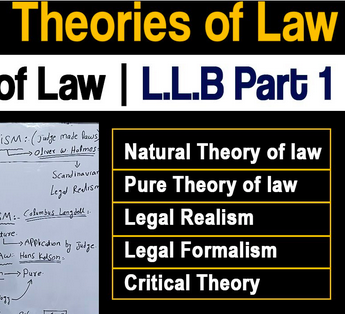
Via Brian Leiter (here), I discovered this strange blog post by Les Green, a philosophy of law professor at Oxford University. In summary, Professor Green offers a nuanced critique of the “pursuit of novelty” in fields like jurisprudence (philosophy of law): the pursuit of the new, which has now become a “fetish” (to quote Green), should take a back seat to the central goal of his field: the pursuit of truth. Professor Green’s diagnosis, however, has a fatal flaw: he fails to define truth. How do jurisprudes, for example, determine whether “the next general theory of law” — or even any of those listed in the picture below — is true or not? Alas, there is no way of testing, refuting, or “falsifying” (in the Popperian sense) such general legal theories; in a purely literary or linguistic field like jurisprudence, it’s all just a matter of opinion! As a result, although novelty is an imperfect proxy for truth (indeed, there might even be an inverse relation between novelty and truth), in a field like jurisprudence it is much easier to determine whether a theory is new than true.

Pick a theory, any theory!
Posted in Uncategorized | 3 Comments

Will Law Lift or Ground Flying Cars?

That was the theme of this conference on advanced air mobility or AAM for short (or better yet, flying cars!) that I had the honor of attending yesterday. For reference, the Federal Aviation Administration has put together this AAM webpage; in brief, the term “advanced air mobility” refers to the new generation of battery-powered aircraft that take off and land vertically, such as Hyundai’s SA-1 Air Taxi or this Lilium Jet prototype manufactured in Munich, Germany. (Also, shout out to my colleagues Timothy Ravich, Sarah Bush, and Laurie Campbell, who were awarded a grant from the National Science Foundation to organize this excellent conference.) If a recording of the conference becomes available, I will post it here; in the meantime, below are three highlights:

  1. One highlight was the old case of State v. Yopp, 97 N.C. 477 (1887), available here, a cautionary tale that involves a North Carolina law that once made it illegal to ride bicycles on private roads; thanks to Professor Ravich for bringing this fun case to my attention.
  2. Another was one speaker’s definition of the now-trendy and “woke” concept of “equity”–specifically, Jacques Coulon, the Mobility Innovation Manager for the City of Orlando (my hometown!), who defined equity in terms of the spatial and temporal distribution of negative externalities generated by an activity. (A negative externality or harmful effect occurs when the production, consumption, or use of a product results in a cost to a third party.)
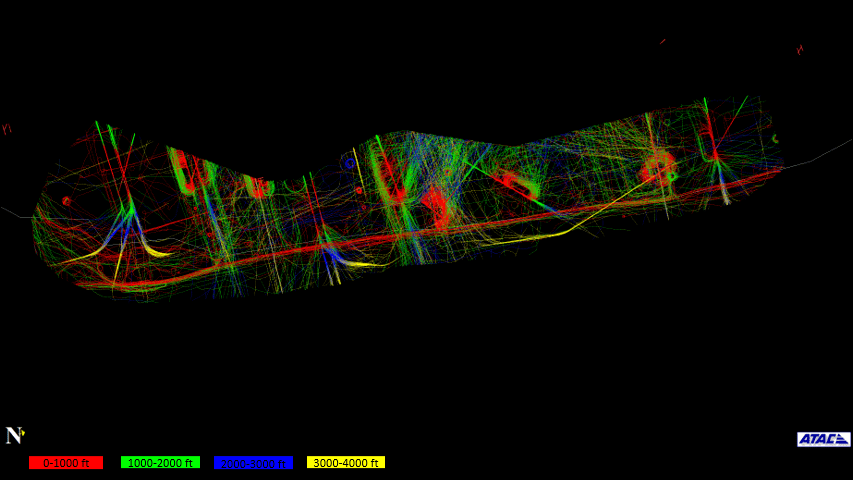
  3. A third highlight was the visualization of existing air traffic in South Florida (pictured below) presented by Greg Dyer, the Director of Aviation and Air Space Services at Woolpert, Inc.

As an added bonus, below is Aaron Koblin’s art video project “24 Hours of Flight Data”:

Posted in Uncategorized | 1 Comment

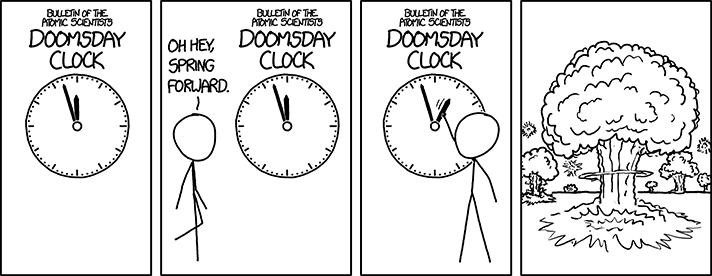
Friday Funnies: Doomsday Clock Meets Daylight Savings Time

Doomsday Clock
Posted in Uncategorized | Leave a comment

Taking Posner Seriously: Politics as Law

This installment of my “Taking Posner Seriously” series is devoted to Richard A. Posner’s excellent essay “A Political Court“, which was published in the fall of 2005 as the Foreward to the Harvard Law Review‘s special issue on the 2004 Supreme Court Term. In summary, as Posner explains in Part II of his polemical essay (pp. 39-60), because the Supreme Court gets to decide which cases to hear, and because constitutional cases are ultimately about power (i.e. the “who decides?” question), and because the text of the Constitution itself is so open-textured and full of glittering generalities and thus open to multiple interpretations, Posner concludes (p. 40): “The more the Supreme Court is seen, and perhaps sees itself, as preoccupied with polarizing “hot button” constitutional cases, the more urgent is the question whether when deciding constitutional cases the Court should be regarded as essentially a political body …, exercising discretion comparable in breadth to that of a legislature.”

Alas, prior to the publication of Posner’s 2005 essay, the idea that “law is politics” was already old hat. Old-school “critical legal scholars” (or Crits, for short) had already noted the political nature of different areas of law, including the common law, and the many different ways in which law, politics, and culture are intimately connected. But what Judge Posner does in his 2005 essay that is so original, surprising, and damning is that he inverts the Crits’ “law-as-politics” thesis. For Posner, the legal rulings of the Supreme Court are not just politics disguised as law (i.e. the Crits’ radical thesis that “law is politics”); instead, those rulings are unabashed political decisions made by an out-an-out political body. In a word, Posner out-crits the Crits!!!

Posner’s conclusion about the political nature of the Supreme Court became all but obvious when five justices used their judicial power to appoint the 43rd President of the United States in late 2000 and thus override the results of that year’s presidential election, yet Posner himself had defended the decision in Bush v. Gore in his book Breaking the Deadlock: The 2000 Election, the Constitution, and the Courts (Princeton University Press, 2001), which is available here for free, by the way. How is it possible to explain this inconsistency between the theoretical Posner and the applied Posner? As I will explain in my next Posner post next week, the source of this gross and glaring inconsistency is most likely Posner’s theory of judicial pragmatism, a theory that (to paraphrase Winston Churchill) is the worst form of legal theory–except for all the others that have been tried!

Image credit: lawliberty.org
Posted in Uncategorized | 1 Comment