Following up on this fun prompt via my fellow co-blogger Sheree (hat tip: Bee H.), I am posting this classic from my young adult years, when I was still a student at the Yale Law School. During those years, I could not go to a party, pub, or club without hearing this catchy song!
Review of Chapter 3 of Rule of Law: An Anomaly
Chapter 3 of Tom Bingham’s book Rule of Law not only surveys the main sources of law in Britain–statutes and legislation, judge-made law and cases (the common law), as well as European and international law–it also identifies an enormous anomaly in the concept of rule of law. The problem, which is both a theoretical and practical one, is this: how can there be “rule of law”–as opposed to what I like to call the “rule of politics”, i.e. rule by the arbitrary whims of men–if we don’t even know how many laws there are in the first place?
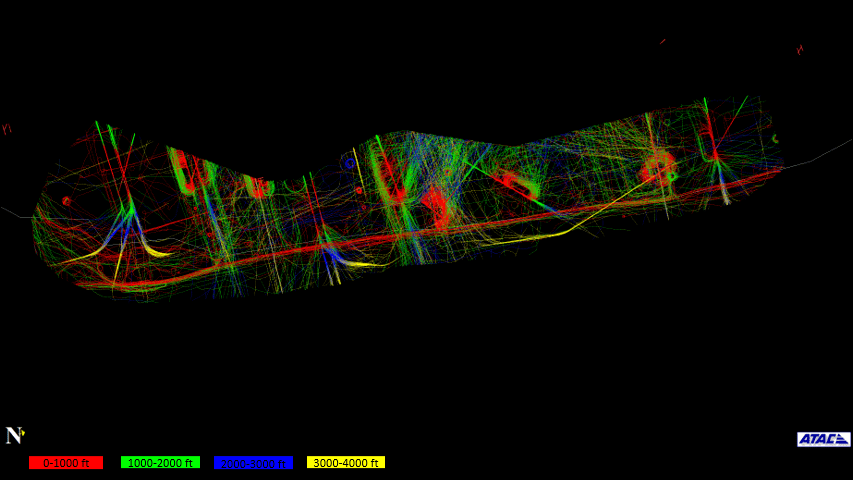
At a minimum, as Judge Bingham himself notes, the law must be “accessible”, “intelligible”, and “clear”. In plain English, people and firms must know what the rules of the game are before they play the game, or in Bingham’s own words: “the rule of law requires that the [rules] laid down should be clear.” But, in reality, there are so many cases, laws, and regulations “on the books” that it is impossible, even for a trained lawyer, to know what the law really is. (This problem is especially acute in the United States, where legal experts don’t even know how many federal crimes there are! See image below or here, for example.) In fact, the problem is even worse than that. Even if we could use some method of “machine learning” or artificial intelligence to identify all the State, federal, and international laws that make up the U.S. legal environment, we would soon discover that many of these rules are either incomplete or vague or, worse yet, in contradiction with each other.
Is this a soluble problem, or is the concept of rule of law an incoherent one? For his part, in Chapter 4 of his book, Bingham will attempt to draw a distinction between narrow or confined “judgment” (in which courts apply the law in a consistent and fair manner) and unbridled, broad “discretion” (in which courts act like power-hungry political bodies). I will proceed to Chapter 4 next week. In the meantime, Happy Groundhog Day!

Flagging the flaggers!?
Last night, during another bout of insomnia, I opened YouTube and poked around that glorious site. At one point, YouTube’s secret algorithms enticed me with this one-hour lecture by Professor Josiah Thompson, a first-generation JFK assassination researcher whose 1967 book Six Seconds in Dallas is considered a classic. Professor Thompson’s excellent lecture, which took place on November 18, 2022 at the Sixth Floor Museum in Dallas, sheds new light on the assassination of JFK and is meticulously researched, but when I first clicked on the link to his lecture, I got this ominous warning:

Question: I know YouTube allows users to “flag” content that they find offensive, but why can’t I, in turn, “flag” obnoxious censorship warnings like these?
It’s Black History Month!
Future adventures in ChatGPT
Thus far, I have used ChatGPT to explore the research questions posed in seven of my previous papers. Below are ten additional research problems from my previous work that I may (or may not) feed into ChatGPT in the days ahead:
- How did the English economist Ronald Coase come up with the idea that harms are a reciprocal problem? (This particular query is one that has haunted me for years; see my forthcoming paper “Coase’s Parable“.)
- What is the optimal lifespan of a replicant? (Inspired by the original Blade Runner movie, Orlando I. Martinez-Garcia and I address this question in our 2012 paper “Clones and the Coase Theorem“.)
- Build a game theory model of the rancher-farmer dispute used to illustrate the Coase Theorem. (See my other 2012 paper “Modelling the Coase Theorem“.)
- Find a Bayesian solution to the “gatecrasher paradox” or to “blue bus problem” from the law of evidence. (See my 2013 paper “Visualizing Probabilistic Proof” and my 2014 follow-up blog post “The ‘Paradox of the Gatecrasher’ is not a paradox“.)
- What was the logical contradiction that Kurt Gödel discovered when he studied the U.S. Constitution on the eve of his citizenship exam? (See, for example, my 2014 paper “Gödel’s Loophole” or this Wikipedia page.)
- Who inspired the character of Santiago, the old fisherman in Ernest Hemingway’s Old Man and the Sea? (See my 2015 work-in-progress “Finding Santiago“.)
- Identify possible theories of legal liability for data fabrication and other forms of “research fraud”. (See my 2017 paper “Legal Liability for Research Fraud“.)
- What if Immanuel Kant were an 18th Century Bulgarian law professor? (See my 2019 reply to Chief Justice John Roberts and Professor Orin Kerr: “Kant on Evidence“.)
- What is the optimal level of rule evasion? (See my 2020 work-in-progress “Tom Brady’s Footballs“.)
- Is Chegg evil? (See my 2021 work-in-progress “The Chegg Conspiracy“.)
Bonus meta-questions: Can ChatGPT generate novel research questions on its own? Either way, will ChatGPT end up generating the equivalent of a real-life Borgesian “Library of Babel“?

Adventures in ChatGPT: Do grasshoppers dream of impartial spectators?
Why doesn’t ChatGPT have a sense of humor? Last year, I posted an essay titled “Do Grasshoppers Dream of Impartial Spectators?”, where I review two books: Our Great Purpose: Adam Smith on Living a Better Life by Ryan Patrick Hanley and Law and the Invisible Hand: A Theory of Adam Smith’s Jurisprudence by Robin Paul Malloy. The title of my double review is a play on words of Philip K. Dick’s dystopian science fiction novel Do Androids Dream of Electric Sheep? In my case, however, the reference to “grasshoppers” is to Walt Disney’s Jiminy Cricket, who famously admonished Pinocchio to “let your conscience be your guide”, while the reference to “impartial spectators” is to Adam Smith’s imaginary internal judge who reviews the moral status of one’s actions (see here, for example). So, just for kicks, I fed the question in the title of my essay into ChatGPT and got back the following short but humorless response:
It is unlikely that grasshoppers dream, as they do not possess the necessary brain structures for dreaming. Additionally, the concept of an “impartial spectator” is a philosophical concept that likely does not apply to grasshoppers.
For the record, I also explicitly asked ChatGPT to compare and contrast Walt Disney’s Jiminy Cricket and Adam Smith’s Impartial Spectator, and the results–along with a screenshot of Disney’s famous cricket character–are pictured below. Are there any lessons to be learned from this doomed intellectual exercise? For me, the main lesson is that ChatGPT’s sense of humor is somewhat underdeveloped.
More Adventures in ChatGPT: Judge Hercules versus Judge Bayes
In a previous post, I pointed out seven of my scholarly papers that contain a question in their titles, and last week, I fed five of those questions into ChatGPT and shared the results of these AI adventures on this blog. Today, I will feature my 2016 paper “Judge Hercules or Judge Bayes?”, a purely theoretical work where I claim that the “superior Being” in Newcomb’s Problem and the mythical Judge Hercules in the late Ronald Dworkin’s (pictured below, left) theory of law are one and the same person. First off, I asked ChatGPT to “compare and contrast Dworkin’s ‘Judge Hercules’ and Guerra-Pujol’s (yours truly) ‘Judge Bayes'”; below the fold is ChatGPT’s response:
Continue readingReview of Chapter 2 of Rule of Law
I won’t have much to say about Chapter 2 of Tom Bingham’s book Rule of Law (available here), which surveys several “historical milestones” in Anglo-American legal history, beginning with the Magna Carta of 1215 and concluding with the Universal Declaration of Human Rights of 1948. (Judge Bingham does include one “foreign” (i.e. non-English-language) milestone in his survey: the “The French Declaration of the Rights of Man and the Citizen“, which was adopted by France’s National Assembly in the summer of 1789 during the start of the French Revolution.) Alas, Bingham’s short history of the rule of law contains many omissions. He fails to explain, for example, why the ill-fated French Declaration of Rights was such an ineffectual legal document, one that failed to curb the violence of the Reign of Terror (1792-94) or prevent Napoleon’s consolidation of power in 1799, nor does Bingham have much to say–at least not in Chapters 1 or 2 of his book–about the English jury system, the hallmark of the English common law tradition and perhaps the single-most important aspect of the rule of law. Suffice it to say that, next time, I will not assign Chapter 2 to my students. Instead, I will assign John Langbein’s “The four epochs of jury trial in England” (available here) or his essay on “The English criminal trial jury on the eve of the French Revolution” (here). (Full disclosure: John Langbein was my favorite professor when I was his student at the Yale Law School.)