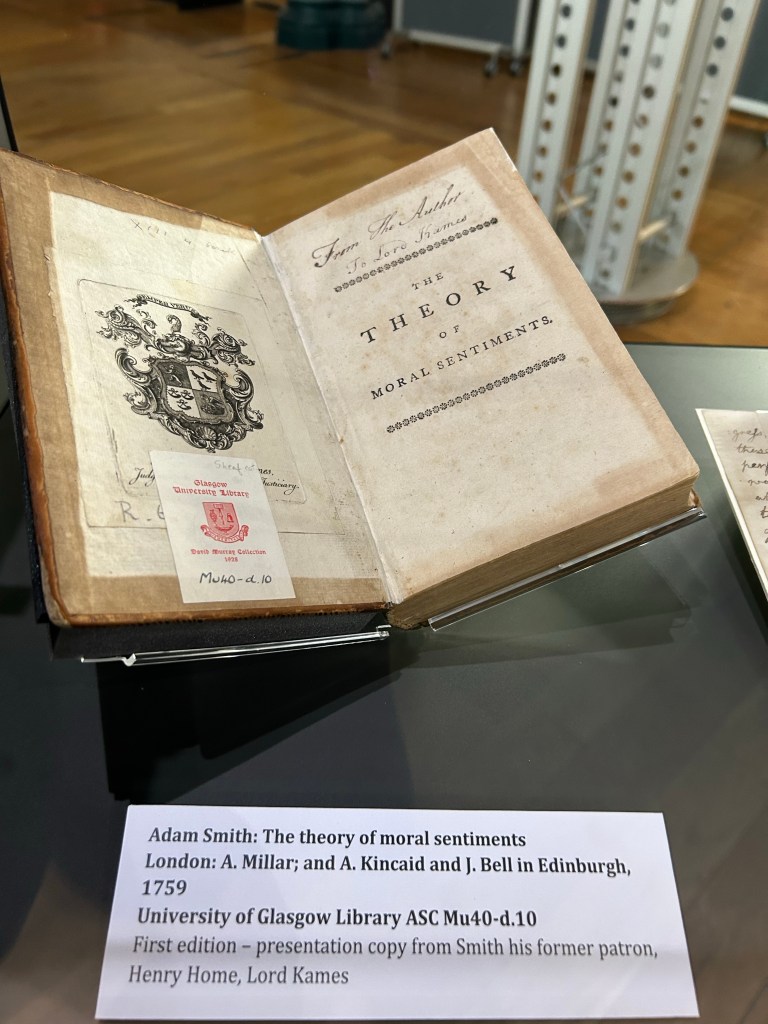
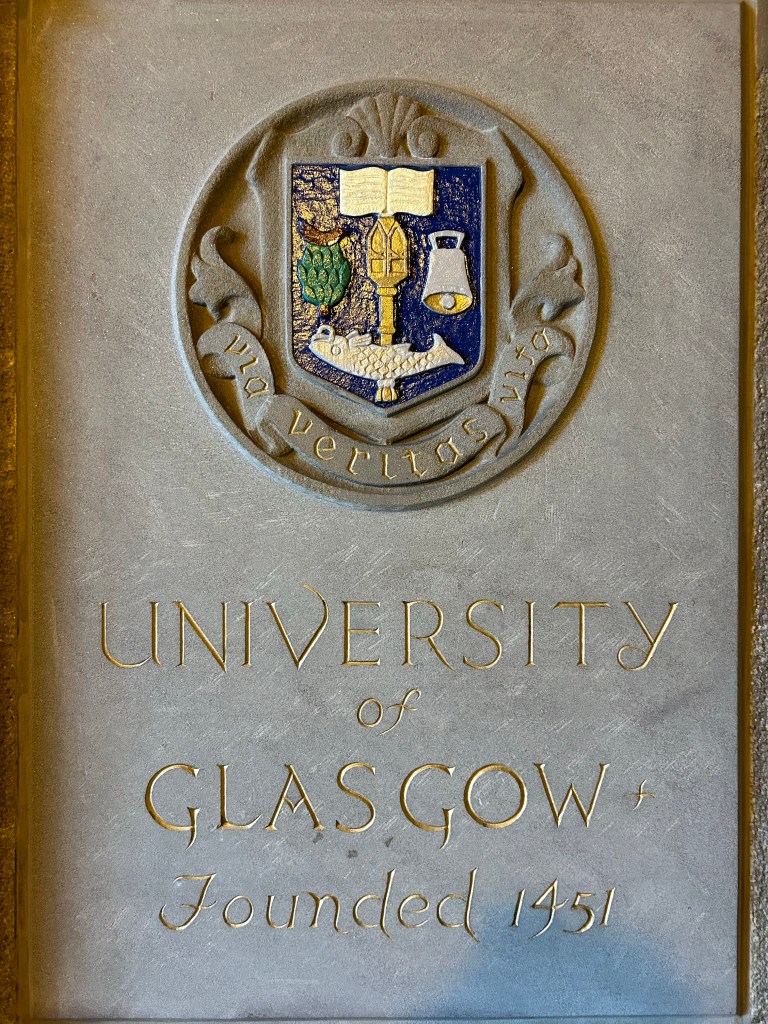
Although 2023 is the 300th anniversary of the birth of Adam Smith, what really matters are his beautiful ideas and metaphors, such as the invisible hand and the impartial spectator. Pictured below is an original edition of Smith’s first book The Theory of Moral Sentiments; the Scottish philosopher was 36 years old when his treatise on ethics was first published in 1759.
Yesterday, Nobel laureate Sir Angus Deaton delivered a lecture on “Economic failure or failure of economics?” (see here) as part of the University of Glasgow’s Adam Smith Tercentenary Week. In brief, the first half of his lecture sounded a lot like one of Tucker Carlson’s monologues. Among other things, Professor Deaton described the despair and declining life expectancy of blue-collar workers in North America, but the second half of the lecture was just a hypocrital mishmash of progressive platitudes (I don’t need to be lectured about inequality by a tenured professor at Princeton) and debunked Keynesian ideas and barely made any mention of Adam Smith.
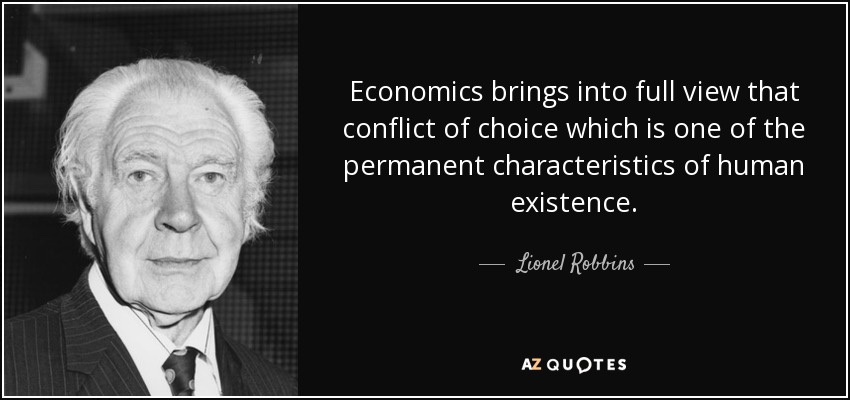
One aspect of the lecture, however, that caught my attention was Professor Deaton’s critique of Lionel Robbins’s “infamous” definition of economics as the allocation of scarce resources among competing ends (see below). But this critique begs the question, How else should we define economics? Although Deaton himself did not bother to provide an alternative definition of economics, I wonder, for example, what definition the great philosopher-economist Adam Smith would have preferred.
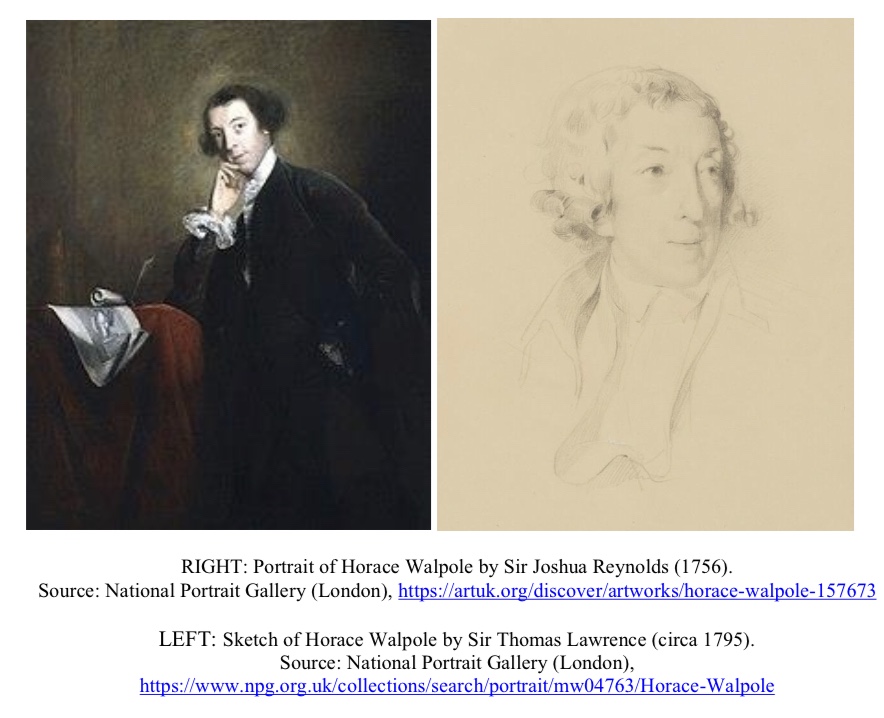
Today I will be presenting my work-in-progress “Adam Smith through the Eyes of Horace Walpole” at the University of Glasgow. (As an aside, in preparation for my talk I made significant revisions and corrections to my draft and posted the updated version here.) Suffice it to say that Smith and Walpole have to be one of the oddest of odd couples of all time, so what is the connection between them? Read my work to find out!
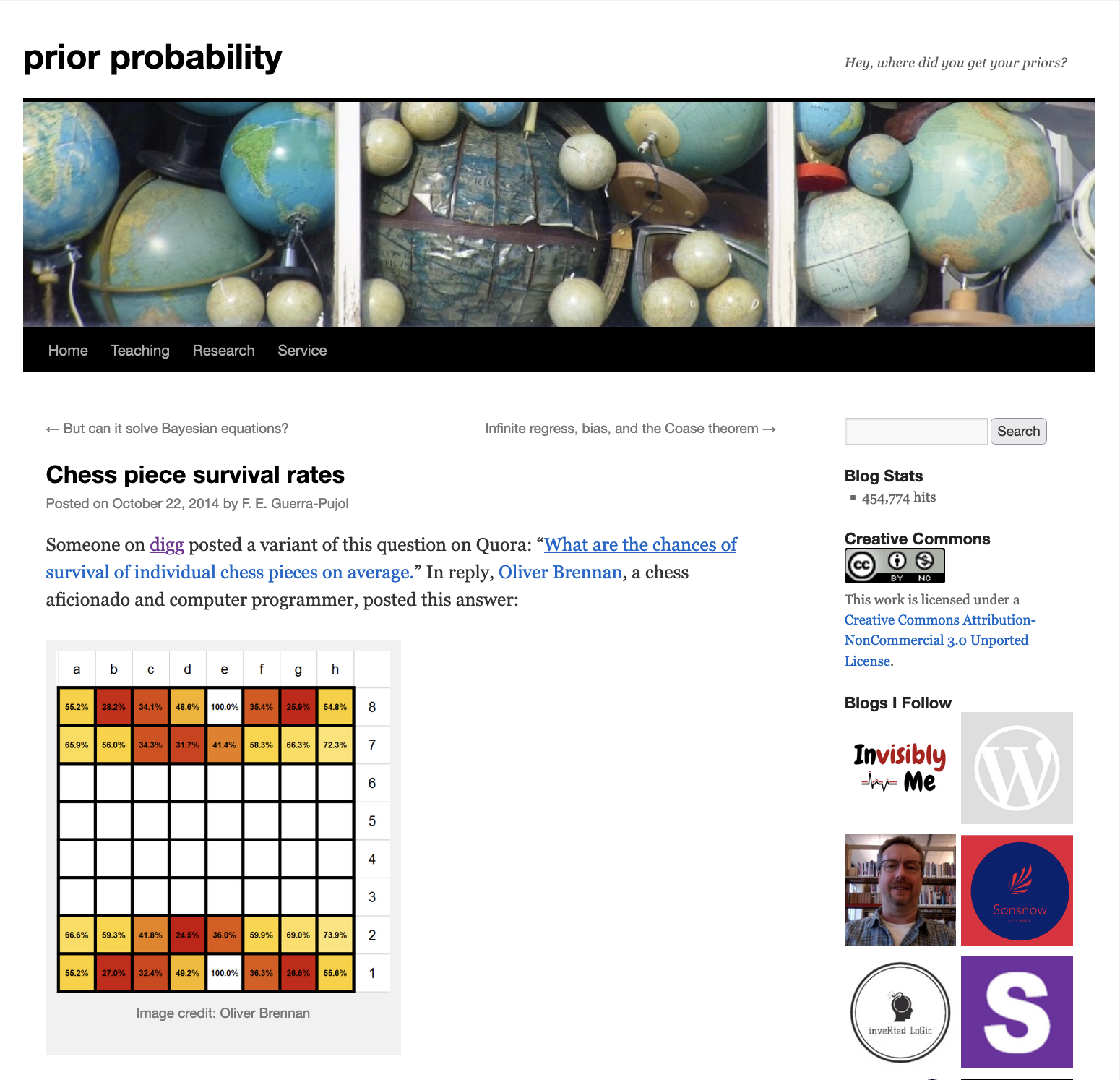
I mentioned in my previous post that this blog is about to turn ten years old and that I will be reposting some of my favorite blog posts from the last ten years to honor this occasion. To wit: I posted “Chess piece survival rates” on 22 October 2014 (see here or screenshot below), and to this day, that pithy blog post turned out to be the most popular one that I have ever posted.
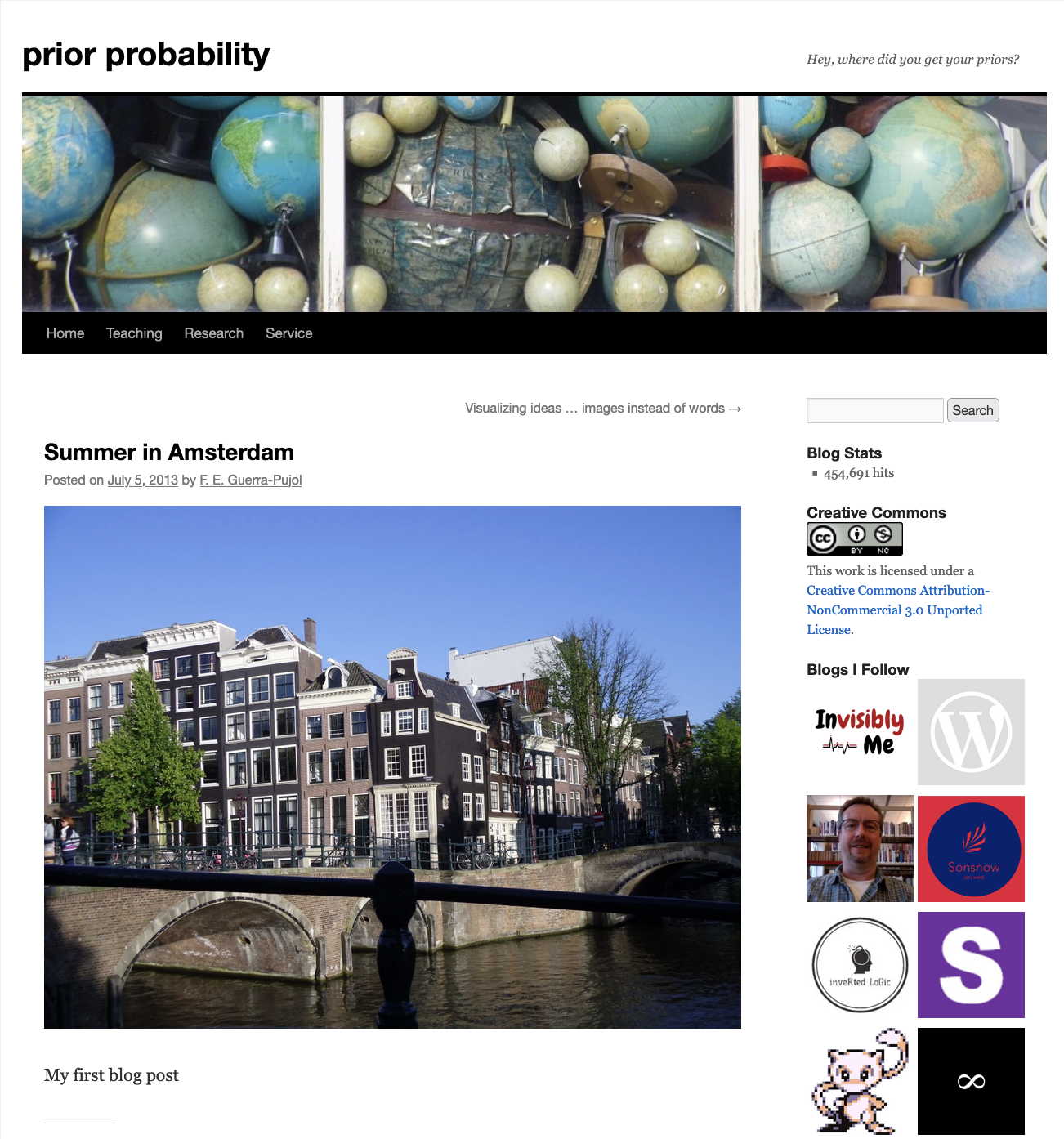
In brief, I began blogging here on 5 July 2013–i.e, nine years and 11 months ago to the day–and to commemorate this occasion, I will from time to time in the next four weeks be reposting some of my favorite blog posts from the last ten years. To get the ball rolling, pictured below is a screenshot of my very first blog post, which features a photograph I took of some bridges, trees, and buildings in one of my favorite cities in the world. Notice too how that post contains only seven words, including the title. Although most blogs consist mostly of words (mine included), one of my goals when I started “Prior Probability” was to convey information and ideas via pictures, charts, and other types of images.
I was finally able to watch Steven Speilberg’s auto-biographical film “The Fabelmans” on my return flight to Orlando. Although this two-and-1/2 hour movie is way too long, I can’t wait for the sequel! “The Fabelmans” walks us through Speilberg’s childhood and adolescence up to his young adult years, and I was spellbound by every scene. Today, with the popularity of YouTube, TikTok, and other video platforms, I wonder who the next Speilberg will be.
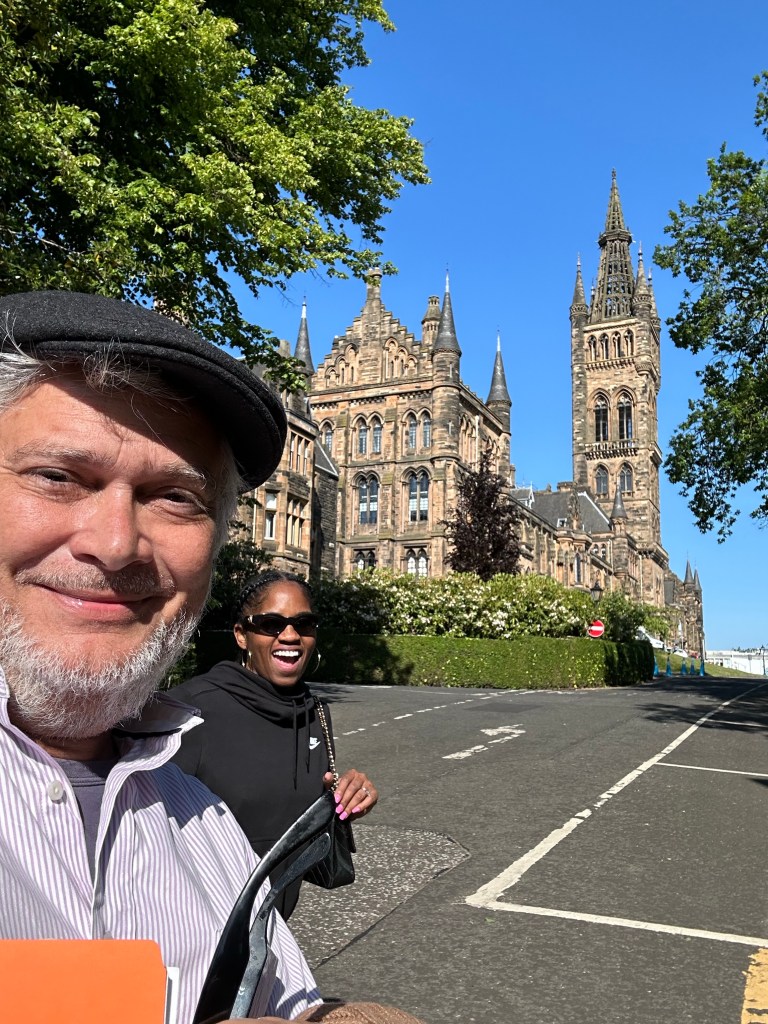
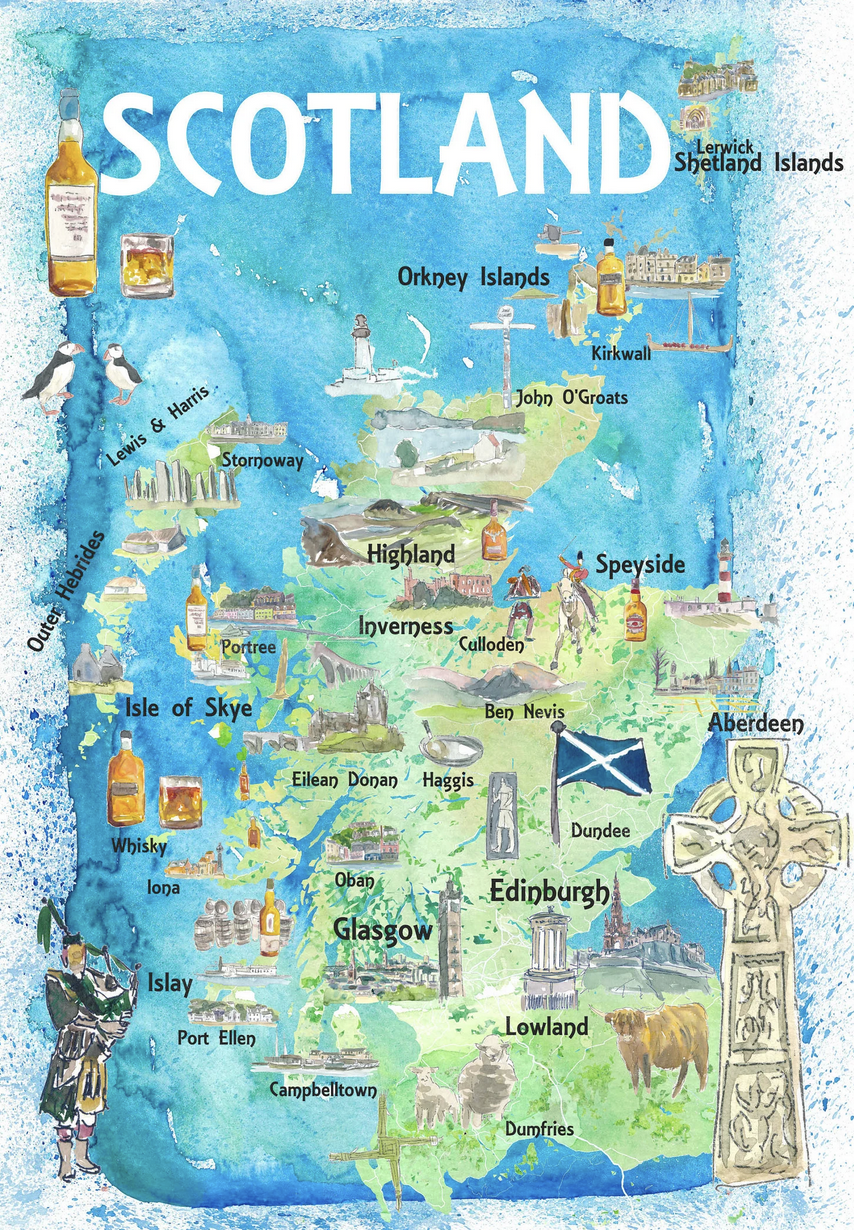
I have enjoyed my trip to Santiago de Chile on many levels–especially her people, food, and culture–and if all goes well I will be returning here next year to attend the annual meeting of the History of Economics Society, which I have been told is scheduled to take place at the Universidad de Desarrollo in July of 2024. (When I return to South America in July of next year, I hope to bring my family and stay much longer in order to visit the enigmatic ruins of Easter Island as well as go stargazing on the desolate plains of the Atacama Desert, among other things.) Now, however, I will be returning to Orlando, Florida this weekend in order to fly out to Scotland on the afternoon of Monday, June 5, where I will be presenting my scholarly research on Adam Smith’s life and ideas at the University of Glasgow on June 8 as part of the celebration of the philosopher-economist’s 300th birthday. In the meantime, if you are as fascinated by the great Adam Smith as I am, some of my Smithian studies are available here (Adam Smith in Love), here (Adam Smith and the Balliol College Conspiracy), and here (Die Adam Smith Probleme).
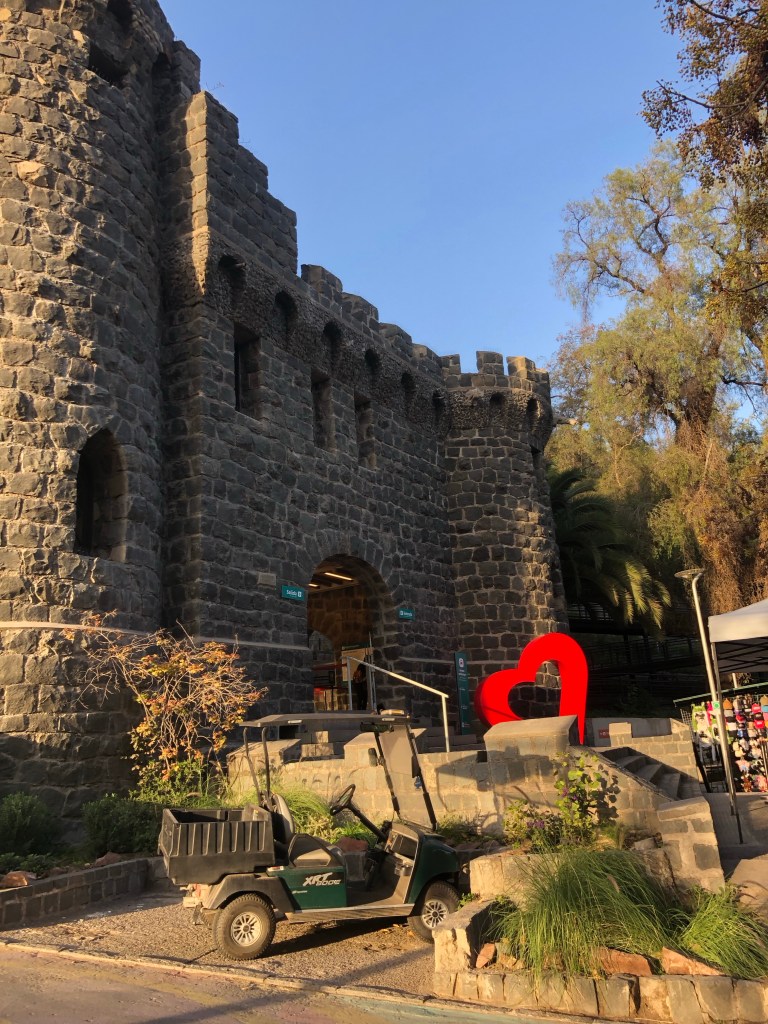
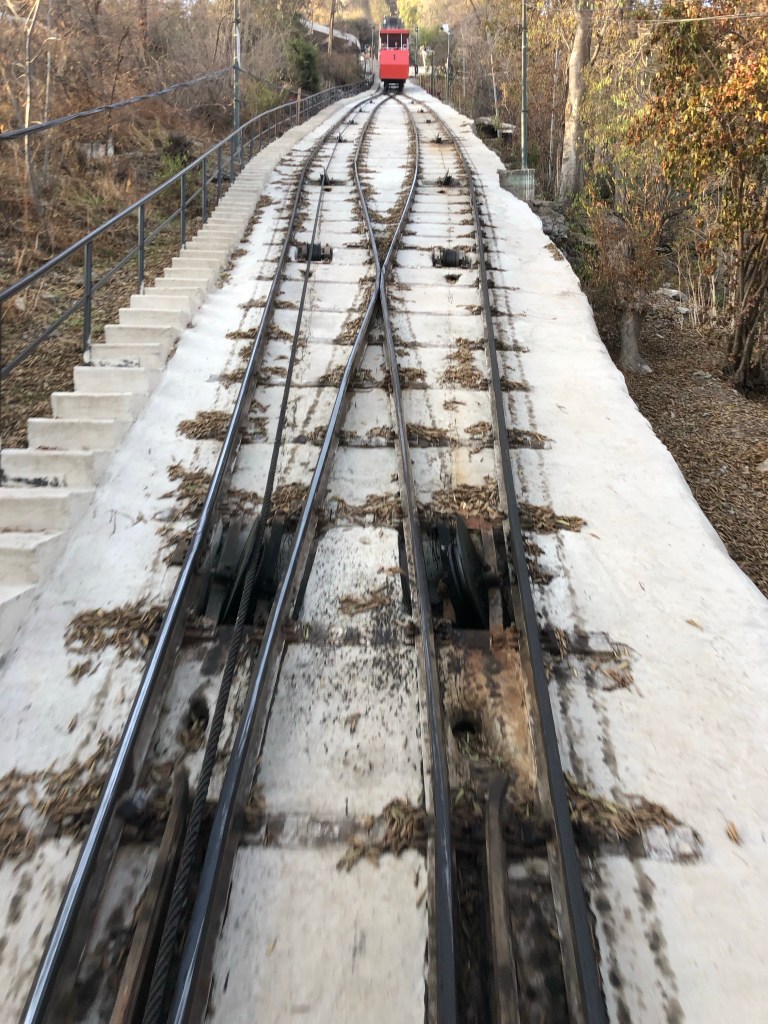
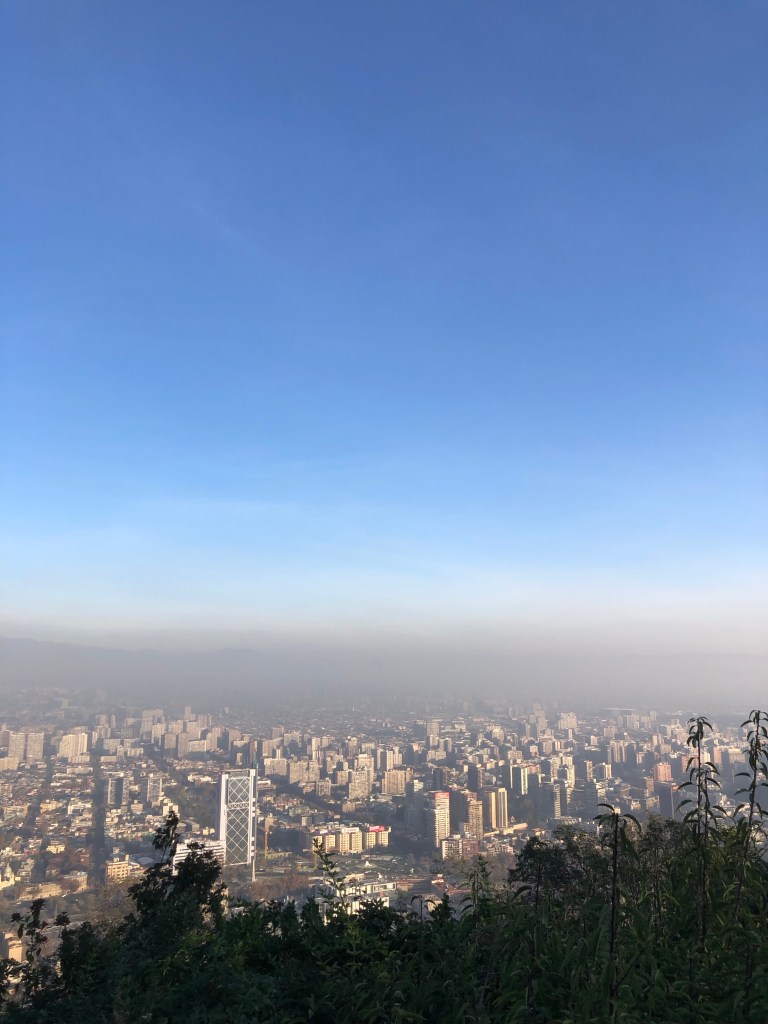
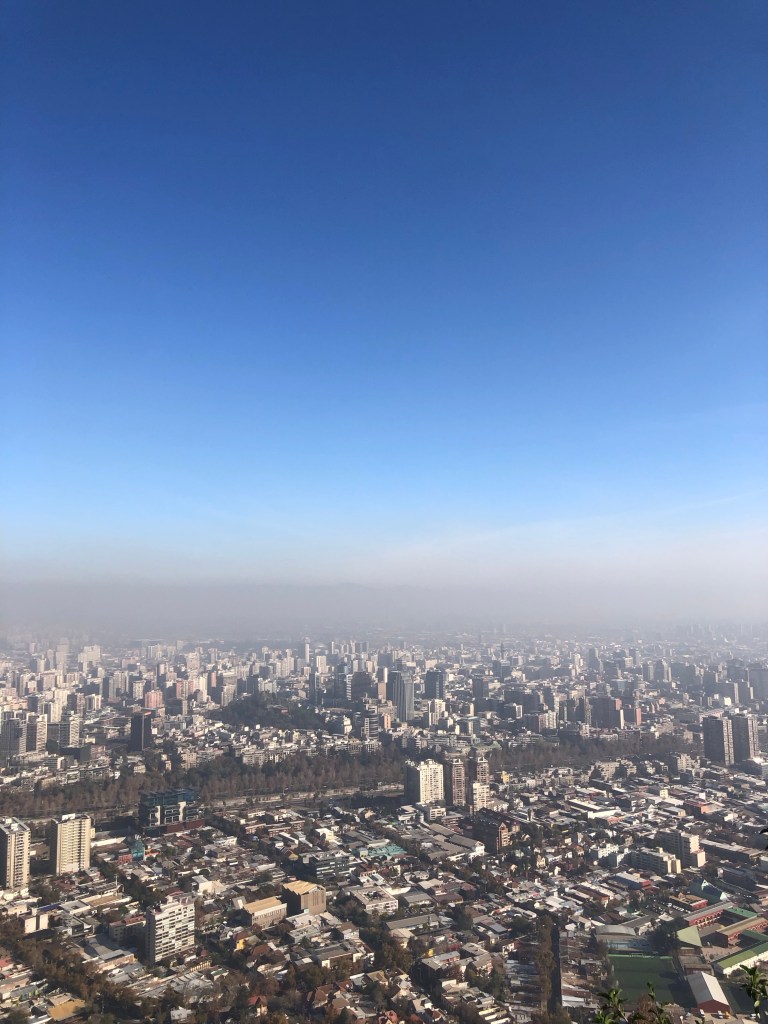
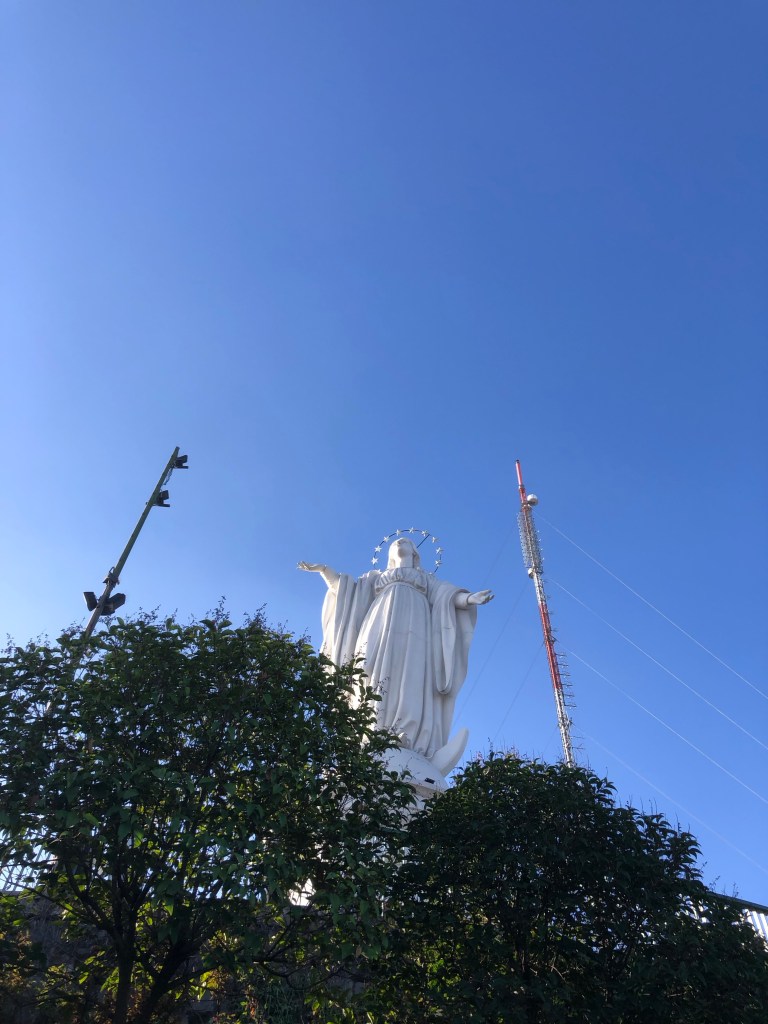
In addition to visiting a plethora of wonderful bookstores, I walked to Barrio Bella Vista from my hotel in the historic city center and rode the funicular railway to the highest point in Santiago de Chile: Cerro San Cristóbal.
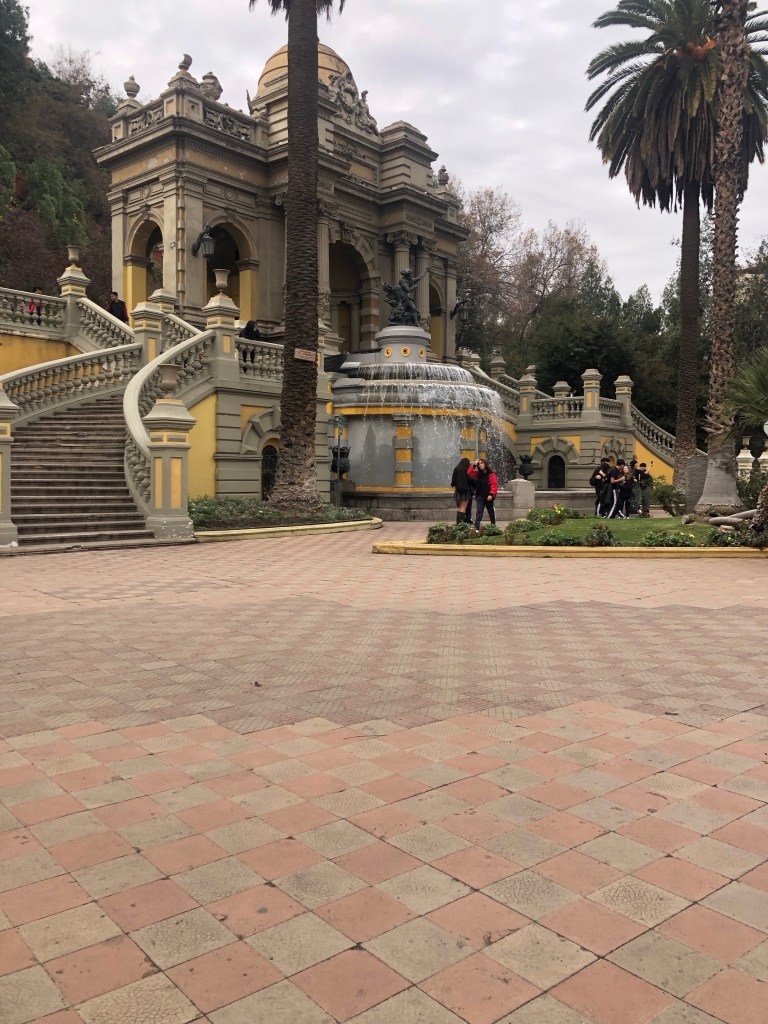
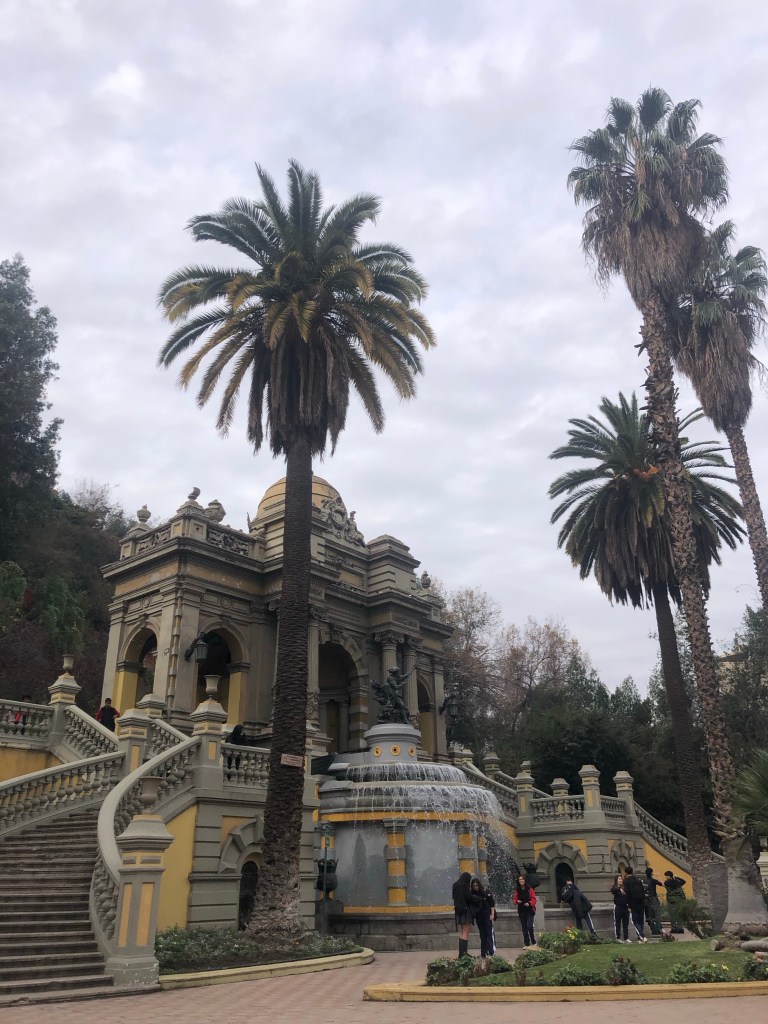
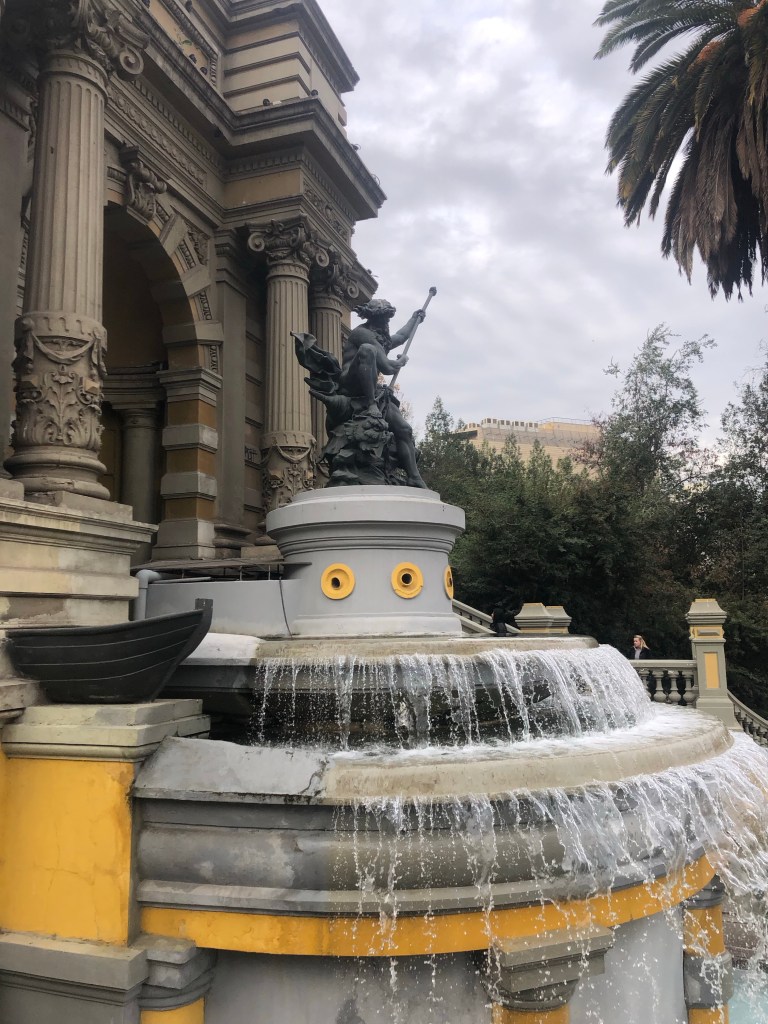
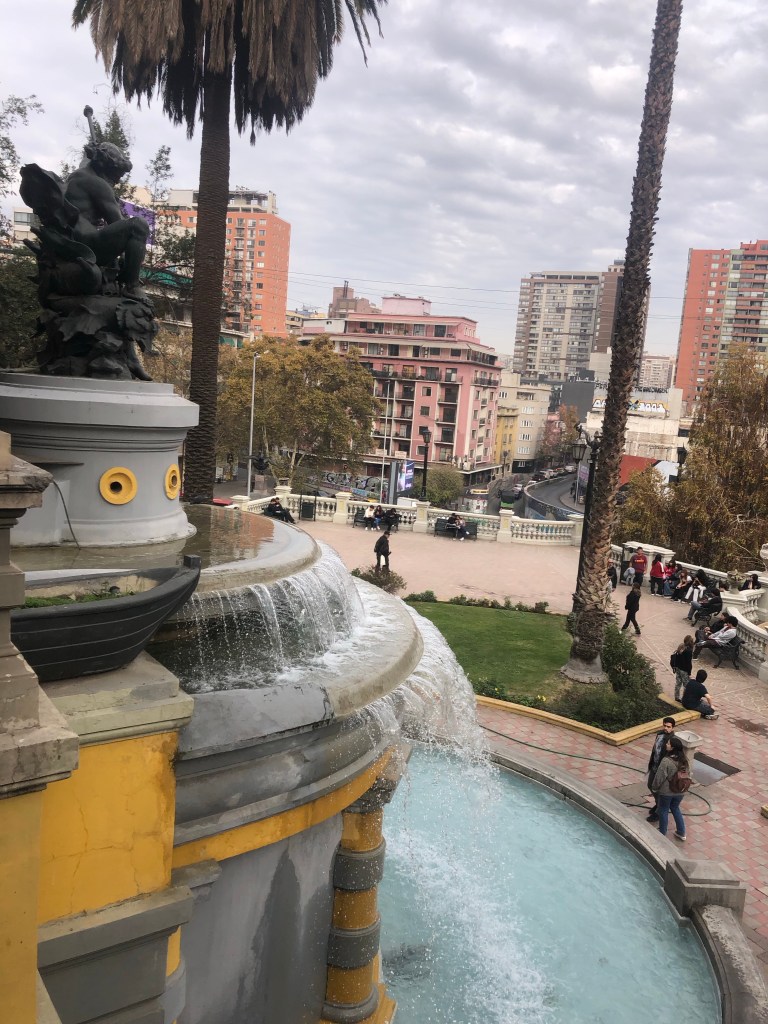
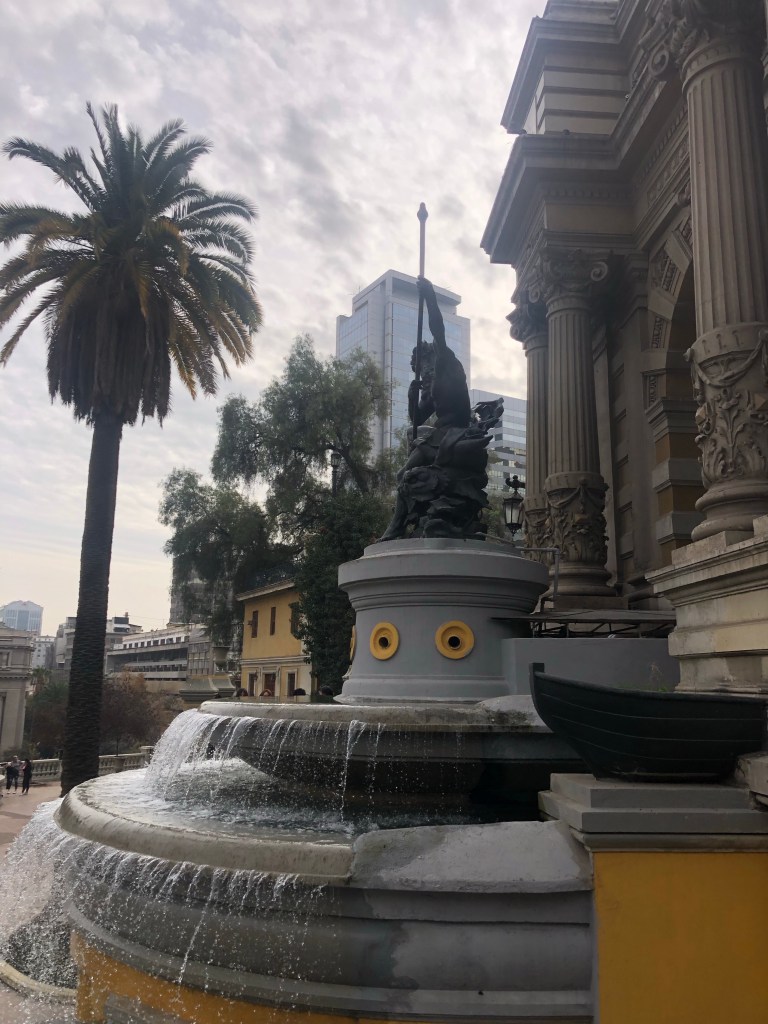
She was not only my first Spanish instructor at UC Santa Barbara (I enrolled in two of her Intermediate Spanish classes during my freshman year in college); she also introduced me to the literary works of Jorge Luis Borges, Gabriela Mistral, and Pablo Neruda. In a word, Dr Ascarrunz de Gilman changed my intellectual life forever; because of her, I decided to major in Spanish literature in order to read more of these great Latin American authors! Also, I still remember how one day she showed the class a picture of a fountain in Santiago de Chile featuring Neptune, the Roman god of freshwater and the sea. (For a history of this fountain in Spanish, see here.) Now, many years later, I finally had the opportunity to visit this landlocked Neptune. Gracias Graciela …