Below is another extended excerpt (six paragraphs in all) from my latest work-in-progress “Coase’s pastoral parable” (footnotes omitted):
Among other things, Coase’s landmark social cost paper contains a careful and painstaking analysis of four English cases involving nuisance law: Sturges v. Bridgman, Cooke v. Forbes, Bryant v. Lefever, and Bass v. Gregory. The plaintiffs in these four nuisance cases sued their neighbors for damages and injunctive relief, but only two of the plaintiffs prevailed in court, while the other two lost. Why did the courts allow some harms to continue and enjoin others?
Before proceeding any further, however, I want to pose a much different question–a methodological query, to be more precise. In short, of all the millions of reported cases in the common law universe, why did Coase choose these four cases? As it happens, Coase may have decided to focus on these particular cases for several reasons:
1. Business narratives. First off, Coase’s social cost paper is primarily “concerned with those activities of business firms [that] have harmful effects on others,” so Coase needs cases involving business activities. As it happens, Coase’s “four actual cases” feature a wide variety of business firms, including a noisy confectioner, a carpet weaver, a gas works, and a pub or “public house.”
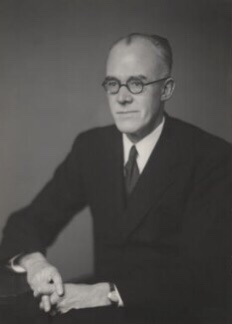
2. Homage to Arnold Plant. Secondly, Coase may have already been familiar with these four cases since his student days at the London School of Economics, where Coase attended a seminar on industrial law taught by Arnold Plant [pictured below] during the 1930-31 academic year.
3. Hard cases. Thirdly, these are all “hard cases” in the Dworkian or jurisprudential sense; that is, plausible legal arguments are available to both sides in each of these legal disputes.
But the most important feature of these particular cases–the main reason why Coase decided to devote extra time and space to them–is the reciprocal nature of the harms alleged in them: the plaintiff, the party alleging the injury, is just as responsible for the harm caused as the defendantis, the party being sued for causing the injury.
As a follow-up to my previous post, below is an extended excerpt consisting of six paragraphs from my new paper “Coase’s pastoral parable” (footnotes omitted):
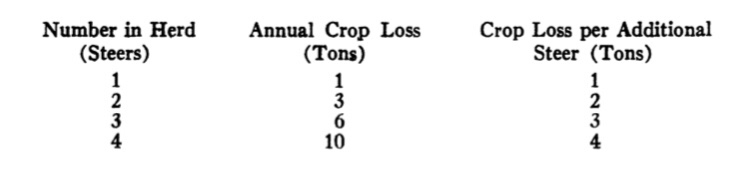
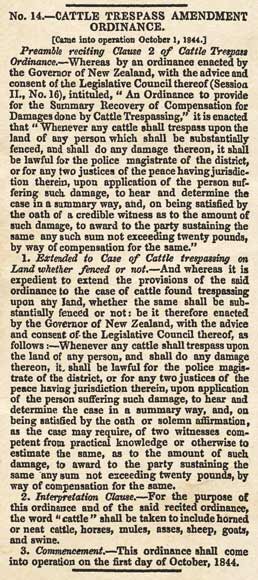
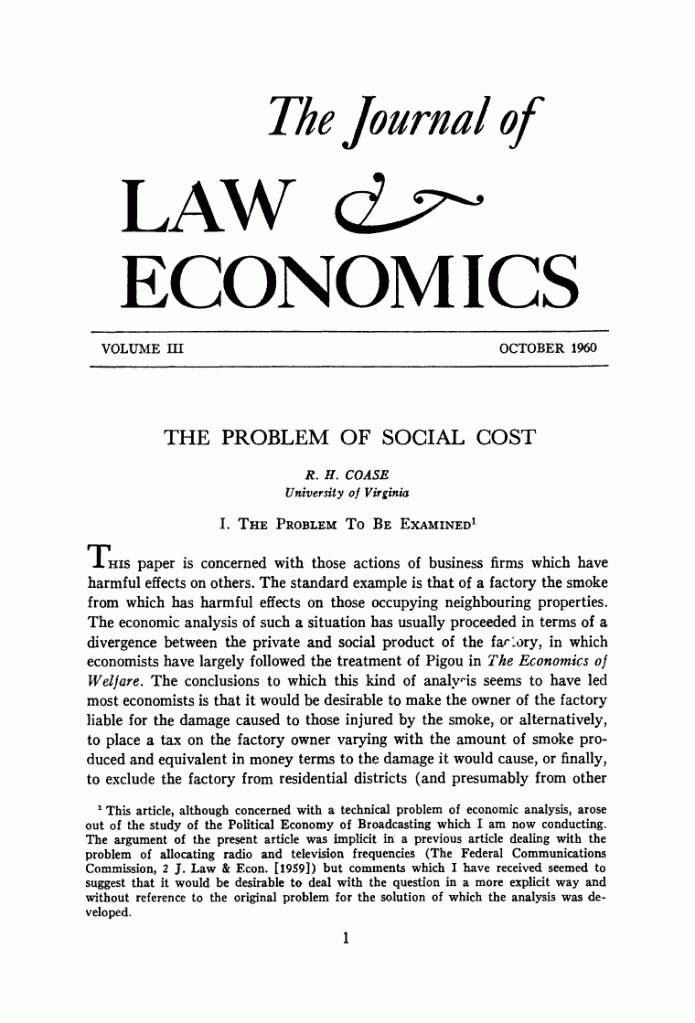
In academic circles, one of the most famous legal narratives of all time is Ronald Coase’s cattle trespass story, or what one scholar has dubbed “the Parable of the Farmer and the Rancher.” In summary, Coase presents his farmer-rancher parable in his 1960 paper “The Problem of Social Cost” as follows: “Let us suppose that a farmer and a cattle-rancher are operating on neighboring properties. Let us further suppose that, without any fencing between the properties, an increase in the size of the cattle-rancher’s herd increases the total damage to the farmer’s crops.” In other words, although the rancher’s business is socially useful, his cattle-ranching activities may harm his neighboring farmer because stray cattle may often invade the farmer’s land and destroy the farmer’s crops. Coase also notes that this harm increases with the size of the rancher’s herd, and he illustrates the link between the magnitude of the externality and the size of the rancher’s herd with a simple arithmetical table (see below):
Next, Coase imagines a hypothetical bargain between the rancher and the farmer, and he further conjectures that the outcome of this bargain will not only be efficient in an economic sense; it will also produce the same economic outcomes regardless of “the initial delimitation of [legal] rights,” i.e. regardless whether the rancher is legally liable or not for the damage caused by his stray cattle. These conjectures were subsequently christened “the Coase theorem” and have been contested (and defended) in the literature–a literature to voluminous to cite here. But regardless of the merits of these claims, Coase’s bucolic parable of the farmer and the rancher also invites us to develop a “counter-counter narrative.” Instead of imagining a hypothetical bargain between the farmer and the rancher, what if therancher and the farmer were the same person? Put another way, what if the ranch and the farm were owned by the same firm? Either way, wouldn’t this imaginary individual or the firm allocate theirresources–either the number of steer or the amount of land dedicated to crops, or both–so as to maximize the value of its production?
But above and beyond these conjectures, the most under-appreciated aspect of the farmer-rancher parable is the reciprocal nature of the cattle trespass problem. For Coase, cattle trespass is a reciprocal problem, both from ex ante perspective and ex post. Ex ante, both the rancher and the farmer could have taken preventative measures to reduce the risk of cattle trespass. Of course, one might argue that it should the rancher who should take the necessary precautions to prevent his cattle from damaging the farmer’s crops–after all, it’s his cattle, but the same logic applies to the farmer side of this pastoral equation. That is, one could also argue that it is the farmer who should take the necessary steps to protect his crops–after all, it’s his crops.
Likewise, ex post, one of the two parties will have to incur a cost regardless of which legal rule is eventually chosen. Here, for example, one could imagine two possible legal rules to deal with the problem of stray cattle: fence-in or fence-out. If we adopt a fence-out rule, the farmer will have to pay the cost of installing a fence or take some other costly measure to protect his crops against stray cattle (e.g. grow cattle-resistant crops). If, however, we choose a fence-in rule, it is the rancher who will have to pay for the fence. Thus whichever legal rule we apply to this pastoral problem–fence-in or fence-out–one of the parties will have to incur a cost.
To sum up: In Coase’s cattle trespass story, the problem is not whether the rancher is responsible for any damage caused by his stray cattle. Instead, the problem is: Who should pay for the costs of installing the fence?
The most remarkable aspect of this story, however, is Coase’s picture of reciprocal harms. Most stories have a protagonist and an antagonist–a hero and a villain–or are populated with character types–cops and robbers, cowboys and Indians, saints and sinners, angels and demons, good guys and bad guys, etc. Coase’s alternate legal universe, by contrast, rejects such clear-cut black-and-white dichotomies. In “Coase-land” everyone is a little bit of both!
That is the title of my most recent work-in-progress, which I have just posted to SSRN. I was invited to present my work next month at Mercer Law School in Macon, Georgia. In the meantime here is the abstract of my paper:
“Some stories have heroes and villains. Others involve a quest or a monster to be defeated. The law is no exception. Broadly speaking, most legal stories are generally about identifying wrongdoers and vindicating the rights of victims, but what if harms are “reciprocal” or jointly-caused? In other words, what if victims are just as responsible as wrongdoers for their plight? It was Ronald Coase who first proposed such a novel counter-narrative to the standard victim-wrongdoer story in law. Researching and writing in the late 1950s and early 1960s, Professor Coase–an obscure, middle-aged English economist at the time–plucked a number of leading cases from the English Law Reports and other sources. Coase then used these old cases to create a compelling but controversial legal counter-narrative in ‘The Problem of Social Cost’: compelling because Coase’s parable forever changed the way many economists, lawyers, and judges see the law; controversial because it was Coase who first conceived of harms as a “reciprocal” problem. Simply put, whenever one party accuses another party of harming them, it is almost always the case that both parties are responsible for the harm–that is the essence of Coase’s novel and unorthodox parable.”
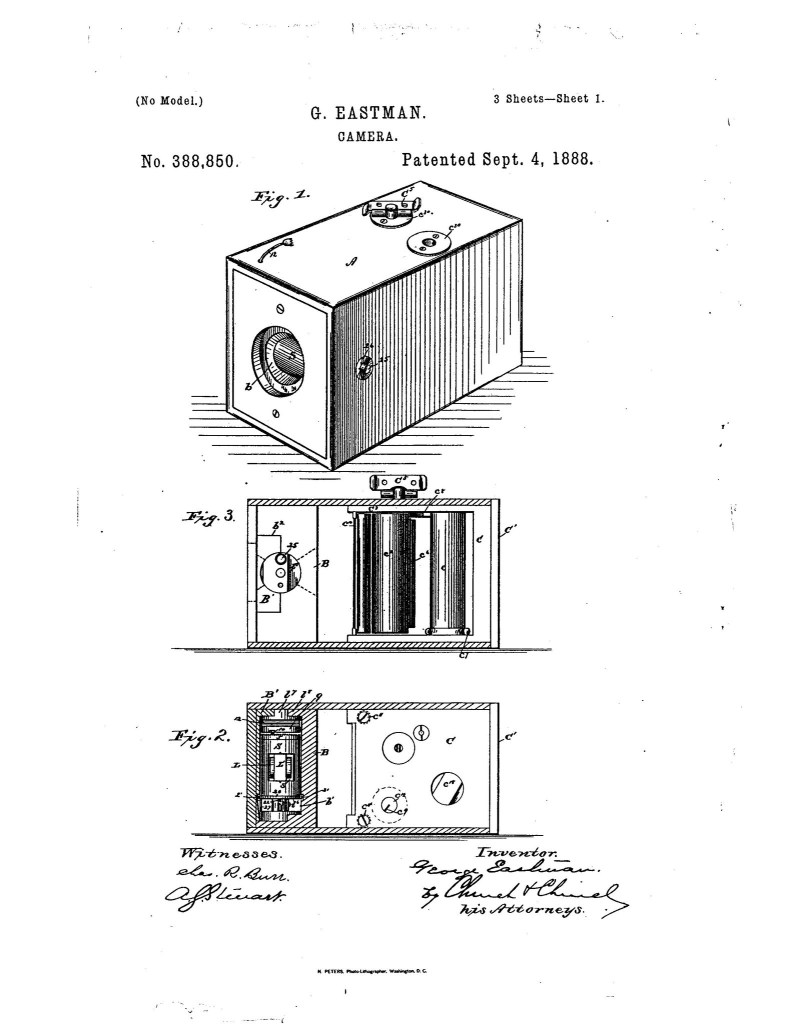
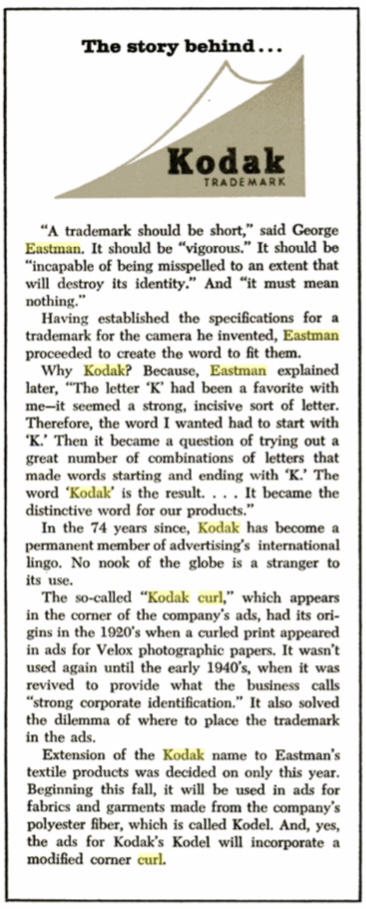
On this day (September 4) in 1888, North American entrepreneur George Eastman obtained a patent on his new camera (Patent No. 388,850), and the word “Kodak” was registered as a trademark (Reg. No. 15,825). Check out the evolution of the Kodak logo here. (P.S.: The oldest U.S. registered trademark still in use is this one (Reg. No. 11,210), which depicts the Biblical figure Samson wrestling a lion. That trademark was registered in 1884 by the J.P. Tolman Company.)
Via Universe Today, check out this scathing but excellent critique of NASA’s costly and obsolete Space Launch System (SLS), the centerpiece of today’s scheduled Artemis I mission (emphasis added by me): “The SLS system has provided plenty of jobs in some critical districts for certain influential members of Congress, and if the project happens to run a bit over budget to support those jobs, so be it. But to anyone who doesn’t directly benefit from the largesse sloshing around these rocketry contracts, it simply looks like the government is spending billions of dollars on a rocket that is already obsolete before it ever even leaves the ground. That is because the SLS has a huge weakness that hikes its single launch cost up into the billions – it is expendable. After launch, the main stage is lost to the ocean, never to be recovered. That is a stark contrast to another well-known launch system that happens to be run by a much more agile firm without a cost-plus contract. Starship has a potential payload capacity almost 30% larger than SLS’s – and it’s reusable, potentially bringing the cost per kilogram launched down to $10.”
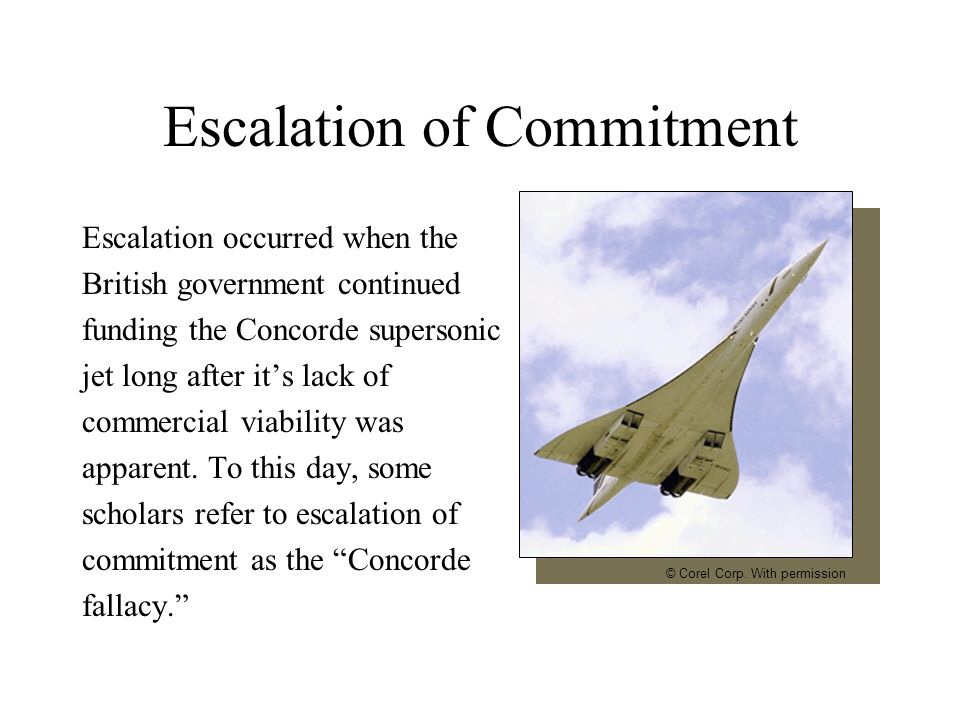
Evolutionary biologist Richard Dawkins once described the sunk cost fallacy as the “Concorde fallacy” (see below). In plain English, this fallacy can be summed up as follows: “Don’t cling to a mistake just because you have already spent a lot of time and money making it.” By way of example, check out this report by Michael Sheetz about NASA’s costly Artemis lunar mission. Among other things, NASA’s Inspector General Paul Martin is quoted as saying: “We found that the first four Artemis missions will each cost $4.1 billion per launch, a price tag that strikes us as unsustainable.” Perhaps we should now call it the Artemis fallacy.
The great Vin Scully died last month at the age of 94. I first fell in love with the voice of this legendary baseball commentator when I was growing up in Los Angeles. While my parents were in church, I would sneak away with my transitor radio to listen to his broadcast of Sunday afternoon Dodger baseball games. Although the video below is from before my time, it is considered Vin’s finest hour:
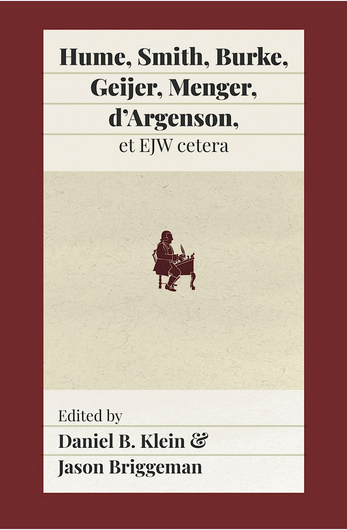
And further shout outs to Dan Klein and Jason Briggeman, the editors of a new collection of fourteen essays on various aspects of the classical liberal tradition, including essays by or about David Hume, Adam Smith, and Edmund Burke, among many others. (The entire collection of essays, which includes my 2021 work “Adam Smith in Love“, are available for free here, via the CL Press, and for purchase here, via Amazon.)
With respect to the arts (music, literature, film, etc.), my general rule of thumb is that the more famous an artist is, the more overrated he or she probably is, but that said, I have been proven totally wrong in the case of Taylor Swift. See, for example, her live performance of “All Too Well” on Saturday Night Live (posted below), which just blew me away. (I somehow missed her appearance on SNL last year; otherwise, I would have blogged about it sooner!) Yes, it’s the 10-minute version, but it is so good, you don’t want it to end.










 prior probability