
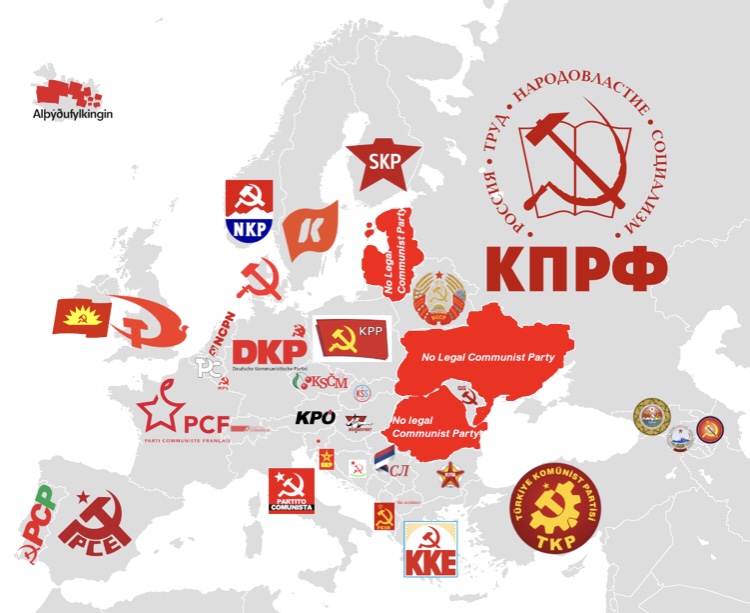
I stumbled upon this intriguing infographic a few weeks ago and have been meaning to share it, so here it is! More details here, via @WallySierk.

I stumbled upon this intriguing infographic a few weeks ago and have been meaning to share it, so here it is! More details here, via @WallySierk.
Which one is your favorite?
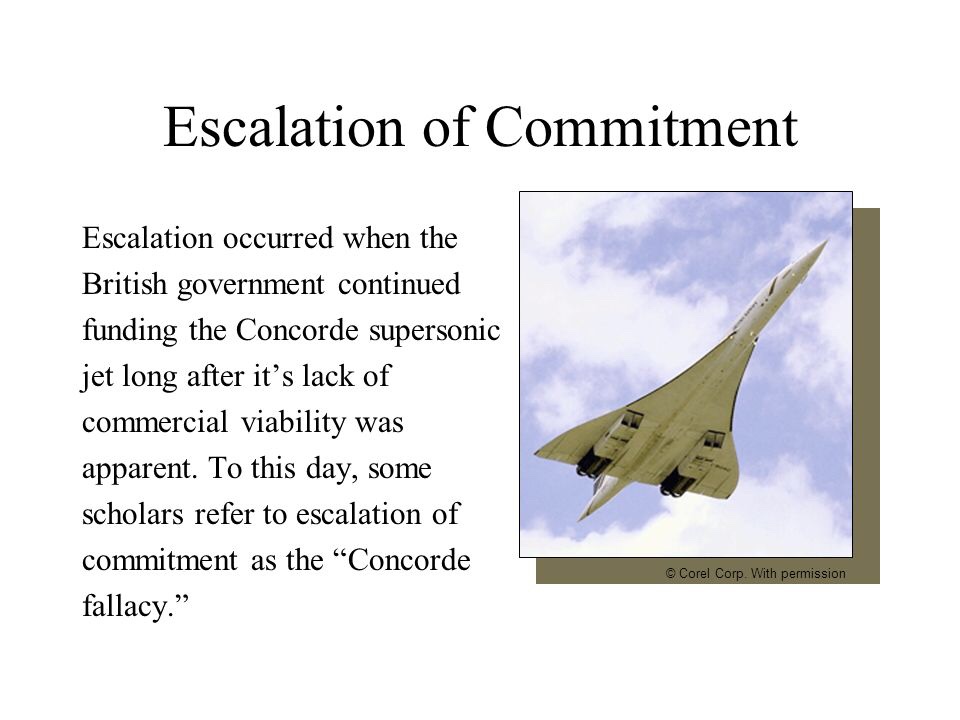
Evolutionary biologist Richard Dawkins once described the sunk cost fallacy as the “Concorde fallacy” (see below). In plain English, this fallacy can be summed up as follows: “Don’t cling to a mistake just because you have already spent a lot of time and money making it.” By way of example, check out this report by Michael Sheetz about NASA’s costly Artemis lunar mission. Among other things, NASA’s Inspector General Paul Martin is quoted as saying: “We found that the first four Artemis missions will each cost $4.1 billion per launch, a price tag that strikes us as unsustainable.” Perhaps we should now call it the Artemis fallacy.
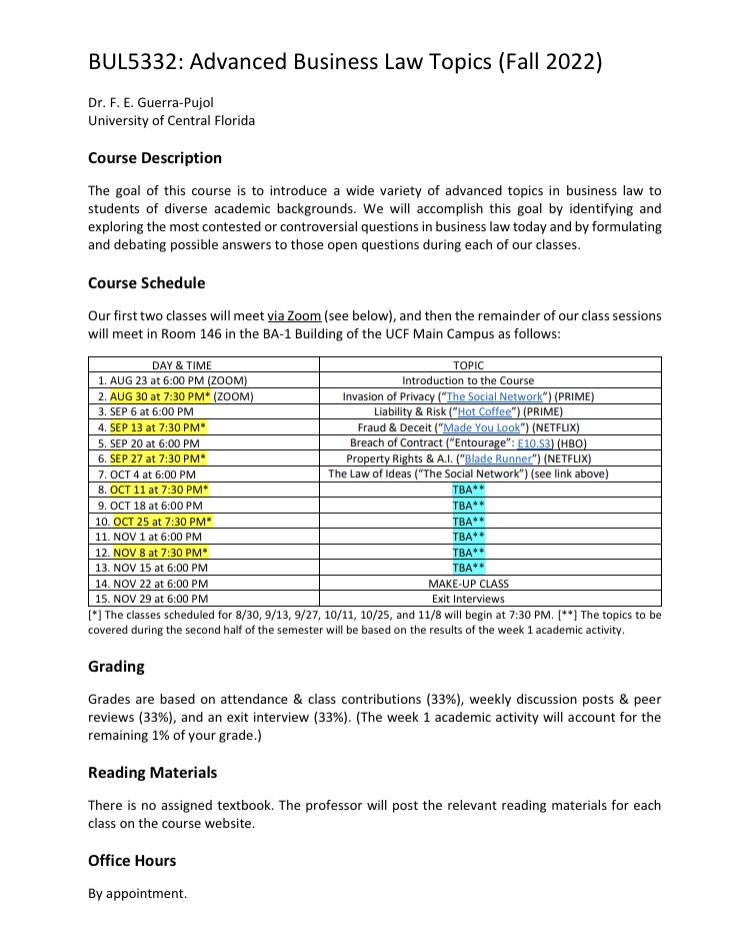
Below is my one-page syllabus for a graduate-level course on “advanced business law topics” that I will be teaching this semester. During the first half of the semester, I am assigning two movies, “The Social Network” and “Blade Runner“; two documentaries, “Hot Coffee” and “Made You Look” (shout out to my T.A. Antonella for recommending “Made You Look” to me); and an episode (see here) from season 3 of the series “Entourage”. My students will select the topics to be covered during the second half of the semester.
The Department of Justice’s memorandum explaining the reasons for the redactions of the Trump search warrant affidavit is itself substantially redacted. File under: Transparency and accountability for thee but not me!

Today (25 August), my wife and I will commemorate the liberation of Paris from the Germans (today is “Paris Liberation Day“!), and I will celebrate another birthday, and we will mark both occasions with a bottle of our favorite champagne, Veuve Clicquot. (I will resume my series of blog posts on “the seven basic plots and legal narratives” in the next day or two.)

The Journal of Law and Public Policy of St Thomas University in Minneapolis has just published its special symposium issue on “Alternate Realities: Conspiracy Theory and the Constitutional and Democratic Order” (see here), including my paper on “The Leibniz Conspiracy.” Enjoy!

Today (23 August) is Election Day in Florida. Although it is just a “primary”, below is a small sample of some of the “political junk mail” my wife, a registered Democrat, received this month. (Life hack: I am a registered Independent, so none of these glossy materials were addressed to me!)

Previously, we identified the “seven basic plots” (see here) and presented the quest narrative in Samuel Warren and Louis Brandeis’s famous article on “The Right to Privacy” (see here). But another classic law review article (the first page of which is pictured below), “The Path of the Law” by the great North American jurist Oliver Wendell Holmes, paints a very different picture of the law. (FYI: Holmes’s influential essay was based on a lecture he gave at Boston University Law School on January 8, 1897; Holmes’s guest lecture was then published as the lead article in the March 25, 1897 edition of the Harvard Law Review.)
For Holmes (unlike Warren & Brandeis), the law is not about autonomy or some other teleological goal; it is first and foremost about making accurate predictions about the outcomes of court cases: “The prophecies of what the courts will do in fact, and nothing more pretentious, are what I mean by the law.” In support of his prediction theory of law, Holmes conjures up one of the most enduring and indelible anti-heroes in the annals of legal scholarship: the bad man. In brief, Holmes’s bad man is an amoral utility-maximizer “who cares nothing for an ethical rule which is believed and practised by his neighbors,” who only wants to avoid legal liability and “keep out of jail if he can.” After introducing this memorable anti-hero, Holmes makes a direct appeal to his audience:
“If you want to know the law and nothing else, you must look at it as a bad man, who cares only for the material consequences which such knowledge enables him to predict, not as a good one, who finds his reasons for conduct, whether inside the law or outside of it, in the vaguer sanctions of conscience.”
But the bad man drops out of Holmes’s essay early on. (Although this fictional figure makes multiple appearances on the first few pages of Holmes’s 1897 essay, he soon disappears entirely from view.) The bad man is instead replaced by the “man of statistics and the master of economics,” both of whom take center stage in Holmes’s story:
“When you get the dragon out of his cave on to the plain and in the daylight, you can count his teeth and claws, and see just what is his strength. But to get him out is only the first step. The next is either to kill him, or to tame him and make him a useful animal. For the rational study of the law the black-letter man may be the man of the present, but the man of the future is the man of statistics and the master of economics. It is revolting to have no better reason for a rule of law than that so it was laid down in the time of Henry IV. It is still more revolting if the grounds upon which it was laid down have vanished long since, and the rule simply persists from blind imitation of the past.”
Given this dragon reference, it is tempting to describe Holmes’s classic essay as a story about “overcoming the monster.” But who is the monster in Holmes’s story? For his part, legal scholar Thomas Grey has described “The Path of the Law” as a quest narrative. (See Professsor Grey’s 1997 essay “Plotting the path of the law.”) On this reading of Holmes’s essay, Holmes himself is the hero of his own story, and his quest is a legal-theoretical one: finding the true meaning of law:
To an imagination of any scope the most far-reaching form of power is not money, it is the command of ideas…. We cannot all be Descartes or Kant, but we all want, happiness. And happiness, I am sure from having known many successful men, cannot be won simply by being counsel for great corporations and having an income of fifty thousand dollars. An intellect great enough to win the prize needs other food beside success. The remoter and more general aspects of the law are those which give it universal interest. It is through them that you not only become a great master in your calling, but connect your subject with the universe and catch an echo of the infinite, a glimpse of its unfathomable process, a hint of the universal law.
In some ways, however, Holmes’s story is also about “rebirth.” Christopher Booker, for example, describes the basic sequence of a rebirth story in Chapter 11 of his magnum opus Seven Basic Plots. In summary, a rebirth narrative often unfolds as follows:
As it happens, all these elements are present in “The Path of the Law”. The evil power in Holmes’s story, for example, is money. To have a successful career and become wealthy, a lawyer must be able to make accurate predictions about the law. But a lawyer who falls under the spell of money, who uses the law solely to guide self-interested clients, is trading off happiness for wealth. What really matters for Holmes is not money but the “command of ideas.” He thus concludes his essay by appealing to the “remoter and more general aspects of the law” and invites his audience to “catch an echo of the infinite, a glimpse of its unfathomable process, a hint of the universal law.” In other words, Holmes’s narrative is thus really a story about rebirth. To be a good lawyer or law scholar, it is not enough to make accurate legal predictions. One must also nourish one’s intellect.
Thus far, we have revisited two of the most influential law review articles of all time, “The Path of the Law” (this post) and “The Right to Privacy” (my previous post). The most cited article, however, is “The Problem of Social Cost” by Ronald Coase. If the hero of “The Path of the Law” is Holmes himself (and men of intellect more generally), and if the hero of “The Right to Privacy” is the common law itself, who is the hero of “The Problem of Social Cost”? (We will revisit Coase’s classic article later this week.)

I will resume my analysis of the “seven basic plots” in legal narratives in the next day or two; in the meantime, I am reblogging my favorite song from the Hamilton musical. (I posted “Ten Duel Commandments” two years and one day ago, and it’s still my favorite Hamilton song.)
Mine is “Ten Duel Commandments” hands down! In addition to the musical beat and the lyrics, I like how Lin-Manuel Miranda breaks down the intricate formal rules of this deadly and fascinating ritual. Here is the Wikipedia page for Ten Duel Commandments. Bonus link: Here is a previous blog post of mine on “Dueling for Dummies.”







Welcome to the online home of the IASS
Hopefully It’s Interesting.
In Conversation with Legal and Moral Philosophers
Relitigating Our Favorite Disputes
PhD, Jagiellonian University
Inquiry and opinion
Life is all about being curious, asking questions, and discovering your passion. And it can be fun!
Books, papers, and other jurisprudential things
Ramblings of a retiree in France
BY GRACE THROUGH FAITH
Natalia's space
hoping we know we're living the dream
Lover of math. Bad at drawing.
We hike, bike, and discover Central Florida and beyond
Making it big in business after age 40
Reasoning about reasoning, mathematically.
I don't mean to sound critical, but I am; so that's how it comes across
remember the good old days...
"Let me live, love and say it well in good sentences." - Sylvia Plath
a personal view of the theory of computation
Submitted For Your Perusal is a weblog wherein Matt Thomas shares and writes about things he thinks are interesting.
Logic at Columbia University
Just like the Thesis Whisperer - but with more money
the sky is no longer the limit
Technology, Culture, and Ethics
Just like the horse whisperer - but with more pages
Poetry, Other Words, and Cats


 prior probability