
Inspired by Sheree’s “Thursday Doors” feature on her fun blog View from the Back, below are some of my favorite doors that I saw while walking through the streets of La Candelaria, the colonial zone of Colombia’s capital city.





















Inspired by Sheree’s “Thursday Doors” feature on her fun blog View from the Back, below are some of my favorite doors that I saw while walking through the streets of La Candelaria, the colonial zone of Colombia’s capital city.
Tyler Cowen delivered the keynote address at this year’s meeting of the International Adam Smith Society (IASS), which is being held in Bogota, Colombia. The first question from the audience (at minute 50 of the video) is from yours truly.
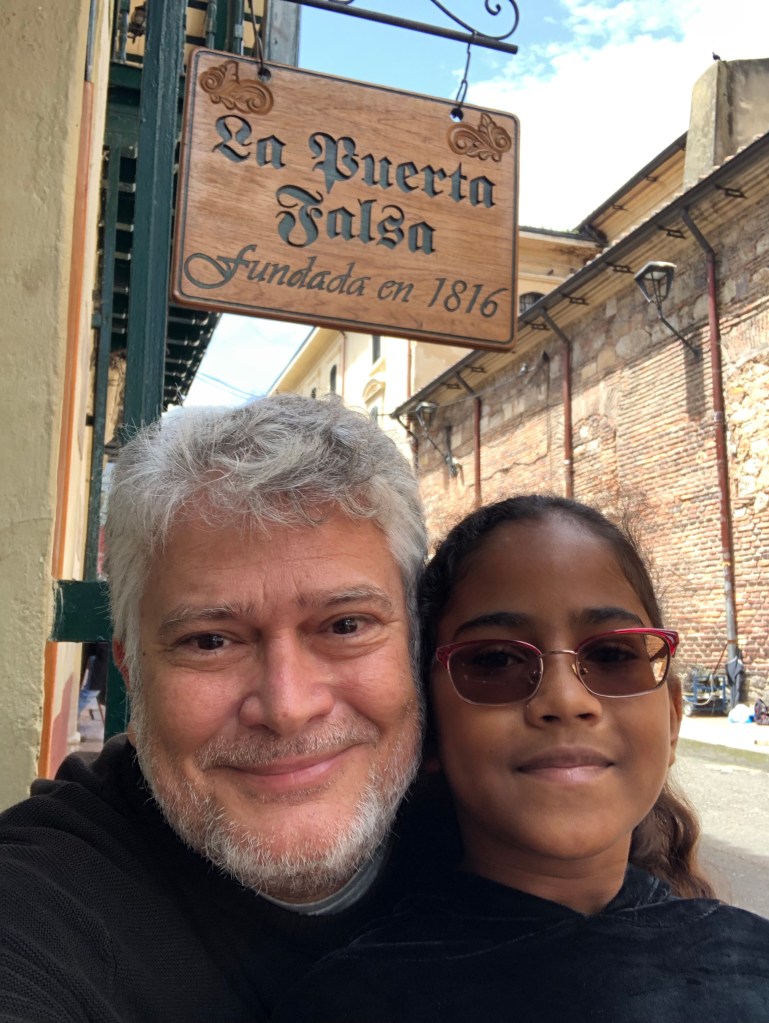
I will be blogging sporadically, if at all, this week as I am attending the 2022 International Adam Smith Society Conference, which is taking place at the Universidad de los Andes in Bogotá, Colombia. Also, here is a link to this year’s program.

“Trying to rank institutions of higher education is a little like trying to rank religions or philosophies. The entire enterprise is flawed, not only in detail but also in conception.” Colin S. Diver.

In honor of James Edmund Caan, below is a montage of scenes from The Godfather featuring this great actor. My personal favorite is number 2, a scene that Mr Caan actually improvised (see here)!
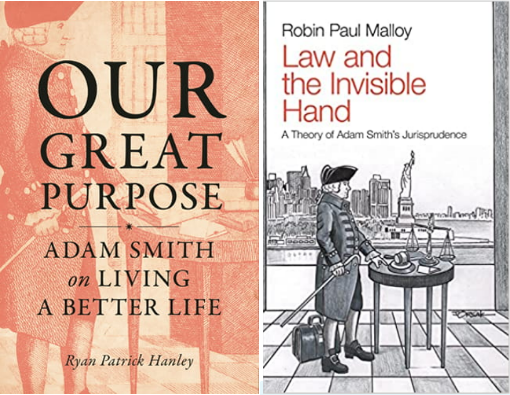
Since my rediscovery of Adam Smith’s Theory of Moral Sentiments in August of 2020 (shout out to Sarah Skwire for inviting me to join her virtual Smith reading group back then!), I have devoted a number of in-depth blog posts to a pair of new books on the ideas of Smith, one by Ryan Patrick Hanley (Our Great Purpose: Adam Smith on Living a Better Life); the other by Robin Paul Malloy (Law and the Invisible Hand: A Theory of Adam Smith’s Jurisprudence). I have since combined these posts into a single, short review of both Hanley and Malloy’s works and uploaded it to SSRN (see here). My double review is titled “Do Grasshoppers Dream of Impartial Spectators?” Enjoy!
I will conclude my three-part series in praise of the Dobbs leak by making a modest proposal. In brief, my proposal is this: Supreme Court judges should, as a matter of course, always release their draft opinions in any case in which one or more members of the Court are considering whether to overrule a previous precedent. Think about it for a moment. Stare decisis, or the common law doctrine of binding precedent, is central to the “rule of law”, since judges are thereby required to apply and uphold their own rules in future cases, absent some special circumstances (see image below). Stare decisis is also what makes the third branch so special. Members of Congress and the president, for example, are not bound by their previous decisions, but judges generally are. Accordingly, judges who are willing to overrule their courts’ previous precedents should be required to give the public some notice or warning of their destabilizing intentions, right?

Here, I will reply to Mark Movsesian’s essay “Why the Dobbs Leak Is Dangerous“, an op-ed that was published in First Things on May 5, 2022. (I am late to this party because on that day my wife and I were in Plaza Garibaldi in Mexico City celebrating our 10th wedding anniversary.) In summary, for Movsesian, a law professor at St John’s University and a former SCOTUS law clerk, the leak was bad for the following two reasons, one Kantian, the other consequentialist: (1) because the motives of the leaker were bad, and (2) because, regardless of the leaker’s motives, the leak will produce bad consequences.
The first argument is the lamest and weakest of the two. Why? Because Professor Movsesian himself has no idea what the true motives of the leaker were. According to Movsesian, the leaker was either a “conservative” agent trying to keep Alito’s anti-abortion majority intact or a “progressive” proxy trying to intimidate one of the anti-abortion jurists into changing their vote. Either way, however, my response is, So what? The fact that we can assign such diametrically opposed motives to the SCOTUS leaker shows just how irrelevant the leak is in the greater scheme of things.
This observation takes us to the second of Professor Movsesian’s two arguments. In brief, Movsesian claims that the leak does matter, that it will somehow “destroy” SCOTUS as an institution. Specifically, Movsesian’s argument is that, by leaking an entire draft opinion, the leaker will cause the justices to “feel less secure about the confidentiality of their deliberations and think twice about what they put in their drafts.” Really? Is that all you got? Putting aside the fact that maybe the Supreme Court should be taken down a notch or two (Exhibit A: Bush v. Gore), that is exactly why the leak was probably, on balance, a good thing. Simply put, in cases involving hotly-contested political issues, we want our judges to be more careful and more cognizant of their decisions. That is, maybe we want our judges to “think twice” about whether they should be deciding political cases at all. (Exhibit B: the Dred Scott case, which led to a civil war.)
So, instead of impugning the motives of the SCOTUS leaker or accepting the need for secrecy at face value, we should be thanking the leaker for exposing the machinations of SCOTUS judges to the wider public. (I will conclude this series with “a modest proposal” in my next post.)







Welcome to the online home of the IASS
Hopefully It’s Interesting.
In Conversation with Legal and Moral Philosophers
Relitigating Our Favorite Disputes
PhD, Jagiellonian University
Inquiry and opinion
Life is all about being curious, asking questions, and discovering your passion. And it can be fun!
Books, papers, and other jurisprudential things
Ramblings of a retiree in France
BY GRACE THROUGH FAITH
Natalia's space
hoping we know we're living the dream
Lover of math. Bad at drawing.
We hike, bike, and discover Central Florida and beyond
Making it big in business after age 40
Reasoning about reasoning, mathematically.
I don't mean to sound critical, but I am; so that's how it comes across
remember the good old days...
"Let me live, love and say it well in good sentences." - Sylvia Plath
a personal view of the theory of computation
Submitted For Your Perusal is a weblog wherein Matt Thomas shares and writes about things he thinks are interesting.
Logic at Columbia University
Just like the Thesis Whisperer - but with more money
the sky is no longer the limit
Technology, Culture, and Ethics
Just like the horse whisperer - but with more pages
Poetry, Other Words, and Cats















 prior probability