
I returned from Colombia last week and am now getting ready to visit Jamaica. In the meantime, here are a few additional photos from Bogota, one of my top-ten favorite cities in the world:







I returned from Colombia last week and am now getting ready to visit Jamaica. In the meantime, here are a few additional photos from Bogota, one of my top-ten favorite cities in the world:
Via the popular Marginal Revolution blog, my colleague and friend Alex Tabarrok recently brought to my attention this prize-winning essay, which is provocatively titled “Drone Airspace: A New Global Asset Class“. The essay was written by Brent Skorup (pictured below), a senior research fellow at the Mercatus Center and a visiting faculty fellow at the Governance and Technology Center of the University of Nebraska, who proposes the creation of “airspace markets” for commercial drone services. In the words of Mr Skorup, “With airspace markets, winning bidders win the exclusive license to manage, combine, and sublease air corridors. Importantly, operators have the freedom to iterate and to use the drone traffic management systems and technologies of their choice (subject to generally applicable FAA safety rules like separation minimums and emergency procedures).” Yes, what an excellent and innovative idea! My only criticism is that this proposal does not go far enough. Specifically, why not extend airspace markets to commercial satellites in outer space? See here, for example.

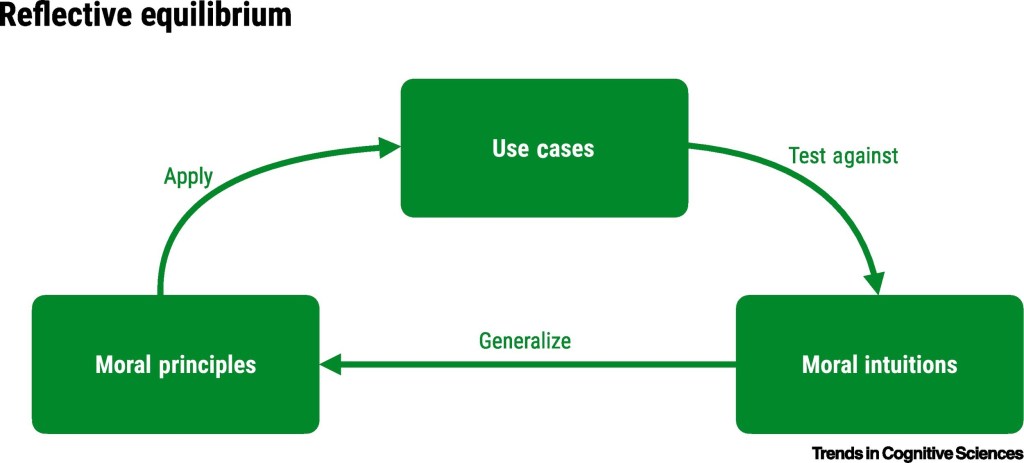
Via Brian Leiter, I recently discovered this excellent essay by Robert Cummins, a former philosophy professor who now writes detective novels. To the point, Dr Cummins’ essay presents a slam-dunk refutation of “reflective equilibrium,” a feeble, if not totally bogus, method of reasoning that is nevertheless popular among professional philosophers and some academic lawyers. In brief, there are two reasons why “reflective equilibrium” is bullshit. One is moral pluralism (my term). When people have different moral intuitions, no amount of individual or collective “reflection” will change that. The other reason has to do with the non-falsifiable nature (in a Popperian sense) of our moral intuitions. As a result, there is no way of “calibrating” or testing the intellectual outputs derived from this method of reasoning.
My colleague and friend Jimena Hurtado interviewed Tyler Cowen on 12 July in Bogota, Colombia. Although this informative interview is less than 10 minutes long, among other things Professor Cowen explains why he read The Wealth of Nations at age 14!
As I have gathered additional information about the many individuals in Adam Smith’s social circle during his 1766 sojourn in Paris, I have made significant revisions to Part 1 of my “Smith in the City” paper. I will most likely be making further corrections and revisions and will then post a “final” draft of the paper by the end of next week; in the meantime, however, here is a link to the most recent version of my work.

I first heard about the picture book “Bayesian Probability for Babies” last year, but the YouTube video below takes us on a page-by-page tour of the book. I am tempted to write a review!
I hate to be “that guy” but according to this 1985 Associated Press report, Jesus may have been born in late July!

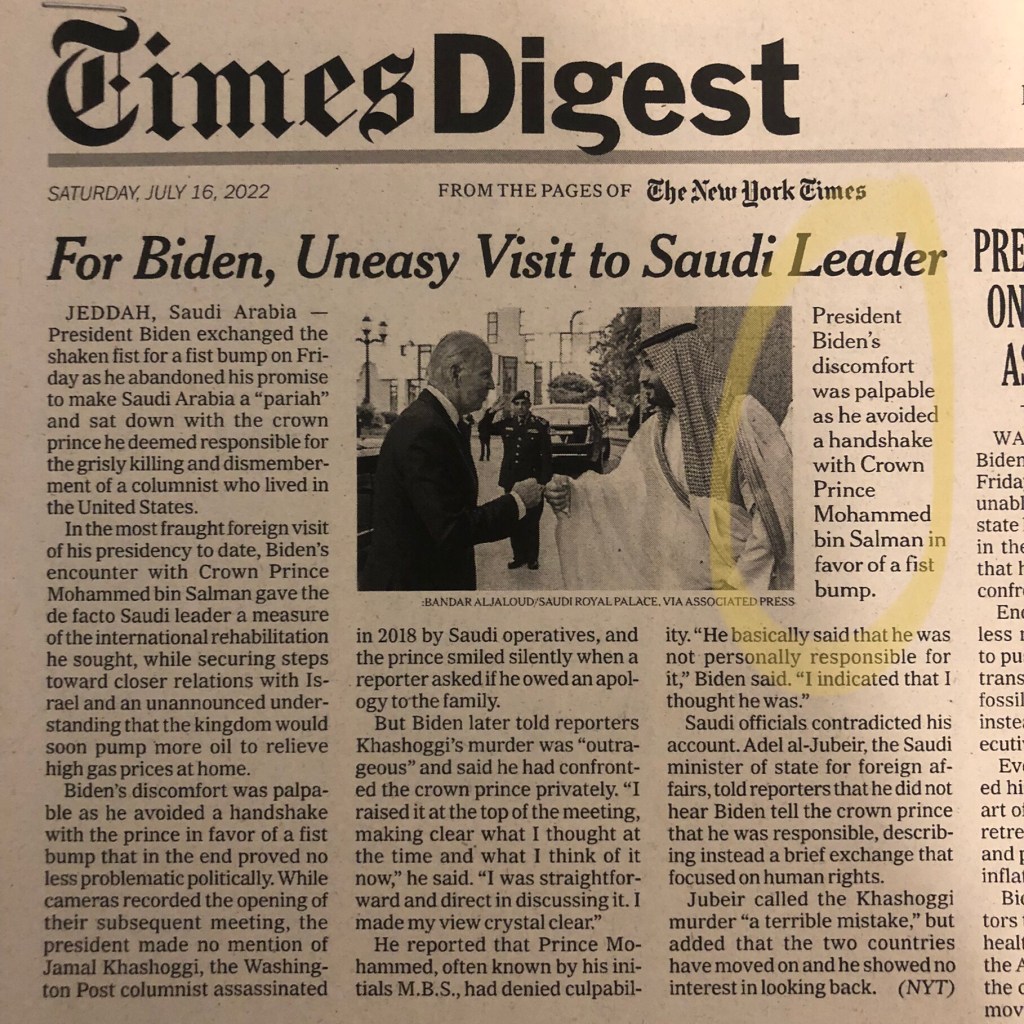
Further proof the New York Times outshines even North Korean propaganda standards.
Although the “Republic of Gran Colombia” in South America was short-lived (1819 to 1831), political unions in other parts of the world have survived for much longer. On this day (July 22) in 1706, for example, the terms of a treaty creating a political union between the kingdoms of England and Scotland were finalized. Via Wikipedia: “The Treaty of Union is the name usually now given to the treaty [that] led to the creation of the new state of Great Britain, stating that the Kingdom of England (which already included Wales) and the Kingdom of Scotland were to be ‘United into One Kingdom by the Name of Great Britain’. At the time it was more often referred to as the Articles of Union. The details of the Treaty were agreed on 22 July 1706, and separate Acts of Union were then passed by the parliaments of England and Scotland to put the agreed Articles into effect. The political union took effect on 1 May 1707.”





Welcome to the online home of the IASS
Hopefully It’s Interesting.
In Conversation with Legal and Moral Philosophers
PhD, Jagiellonian University
Books, papers, and other jurisprudential things
Ramblings of a retiree in France
BY GRACE THROUGH FAITH
Natalia's space
hoping we know we're living the dream
Lover of math. Bad at drawing.
We hike, bike, and discover Central Florida and beyond
Making it big in business after age 40
Reasoning about reasoning, mathematically.
I don't mean to sound critical, but I am; so that's how it comes across
remember the good old days...
"Let me live, love and say it well in good sentences." - Sylvia Plath
a personal view of the theory of computation
Logic at Columbia University
Just like the Thesis Whisperer - but with more money
the sky is no longer the limit
Technology, Culture, and Ethics
Just like the horse whisperer - but with more pages
Poetry, Other Words, and Cats


