Via Wikipedia: “On the Wednesday before his death [Holy Wednesday], Jesus was in Bethany, in the house of Simon the Leper. As he sat at the supper table with his disciples, a woman named Mary anointed Jesus’ head and feet with a costly oil of spikenard.” More details here.
This week is Holy Week (Semana Santa), the most sacred time in the Catholic liturgical year, so my blogging will be lighter than usual until next Tuesday, April 19.
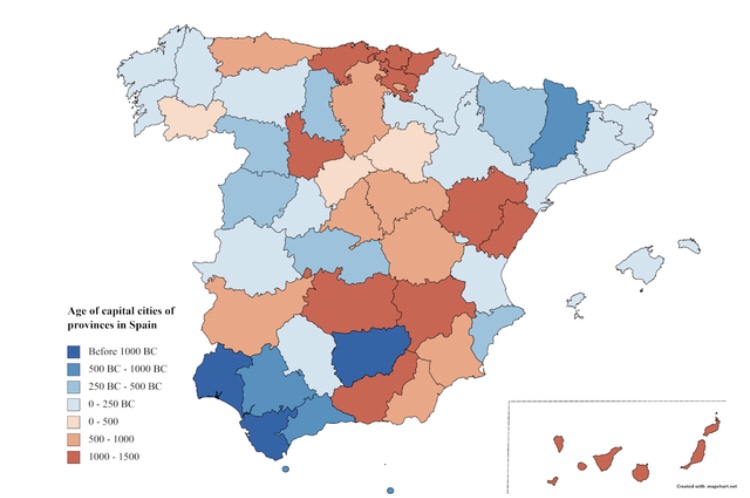
According to u/tywindevillena: The oldest provincial cities of Spain are Huelva, Cádiz, and Jaén: “Cádiz is frequently considered the oldest city in Europe. It was founded by the phoenicians, who named their settlement Gadir, somewhere in the 11th century BC.” Hat tip: u/fulanax.
On this day (April 9) in 1865, Confederate General Robert E. Lee formally surrendered to Union General Ulysses S. Grant after the remnants of Lee’s Army of Northern Virginia were decisively defeated at the Battle of Appomattox Court House by Union forces. (Above is a screenshot of the front page of the Albany Journal, dated 10 April 1865. More information about this fateful battle is available here and here.)
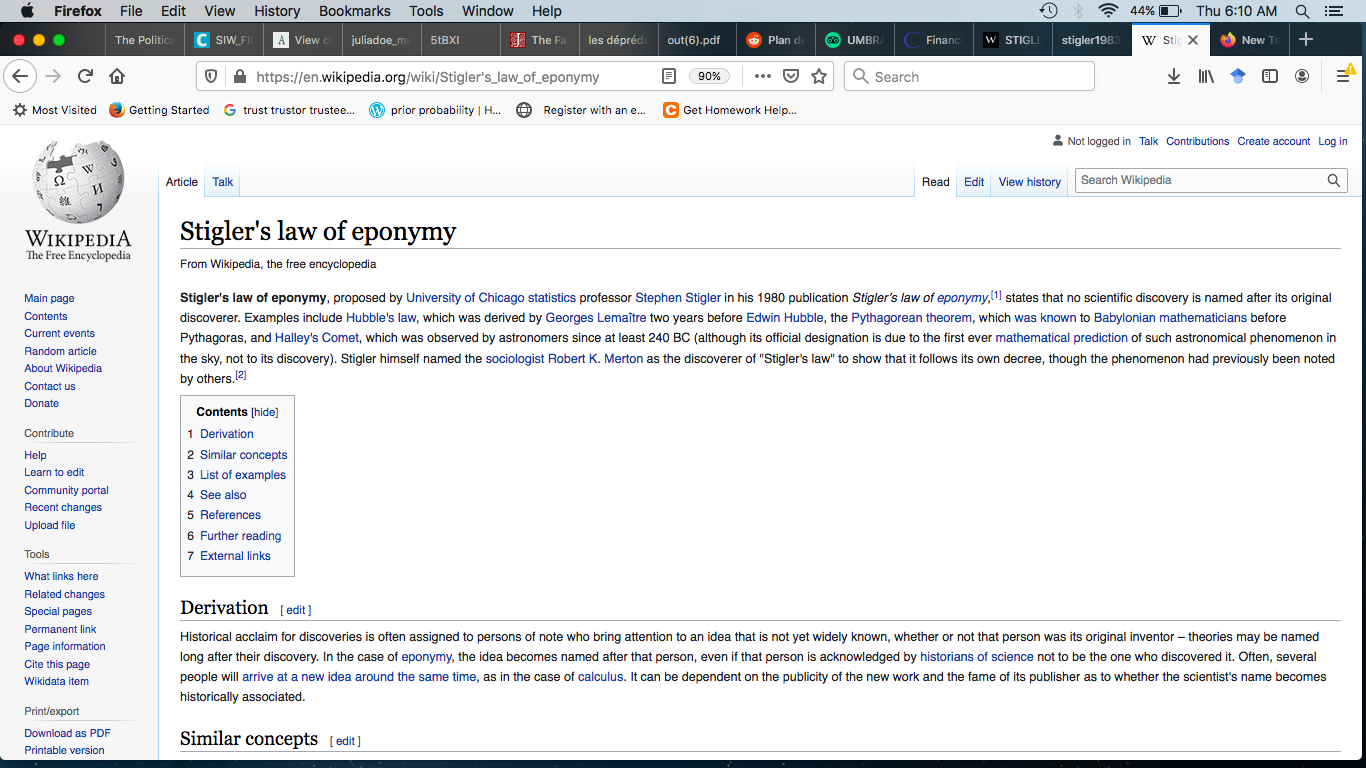
What is “Stigler’s Law of Eponymy“? You can either read about Stigler’s law for free on Wikipedia (see here) or pay a company called “Wiley” up to $42.00 to obtain a PDF copy of Stigler’s original 10-page paper — that’s $4.20 per page or $1.00 for every year since Stigler’s paper was first published in 1980. (What make’s Wiley’s extortion racket even more infuriating is that I don’t have free access to Stigler’s 42-year-old paper even though I am affiliated with a major research university.)
Don’t you love it how North American CEOs like to lecture us about privacy, gay rights, or “social justice” while at the same time they are doing business in China. (Apple, Disney, the NBA, and Nike immediately come to mind.) Now, check out this academic job posting for a two-year “Vulnerability and the Human ConditionInitiative Fellowship at Emory University.” Among other things, that job post tells us that vulnerability theory is about “decentering the individual and focusing attention on the law’s construction and maintenance of the social structures and relationships in which we all live our day-to-day lives.” (You cannot make this shit up!) How ironic, however, that an academic institution devoted to “vulnerability theory” and to “decentering the individual” itself replicates the existing feudal hierarchies of academia, or to quote an anonymous critic of the job post, notice how issues of social justice in academia are “never addressed self-referentially by high-income individuals with relative job security in legal academia, with respect to the relation of their own relative positions in society with those they employ in ‘lesser’ roles, e.g. VAPs, Fellows, Adjuncts, Lecturers, [legal writing] instructors, Clinical Instructors, Professors of Practice, and so on.” Touche’.
This week’s edition of “Wednesday Writing Tips” comes to us via The Paris Review, which published an intimate and in-depth interview of Ernest Hemingway in 1958–available here (in the PDF format) or here (online version). In the words of one author (Julia Mehalko for Retro Gazing): All writers need to read this Hemingway Paris Review interview. I concur!

















 prior probability