
I have posted a revised and corrected version of “Adam Smith in the City of Lights (Part 1 of 2)” on the Social Science Research Network (SSRN), though I will be making further revisions next week.
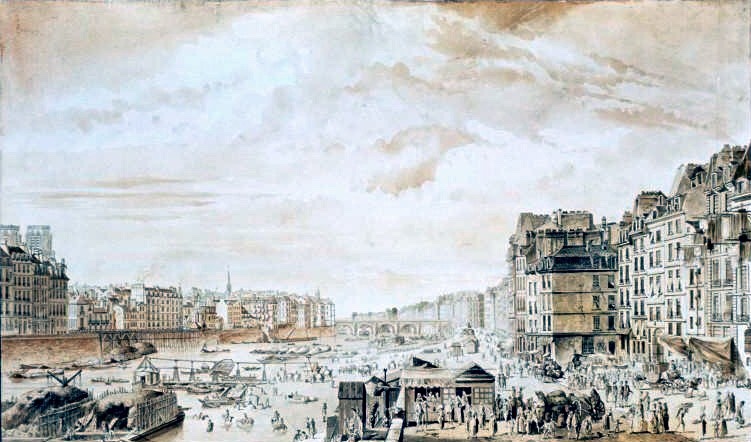
I have posted a revised and corrected version of “Adam Smith in the City of Lights (Part 1 of 2)” on the Social Science Research Network (SSRN), though I will be making further revisions next week.
Now that we have reviewed all the entries in which Adam Smith is mentioned in Horace Walpole’s 1765-66 Paris travel journal, it’s time to wrap up my multi-part “Smith in the City” series. Specifically, were Adam Smith’s travels in France and his stay in Paris a mere intellectual detour? After all, “Smith was already working on ideas that would form the backbone of [The Wealth of Nations] almost immediately after publishing the first edition of [The Theory of Moral Sentiments] ….”[1] Or did his travels play a pivotal role in his intellectual transformation from a virtue-centric moral philosopher into a modern political economist? Five years before embarking on his Grand Tour of Europe, Smith had announced his next great work in the last paragraph of the first edition of The Theory of Moral Sentiments (1759):
"I shall in another discourse endeavour to give an account of the general principles of law and government, and of the different revolutions they have undergone in the different ages and periods of society, not only in what concerns justice, but in what concerns police, revenue, and arms, and whatever else is the object of law."[2]
Smith never published this promised tome on law and government; instead, he wrote about the nature and causes of the wealth of nations. Why did Smith abandon his law book and turn toward political economy? Why did he write a different book? Using Horace Walpole’s Paris journal, I have reconstructed the first eight weeks of Adam Smith’s fateful stay in Paris and identified the people he may have met during this time–from February 15, 1766, the day he arrived at the Hotel du Parc Royal, to April 17, 1766, the day Walpole left Paris.
Alas, Walpole left Paris on the afternoon of April 17, 1766, so we lose our primary witness and source of Smith’s whereabouts in Paris in early 1766. Nevertheless, despite this unfortunate development, using alternative primary sources–such as the correspondence of such contemporaries as Colbert de Castle-Hill, Madame du Deffand, David Hume, Andre Morellet, Madame Riccoboni, and others–as well as the letters of Adam Smith himself–I will next attempt to reconstruct the remainder of Smith’s Paris sojourn, from his first introduction to Madame Riccoboni in May of 1766 to his sudden departure in October of 1766. (I will present the second part of “Smith in the City of Lights” at the annual meeting of the Southern Economic Association in November 2022.)
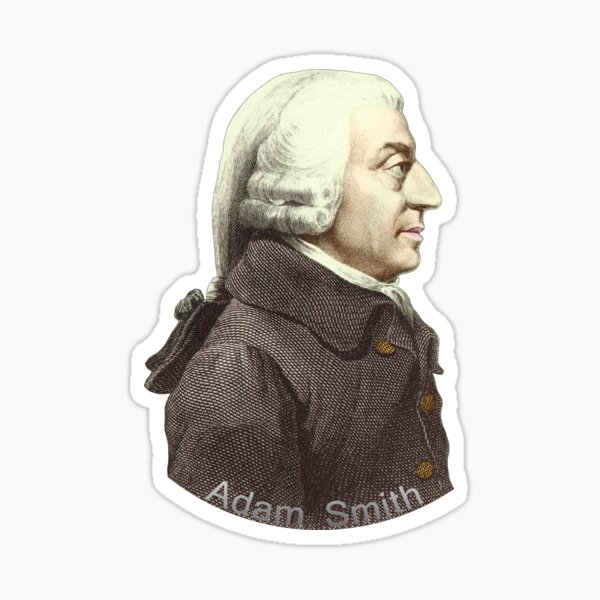
Adam Smith appears one last time in Horace Walpole’s travel journal on Wednesday, April 9, which reads: “Lord Edward Bentick and Mr Smith came.”[1]
“Lord Edward Bentick” most likely was Lord Edward Charles Cavendish-Bentinck (1744–1819), whose portrait is pictured below (right), along with the 3rd Duke of Portland (left).[2] At the time of Smith’s 1766 visit to Paris, Bentick was on the last leg of his three-year Grand Tour (1764-66) to France, Holland, and Germany.[3] Later that year, upon his return to England, he would be elected to the House of Commons (Dec. 27, 1766), and he would remain an MP for the next 36 years.[4] Despite his long parliamentary career (1766-1802), and despite his family connections–he was the only brother of Prime Minister William Cavendish-Bentinck, 3rd Duke of Portland–, he never held ministerial office.
Did Bentick and Smith’s pupil, Henry Scott, befriend each other in Paris? Both milords were close in age: Bentick was born in March of 1744; Duke Henry, in September of 1746. And both were experiencing their first grand tours of Europe. Regardless whether they became friends or not, however, the presence of such young men as Lords Bentick and Duke Henry in the French capital reminds us of the original reason why Adam Smith was in Paris in the first place. His primary responsibility at the time was the education and cultivation of his pupils, Duke Henry and the duke’s younger brother Hew Campbell Scott. On the social side of things, Smith–perhaps with the help of Walpole–, had now introduced his students to le monde, Parisian high society. But what about the intellectual side? Did Smith, for example, assign his students any articles from the monthly Journal de l’agriculture, du commerce et des finances, a scholarly journal where the leading économistes of Europe were publishing their work? Did Smith himself get to meet Mirabeau, Quesnay, or Turgot? If so, when, and what did they talk about?
As it happens, something remarkable was occurring in the kingdom of France at this very moment in history–what can only be described as one of the most massive and extraordinary “natural experiments” in history. Although the King had recently deregulated the sale of grain, France’s most important agricultural staple, in Paris the old police regulations still applied to the grain trade. The people of France thus became guinea pigs in a real-time natural experiment, with Parisians serving as the control group. I will turn to this aspect of Smith’s visit and preview my next paper, “Adam Smith in the City of Lights: Part 2” in my next post.

The next-to-last time Adam Smith appears in Horace Walpole’s travel journal is in the entry for Monday, April 7, which states: “Supped at Lady Mary Chabot’s with Lady Browne, Mme de Bouzols, Mr Smith and Chevalier de Barfort.”[1] What is most notable about this collection of eclectic individuals attending this late-night souper is that they were all, with the exception of Smith and Walpole, Roman Catholics.
“Lady Browne,” for example, most likely refers to Margaret Cecil, Lady Brown (1692-1782), the widow of Sir Robert Brown who became Walpole’s neighbor in Twickenham later that year (1766).[2] Walpole himself once referred to her as “the merry Catholic.”[3] The other guests at this souper, Bouzols and Barfot, were also most likely Roman Catholics. “Mme de Bouzols,” for example, may refer to Laure Anne FitzJames (1713-1766), the widow of Timoleon Joachim Louis de Montagu-Beaune, the Marquis de Bouzols.[4] She was a dame du palais, a lady of the Queen’s palace, until 1762, and she died in December of 1766.[5] For his part, the “Chevalier de Barfot” may refer to the Chevalier Charles Jermingham, an English Catholic with strong French connections.[6]
The hostess of this souper was “Lady Mary Chabot,” who most likely refers to Lady Mary Apollonia Scholastica de Rohan Chabot (1721-1769), the widow of Guy Augustus de Chabot-Rohan (1683-1760), known as the comte de Chabot.[7] Although Lady Mary was English–she was the eldest daughter of William Stafford Howard, the 2nd Earl of Stafford[8]–and is buried in St. Edmund’s Chapel in Westminster Abbey,[9] she was married in France and became the Countess de Rohan when she married Guy Augustus de Chabot-Rohan in 1744. (The family shield of the house of Rohan-Chabot is pictured below.)
For his part, Adam Smith refers to the Catholic religion in various parts of The Wealth of Nations. There are, in fact, 10 references in all to Catholics and the Catholic Church in Smith’s magnum opus. By contrast, there are only two references to Catholics in The Theory of Moral Sentiments.[10] In Chapter 1 of Book 5, for example, in the subsection titled “Of the Expense of the Institutions for the Instruction of People of all Ages,” Smith notes how “[i]n some parts of Switzerland, … where, from the accidental union of a Protestant and Roman Catholic country, the conversion has not been so complete, both religions are not only tolerated but established by law.”[11] And in Chapter 7 of Book 1, in the section titled “Causes of Prosperity of New Colonies,” Smith writes:
"The English Puritans, restrained at home, fled for freedom to America, and established there the four governments of New England. The English Catholics, treated with much greater injustice, established that of Maryland; the Quakers, that of Pennsylvania. The Portuguese Jews, persecuted by the Inquisition, stripped of their fortunes, and banished to Brazil, introduced by their example some sort of order and industry among the transported felons and strumpets by whom that colony was originally peopled, and taught them the culture of the sugar-cane. Upon all these different occasions it was not the wisdom and policy, but the disorder and injustice of the European governments which peopled and cultivated America."[12]
In other words, Smith not only avoids a dogmatic tone when writing about Catholics and other religions “dissenters” of his time; he appears to be downright sympathetic to their plight.

Adam Smith is mentioned twice in Horace Walpole’s journal entry for Monday, April 7: “The Rena, Lord Tavistock and Mr Smith came. To Madame du Deffand. To Hotel de Brancas…. Supped at Lady Mary Chabot’s with Lady Browne, Mme de Bouzols, Mr Smith and Chevalier de Barfort.”[1] Of all of people mentioned in this entry, La Rena, a high-class prostitute or “courtesan,” was the most scandalous. A footnote identifies her as “… the Countess L__________, an Italian separated from her husband. She was mistress to the [Earl] of March.”[2] Two additional sources support this identification: (1) “John Robert Robinson, ‘Old Q,’ 1895, p. 78,” and (2) a letter from Horace Walpole to Sir Horace Mann dated April 14, 1769, in which Walpole himself states that “she was wife of a Florentine wine-merchant and former mistress of Lord Pembroke.”[3] As it happens, Walpole may have known La Rena as early as 1762, when he refers to her as a “fashionable courtezan” in a footnote to his published correspondence from that year.[4]
La Rena apparently had many admirers; a “Lord March” refers to her in glowing terms in a letter address to George Selwyn dated Nov. 17, 1766.[5] But what was a kept woman, an exotic foreign-born courtesan, doing at the Hotel du Parc Royal, where both Walpole and Smith (and perhaps Tavistock) were lodging, and did she and Adam Smith ever meet? It’s possible, of course, that she was mistress to Lord Tavistock, the second person mentioned in Walpole’s April 7 entry.
But who was Tavistock, and what is his possible relationship to Adam Smith? Lord Tavistock could refer to Francis Russell (1739–1767), whose portrait is pictured below, who was the Marquess of Tavistock and the eldest son of the 4th Duke of Bedford.[6] Like Walpole and Lyttelton, Tavistock was sat in the House of Commons (1761 to 1767),[7] but he would die in 1767 at the age of 28 after falling from his horse while hunting.[8] [As an aside, Colbert de Castle-Hill’s father had died the same way in 1746.]
What if, however, La Rena was Adam Smith or Duke Henry’s mistress during this time? Although such a scenario might sound unlikely or implausible at best, it is not altogether beyond the realm of possibility.[9] At the very least, perhaps Adam Smith and La Rena met that day (April 7, 1766). If so, what did they discuss? Perhaps Smith asked her about her diet and her favorite foods. Although Smith does not openly discuss the market for prostitution in The Wealth of Nations, In Chapter 11 of Book 1 of his magnum opus, in the subsection titled “Of the Produce of Land which always affords Rent,” Smith writes:
“… experience would seem to show that the food of the common people in Scotland is not so suitable to the human constitution as that of their neighbours of the same rank in England. But it seems to be otherwise with potatoes. The chairmen, porters, and coalheavers in London, and those unfortunate women who live by prostitution, the strongest men and the most beautiful women perhaps in the British dominions, are said to be the greater part of them from the lowest rank of people in Ireland, who are generally fed with this root. No food can afford a more decisive proof of its nourishing quality, or of its being peculiarly suitable to the health of the human constitution."[10]
There are no references to prostitutes or prostitution in The Theory of Moral Sentitments. So, how did Smith know about the diets of “those unfortunate women who live by prostitution”? Perhaps, he asked.

The next mention of Adam Smith in Horace Walpole’s journal occurs on Easter Sunday, 30 March 1766: “To Mme du Deffand. Mr Smith came.”[1] In fact, before his departure from Paris on April 17, Walpole will mention Smith four more times: once on April 1, twice on April 7, and one last time on April 9, but during this same span of time (March 30 to April 9), Madame du Deffand, whose portrait is pictured below, is mentioned no less than nine times–every single day, except for March 31 and April 8. The reference to “Mme du Deffand” is to none other than Marie Anne de Vichy-Chamrond (1696–1780), la marquise du Deffand, a spirited woman with a sharp tongue.[2] By all accounts, la marquise du Deffand was not only a patroness of the arts; she was also a remarkable woman of letters in her own right, as her surviving letters to Horace Walpole attest to.[3]
As it happens, Madame du Deffand was also one of the leading salonnières of Paris, Madame Geoffrin’s great rival in the rarefied world of the Paris salons, where the art of conversation à la Française and the pleasures of refined sociability ruled.[4] The salon of du Deffand was located on the rue Saint-Dominique (now the Boulevard Saint-Germain), [See Collins ****.] just a few blocks from the Hotel du Parc Royal on the rue du Colombier, where Walpole and Smith were lodging, and Walpole himself spent a considerable amount of time at her salon during his visit to Paris. Walpole and du Deffand became especially close friends,[5] and in his private correspondence to Thomas Gray, Walpole provides one of the most memorable descriptions of his friend, Madame du Deffand:
“… Madame du Deffand … is now very old and stone blind, but retains all her vivacity, wit, memory, judgment, passions and agreeableness. She goes to operas, plays, suppers, and Versailles; gives suppers twice a week; has everything new read to her; makes new songs and epigrams, ay, admirably, and remembers every one that has been made these fourscore years. She corresponds with Voltaire, dictates charming letters to him, contradicts him, is no bigot to him or anybody, and laughs both at the clergy and the philosophers. In a dispute, into which she easily falls, she is very warm, and yet scarce ever in the wrong: her judgment on every subject is as just as possible; on every point of conduct as wrong as possible: for she is all love and hatred, passionate for her friends to enthusiasm, still anxious to be loved, I don’t mean by lovers, and a vehement enemy, but openly.” [See Letter from Horace Walpole to Thomas Gray dated January 25, 1766, in The Yale Edition of Horace Walpole’s Correspondence. Vol. 14, pp. 148-157.]
By this time (1766), however, Madame du Deffand’s salon was in decline. Her protégé, Jeanne Julie Éléonore de Lespinasse (1732–1776), had opened a competing salon of her own just down the street in the 1764.[6] But in its heyday, the salon of Madame du Deffand had attracted famous diplomats, great ladies, philosophes, and prominent politicians and gained international renown. She presided over her salon from her tonneau, her great straw-canopied chair,[7] and foreign visitors to Paris flocked to participate in her celebrated evening repasts; she received diplomats from all over Europe: baron Gleichen, Gustaf Philip Creutz, Johan Bernstorff (the Danish extraordinary envoy to Paris from 1744 to 1751), marquis Caraccioli (the Neapolitan ambassador from 1771 to 1781), and Count Ulrik Scheffer (the Swedish minister to Paris from 1744 to 1751).[8] Madame du Deffand’s salon also became a popular destination for British writers and eccentrics, men of state, and amateurs of art, literature, philosophy, and politics. John Craufurd, Gilbert Elliot, James Macdonald, Lord Robert Darcy, Lord Shelburne, Lord Bath, Charles James Fox, Charles Fitz Roy, David Hume, Edward Gibbon, and John Taaffe had figured among her distinguished English-speaking guests.[9]
Alas, we do not know what Smith thought of Madame du Deffand and the salons of Paris, but we do know that he visited du Deffand’s salon on March 30, which was Easter Sunday. At the very least, then, Smith must have preferred the salons of du Deffand, Geoffrin, and d’Holbach to the city’s many chapels, conversation to prayer, fine food to bread and wine. The salons of Parisian high society were cathedrals of conversation and fine dining, where Smith met and befriended some of the most notable figures of the Enlightenment period, who must have provided grist for Smith’s intellectual mill and invaluable sources of information for Smith’s fertile mind.

Note: After a one-week hiatus due to my travels, I am now resuming my series “Adam Smith in the City of Lights.”
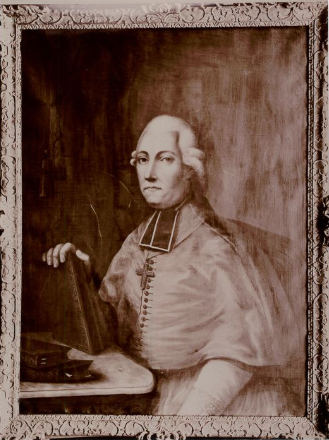
Smith’s closest friend and confidante in France was Seignelay Colbert de Castle-Hill (1736-1811), the Abbé Colbert, whose portrait (circa 1781) is pictured below.[1]. Although he was born in Scotland, near the small town of Inverness,[2] he had emigrated to France at a young age in 1746, the year his father had died.[3] The young Colbert then enrolled in the Scots College in Paris in 1747,[4] became an ordained priest in 1762,[5] and was appointed a Vicar General for the diocese of Toulouse.[6] The provincial town of Toulouse, where Smith and his pupil Duke Henry began their Grand Tour, is where the Abbé Colbert and Adam had first met in March of 1764.[7]
At that time, Colbert was one of Smith and Duke Henry’s few contacts in the south of France; he even travelled with Smith and Duke Henry to Bordeaux and to other places in the South of France and would thus become Smith’s “chief guide and friend” during this stage of his travels.[8] Moreover, as it happens, Colbert and Smith coincided in the French capital during the first part of Smith’s stay in Paris (February to April, 1766), for Colbert’s name appears multiple times in Horace Walpole’s travel journal. As such, Colbert and Smith must have continued their friendship during this time, perhaps at the salons of the leading ladies of Paris. In a letter addressed to Smith and Duke Henry dated September 1766, Colbert writes:
“And you, Adam Smith, Glasgow philosopher, high-broad Ladies’ hero and idol, what are you doing my dear friend? How do you govern the Duchess of Anville and Madame de Boufflers, where your heart is always in love with Madame Nicol and with the attractions as apparent as hidden of this lady of Fife that you loved.” [Quoted in Alcouffe & Massot-Bordenave 2020, p. 260.]
With the exception of the “lady of Fife,” whose identity remains a mystery,[9] two other ladies are identified in Colbert’s letter by name, including the “Duchess of Anville,” Madame de Boufflers, and Madame Nicol. The Duchess of Anville could refer either to Marie-Louise Nicole Elisabeth de La Rochefoucauld 1716-1797, Duchesse d’Enville, the widow of Jean Baptiste Frédéric de La Rochefoucauld de Roye, Due d’Anville,[10] or perhaps to Elisabeth Louise de La Rochefoucauld (1740–1786), who was the “[g]rand-daughter of La Rochefoucauld (the author of the ‘Maximes’) and faithful friend of Turgot.”[11] For her part, Madame de Boufflers refers to Marie Françoise Catherine de Beauvau-Craon (1711–1786), mistress to the Prince of Conti[12] and friend of David Hume[13] and one of the leading ladies of Paris at the time, but who was “Madame Nicol”? According to Alcouffe and Moore, she might refer to the spouse of Jacques Nicol de Montblanc, Capitoul elected in 1763,” who “had received in his Chateau the Duke of Fitz-James during his conflict with the Parlement.”[14]
Regardless of who these women were and regardless of the precise nature of their relationship to Adam Smith–secretly amorous or purely Platonic–the jocular and intimate tone of Colbert’s letter suggests camaraderie and close connections, or in the words of Alain Alcouffe and Philippe Massot-Bordenave, the letter “is probably a private correspondence between friends who have established trust.”[15] This letter may also provide some indication of Smith’s circle of friends in Paris, such as Madame de Boufflers and the Duchess of Anville. What other French ladies did Adam Smith meet at this time?
I will resume my “Adam Smith in the City of Lights” series in my next post. In the meantime, check out this website, which features an 1867 photograph of rue Jacob (pictured below), which used to be the rue du Colombier, the street where Adam Smith lived during most of his nine-month sojourn in Paris in 1766.

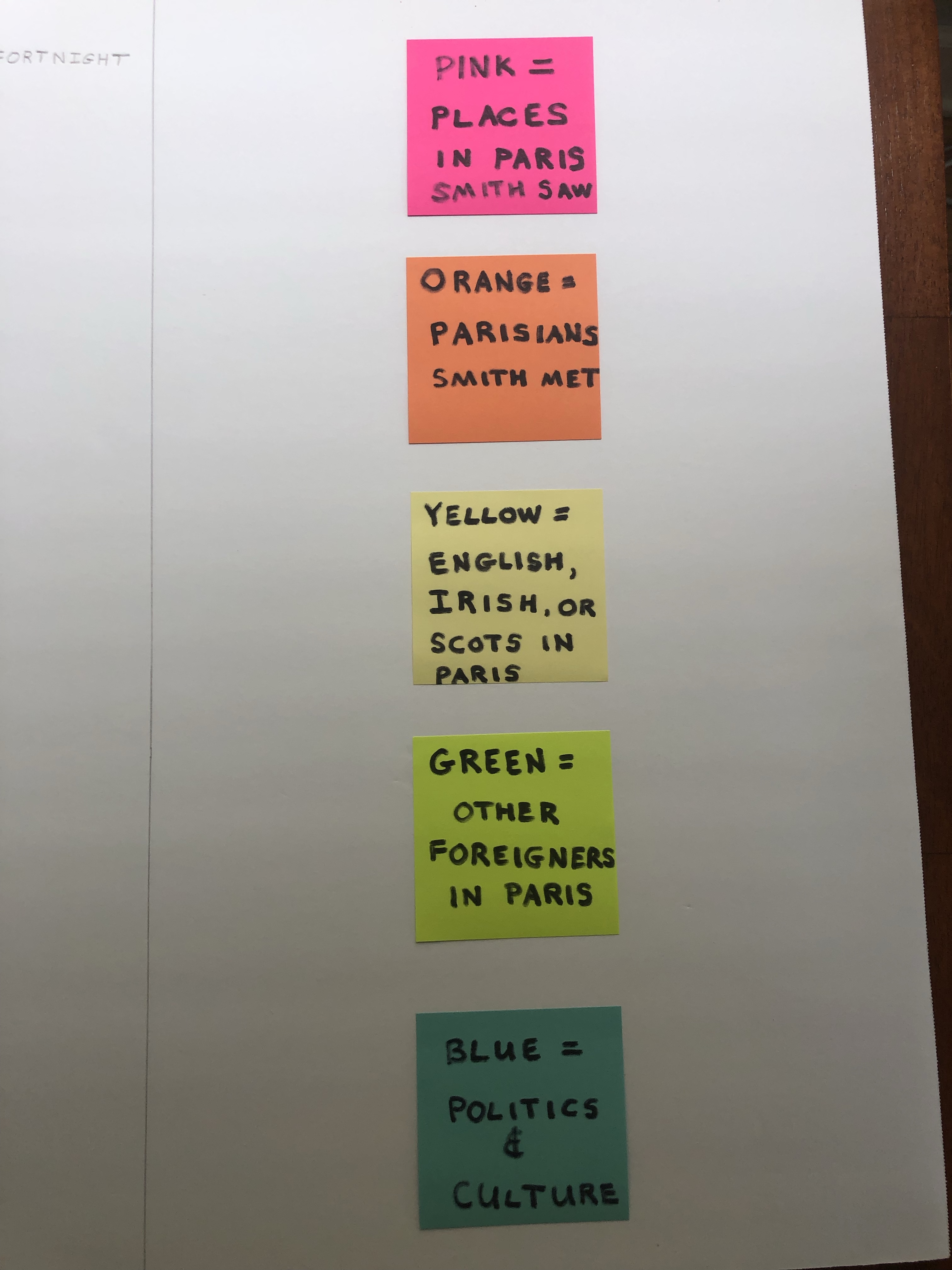
As I mentioned in my previous post, my Adam Smith in Paris paper, which retraces Smith’s steps in the French capital from mid-February to mid-April 1766, is now divided into three sections: (1) date of arrival, (2) the first fortnight, and (3) the next 40 days. Below is a color-coded visualization of part 3 of the paper:


I extended my travels and am without my laptop and my research files, so I will resume my “Smith in the City of Lights” series upon my return later this week. In the meantime, I have posted an updated version of my Adam Smith paper on SSRN, available here. The paper is now divided into three sections as follows:
1. Date of arrival and first impressions of Paris (Feb. 15, 1766)
2. The first fortnight (Feb. 15 to Feb. 29–yes, 1766 was a leap year!)
3. The next 40 days (March 1 to April 9–the 9th being the last time Smith is mentioned in Horace Walpole’s journal)








Welcome to the online home of the IASS
Hopefully It’s Interesting.
In Conversation with Legal and Moral Philosophers
PhD, Jagiellonian University
Books, papers, and other jurisprudential things
Ramblings of a retiree in France
BY GRACE THROUGH FAITH
Natalia's space
hoping we know we're living the dream
Lover of math. Bad at drawing.
We hike, bike, and discover Central Florida and beyond
Making it big in business after age 40
Reasoning about reasoning, mathematically.
I don't mean to sound critical, but I am; so that's how it comes across
remember the good old days...
"Let me live, love and say it well in good sentences." - Sylvia Plath
a personal view of the theory of computation
Logic at Columbia University
Just like the Thesis Whisperer - but with more money
the sky is no longer the limit
Technology, Culture, and Ethics
Just like the horse whisperer - but with more pages
Poetry, Other Words, and Cats


