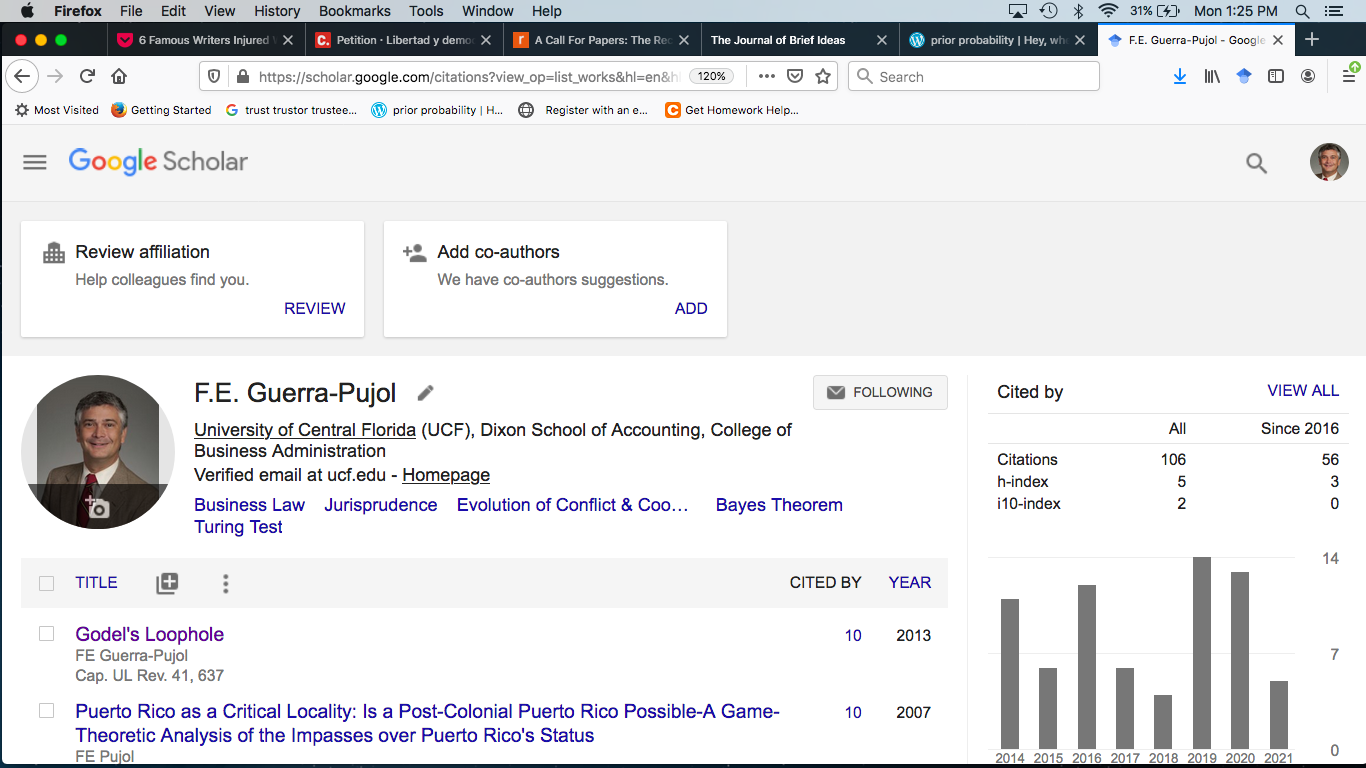
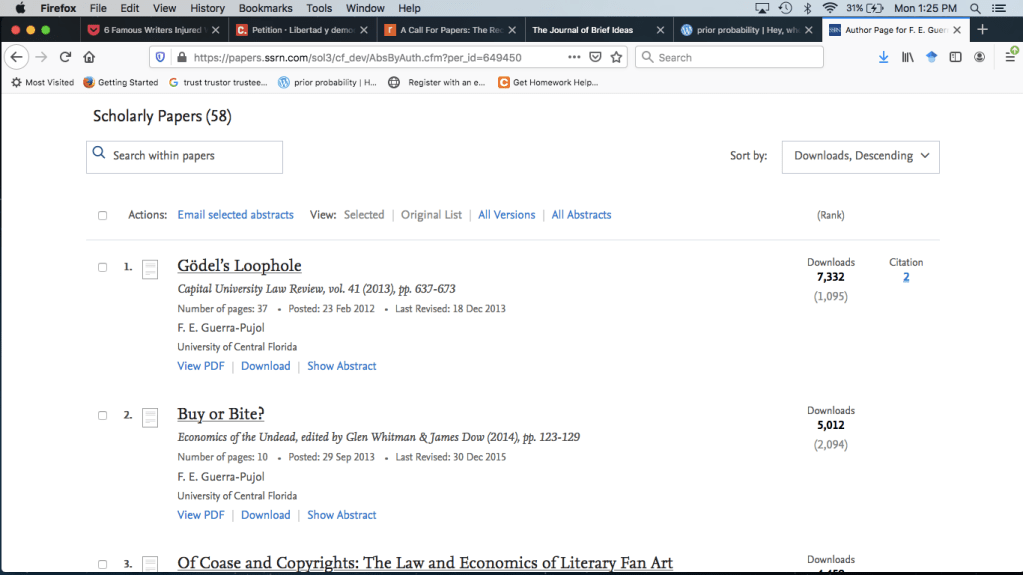
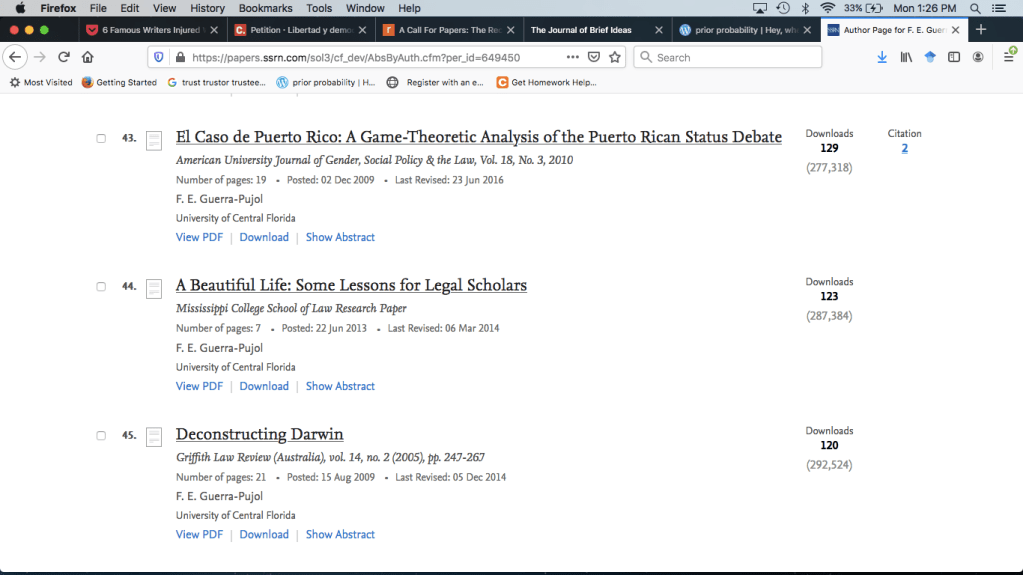
According to Google Scholar, two of my papers have been cited 10 times by other scholars (my 2014 paper “Goedel’s Loophole” and my 2010 paper “A Game-Theoretic Analysis of the Puerto Rico Status Debate“; see screenshot immediately below this paragraph), but according to SSRN (a popular platform scholars use to post ungated versions of their work), those same two papers have only been cited twice (see the other two screenshots on the bottom of this post). I love SSRN, but what is the source of this discrepancy?
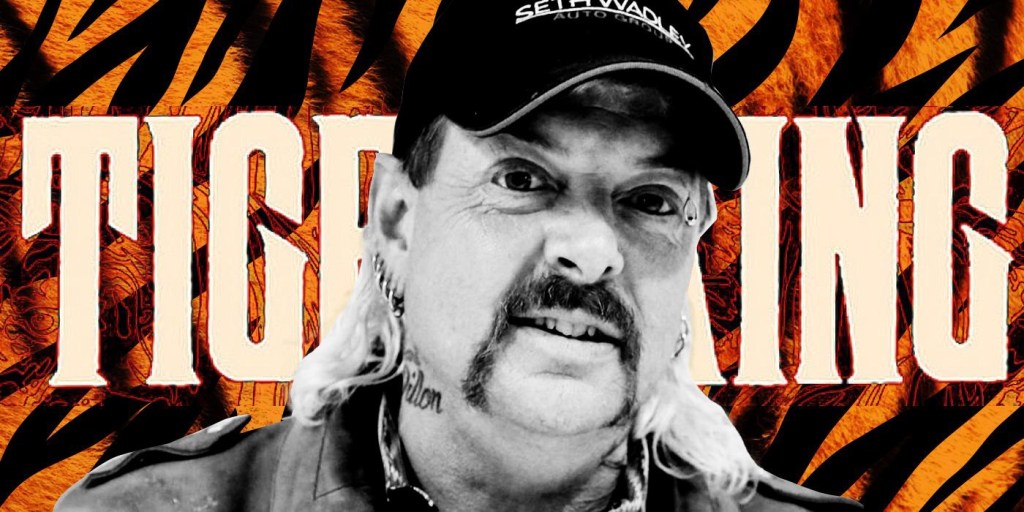
You may have already heard that Netflix will be releasing Season 2 of “Tiger King” on November 17, 2021. (See here, for example.)
In related news, my July 2020 law review article, “Teaching Tiger King“, was recently published in final form in Volume 65 of the Saint Louis University Law Journal. (Shout out to Michael McMahon, the managing editor of the special teaching issue in which my paper was published, for his helpful comments, suggestions, and edits.) You’re welcome!
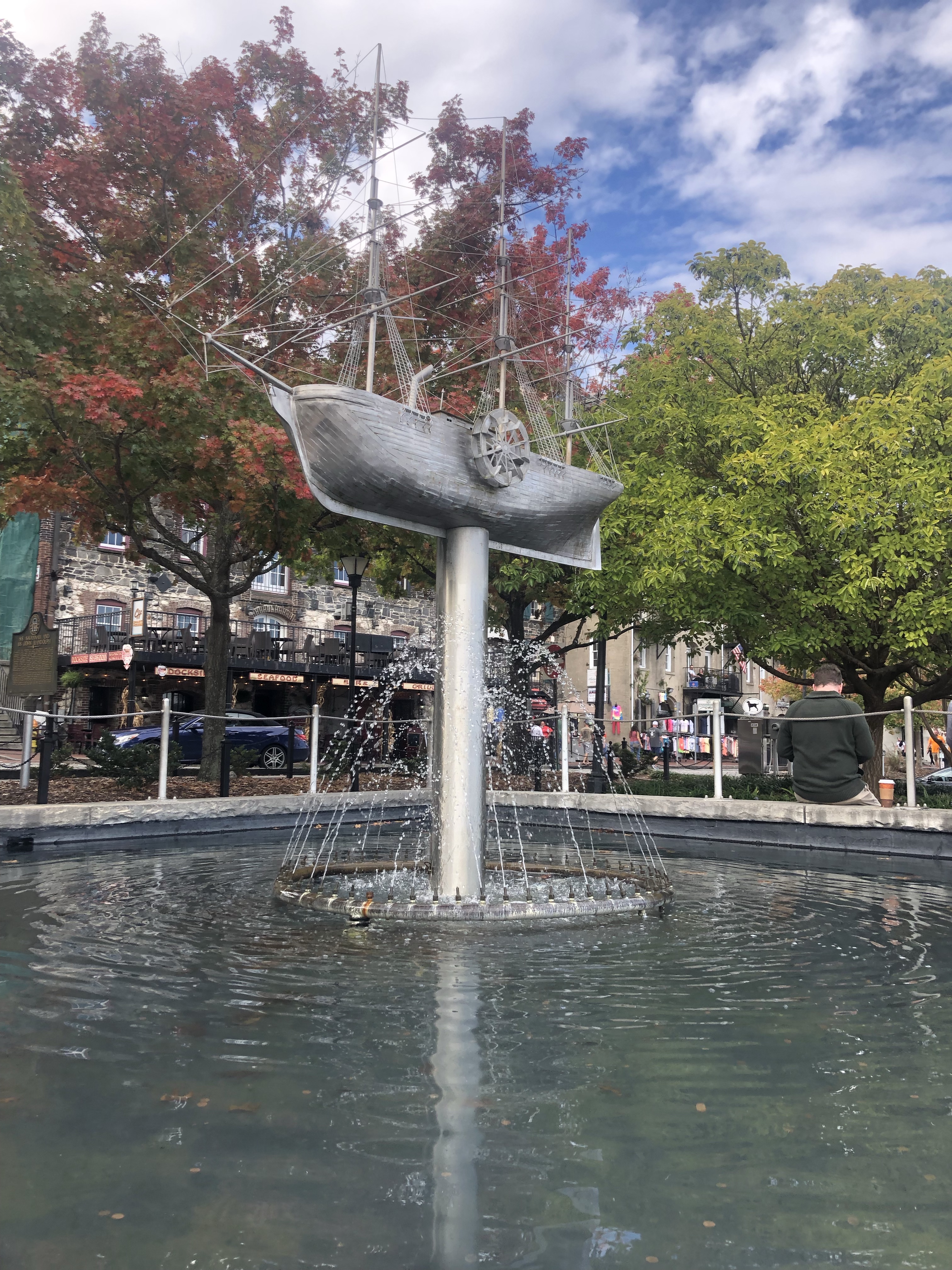
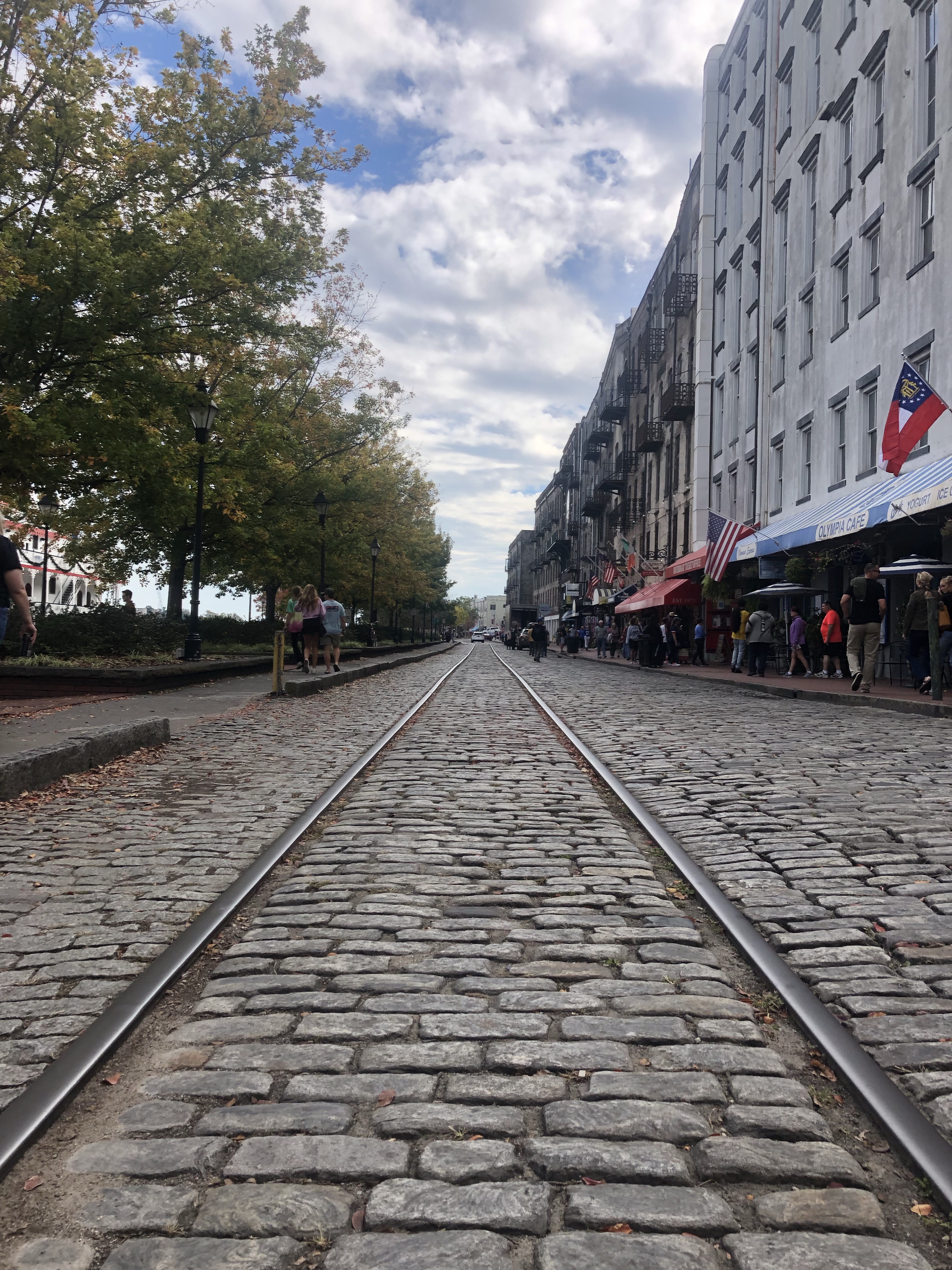
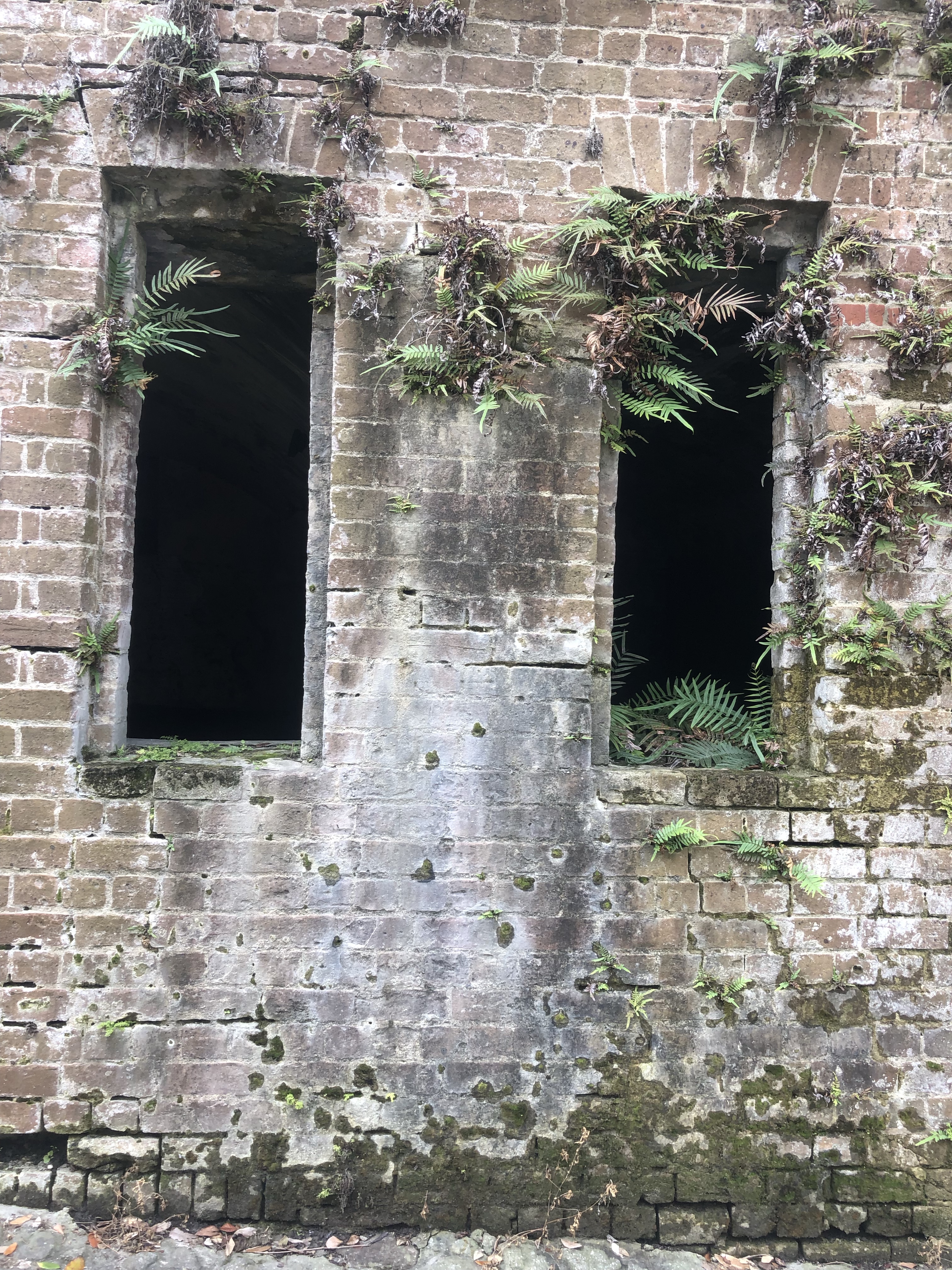
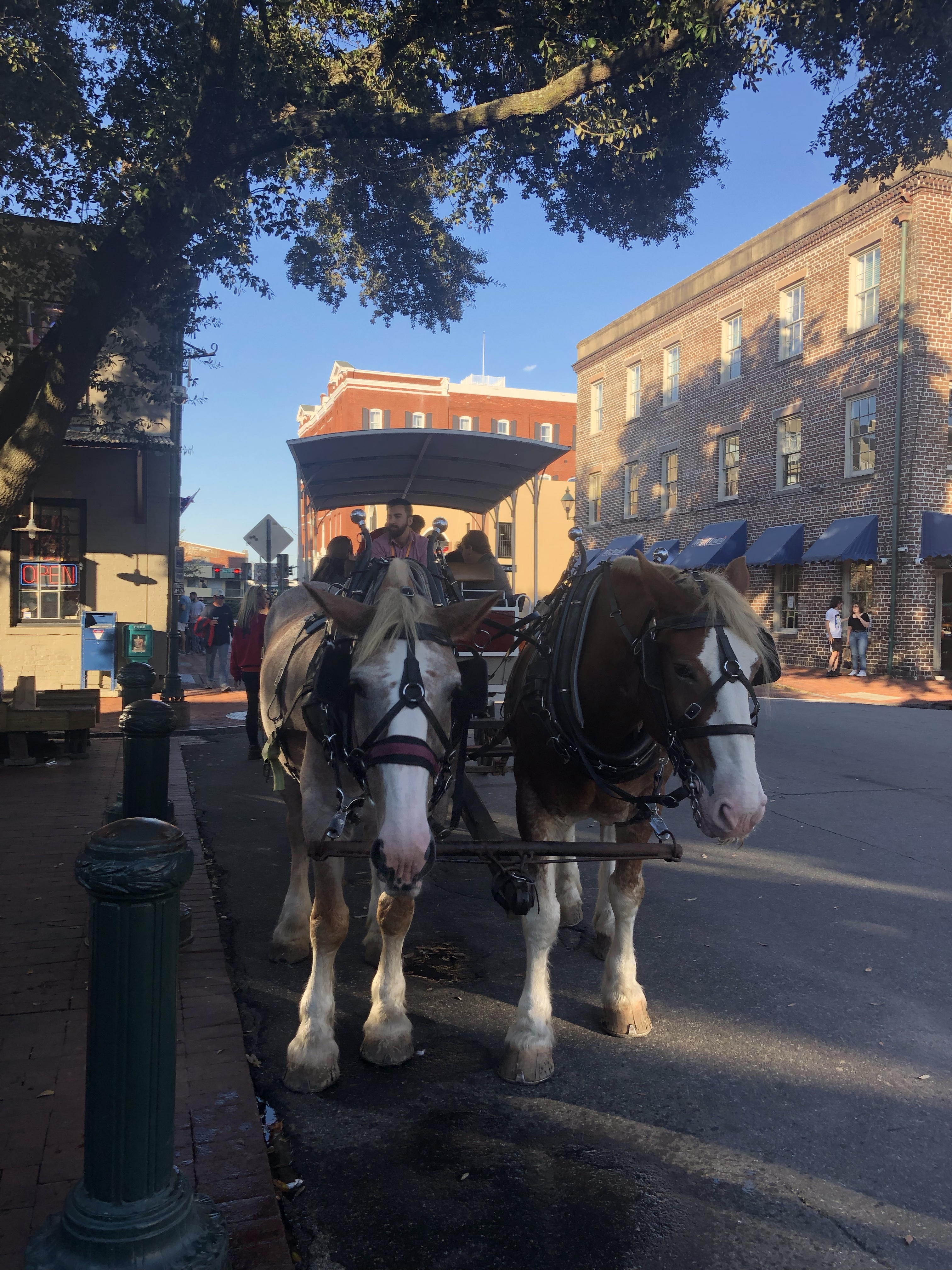
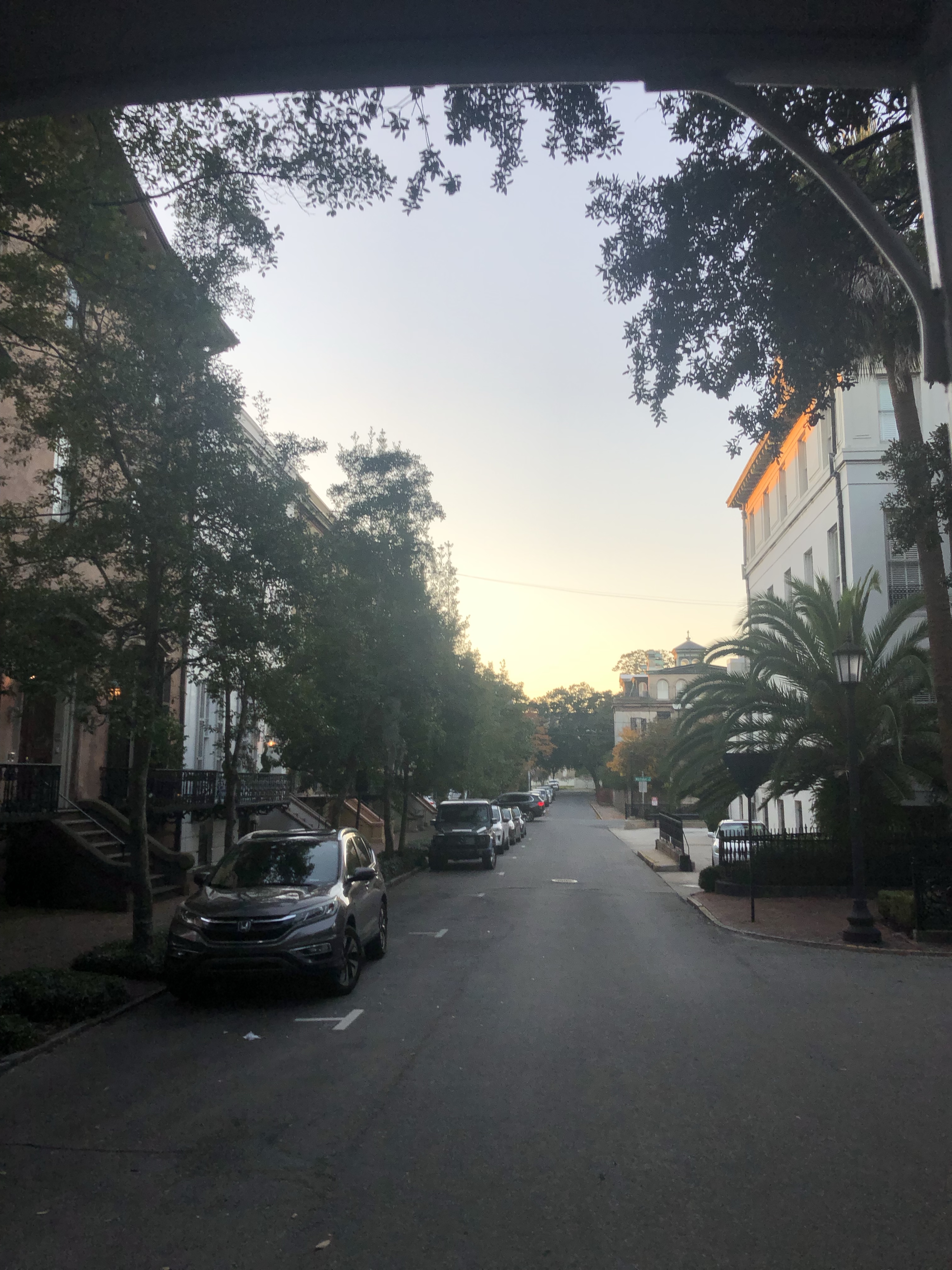
I attended my fifth and final scholarly conference of the fall semester: two via Zoom (the Central States Law School Association and LatCrit); one in the hybrid format, which I attended in person (the International Adam Smith Society in Madison, Wisconsin); and most recently, two in person (the Florida Statewide Undergraduate Research Symposium in Gainesville, Florida and the Southeastern Academy of Legal Studies in Business or “SEALSB” in Savannah, Georgia). Below are some pictures from my time in Savannah this weekend during the SEALSB conference:
The first I ever heard about Chegg was in the spring of 2021, when I discovered that some students were posting the answers to my quiz questions on the Chegg platform — quiz questions that I had created myself, by the way. At that time, Chegg was a $12 billion company, and Chegg’s stock was trading at over $100 per share.
Instead of punishing my students, however, I decided to go after Chegg itself and its corrupt management team. I filed a complaint with the Federal Trade Commission (FTC), and I wrote a paper called “The Chegg Conspiracy” explaining why Chegg’s officers should be criminally prosecuted for wire fraud. As it happens, I will be presenting my paper this weekend at the annual meeting of the Southeastern Academy of Legal Studies in Savannah, Georgia (#SEALSB2021). But this update doesn’t have to do with my paper; instead, it’s about Chegg itself.
When I first posted the original draft of my Chegg paper to SSRN on August 25, 2021, Chegg’s stock price had gone down to $80. A few weeks later (September 13, 2021), a major multinational publishing company called Pearson initiated a copyright infringement lawsuit against Chegg in the U.S. District Court for the District of New Jersey, and since then, Chegg’s shares have steadily declined in value. But on November 1st of this year, Chegg’s stock price took a dramatic plunge — it went from $62 to $32 in a single day!
So, what happened on Nov. 1st? That was the day Chegg released its quarterly financial report. (See here for a summary.). Among other things, Chegg announced that its paid subscribers fell to 4.4 million, an unexpected decline from 4.86 million in the previous quarter and a small fraction of the almost 20 million college and university students overall. (See here, for example.) Is this the beginning of the end for Chegg? Let’s hope so …
Below the fold is a small sample of English-language dailies marking the end of “the war to end all wars” — the original Armistice Day (11 November 1919).
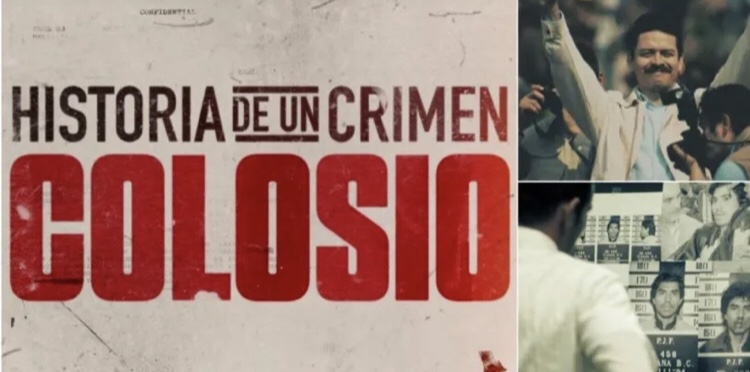
That is the subject of the Spanish-language docudrama “Historia de un crimen: Colosio“. (For your reference, more details about this entertaining 2019 Netflix series are available here, via Wikipedia.) In summary, Luis Donaldo Colosio was the presidential candidate of Mexico’s ruling party, the PRI (“Partido Revolucionario Institutional”), for the August 1994 elections. (Amazingly, this political dynasty had ruled over Mexico for 71 straight years(!), from 1929 to 2000.)
But on March 23, 1994, a day that will live in infamy in Mexico’s political history, Colosio was assassinated at a political rally in Lomas Taurinas, a poor neighborhood close to the U.S.-Mexico border in Tijuana. (A video of his last speech is embedded to this blog post below.) By all accounts, the candidate was hit by two bullets: one to the head, the other in the abdomen. Although these two bullets were fired from different directions, and although several individuals were detained immediately after the assassination, only one man (the mysterious Mario Aburto) was charged with Colosio’s murder. Furthermore, if the Netflix series is to believed, corrupt officials in Mexico’s national government covered up evidence of a possible conspiracy against Colosio, a conspiracy that may have been set in motion at the highest levels of the Mexican government, i.e. then-President Carlos Salinas de Gotari.
How credible are the allegations in the Netflix series? Before watching the Colosio docudrama, I had put the odds of a conspiracy against Colosio (or against JFK, for that matter) at 50/50 or 51/49. Why even odds, or odds slightly in favor of the conspiracy hypothesis? Because of an epistemological principle often referred to as “Okham’s Razor“–the simplest explanation is more likely to closer to the truth than a complex or convoluted story with many moving parts.
Spoiler alert: Now that I have watched the Colosio crime series for myself, I put the odds at 99 to 1 in favor of the conspiracy hypothesis! Like JFK, Colosio had a lot of enemies, and the official investigations into both of the their assassinations are full of anomalies and contradictions.
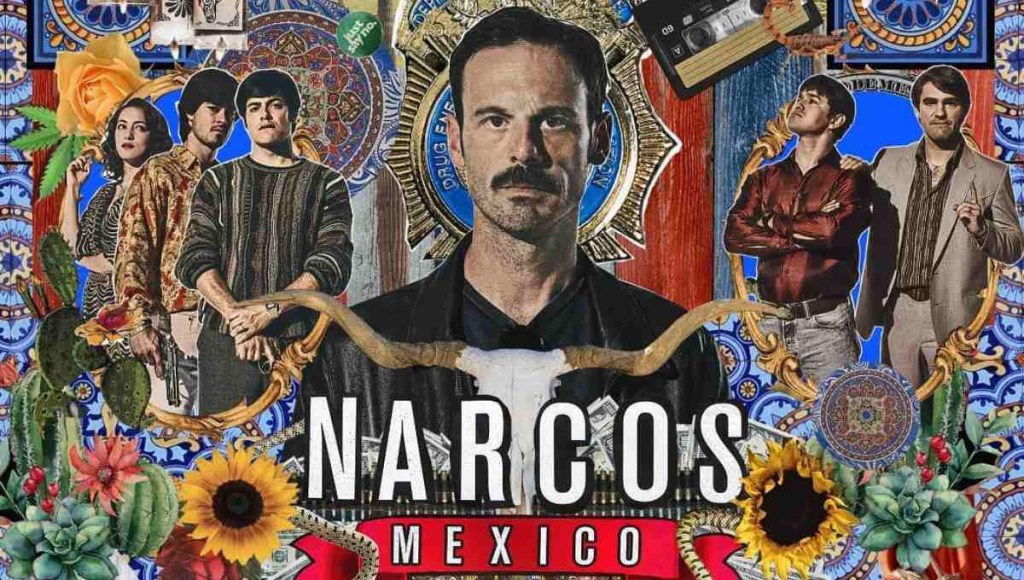
I am wrapping up my “Narcos Mexico” and “Historia Colosio” binge sessions and will be writing up reviews of those Netflix series in the next day or two; in the meantime, check out the topological map of the world pictured below, or in the words of u/Shevek99, who posted this map on Reddit, “borders and nothing else”:












 prior probability