
In honor of my intellectual hero Thomas C. Schelling, check out the syllabus and final exam for his fall 1970 course at Harvard on “Conflict, Coalition, and Strategy” (Econ 1030). Hat tip: Irwin Collier.
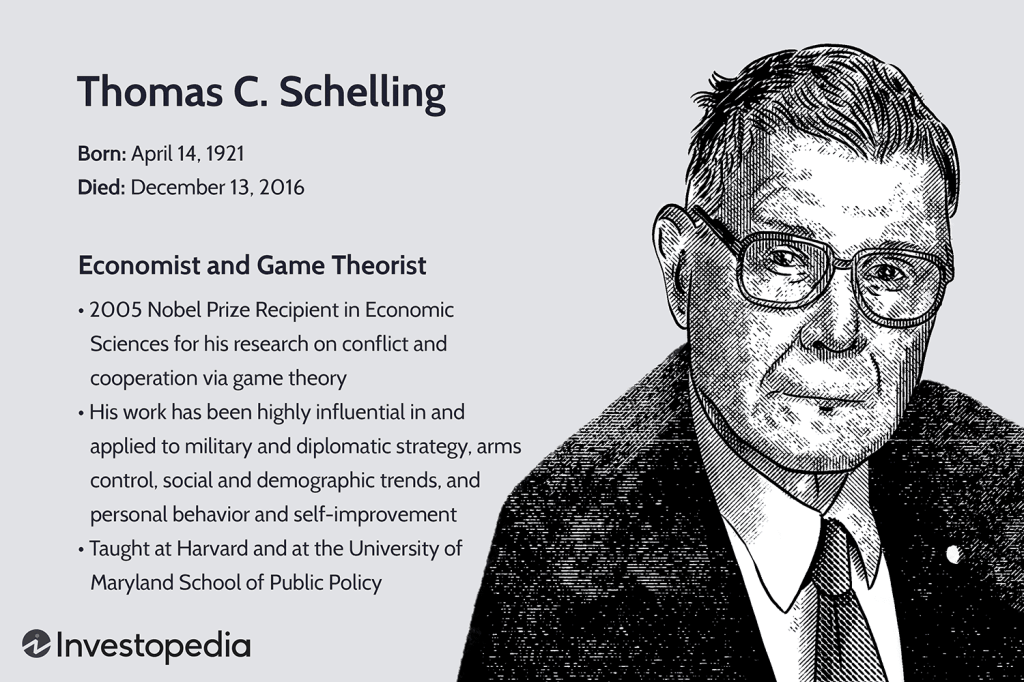
In honor of my intellectual hero Thomas C. Schelling, check out the syllabus and final exam for his fall 1970 course at Harvard on “Conflict, Coalition, and Strategy” (Econ 1030). Hat tip: Irwin Collier.
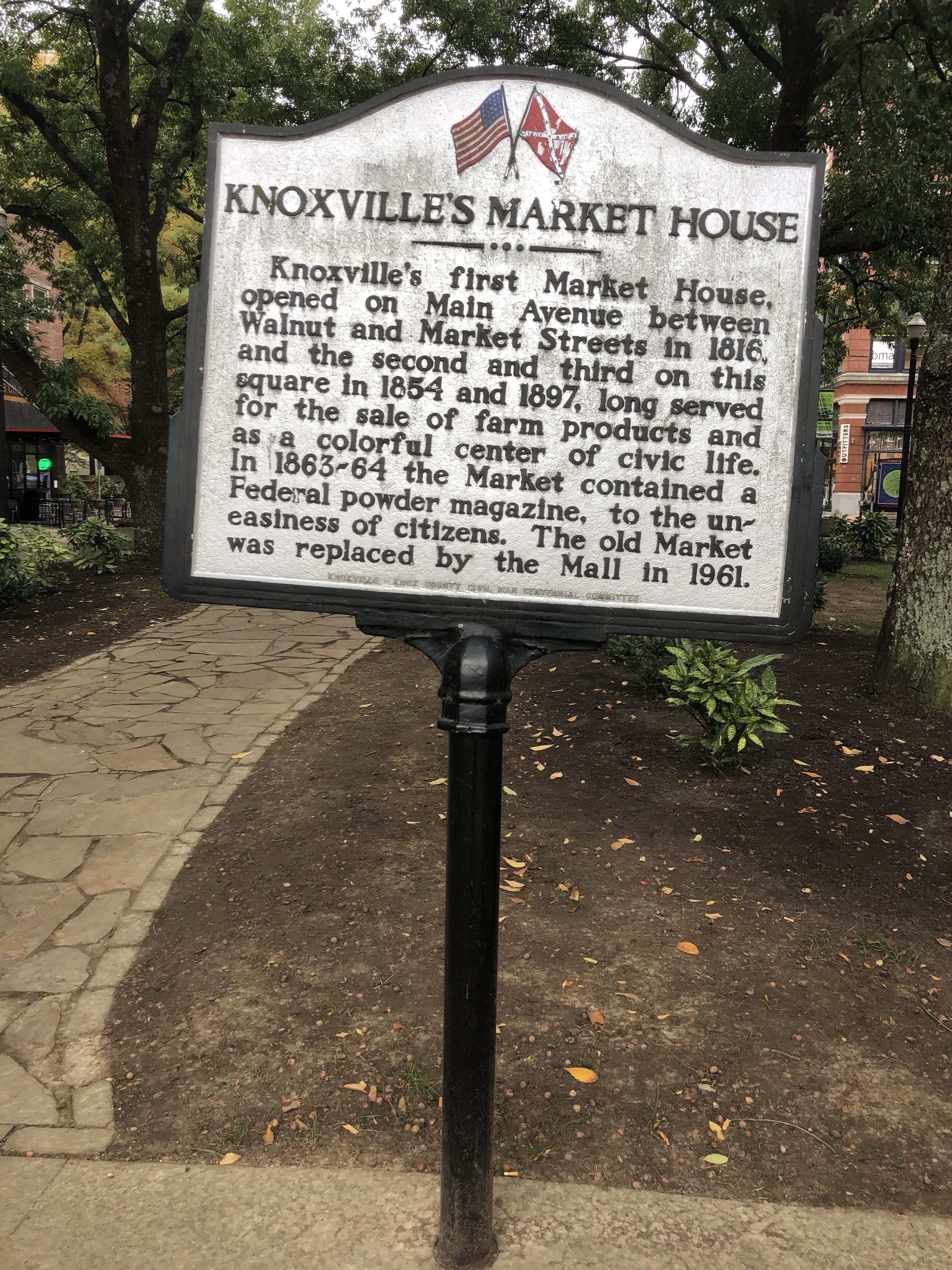
I was lucky enough to visit Knoxville, Tennessee for the first time this week and fell instantly in love with this “scruffy little city“!




What happens when you analyze a text by deleting the words, leaving only the punctuation marks? Clive Thompson created an online tool that allows you to do just that. Here is a link to his website, which is called “just the punctuation”, and here is an extended excerpt from his essay “What I Learned about My Writing by Seeing Only the Punctuation” (italics and the final ellipsis in the original):
“Back in 2016, Adam J. Calhoun wrote a fascinating Medium post in which he showed off something quite cool: What novels look like if you strip away the words, and show just the punctuation. *** This image below? On the left, it’s Calhoun’s analysis of Blood Meridian by Cormac McCarthy, compared to Absalom, Absalom! by William Faulkner, on the right …”

As an addendum to my Oct. 25 JFK post (see below), check out this Oct. 30 report in The Miami Herald, according to which a Cuban exile told his sons that he trained Lee Harvey Oswald at a secret CIA camp. As a further follow up, what if we had a “retrodiction market” in conspiracy theories to allow us to place bets on the truth-values of these alleged conspiracies? (Full disclosure: I have proposed just such a market here.)
The government is once again “postponing” the release of the next batch of JFK assassination records. For your reference, here is the official announcement.
I have posted a “new & improved” (i.e. shorter) version of my paper “Breaking Bad Promises” on the Social Science Research Network (SSRN). In summary, the new version of the paper, which focuses on some of the “bad” or illicit promises in the popular TV show Better Call Saul (see faux lawyer ad pictured below), is just 13 pp. long (double-spaced) and contains four color images. The old version of the paper, by contrast, was much longer (over 40 pp., single-spaced!), in part because it presented in great detail many more examples of “bad” promises from past and present times, including the evil Transatlantic slave trade, popular Mexican drug-smuggling ballads called narco-corridas, and modern-day usurious payday loans. Not to fear, however, as I will most likely revisit those examples (and many more!) sometime in the future, as I plan on writing a book-length treatment on the problem of bad promises.


Today begins Dia de los Muertos, Day of the Dead. If you’re not familiar with the holiday you might think it strange to greet someone with “Feliz Dia…
Feliz Día de los Muertos
Note: this is my sixth and final post in this multi-part series; end notes appear below the fold.
Does the moral paradox of bad promises have a solution? Here, I will propose a different approach, one informed by Jimmy McGill/Saul Goodman’s legal training and our common law tradition. In summary, common law courts, even those in American Samoa,[1] where Jimmy McGill received his online law degree, have developed a sophisticated body of legal principles and judicial doctrines to deal with the problem of illegal bargains, so I will conclude this chapter by turning to the law for guidance.
Legally speaking, illicit agreements come in two varieties: (i) those that are immoral or mala in se, and (ii) those that are merely illegal or mala prohibita.[2] A promise involving some form of moral turpitude is considered malum in se and is totally void, while a promise in violation of a commercial statute or an economic regulation is generally considered malum prohibitum and is thus treated as “voidable” by the innocent party.[3] By way of example, contracts tainted by mistake, duress, or even fraud are all voidable at the option of the innocent party.[4] A void contract, by contrast, does not produce any legal effects.[5] Either way, the key to this void/voidable distinction is the gravity of the harm caused by an illicit promise.
With this common law background in mind, we can now picture a continuum in which non-morally objectionable promises occupy one end of the moral spectrum, while totally immoral or mala in se promises fall on the other end of the moral spectrum, and so-called “voidable” promises would fall somewhere in the middle of these two extremes. The common law thus recognizes different degrees of contract validity by distinguishing between void and voidable illegal bargains. Likewise, we could similarly allow for different degrees of promissory duties depending on the type of harm generated by the illicit agreement.
Additionally, what if we were take into account the location of the harm? Specifically, what if we were to ask an altogether different question about illicit promises. To the point: who is harmed when an illicit promise is made? On this view, “bad” or illicit promises would fall into one of four general categories: (i) promises that harm the promisor, i.e. the person making the promise; (ii) promises that harm the promisee, i.e. the person to whom the promise is made; (iii) promises that harm both parties to the illicit agreement; and (iv) and promises that harm a third party.
This approach does not ask us to quantify the amount of harm to be caused or estimate the probability that the harm will even occur; instead, it only asks us to determine whether the harm is unjustified and where (on whom) the harm of an illicit promise will fall. We could thus formulate this legalistic framework in the form of the following question: whom does the illicit promise harm?
In summary, promises in which the harm is unjustified and external, such as any promise to harm a third party, should be considered void ab initio, i.e. promises with no moral standing or moral force. At the same time, promises in which the harm is internal–i.e. promises in which no third party is harmed but either of the promising parties, or both of them, will be harmed–should be merely voidable. In these cases of purely internal harms, the party to be harmed could exercise a “moral veto” over the illicit promise.[6] In short, the moral status of voidable illicit promises should depend on the wishes of the party who will be harmed if the promise is kept.
To conclude, the main advantage of this approach to illicit promises is that one does not need to measure the gravity of the harm or determine whether the harm caused by an illicit promise is malum in se or merely malum prohibitum.[7] What matters is the location of the harm. Of course, we still need to figure out which harms should count as “unjustified” harms.
By way of example, if I order a chicken burrito at Los Pollos Hermanos, aren’t I complicit in an unjustified external harm, i.e. the harm to the animal whose meat was used to make my burrito? If so, isn’t my Pollos Hermanos order an illicit one? What about the supply contract between the Pollos Hermanos chain and the poultry supplier? My tentative reply to the second-order problem of defining harms is this: we must be careful to distinguish between the legality of illicit promises and the morality of such promises. On my theory, a promise that generates an unjustified external harm is void from a moral perspective, so even though the poultry supply contract might be legally enforceable as a matter of law, the legal status of such an arrangement does not answer the moral question–whether the killing of animals for food consumption is justified.
One of the virtues of my harm-based approach is that it compels us to interrogate the morality of our promises, even our most prosaic and ordinary ones. If my approach makes us uncomfortable, if it makes us rethink everyday practices and promises, that is a feature, not a bug.

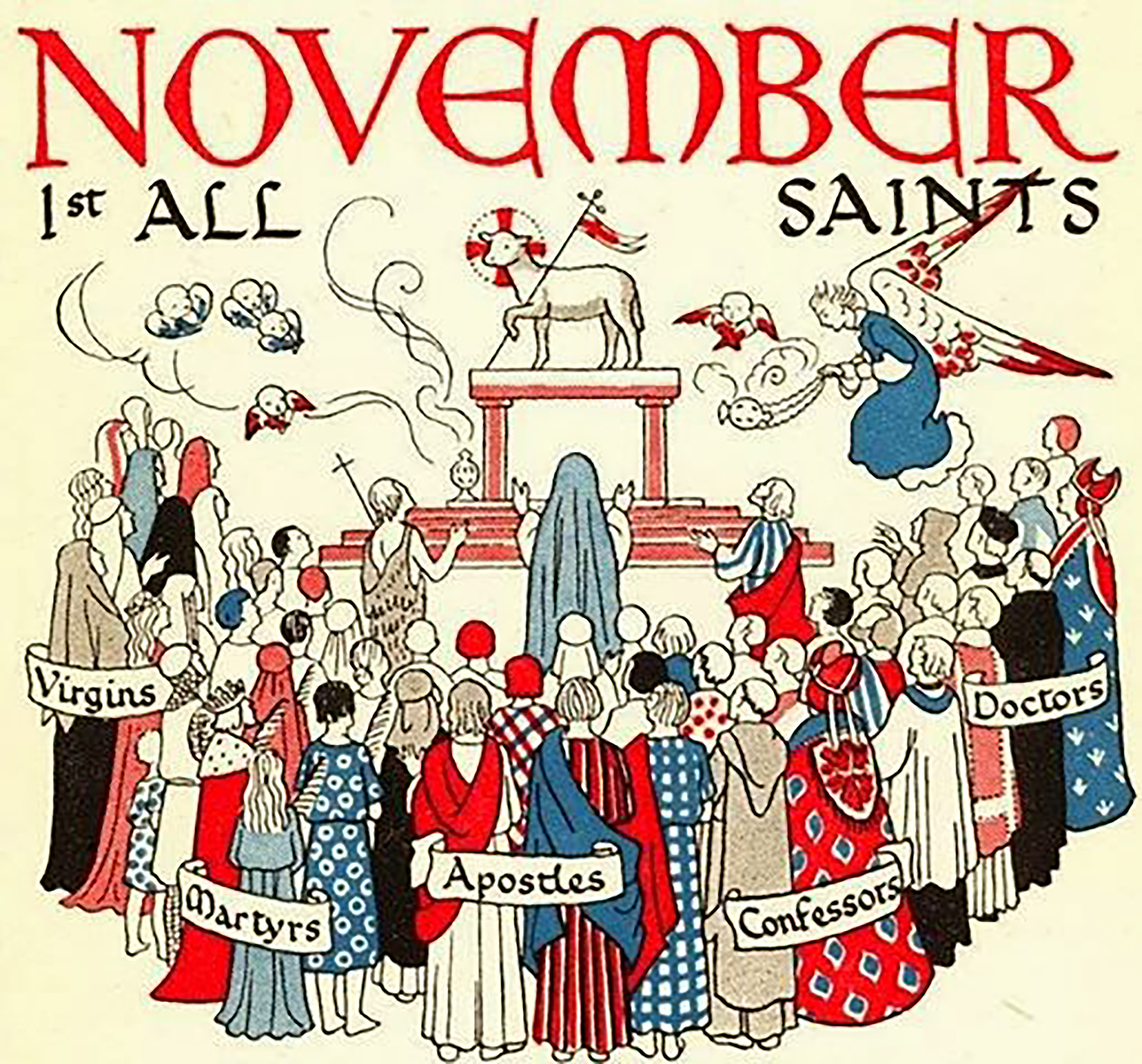
I will conclude my series on the problem of bad promises in “Better Call Saul” in my next post. In the meantime, I just want to point out that today, Nov. 1, is “All Saints’ Day” (In Die Omnium Sanctorum).
Note: this is my fifth post in a multi-part series; end notes appear below the fold.
May we break our “bad” promises, or must we keep them? Broadly speaking, legal scholars and moral philosophers have offered two plausible solutions to this question. One is to simply deny that an immoral promise is a promise. The other is to concede that an immoral promise is, in fact, a promise, but not a morally obligatory or binding one. As we shall see below, however, neither solution really works.
To begin with, some theorists, such as Seana Shiffrin and David Owens, define valid promises in such a way as to exclude promises to perform immoral acts. On this view of promising, a “bad” or illicit promise is not morally binding because such a commitment is not really a “promise” in the moral sense.[1] To the point, if one does not have a right to perform X (where X is some immoral or wicked act), then a promise to do X is a defective promise, i.e. a non-promise or a promise that is not morally binding.[2]
Similarly, philosopher David Owens reframes the act of making a promise as a transfer of authority from the promisor (the person making the promise) to the promisee (the person to whom the promise is made).[3] Specifically, according to Owens’s “simple theory of promising,” whenever I make a promise to someone, what I am really doing is giving the promisee (the recipient of my promise) the authority to require me to perform my promise; on this view, if I lack the authority to do something immoral or illegal in the first place, then I also lack the authority or normative power to promise to do that very same immoral/illegal act in the future, or in the words of Owens: “Where the promisor has no authority to do the thing promised (for example, a promise to kill or maim), no grant [of authority] can be made and the promise is nugatory ….”[4]
These clever reframings of the act of promising appear to solve the problem of bad promises, since promisors lack either the right to perform illegal or immoral actions (Shiffrin’s solution) or the authority to do so (Owen’s solution), but is a promise really a transfer of authority (Owen) or a transfer of rights (Shiffrin)? If so, how does a promise effectuate such a transfer? Or as none other than David Hume objected long ago, how does the mere utterance of a few words change anything about the world? Alas, all such transfer theories of promising are ultimately magical in nature, for they are unable to circumvent Hume’s famous objection.
Worse yet, these purported solutions to the problem of bad promises suffer from a fatal flaw: they are empty. Why? Because they fail to provide any substantive criterion or criteria for determining whether one has the authority or moral right to do X in the first place. Owen, for example, focuses on whether one has the authority to make a promise, while Shiffrin’s focus is on whether the person making the promise has a moral right to perform the promised act, but to determine whether one has the authority or moral right to perform X act, we need a theory to judge the moral content or moral authority of our promises. Neither Shiffrin nor Owens, however, is able to provide such a theory.
To see this objection more concretely, consider the illegal drug cartels and black markets in Better Call Saul. In an ideal world, it would be best if these cartels and their drug-smuggling operations did not exist. But we do not live in an ideal world; markets for crystal meth and other illegal drugs exist in New Mexico and beyond, so if Hector Salamanca or Gustavo Fring (see chart pictured below), or later on Walter White and Jesse Pinkman, don’t meet this demand, the reality is that other suppliers most likely will. Moreover, to the extent these illegal activities occur among consenting adults (i.e. to the extent these are voluntary markets), how can we say that no one has the moral authority or moral right to engage in the meth trade?
Other moral philosophers, by contrast, concede that an illicit promise is, in fact, a promise, but they—most notably James Altham and Margaret Gilbert—offer a different solution to the problem of illicit promises: they simply conclude that an immoral promise does not generate a morally binding obligation.[5] We can, however, dispatch this purported solution with just a few words, since it borders on pure sophistry. Why? Because a promise, by definition, is something that is morally binding. So, to say that wicked promises are not morally binding because they are wicked is simply to engage in circular reasoning. Altham and Gilbert want to have their philosophical cake and eat it too!
Stay tuned: I will offer a common sense solution to the problem of bad promises in my next post …










Welcome to the online home of the IASS
Hopefully It’s Interesting.
In Conversation with Legal and Moral Philosophers
Relitigating Our Favorite Disputes
PhD, Jagiellonian University
Inquiry and opinion
Life is all about being curious, asking questions, and discovering your passion. And it can be fun!
Books, papers, and other jurisprudential things
Ramblings of a retiree in France
BY GRACE THROUGH FAITH
Natalia's space
hoping we know we're living the dream
Lover of math. Bad at drawing.
We hike, bike, and discover Central Florida and beyond
Making it big in business after age 40
Reasoning about reasoning, mathematically.
I don't mean to sound critical, but I am; so that's how it comes across
remember the good old days...
"Let me live, love and say it well in good sentences." - Sylvia Plath
a personal view of the theory of computation
Submitted For Your Perusal is a weblog wherein Matt Thomas shares and writes about things he thinks are interesting.
Logic at Columbia University
Just like the Thesis Whisperer - but with more money
the sky is no longer the limit
Technology, Culture, and Ethics
Just like the horse whisperer - but with more pages
Poetry, Other Words, and Cats


 prior probability