Gus and Mike: La Conspiracion Pollos Hermanos

Note: this is the fourth post in a multi-part series.

Season 3 of “Better Call Saul” reconstructs the origins of the long-lasting illicit partnership between a dirty ex-cop, Micheal “Mike” Ehrmantraut, and the owner of the Los Pollos Hermanos fast-food chain (logo pictured below), Gustavo “Gus” Fring, who uses his business as a front to operate an illegal drug cartel. [Gus and Mike’s illicit alliance is also one of the central plot lines in the original “Breaking Bad” series.] In summary, after Mike’s attempt to assassinate Hector Salamanca is mysteriously thwarted at the end of Season 2, Mike eventually discovers in Season 3 that it is Gustavo Fring who has been tracking him (Mike) all along and who had foiled the assassination attempt on Hector. [See “Sunk Costs” (Season 3, Episode 3).] Although Gus has his own nefarious reasons for wanting to keep Hector Salamanca alive, he allows Mike to interfere with Hector’s drug-smuggling operations, and with this informal arrangement in place, Gus and Mike develop an uneasy truce: Gus agrees to stop tracking Mike’s whereabouts, while Mike agrees to leave Hector Salamanca alone.

Subsequently, this loose arrangement develops into a full-blown and mutually-beneficial criminal partnership when Gus arranges for Mike to be hired by Madrigal Electromotive as a “security consultant.” [See “Slip” (Season 3, Episode 8) and “Fall” (Season 3, Episode 9.] Mike needs a steady source of employment in order to launder a large amount of money that he had previously stolen from one of Hector Salamanca’s trucks–ill-gotten gains that Mike wants to leave to his family–while Gus could use an ex-policeman and someone as reliable and knowledgeable as Mike to help him carry out his underworld affairs. The rest will become “Breaking Bad” history. Gus will compensate Mike for his illicit services; Mike will do Gus’s bidding as his full-time fixer.

Thus far, I have sampled and highlighted a wide variety of illicit agreements in the series “Better Call Saul”, beginning with the staged car accident in the series premiere and with Jimmy McGill/Saul Goodman’s conman past in Cicerto, Illinois and then continuing with several criminal conspiracies from the first three seasons of the series. In addition to the Pollos Hermanos Conspiracy described above, we have described Nacho Varga and Mike Ehrmantraut’s hitman contract (“The Tuco Salamanca Conspiracy”) and the illicit dealings between Jimmy and Craig and Betsy Kettlemans (“The Kettleman Conspiracy”).

Broadly speaking, these sundry illicit promises should be of philosophical and jurisprudential interest to us because they pose a kind of moral paradox. On the one hand, we have a moral duty to keep our promises, but on the other hand, we also have a moral obligation to avoid harming third parties. As a result, there are two competing moral principles in direct conflict with each other whenever someone makes an illegal or immoral promise. The philosophical and jurisprudential question is: how should we resolve this moral contradiction? Starting next week (Monday, Nov. 1), I will further explore this paradox and explain why previous attempts to resolve this moral contradiction fall short.

Los Pollos Hermanos pin Breaking Bad fan gift|Pins & Badges| - AliExpress

Posted in Uncategorized | Leave a comment

Mike and Nacho: The Tuco Salamanca Conspiracy

Note: this is the third post in a multi-part series.

As I see it, the “Better Call Saul” character who exemplifies the moral paradox of illicit promises the most (aside from Saul/Jimmy) is retired ex-cop Michael “Mike” Ehrmantraut. [As an aside, Mike is my favorite character of the entire series!] Season 2 of “Better Call Saul”, for example, features an illicit alliance between Ignacio “Nacho” Varga and Mike Ehrmantraut, who conspire against Nacho’s boss, a powerful drug lord named Tuco Salamanca. Nacho works for Tuco, helping him run his illegal drug operations in Albuquerque, and is one of Tuco’s most trusted men. But when Tuco repeatedly violates the number one rule of the drug trade—”don’t get high off your own supply”—Nacho hires Mike, who he trusts from their multifarious previous dealings, to assassinate Tuco. [Or as Nacho puts it in “Amarillo” (Season 2, Episode 3), “There’s a guy. And I need him to go away.”] Mike then formulates a fail-proof assassination plan—the use of a discreet and expert sniper—and he offers to be that sniper in exchange for $50,000.

Although this hitman deal is no doubt an illegal one—and possibly immoral too—Mike, a man of his word, refuses to accept the full $50,000 payment when he is unable to follow through on his original assassination plan. Specifically, when Mike modifies the plan–instead of killing Tuco, he decides to stage an altercation with him in order to get Tuco arrested for assault with a deadly weapon, which carries a mandatory prison sentence of five to ten years—Mike reduces his original fee down to $25,000. [“Gloves Off” (Season 2, Episode 4).] Furthermore, when Mike’s illicit plot backfires altogether, Mike gives Nacho a full refund(!), returning the 25K to Nacho in its entirety. [“Bali Ha’i” (Season 2, Episode 6).] That Mike would feel obligated to return money paid based on an illegal promise is, to me, the most striking and morally-salient aspect of this entire ordeal: despite his best efforts, and through no fault of his own, Mike feels morally compelled to return his payment because has failed to uphold his part of the original deal with Nacho.

But Mike dealings with Nacho are not his only illicit agreements; for thus far in the series Mike has yet to meet the enigmatic Gustavo Fring. I will further explore the illicit relationship between Mike and Gus in my next post …

Nacho & Mike | Breaking bad saul, Better call saul, Breaking bad
Posted in Uncategorized | Leave a comment

The Kettleman Conspiracy

Note: this is the second post in a multi-part series.

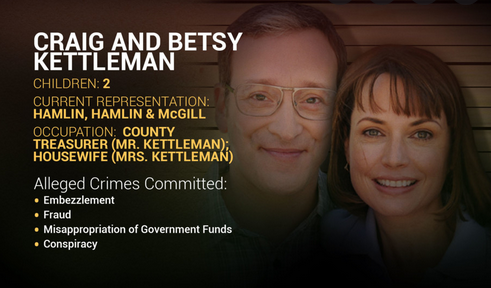
Craig Kettleman, a thieving treasurer, has been accused of embezzling $1.6 million in taxpayer dollars from Bernalillo County. With the help of his wife Betsy, who is fully aware of her husband’s crime, the Kettlemans (pictured below) decide to keep their ill-gotten gains and soon go into hiding, and at one point, they offer Jimmy McGill the sum of $30,000 to keep their hiding spot a secret. [“Hero” (Season 1, Episode 3).] The criminal conspiracy between Craig and Betsy Kettleman, not to mention their bribing of Jimmy, once again generates a difficult moral dilemma: should Jimmy keep his promise to stay quiet? After all, he has accepted their money, and we have a moral duty to keep our promises. But at the same time, lawyers have an ethical duty to avoid assisting a client—even a prospective one—in conduct that the lawyer knows to be criminal. [See, for example, Model Rule 1.2 of the American Bar Association’s Model Rules of Professional Conduct, which prohibits a lawyer from counseling or assisting a client in conduct the lawyer knows is criminal or fraudulent.]

But Jimmy McGill/Saul Goodman is not the only character in “Better Call Saul” who is a party to an ongoing illicit agreement. As it happens, most of the characters in this popular spin-off series, just like most of the characters in Breaking Bad, end up making promises that are either illicit or illegal, or both. For the record, I will highlight two additional illicit relationships in “Better Call Saul” in my next post …

Posted in Uncategorized | Leave a comment

Better Call Saul and the paradox of illicit promises

Note: this is the first post in a multi-part series.

The proposition that “promises ought to be kept” is quite possibly one of the most important normative ideals or value judgements in daily life. [1] But what about illegal or immoral promises?

Philosophically speaking, what is the moral status of such illicit agreements, i.e. promises that are wrongful in some legal or moral sense? What moral obligations, if any, do illicit promises generate? As it happens, these philosophical questions are posed time and time again in the hit TV show Better Call Saul, beginning with the episode “Uno”–the series premiere–when our hero Jimmy McGill (pictured below, right), with the help of two teenage accomplices, orchestrates a phony vehicle-pedestrian accident in order for Jimmy, a small-time struggling Albuquerque attorney, to lure a prospective client.

In brief, Jimmy’s accomplices agree to help him stage a car accident in exchange for $2000. The moral dilemma, however, is this: Had this elaborate but illicit scheme worked according to plan (spoiler alert: it did not!), wouldn’t Jimmy have been morally obligated to keep his promise to pay the twins the promised $2000? After all, we have a general moral obligation to keep our promises, but at the same time, Jimmy’s promise was part of an illicit scheme; his promise to pay off his accomplices was an immoral one. So, how can one have a moral obligation to perform an immoral action?

Moreover, in many ways Jimmy’s entire persona–beginning with his conman’s past in Cicero, Illinois–is a living embodiment of this moral paradox. Back in Cicero, for example, Jimmy’s closest friend was Marco Pasternak (pictured below, left), a fellow con artist. Together, they would run an elaborate con in which they duped unsuspecting marks into buying fake Rolex watches. [See, for example, “Hero” (Season 1, Episode 3) and “Marco” (Season 1, Episode 10).] The mark thinks he is buying a genuine Rolex, but he must also know that what he is doing is wrong; after all, he is buying a dead man’s Rolex with the dead man’s own money! So, is the mark morally entitled to get “his” money back? And if so, do Jimmy or Marco have a moral obligation to provide such a refund?

Either way, it is no exaggeration to say that all the relationships in “Better Call Saul” are explicitly premised on illicit promises! To see how, I will identify several such ongoing “illicit agreements” in my next few blog posts.

[1] See, for example, David Hume, A Treatise on Human Nature, Book 3, Part 2, §5 (David Fate Norton & Mary J. Norton, eds.) (Oxford Univ. Press, 2000). See alsoAllen Habib, Promises, in Edward N. Zalta, ed., The Stanford Encyclopedia of Philosophy (2018). Cf. Mary Midgley, “The Game Game”, Philosophy Vol. 49, (1974), p. 235: “[P]romising is everywhere a kingpin of human culture.”

CLASSIC: Mel Rodriguez (Marco Pasternak - Better Call Saul)
Posted in Uncategorized | Leave a comment

The Bitcoin Files (Installment #188)

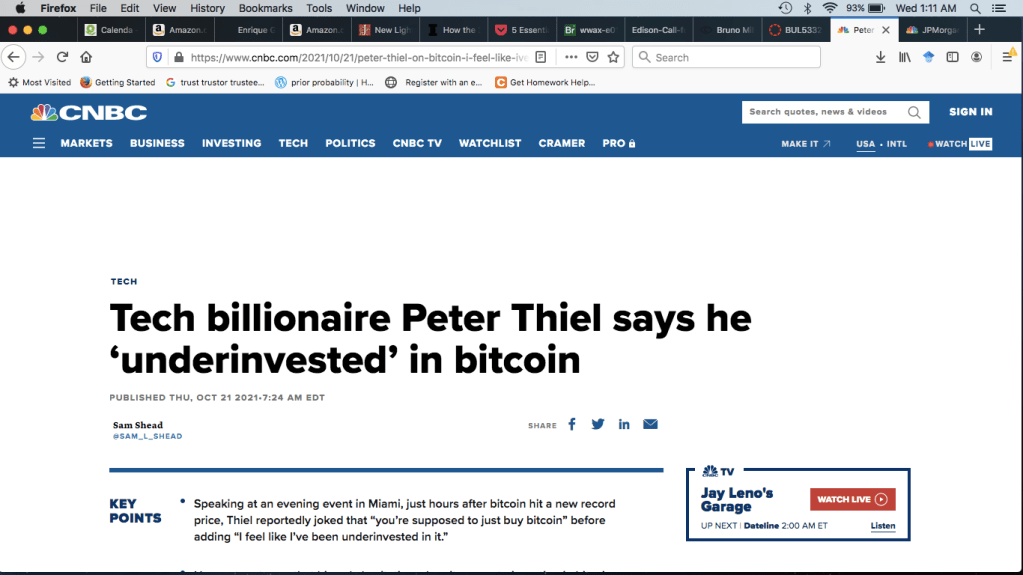
My next “Advanced Topics in Law” class, which is scheduled for later today, will be devoted to Bitcoin and cryptocurrencies generally, so before I start blogging about Better Call Saul and the problem of illicit promises, I want to share two recent headlines regarding Bitcoin with my loyal followers:

For the record, here is a link to the Peter Thiel article (dated Oct. 21, 2021), and here is a link to the Jamie Dimon article (Oct. 11), but more importantly, who is right about Bitcoin: Thiel or Dimon? To the point, is Bitcoin an irrational bubble, or the best thing since sliced bread?

Bonus Video: Check out this entertaining rap battle between “Alexander Hamilton” (anti-crypto) and “Satoshi Nakamoto” (pro-crypto):

Posted in Uncategorized | 4 Comments

Blog Update

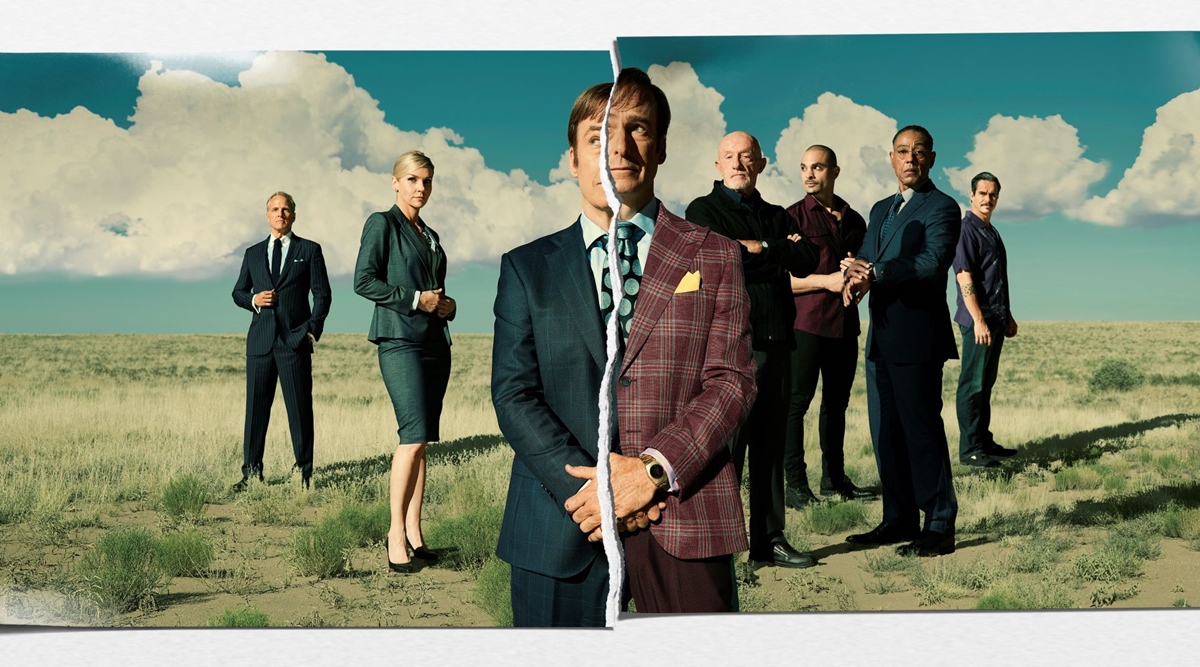
I will be taking a brief hiatus from blogging today and tomorrow, but I will soon resume my blogging duties by turning my attention to the hit show Better Call Saul. (Pictured below is the poster for Season 6 of Better Call Saul, the final season, which is scheduled to air sometime in 2022.) Specifically, I will explore the problem of illicit or wicked promises and what moral weight, if any, we should assign to these types of promises.

2020 Emmy predictions: Better Call Saul will win Outstanding Drama Series  award | Entertainment News,The Indian Express

Posted in Uncategorized | Leave a comment

JFK conspiracy-theory update

The government is once again “postponing” the release of the next batch of JFK assassination records. For your reference, here is the official announcement.

Posted in Uncategorized | 2 Comments

Monday Map: Greater Florida

What if we replaced all of Alabama and Mississippi as well as most of Georgia and parts of Tennessee with “Greater Florida”? And what if, instead of sleepy Tallahassee, we made St Augustine, Florida’s oldest city, the capital of this new mega-state?

Hat tip: u/gayfknicon (via Reddit)
Posted in Uncategorized | Leave a comment

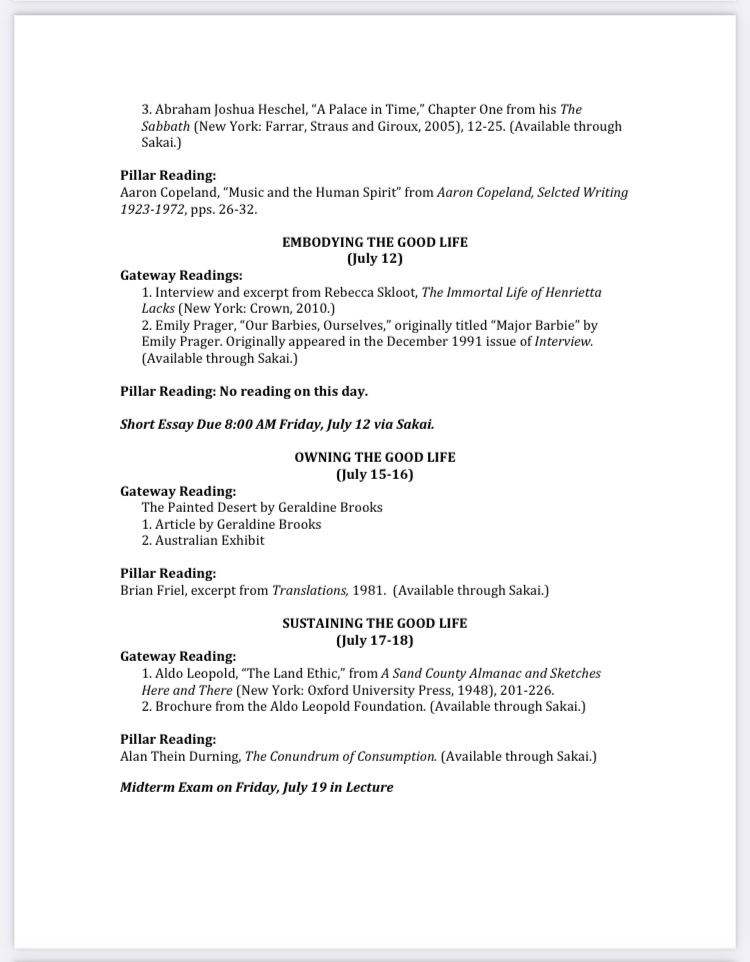
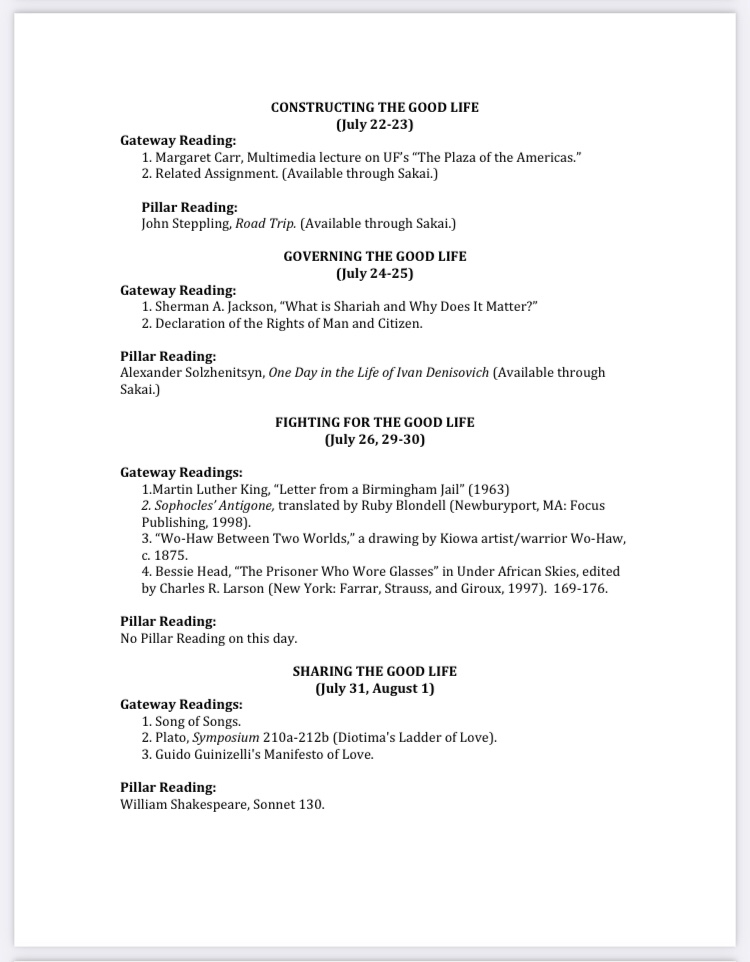
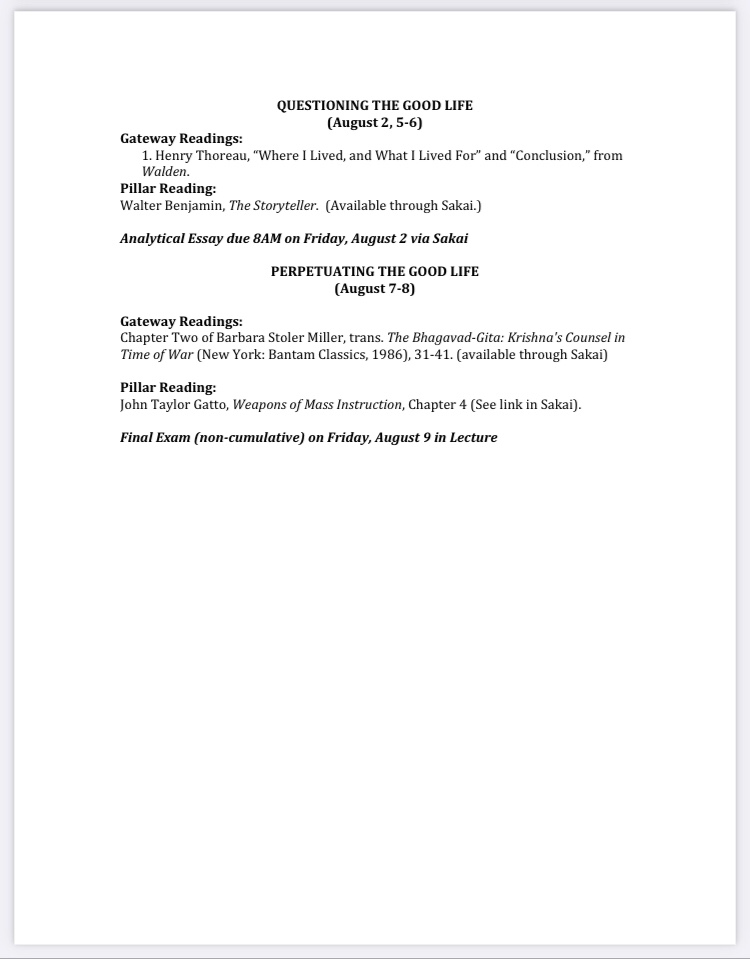
Sunday Syllabus: What Is the Good Life?

All great college courses are based on thought-provoking questions. This syllabus asks the most important question of all. (Source: University of Florida.)

Posted in Uncategorized | 3 Comments

Simpsons’ Syllabus?

Via Kottke: “The Simpsons Library Instagram account has been documenting all of the books, magazines, and other printed matter that has appeared on the long-running sitcom.”

Posted in Uncategorized | Leave a comment