Twitter Tuesday: #ShotOniPhone

I am interrupting my “Adam Smith in Paris” series to share this tweet by @johnkrausphotos:

Posted in Uncategorized | Leave a comment

Adam Smith and Lady Janet Anstruther?

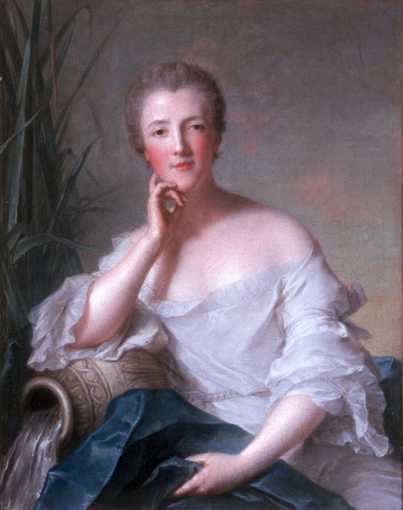
Who was the “lady of Fife” mentioned in my previous post and in Colbert’s letter dated 18 September 1766? Alain Alcouffe and Andrew Moore (2018, 15 n.18) identify this possible love interest as Lady Janet Anstruther (b. 1725, d. 1802), who “was renowned for her beauty and for her reputation as a flirt” and whose portrait is pictured below. Additionally, the second edition of Dugald Stewart’s biographical essay “An Account of the Life and Writings of Adam Smith” contains the following enigmatic endnote (Stewart, 1980/1811, pp. 349–350, emphasis added):

“In the early part of Mr Smith’s life it is well known to his friends, that he was for several years attached to a young lady of great beauty and accomplishment. How far his addresses were favourably received, or what the circumstances were which prevented their union, I have not been able to learn; but I believe it is pretty certain that, after this disappointment, he laid aside all thoughts of marriage. The lady to whom I allude died also unmarried. She survived Mr Smith for a considerable number of years, and was alive long after the publication of the first edition of this Memoir. I had the pleasure of seeing her when she was turned of eighty, and when she still retained evident traces of her former beauty. The powers of her understanding and the gaiety of her temper seemed to have suffered nothing from the hand of time.”

What are we to make of this passage? For his part, Ian Simpson Ross (2010, p. 227) describes this early love interest as “a Fife lady whom he [Smith] had loved very much,” but neither Ross nor Stewart provides any additional evidence about the geographical location of this love affair; nor do they identify this woman by name. Nevertheless, if this love affair occurred in the Kirkcaldy of Smith’s youth, a small parish located in the burgh of Fife, it should not be impossible to identify the lady. (At the time of Smith’s birth in 1723, Kirkcaldy had a population of 1,500. See, e.g., Heilbroner (1999), p. 46.)

So, was this “young lady of great beauty and accomplishment” in Stewart’s endnote Lady Janet Anstruther, as alleged by Alain Alcouffe and Andrew Moore in their 2018 paper? Was she the same “lady of Fife” referred to in Colbert’s 1766 letter? Whoever she was, Dugald Stewart is a credible witness to an attachment “well known” to Smith’s friends, since Stewart personally knew Smith and many of Smith’s acquaintances. Also, to give the reader some idea of Stewart’s stature and sterling reputation, he co-founded the Royal Society of Edinburgh in 1783 and held the chair of moral philosophy at the University of Edinburgh for thirty-five years, from 1785 until 1820. Why would Stewart risk sullying his own reputation (and that of his friend Smith) by reporting mere gossip or an unfounded rumor?

I will present one last piece of evidence of Adam Smith’s love life in my next post …

Lady Anstruther', Sir Joshua Reynolds, 1761 | Tate

Artist Credit and Works Cited

Artist of the Portrait of Lady Janet Anstruther: Sir Joshua Reynolds.

Alain Alcouffe and Andrew Moore, “Smith’s Networks in Occitania—March 1764–October 1765,” presented at the 31st Annual Conference of Eighteenth-Century Scottish Studies Society (Glasgow) (July 17–21, 2018).

Robert L. Heilbroner, The Worldly Philosophers: The Lives, Times, and Ideas of Great Economic Thinkers, 7th rev. ed., Touchstone (1999).

Ian Simpson Ross, The Life of Adam Smith, 2nd ed., Oxford University Press (2010).

Dugald Stewart, Account of the Life and Writings of Adam Smith, LL.D., in Ian Simpson Ross, editor, Essays on Philosophical Subjects, pp. 269–351, Oxford University Press (1980 [1811]).

Posted in Uncategorized | Leave a comment

Adam Smith in France: Four Lost Loves?

Let’s resume my “Adam Smith in Paris” series by introducing an additional piece of evidence, a possible “Smoking Arrow” in the form of a private letter addressed to Smith dated 18 September 1766, a month before the end of Smith’s sojourn in Paris. Among other things, this correspondence contains the following fascinating passage (as translated in Alcouffe & Massot-Bordenave, p. 260):

“And you, Adam Smith, Glasgow philosopher, high-broad Ladies’ hero and idol, what are you doing my dear friend? How do you govern the Duchess of Anville and Madame de Boufflers, where your heart is always in love with Madame Nicol and with the attractions as apparent as hidden of this lady of Fife that you loved.”

For the reasons that I discuss in my refereed paper “Adam Smith in Love“, this letter was most likely authored by Seignelay Colbert de Castlehill (b. 1735, d. 1811), a fellow Scotsman who had emigrated to France at an early age. According to John Rae (1895, p. 176), Colbert played an important role during the first part of Smith’s trip overseas as Smith’s “chief guide and friend”. In brief, Colbert became Smith’s closest friend and confidant while Smith was living in Toulouse–March 1764 to November 1765–and Colbert even travelled with Smith to Bordeaux and to other places in the South of France during this 18-month period. See generally Alcouffe & Massot-Bordenave (2020), pp. 216–217; see also Rae (1895), p. 179.

Getting down to brass tacks, who are the four women identified in Colbert’s letter: the Duchess of Anville, Madame de Boufflers, Madame Nicol, and the Lady of Fife? Also, how did Adam Smith meet these women, and what was the nature of his relationship with them, i.e. romantic or Platonic? Let’s begin with the Duchess of Anville. As it happens, Anville is a real place, a small settlement in southwestern France, but at the time of Smith’s travels (1764-66), Anville’s population probably consisted of just a few hundred souls. (See here, for example.) Did such a small village really have a duchess? If so, it should be possible to determine the identity of this noblewoman.

What about the second women mentioned in this letter, Madame de Boufflers? According to this entry in Wikipedia, Madame de Boufflers refers to a real person, the French noblewoman Marie Françoise Catherine de Beauvau-Craon (b. 1711, d. 1786), whose portrait is pictured below. Her formal title was the Marquise de Boufflers, but she was commonly known as Madame de Boufflers! Did Smith meet Madame de Boufflers in Paris or Toulouse (or somewhere else), and what was the nature of their relationship?

Next, who was Madame Nicol, the woman who, if Colbert is to be believed, apparently won Smith’s heart? My colleagues and friends Alain Alcouffe and Philippe Massot-Bordenave (2020, p. 262) have identified this potential love interest as a resident of Toulouse: “Madame Nicol, the wife of Capitoul Nicol.” Alcouffe and Massot-Bordenave also provide additional details about Madame Nicol’s husband, Jacques Nicol de Montblanc, a wealthy Anglophile Frenchman who presided over the Mont Blanc Estate in the present Croix Daurade district of Toulouse, but they do not provide any further details about Madame Nicol herself.

Lastly, who was the fourth woman in this letter — “this lady of Fife that [Smith] loved”? Whoever she was, it is worth noting that the word love in this part of the letter appears in the past tense, but how far back? Does the lady of Fife refer to the same “English lady” in Dr James Currie’s 1794 letter–the hearsay report that I mentioned in a previous post–i.e. the lady that Adam Smith was supposedly “dying for” during his visit to Abbeville in northwestern France? Or does she refer to another lost love. I shall consider the latter possibility in my next post …

Screen Shot 2021-10-10 at 10.37.47 PM

Artist Credit and Works Cited

Artist of the Portrait of Madame de Bouffler: Jean Marc Nattier.

Alain Alcouffe and Philippe Massot-Bordenave, Adam Smith in Toulouse and Occitania: The Unknown Years, Palgrave Macmillan (2020).

John Rae, Life of Adam Smith, London: Macmillan (1895).

Posted in Uncategorized | Leave a comment

Maps of Neverland

Which one is your favorite, and why?

Posted in Uncategorized | Leave a comment

Adam Smith in Paris: L’affaire du Chevalier de La Barre

In a private letter dated 14 July 1794, four years and three days after the death of Adam Smith, Dr James Currie mentions that Adam Smith visited the small town of Abbeville in northwest France. Currie’s letter does not say when Smith was there or for how long, but in 1766, the same year Smith was in Paris, Abbeville was the center of a huge controversy. It was where Chevalier de La Barre was put to death in July of 1766, the last man in Europe to be executed for the crime of blasphemy.

Although Currie’s letter is based on a second-hand report, and although I do not have any further evidence beyond this letter, I conjecture that Adam Smith may have travelled from Paris to Abbeville to witness the execution of the Chevalier de La Barre. (For detailed histories of this celebrated case, see Claverie 1992; 1994; Chassaigne 1920.) At the time, “l’affaire du Chevalier de La Barre” attracted attention across France—even attracting the sustained notice of the celebrated atheist and free-thinker Voltaire, who Adam Smith had visited in Geneva on his way to France. (Also, as it happens, Voltaire wrote not one but two accounts of the young de La Barre’s prosecution and sentence. Voltaire’s first essay about this case is dated 15 July 1766, but some scholars believe this essay was actually written in 1767 or 1768. For a summary of Voltaire’s involvement in this notorious case, see Claverie 1994; see also Braden 1965, 58–65.)

As it happens, this case has now become so central to the identity and history of modern France that many streets are named after the Chevalier de La Barre and many monuments were subsequently erected in his honor, including a statue standing at the gates of the famous Sacred Heart Cathedral in the Montmarte neighborhood of Paris. A picture of this particular monument to de La Barre is posted below. (Alas, this monument was taken down during the Second World War on orders of Marshal Philippe Pétain and melted down. See Caulcutt 2020.)

Dr Currie’s 1794 letter also contains the following observation:

“Dr. Smith, it seems, while at Abbeville, was deeply in love with an English lady there. What seems more singular, a French Marquise, a woman of talents and esprit, was smitten, or thought herself smitten, with the Doctor, and made violent attempts to obtain his friendship. She was just come from Paris [and], … was determined to obtain his friendship; but after various attempts was obliged to give the matter up. Dr. Smith had not the easy and natural manner of Mr. Hume…. He [Smith] was abstracted and inattentive. He could not endure this French woman, and was, besides, dying for another.”

Dying for another! Is the reference to the “Marquise” in this letter to Madame Riccoboni, or did Smith have yet another French admirer? Also, who was the “English lady” that Smith was “deeply in love with”? I will address these questions next week …
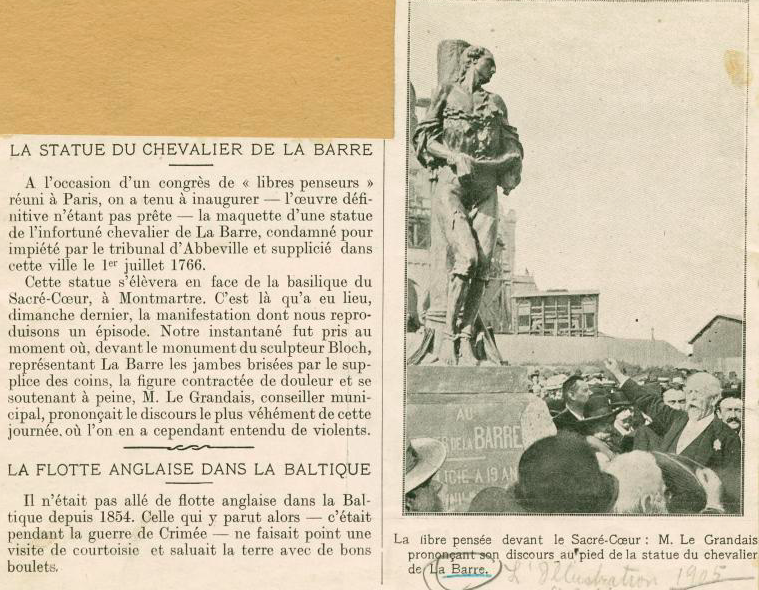
Screen Shot 2021-10-08 at 4.03.53 PM

Works Cited

Irene Braden, Voltaire and Injustice. Master’s thesis, Kansas State University (1965).

Marc Chassaigne, Le procès du Chevalier de la Barre, Librairie Victor Lecoffre (1920).

Clea Caulcutt, “French Free-Thinking Knight Still a Controversial Figure,” France Médias Monde (Dec. 16, 2010).

Elisabeth Claverie, “Sainte indignation contre indignation éclairée: L’affaire du Chevalier de La Barre,” Ethnologie Française, Vol. 22, No. 3 (2010), pp. 271–290.

James Currie, Letter 87 (“To Dugald Stewart, Esq., Edinburgh, July 14, ’94, Respecting Dr. Adam Smith”), in William Wallace Currie, editor, Memoir of the Life, Writings, and Correspondence of James Currie, M.D. F.R.S., of Liverpool, vol. 2, pp. 317–320. London: Longman, Rees, Orme, Brown, & Green (1831).

Posted in Uncategorized | 1 Comment

Adam Smith in Paris: Le Demimonde

Previously, I described the dramatic transformation in Madame Marie-Jeanne Riccoboni’s attitude toward Adam Smith. (See my post dated 7 October 2021.) But the question remains, Why did she fall for him?

Madame Riccoboni, an accomplished actress and novelist, and Doctor Smith, a travelling tutor and admirer of the stage, were by all accounts avid theater and opera fans, so it is not far-fetched to imagine them attending a play or an opera or a concert together during Smith’s 10-month stay in the City of Light. At the very least, according to one historian (Dawson, 2013, p. 8), “it is very likely Smith took recommendations from Riccoboni as to which theatrical performances to attend.” Perhaps it was this side of Adam Smith, his art-appreciation side, that sparked their connection?

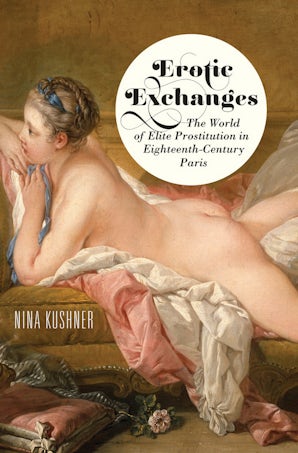
But as I noted in my Oct. 8 post, what is even more fascinating is that these theatrical venues were the center of an elite sexual marketplace: the demimonde. Nina Kushner, a historian who specializes in 18th-century European social and cultural history, has researched both the buyer and seller sides of this elite sex market in her 2013 book Erotic Exchanges: The World of Elite Prostitution in 18th-Century Paris, the cover of which is pictured below. Although Kushner’s book does not contain any reference to Adam Smith, it paints a vivid portrait of many of the famed dames entretenues or “kept women” of French high society.

Kushner’s meticulous research is based on the records of the Paris police, which operated a secret unit to keep track of these underground activities, and the inspectors of this unit, which operated from 1747 to 1771, produced hundreds of dossiers and wrote up thousands of hand-written pages documenting the demimonde. In summary, Kushner found that, although not all theater women were kept mistresses or femmes galantes, many actresses and dancers on the Paris stage earned their living by engaging in long-term sexual and often companionate relationships with men from the financial, political, and social elites, known as le monde.

According to Kushner (p. 31), “It was widely understood that any woman in the Opéra, and to a lesser degree the other theater companies, was a dame entretenue, or at least wanted to be.” These femmes galantes–famous for their talent, glamour, and beauty–were the most highly sought-after women of pleasure in all Europe. As Kushner explains (p. 5), “being on the stage greatly increased [an actress’s or dancer’s] ‘sexual capital,’ the desirability of a mistress and hence the prices she could command for her services.” In addition, police files indicate that the theater district of the French capital was teeming with high-end brothels and places of ill repute. Again, as I mentioned in my previous post, there is no evidence to indicate that Smith partook in any illicit activities while he was overseas, but how could such a keen observer like Smith not have taken any notice of the world around him, including the world of kept women, brothels, etc.?

There is one more aspect of Smith’s stay in Paris that I would like mention. Another source, a private letter by a Dr James Currie, a respected medical doctor in Liverpool, reports that Adam Smith visited the French town of Abbeville. This letter does not explain why Smith went to visit this remote town in northwest France, but Abbeville was the center of one of the greatest injustices in French history: the execution of the Chevalier de La Barre, the last man in Europe to be put to death for the crime of blasphemy. Did Smith visit Abbeville to attend this public execution? I will further explore this conjecture in my next post …

Erotic Exchanges by Nina Kushner | Paperback | Cornell University Press

Works Cited

Deidre Dawson, “Love, Marriage and Virtue: Mary Wollstonecraft and Sophie de Grouchy, Marquise de Condorcet, Respond to The Theory of Moral Sentiments,” Adam Smith Review, Vol. 7 (2013), pp. 24–46.

Nina Kushner, Erotic Exchanges: The World of Elite Prostitution in 18th-Century, Cornell University Press (2013).

Posted in Uncategorized | Leave a comment

Adam Smith in Paris: La Comédie Italienne

In his 1995 biography of Adam Smith, Ian Simpson Ross (p. 209 & p. 213) reports that “Smith enjoyed the Paris opera season” and had “attended many plays and concerts, as well as the operas ….” during his 10-month sojourn in Paris. In fact, the first report in writing of Smith in Paris involves the popular opera Tom Jones.

This first-hand account appears in a private letter authored by Horace Walpole (b. 1717, d. 1797), the 4th Earl of Orford, dated March 2, 1766 (quoted in Ross, p. 209). Walpole, a literary light and a member of Parliament for many years, reports attending an “Italian play” with Smith and his pupil Henry Scott, the future 3d Duke of Buccleuch. Smith’s biographer, Ross (1995, p. 209), identifies this production as “the successful opera Tom Jones, first produced in 1765, revived the following year [1766], and still in the repertoire … at the Comedie Italienne.”

What Ross and Walpole himself both leave out, however, should be of even greater interest to students of Smith’s travels. The Comédie-Italienne–or Théâtre-Italien, as this playhouse was also known–, was not only the celebrated stage where Smith’s soon-to-be lady admirer Madame Marie-Jeanne Riccoboni rose to fame (see my previous post); as historian Nina Kushner has shown, this theater was also an integral part of an elite Parisian sexual marketplace, the famed dames entretenues or “kept women” of French high society!

That this sultry scene overlapped directly with the world of theater — Adam Smith’s world during his sojourn in the French capital — opens up an entirely new vista of Smith’s social world in the City of Light. Although there is no direct evidence to indicate that Smith himself kept a mistress in Paris or partook in any illicit activities, this intersection between Smith’s love of theater and the dames entretenues of the Paris stage is worth exploring, a connection that I shall further explore in my next post …

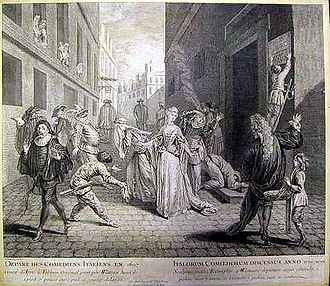
Comédie-Italienne - Wikipedia

Posted in Uncategorized | 1 Comment

Adam Smith in Paris: Madame Riccoboni

Note: this is the second post in a multi-part series.

Most accounts of Adam Smith’s extended stay in Paris (Dec. 1765 to Oct. 1766) emphasize the pivotal role that Paris’s famed philosophical and literary “salons” had on Smith’s intellectual development. In brief, the “salons” were informal gatherings hosted in private homes, often by prominent Parisian women. The invited guests discussed literature and exchanged ideas about art, science, and politics, and it was at these gatherings that Smith met the French “physiocrats” and developed revolutionary ideas that would eventually find their way in his magnum opus “The Wealth of Nations”.

But what about Smith’s social life in Paris? By all accounts, it turns out that Smith not only broke out of his intellectual shell during his Parisian sojourn; he also became something of a bon vivant, participating in Paris’s cultural life by attending many plays, concerts, and operas and making many friends among France’s leading artists. Among these artistic friends was Marie-Jeanne Riccoboni (b. 1713, d. 1792).

Although Riccoboni is little remembered today, she was a highly accomplished actress in the Théâtre-Italien, located in the Hôtel de Bourgogne of Paris, and an illustrious femme de lettres, one of the best-selling novelists of her day. More importantly, Riccoboni not only became acquainted with Smith during his extended residency in Paris in 1766; she also fell in love with him!

Madame Riccoboni met Smith for the first time in May of 1766, most likely in the Parisian salon of the Baron d’Holbach, where Smith was a frequent visitor. At first, Smith did not make much of an impression on Riccoboni. In a private letter dated May 21, 1766, she describes Smith in the following unflattering terms:

“Two Englishmen have arrived here. One [David Hume] is a friend of Garrick’s; the other is Scottish; my God what a Scot! He speaks with difficulty through big teeth, and he’s ugly as the devil. He’s Mr. Smith, author of a book I haven’t read [i.e. The Theory of Moral Sentiments]….”

But by the end of Smith’s fateful visit in October of that same year (1766), Madame Riccoboni had fallen head over heels with Smith! In a letter addressed to fellow actor David Garrick and dated sometime in October 1766, she reveals her feelings for Smith thus:

“I am very pleased with myself, my dear Garrick, to offer you that which I miss very sharply: the pleasure of Mr. Smith’s company. I am like a foolish young girl who listens to her lover without ever thinking of loss, which always accompanies pleasure. Scold me, beat me, kill me! But I adore Mr. Smith, I adore him greatly. I wish the devil would take all our philosophes, as long as he returns Mr. Smith to me.”

What happened between May and October to so dramatically change Riccoboni’s attitude toward Smith? I will address this question in my next blog post …

Posted in Uncategorized | 1 Comment

Adam Smith in Paris

Now that I have completed my multi-part reviews of the Jack Balkin and Mark Lemley papers, I will be “switching gears”, so to speak, and writing about Adam Smith’s eventful year in Paris — i.e., from late December of 1765 up to mid-October of 1766. But before proceeding any further, what was Smith doing in France in the first place, and what was he up to in the City of Light?

Most students of Adam Smith’s life will already know the answer to the first question. Smith was in France in his capacity as a “travelling tutor” to Henry Scott Campbell, the future 3d Duke of Buccleuch, whose portrait (circa 1760) is posted below. A direct descendant of King Charles II of England and King Henry IV of France, Duke Henry was born into one of the wealthiest, most powerful, and most prestigious families in Scotland, and upon his official coming of age in September of 1767, Smith’s pupil would legally become one of Scotland’s largest landowners. (For further background about Duke Henry, I strongly recommend Alain Alcouffe & Philippe Massot-Bordenave’s 2020 book “Adam Smith in Toulouse and Occitania”, especially pp. 28–34.)

Okay, but what were Adam Smith and his pupil doing in Paris? Stay tuned, for I will revisit (pun intended!) Smith’s time in Paris in my next few posts.

File:Henry Scott, 3rd Duke of Buccleuch.jpg - Wikimedia Commons
Wikimedia Commons

Posted in Uncategorized | Leave a comment

Can Facebook do better? Compared to what?

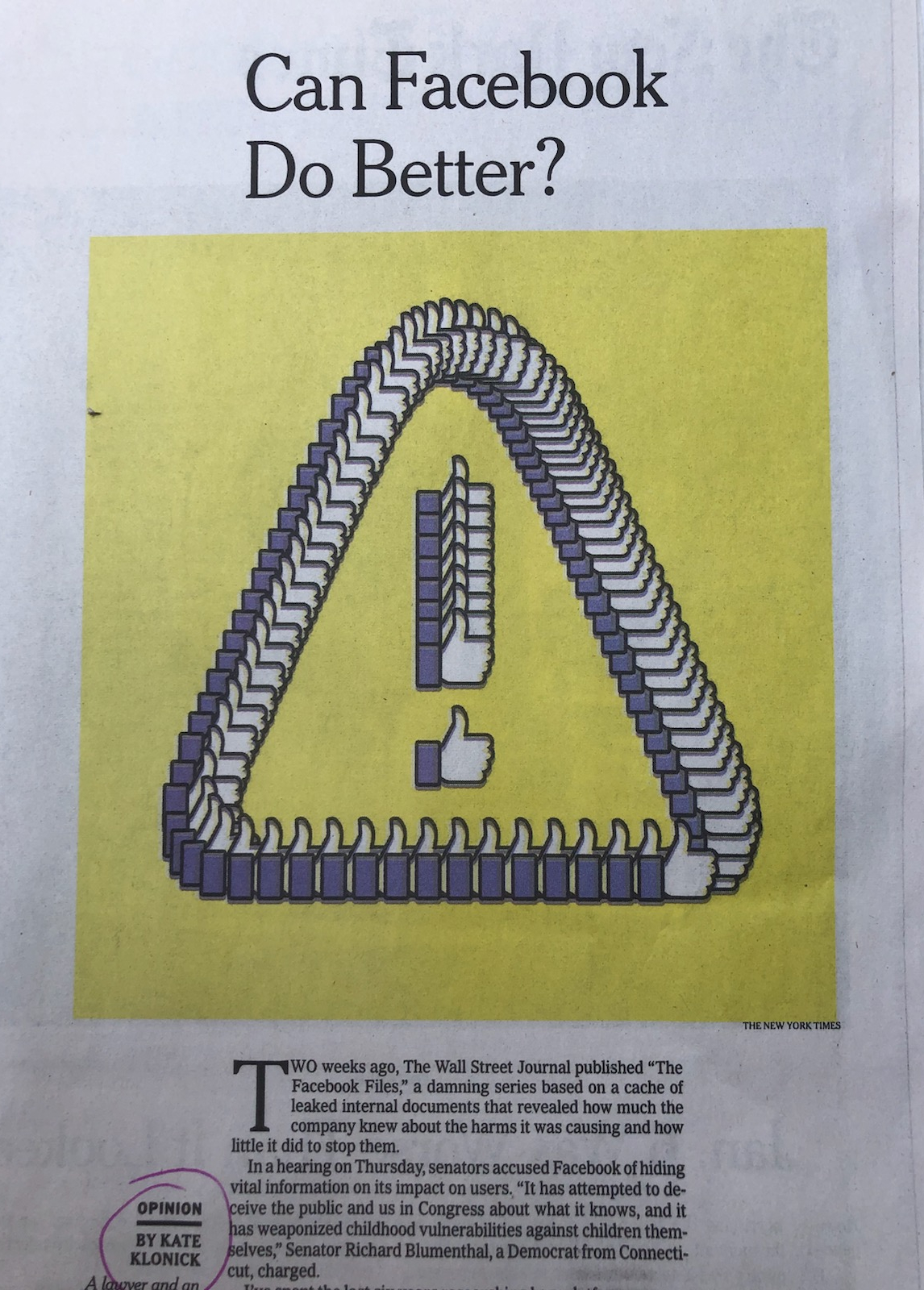
The first question forms the title of this recent op-ed in the New York Times by Kate Klonick, a social media expert who is a law professor at St John’s University Law School as well as a fellow at the Yale Law School and the Brookings Institution. Professor Klonick’s question also provides me a golden opportunity to conclude my review of Mark Lemley’s paper “The Contradictions of Platform Regulation“.

For starters, how are we supposed to answer Professor Klonick’s rhetorical question? To the point: “Compared to what?”

Alas, although Prof Klonick makes a number of good points, her op-ed contains no comparative analysis whatsoever. Instead, she criticizes the way Facebook measures “user engagement” and then recommends “laws demanding transparency from platforms, a new agency to specialize in online issues, and more science.”

For my part, although I agree with Klonick’s call for “more science”– i.e. more independent studies about the harmful and beneficial effects of social media — I caution against her call for more laws and a new public Internet agency for the reasons Mark Lemley gives in Part 2 of his excellent paper. In summary, Professor Lemley gives two-and-a-half slam-dunk reasons why calls for regulation of tech platforms are likely to backfire:

1. Trade-offs are unavoidable (p. 324): “Real regulation of technology platforms is likely to require difficult tradeoffs, giving some people what they want but making things worse in other respects.”

2a. Perverse effects on new entrants: Regulations often make it difficult for new entrants to compete with existing big players, or in Lemley’s own words (p. 332): “… once government creates a comprehensive set of regulations for an industry, it makes it harder for others to break into that industry, since they don’t have the experience dealing with those complex regulations.”

2b. Entrenchment effects (p. 335, footnote omitted): “… in the long run, regulatory choices that impose obligations on incumbents to do the things we want them to do as a matter of social policy are likely to entrench those incumbents, making it harder and more costly for someone to compete with them and eliminating the possibility of competing by offering a different set of policies.”

Notice that I say “two-and-a-half reasons” because the last two points are really two sides of the same coin, but be that as it may, the larger point that Lemley (and I) want to make is that bottom-up competition, not top-down regulation, is the way to go. If you don’t like Facebook, there is always Twitter and TikTok! And if you don’t like Twitter or TikTok, why not start your own social network? My motto, then, is let a thousand social media sites bloom! Yes, all of these platforms are going to be imperfect, but I want to live in a world where users have choices, where it is easy for new platforms to enter the Internet market.

IMG_4196

Posted in Uncategorized | Leave a comment