The Evolution of Singapore’s Street Lighting — Remember Singapore

Source: Remember Singapore (9/24)

For the first half of the 19th century, much of Singapore was covered in darkness at night. Although there were candles, oil and kerosene lamps, they were unable to illuminate large areas and were mostly confined to localised spaces such as houses and offices. Oil Lamps The first street lamps were apparently set up in […]

The Evolution of Singapore’s Street Lighting — Remember Singapore
Posted in Uncategorized | Leave a comment

Moon Art

Check out this beautiful collage of the Moon in 48 different hues. This original work of “Moon art” was created by Marcella Giulia Pace. (More details about her project are available here; hat tip: Kottke.)

Posted in Uncategorized | Leave a comment

Social Media Regulation Redux

I recently reviewed Jack Balkin’s paper on social media regulation and ended up giving it a mere “D minus” (see here, for example). But what would an “A plus” platform regulation paper look like? In a word, it would look like this. To the point, in the same volume in which Balkin’s sub-par paper appears, Stanford law professor Mark Lemley has published an excellent essay titled “The Contradictions of Platform Regulation“, which is, simply put, one of the best papers on Internet regulation that I have read thus far. Lemley’s work is deserving of more attention, so I will begin writing up a multi-part review of Professor Lemley’s new paper starting on Monday of next week …

Immediate Self-Contradiction - TV Tropes
Posted in Uncategorized | Leave a comment

The Anti-Facebook

Imagine an alternative social network, one without like buttons or noisy notifications — an anti-Facebook where the feed is reverse chronological, not algorithmic, and where nothing is monetized. Imagine no more …

In particular, check out Minushttps://minus.social/ — a “finite” social network in which each user gets 100 posts, period. According to Minus’s website: “The site’s only visible metric counts down, showing how many posts each user has remaining.” Although users may reply to a post as often as they like, each user is allotted a maximum of 100 posts for life. Check it out for yourself and tell me what you think …

Posted in Uncategorized | Leave a comment

Parking Garage Art

The “code wall” parking garage at the Lake Nona Town Center in Orlando, Florida has to be one of the most beautiful and creative parking structures in the world. For additional details, check out this short entry from the London International Creative Competition (LICC) and this more detailed report by Eva Recinos (via Vice).

Lake Nona is shaping up to be quite the upscale, busy district | Annual  Manual | Orlando | Orlando Weekly
LICC

Posted in Uncategorized | Leave a comment

Throwback Thursday: do you remember the 21st night of September?

Those are the opening words of the 1978 song “September” by one of the greatest North American bands of all time: Earth, Wind & Fire. For me, this song brings back so many beautiful memories from my childhood in Los Angeles, California. (Hat tip: Kottke.)

Posted in Uncategorized | 1 Comment

Fall Update

In addition to my regular teaching duties and service commitments, this fall I will be presenting some of my ongoing research projects (in bold) at the following upcoming conferences:

  1. Betting on Conspiracies?” at the 2021 Annual Conference of the Central States Law Schools Association (CSLSA), to be held via Zoom on Sept. 24-26. (I will present my paper “Betting on Conspiracy Theories“, which I wrote earlier this year for a special symposium issue of the Journal of Law & Public Policy; in brief, I will propose an open betting market to adjudicate the truth values of conspiracy theories and fake news.)
  2. Lockdowns as Takings” at the LatCrit 2021 Biennial Conference, to be held in Denver, Colorado on Oct. 8-9. (I began writing this paper in the spring of 2020 and made significant additions and revisions to it this summer; in summary, I will explain why lockdown orders constitute a “taking” of property–specifically, a taking of the labor rights of “non-essential” workers. A draft of my takings paper is available here.)
  3. Adam Smith in Paris” at the 2021 Annual Conference of the International Adam Smith Society (IASS), to be held in Madison, Wisconsin on Oct. 14-16. (I will present my ongoing work on Adam Smith’s enigmatic private life (see here, for example), with a special focus on his ten-month residency in Paris from late-December 1765 to mid-October 1766.)
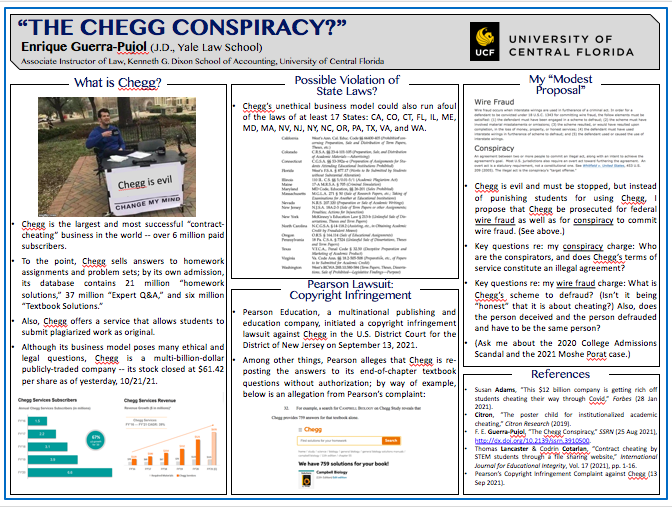
  4. The Chegg Conspiracy” at the 2021 Statewide Symposium of the Florida Undergraduate Research Association (FURA), to be held in Gainesville, Florida on Oct. 22-23, and at the 2021 Annual Conference of the Southeastern Academy of Legal Studies in Business (SEALSB), to be held in Savannah, Georgia on Nov. 11-13. (I will explore the buyer and seller sides of Chegg’s illicit market and propose that Chegg be criminally prosecuted for wire fraud. A draft of this short paper is available here.)
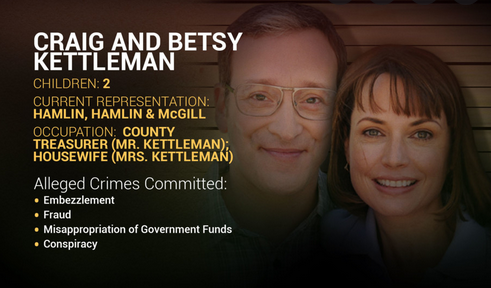
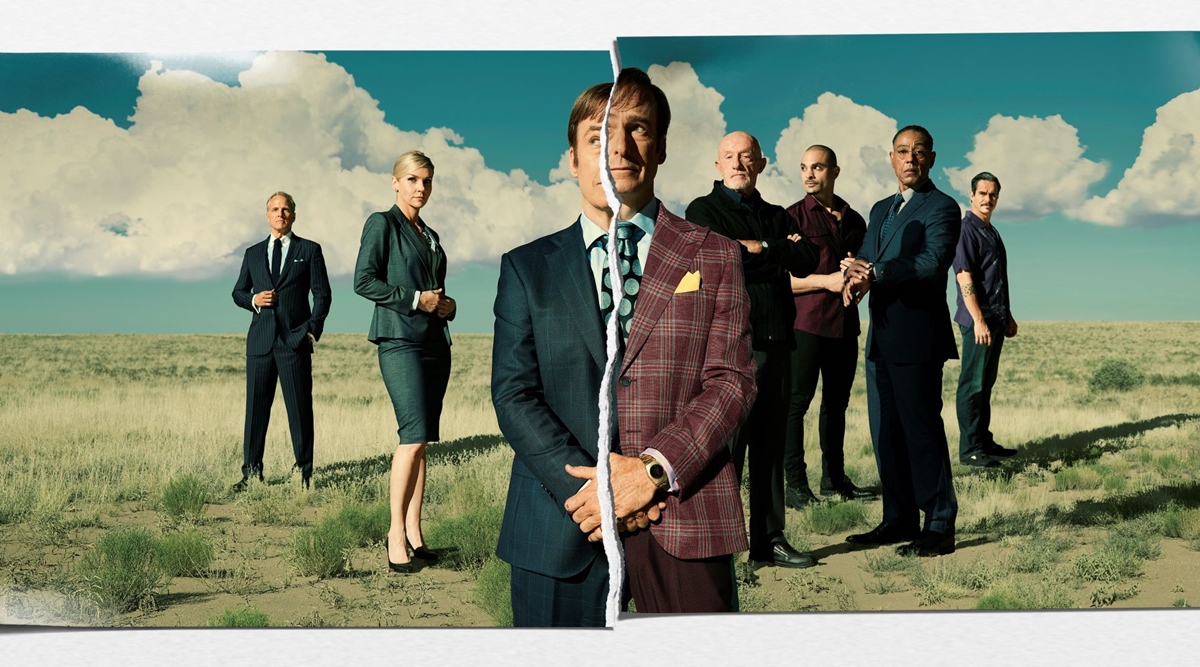
  5. Lastly, I have been invited to contribute a chapter to the forthcoming book “Better Call Saul and Philosophy”. Along with the original “Breaking Bad” series, I am a huge fan of “Better Call Saul”, so I am thrilled to participate in this project. My chapter is tentatively titled “Breaking Bad Promises” and although it is not due until mid-November, I will be blogging about my contribution to this new book soon.
Coming soon – MHSIBCA
Posted in Uncategorized | Leave a comment

Mona Lisa 2021

Check out this fascinating report in Tech Crunch by Devin Coldeway, who explains how computer scientists used “machine learning” and AI techniques to bring Leonardo da Vinci’s famous portrait of the Mona Lisa to life.

Hat tip: @pickover
Posted in Uncategorized | Leave a comment

PSA: Just say no (to the drug of social media regulation)

For your reference, below is a compilation in chronological order of my 12-part critique of Yale law professor Jack Balkin’s call for regulation of social media platforms:

  1. Jack Balkin commits the Nirvana Fallacy (9.7)
  2. Memo to Balkin: define your terms (9.8)
  3. Some questions for Jack Balkin (9.9)
  4. Professor, they run ads (9.9)
  5. Jack Balkin’s bait-and-switch (9.10)
  6. Balkin’s big blind spot (9.11)
  7. Jack Balkin, meet Edward Snowden (9.11)
  8. How not to regulate social media (9.14)
  9. The Facebook apology cycle (9.15)
  10. If Jack Balkin were King of the Internet … (9.18)
  11. Balkin’s modest proposal: notice and take-down (9.20)
  12. Jack Balkin’s final grade: D minus (9.21)
Batman Slaps Robin! | Just Say No to Stupid Internet Memes!
Posted in Uncategorized | 5 Comments

Jack Balkin’s final grade: D minus

This is my last post in this series.

Yale Law School Professor Jack Balkin concludes his social media regulation paper with the following paragraph, which I will quote in full below:

“We should regulate social media because we care about the digital public sphere. Social media have already constructed a digital public sphere in which they are the most important players. Our goal should be to make that digital public sphere vibrant and healthy, so that it furthers the goals of the free speech principle—political democracy, cultural democracy, and the growth and spread of knowledge. To achieve those ends, we need trustworthy intermediate institutions with the right kinds of norms. The goal of regulation should be to give social media companies incentives to take on their appropriate responsibilities in the digital public sphere.”

Before proceeding, notice that Prof Balkin’s conclusion consists of five separate sentences. The ideas expressed in all of these concluding sentences, however, are either vacuous or tautological. For starters, consider Sentence #1 (emphasis added): “We should regulate social media because we care about the digital public sphere.” Bullshit! We could just as well argue that we should leave social media alone for the same reason: precisely because “we care” about the digital public square.

Similarly, Sentence #2 is just as vacuous as #1, setting forth the following non-sequitur (emphasis added): “Social media have already constructed a digital public sphere in which they are the most important players.” Sigh. Of course social media platforms are “the most important players” in this space; without these platforms, there would be no digital public square to speak of. So what?

Sentence #3, however, is the most vacuous sentence of them all (emphasis added): “Our goal should be to make that digital public sphere vibrant and healthy, so that it furthers … political democracy, cultural democracy, and the growth and spread of knowledge.” Alas, as I mentioned previously, Balkin doesn’t bother to define what he means by “vibrant” and “healthy”; nor does he make a persuasive case that regulation would achieve these lofty but undefined goals instead of making matters worse.

Next, Sentence #4 contains this brilliant piece of circular reasoning (emphasis added), “To achieve those ends [i.e. a healthy and vibrant digital public square], we need trustworthy intermediate institutions with the right kinds of norms.” Again, however, Balkin does not spell out what these “norms” are; nor does he explain how regulation would generate these optimal social media norms. Worse yet, when it comes to Internet governance, Balkin simply assumes that governments are more trustworthy than private companies, an assumption that is dubious at best.

Finally, Sentence #5 concludes with this vacuous and empty observation (emphasis added), “The goal of regulation should be to give social media companies incentives to take on their appropriate responsibilities in the digital public sphere.” But above and beyond the formulation and even-handed enforcement of their content moderation policies (and, I might add, the reduction of enforcement errors), what are these “appropriate responsibilities”?

This omission on Prof Balkin’s part shows us the overall problem with his call for social media regulation. To the point, Balkin never provides us with a well-defined yardstick for deciding whether social media policies are furthering or hindering the goals of a “healthy and vibrant” digital public square. By contrast, I would argue that our digital public square has never been healthier or more vibrant (defined in terms of the number of social media options we have and the general level of freedom we have on each platform), I would further argue that social media regulation, by increasing compliance costs and liability risks, would very likely make matters worse by discouraging new entrants from entering the social media market.

It’s time to bring this review to a close by assigning Professor Balkin’s work a letter grade. Although I am generally an easy grader, Balkin is a law professor at Yale, so I will grade him on a curve. In particular, given his susceptibility to the Nirvana Fallacy (a rookie mistake), his vacuous and woefully inadequate reasoning (see above), and his utter inability to define key terms, Balkin’s work merits a “D minus” at best.

Grade D Minus - D Minus Grade Png Transparent PNG - 388x316 - Free Download  on NicePNG
Posted in Uncategorized | 2 Comments