Thus far, I have carefully reviewed the first four parts, plus the intro, of Professor Balkin’s new paper “How to … regulate social media”. That portion of the paper is mere throat-clearing, so to speak, providing the context for Balkin’s overall pro-regulation argument. In Parts 5 and 6 of his paper, however, Balkin finally gets around to explaining in earnest why social media must be regulated.
To appreciate Balkin’s contribution, let me engage in some background throat-clearing myself. To the point, whenever someone calls for government regulation — whether it be regulation of social media or regulation of hair dressers — one should always ask two questions: (1) What is the problem that the call for regulation is designed to solve? And (2) will the proposed regulation solve the problem, or will it make it worse? (Shout out to my intellectual hero, Ronald Coase.)
With this background in mind, let’s now turn to Parts 5 and 6 of Balkin’s paper. According to Balkin (pp. 81-82), the problem with social media today — i.e. the problem that he wants to fix via regulation — is the overproduction of propaganda and conspiracy theories and the underproduction of “knowledge” — another term, by the way, that Balkin does not bother to define. Additionally, Parts 5 and 6 explain why social media over-produces so much, for lack of a better word, “intellectual garbage” (e.g. propaganda, fake news, and conspiracy theories) and under-produces informed opinions or true “knowledge”. According to Balkin (p. 82), the reason for this sad state of affairs is that social media firms are “profit-making technology companies” that are “solely market-driven.”
Is Balkin serious? Is that the best he can muster?
Let me not waste any more of our time. In brief, there are three fundamental flaws with Balkin’s pro-regulation argument. One is empirical: he provides no evidence whatsoever that conspiracy theories, fake news, etc. are being over-produced or are crowding out “knowledge”. For my part, I do not dispute that conspiracy theories and fake news do, in fact, spread on social media, but my reply to Balkin and his elitist ilk is that the optimal level of such garbage is not zero.
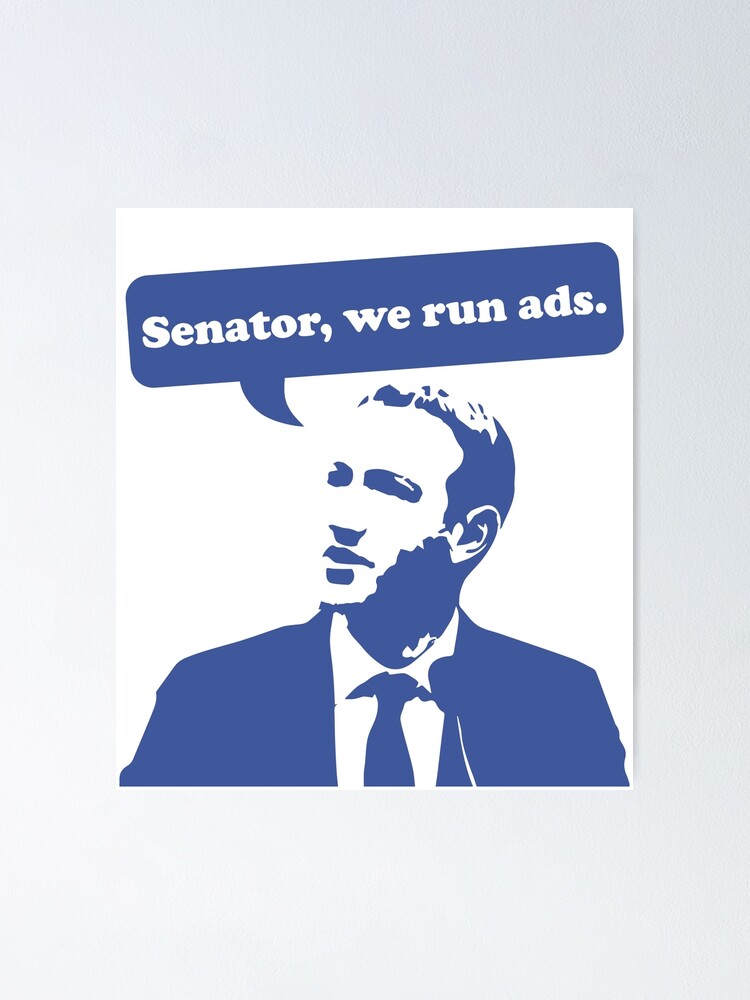
Another problem is that Balkin has his pro-regulation blinders on again. What do I mean by this? I mean that Professor Balkin fails to realize that all media companies — from ABC News and CNN to The New York Times and the Washington Post — are all profit-making companies that are ultimately market-driven. (I already made this critique in a previous post, which is titled “Professor, they run ads,” with the “they” referring to all media companies, not just social media ones.)
But the biggest problem with Balkin’s argument — and the biggest blind spot in his overall liberal law professor world view — is his distorted picture of the market incentives of social media companies. For Balkin, the reason why conspiracy theories and fake news and other forms of intellectual garbage spread on the Internet is because social media platforms need to cater to the tastes, however low-brow or deranged, of all its users, and furthermore, the reason why social media companies cater to these tastes is because these firms are “solely market-driven”.
Alas, Balkin is wrong. Market incentives are features, not bugs. Social media companies have many incentives to clean up their acts and curb the spread of misleading or even dangerous information, and that is why social media firms spend so much time and effort on their content moderation policies, even in the absence of the heavy hand of government regulation. These companies might not always get it right. (Often, it is conservative voices that are censored.) But my larger point here is that social media companies don’t need the government telling them what to do.
Having made this stinging critique of Balkin’s pro-regulation argument, I now want give Professor Balkin his due. Although Balkin’s pro-regulating stance is for the most part misguided for the reasons I have provided above, in Parts 5 and 6 of his paper Balkin also highlights two legitimate concerns about social media — concerns that might justify some form of public regulation.
One legitimate concern is the private cost of content moderation, or as Balkin himself puts it (p. 83), “Quick, accurate, at-scale content moderation is hard to achieve.” The other potential concern is what Balkin refers to as “the dangers of surveillance capitalism” (p. 84). In exchange for “free” access to Instagram and Gmail, for example, Facebook and Google are able to collect and aggregate enormous amounts of end user data and then use that data not only to sell ads, but also to “nudge” their users in potentially ominous directions.
Like I said, these are legitimate concerns, and Balkin is right to bring them up. The main difference between Balkin and me, however, is that I tend to have more faith in markets than in governments when it comes to finding solutions. Edward Snowden taught us that lesson years ago …
Note: I will review the last third of Balkin’s nine-part paper (i.e., Parts 7 to 9) next week, starting on Tuesday.
Although Part 4 of Professor Balkin’s paper on “How to regulate … social media” is the shortest part of his paper (with the exception of the opening and concluding sections), it is emblematic of the larger problem with Balkin’s pro-regulation argument. Recall from my previous post the four key ingredients that, according to Balkin, a healthy public square must have. (These four criteria are set forth in Part 3 of Balkin’s paper.) Part 4 adds a fifth criterion to the list — a criterion specific to the digital sphere. To the point, Balkin argues (correctly, I might add) that a healthy digital public square requires a wide variety of social media platforms, or in Balkin’s own words (p. 80), “To achieve a healthy and vibrant public sphere, we also need many different kinds of social media with many different affordances, and many different ways for individuals to participate and make culture.”
I agree 100% with Balkin about the benefits of diversity in the social media market, so what is the problem? Let’s put aside the irony that this is more or less the situation we have now. Today, we have many different types of social media platforms — from Twitter to TikTok and everything in between — each with their own set of community standards and values. The deeper problem with Balkin’s overall stance in favor of social media regulation is that it has an enormous blind spot — a blind spot so big that it will bring down his entire pro-regulation argument like a house of cards.
In brief, Balkin is so single-mindedly committed to social media regulation that he completely misses the following glaring contradiction that would result from any regulatory regime: the fact that regulation will most likely destroy the existing diversity of social media models that Balkin (and I) so much desire by imposing a uniform set of legal requirements on social media firms. Worse yet, Balkin also fails to recognize the very real possibility that regulation might impose onerous compliance costs on social media firms, making it even more difficult for new firms to enter the social media market!
To be fair, Balkin will mention the problem of compliance costs in passing toward the end of his paper (on p. 90), but mark my words: later on, when we reach the last part of the paper (Part 9 on pp. 89-96), the part that contains Balkin’s proposed models for regulation, we will see why all of Balkin’s specific proposals will most likely make matters worse by destroying the existing diversity of social media models.
Note: I will review Parts 5 and 6 of Balkin’s paper in my next 9/11 post.
In Part 3 of his paper “How to regulate … social media”, Yale Professor Balkin finally gets around to defining what he means by a “healthy” and “vibrant” digital public sphere. (In a previous post, I had taken Balkin to task for his failure to define these terms.)
For Balkin, a healthy and vibrant public sphere requires four key ingredients:
First off (p. 78), Balkin claims that a healthy public square requires “knowledge institutions” and “knowledge professionals” who produce knowledge and shape public opinion.
Balkin further claims on pp. 78-79 of his paper that a healthy public square requires “lots of different institutions” with the qualification that these knowledge institutions “can’t all be owned or controlled by a small number of people.”
Next, Balkin claims that a healthy public square requires not only a plethora of knowledge institutions {a condition, I might add, that appears to exist today}; in addition, “these institutions have to have professional norms that guide how they produce, organize, and distribute knowledge” (p. 79).
Lastly, Balkin adds a fourth and final criterion that his idealized public square must meet. According to Balkin (p. 79), his idealized group of knowledge institutions and knowledge professionals must be “trustworthy and trusted” (emphasis in the original).
Once again, however, Professor Balkin has fallen prey to the Nirvana Fallacy: he presents a Utopian picture of an ideal public square, he contrasts this ideal world to the imperfect status quo, and then he assumes that government regulation would be best way to reach this state of perfection. Sigh.
But I want to make a further and deeper critique of Balkin’s ideal public square. Specifically, is it really so ideal? After all, another word for “knowledge professional” is “expert” — and one man’s trusted “expert” is another man’s dime-a-dozen “pundit”. Moreover, as Philip Tetlock has shown (see here, for example), our “experts” and “pundits” (depending on which term you prefer) have been wrong on so many issues so many times that I wonder whether we would not, in fact, be better off without them
I also want to push back on Prof Balkin’s assumption that the current status quo is so bad that it needs to be fixed through some form of government regulation — as if our government can be more trusted than Balkin’s idealized “knowledge professionals”. Even if you are inclined to agree with Balkin that a healthy public square requires “lots of different institutions”, doesn’t today’s Internet world satisfy this condition with flying colors? From Wikipedia to Google Scholar, and everything in between, today’s Internet contains a veritable plethora of knowledge institutions, especially when we compare the status quo to the awful pre-Internet age that Balkin so idolizes, when there were only three major broadcast networks.
Most importantly, notice the sneaky intellectual sleight of hand at work in this part of Professor Balkin’s paper. Balkin defines the terms “healthy” and “vibrant” by referring to concepts that also need to be defined. What, for example, do these so-called “professional norms” consist of? How can we tell when an institution is both “trustworthy and trusted”? Alas, my colleague and friend does not say. Instead, he has pulled off a classic bait-and-switch — substituting “trustworthy” and “trusted” for “healthy” and “vibrant” — circular reasoning at its finest!
Note: I will review the next part of Balkin’s paper (Part 4) in my next post …
Part 2 of Professor Balkin’s “How to regulate … social media” paper — the second-longest part of the paper — contains the core of Balkin’s pro-regulation argument. First off, Professor Balkin identifies three “central functions” that social media platforms perform (p. 75, emphasis in the original) (note: for some unknown reason, Balkin drops search engines from his analysis):
Social media platforms facilitate public participation in art, politics, and culture.
Social media platforms organize public conversations so people can easily find and communicate with each other.
Social media platforms curate public opinion by enforcing community standards and terms of service.
For Prof Balkin, a healthy, vibrant, and well-functioning digital public sphere is one that performs these three central pro-public functions. Therefore, according to Balkin’s argument, regulation of social media platforms is called for to the extent they are not performing these public-regarding functions well.
Alas, my colleague and friend commits two fundamental fallacies. One is the so-called Nirvana Fallacy, which I mentioned when I began this series of blog posts. Simply put, Prof Balkin (like most liberal law professors) assumes that regulation will somehow magically produce ideal results. The other fallacy is what I like to call the Oskar Lange/Abba Lerner Fallacy, named after the two leading proponents of the losing side of the Socialist Calculation Debate of the 1930s and 40s. Specifically, the main weakness of Balkin’s argument is that it simply assumes that social media platforms are unable to perform the above pro-public functions well in the absence of top-down regulation, but in reality, social media platforms might already have a built-in monetary incentive to perform these public-regarding functions even in the absence of regulation.
To see why, ask yourself, What is the real purpose of social media platforms? (Hint, it is the same purpose for which traditional forms of print and broadcast media exist.) Spoiler alert: it is to make money by selling ads. So, what is wrong with selling ads? Why do Balkin and so many of my academic colleagues idealize traditional media but are simultaneously so suspicious of social media’s business model? Both business models are essentially the same. More importantly, by having to rely on ad revenue to stay in business, social media platforms have a monetary incentive to perform Balkin’s three public-regarding functions in order to attract a sufficient critical mass of users and then sell the attention time of these users to ad firms. How would “regulation” improve on this current social media situation?
As it happens, Balkin anticipates my objection in the next part of his paper (Part 3) by pulling the old “bait-and-switch” strategy. I will describe Balkin’s sneaky sleight of hand in my next post …
The most technical part of Jack Balkin’s latest work, which is titled “How to regulate (and not regulate) social media”, is Part 1 of the paper, where Professor Balkin identifies three different types of Internet services and organizes them hierarchically as follows:
Basic Services. At the bottom of Balkin’s Internet hierarchy are firms that provide “basic Internet services”, including domain name registration providers like GoDaddy and Wix, Internet service providers like AT&T and Verizon (FYI: here is a list of the largest Internet providers in the US), and data storage providers or “cloud” services such as Amazon Web Services and Microsoft Azure.
Payment Services. In the middle of this cyber-hierarchy are firms like Visa, MasterCard, and PayPal that provide electronic payment services over the Internet.
Information and Networking Services. At the top of Balkin’s hierarchy are firms like Google and Facebook–that is, firms that offer Internet search engines or social media platforms.
Why does Professor Balkin draw these distinctions between (i) basic Internet services and (ii) payment services and (iii) information/networking services? In short, because Balkin is willing to leave the first two categories completely alone, since “content moderation … is not their job” (p. 74). Instead, Balkin argues we should treat payment and basic services the same way we treat public accommodations (i.e. all customers should be allowed to use all such payment and basic Internet services as long as they are not using those services to engage in an illegal activity), or as Balkin himself puts it (p. 73), “Let the bits flow freely and efficiently. Don’t try to engage in content regulation at this level.”
The key question for me, then, is this, Why won’t Prof Balkin extend this “hands off” or laissez faire logic to business firms that provide information or networking services? In other words, what makes search engines or social media platforms so dangerous or harmful that they must be regulated? What about text messages, for example? Should text messages also be subject to content regulations? Professor Balkin will address these questions in the next part of his paper (Part II), which I will review and respond to in my next post …
Note: this is the second post in a multi-part series.
In the Introduction to his paper “How to regulate … social media” (see my previous post), my colleague and friend Jack Balkin invites us to ponder the following question, Why should we regulate social media? And to his credit, Professor Balkin states his thesis up front: “The goal of regulating social media is to create incentives for social media companies to be responsible and trustworthy institutions that will help foster a healthy and vibrant digital public square.”
Alas, Prof Balkin commits the most elementary of intellectual sins: he doesn’t bother to define his terms — in particular, what does he mean by “responsible” or “trustworthy”? — nor does he provide any criteria for deciding whether our digital public square is “healthy” or “vibrant”. (Indeed, if Balkin were my student, this utter failure to define terms would earn him a C minus at best.) As a result, right off the bat, Balkin’s knee-jerk call for Internet regulation looks like just another law professor solution in search of a non-existent problem. After all, isn’t the digital public square — at least in countries like the United States; China, of course, is a different story — already a healthy and vibrant one, however those terms are defined?
The remainder of Professor Balkin’s regulation paper consists of nine separate parts, plus a Conclusion. I will review and respond to each part of Balkin’s essay in the days ahead.
Jack M. Balkin, a liberal law professor at Yale, recently wrote an essay titled “How to regulate (and not regulate) social media.” (The full essay is available here, via the Journal of Free Speech Law.) Suffice it to say (for now) that his essay is part of a growing chorus of legal scholars calling for greater regulation of the Internet. These scholars, however, are guilty of committing the Nirvana Fallacy: they assume that public regulation will somehow magically produce optimal results or at least better results than the status quo. The late great Ronald Coase demolished this fallacy years ago, but because of Professor Balkin’s academic stature (he is Knight Professor of Constitutional Law and the First Amendment at Yale Law School), and because of my interest in social media and information technology law generally, starting tomorrow I will be taking a closer look at Balkin’s arguments and will be writing up a multi-part review of/response to Balkin’s essay.
Check out this homage to the late great puzzle master Martin Gardner. Here is one of his mathematical puzzles: “Imagine heating a metal ring enough so it expands. What happens to the hole, does it get bigger or smaller?”
















 prior probability