
I will resume my “reflections” in the next day or two; in the meantime, check out Seth’s Instagram page (@dudewithsign) here.
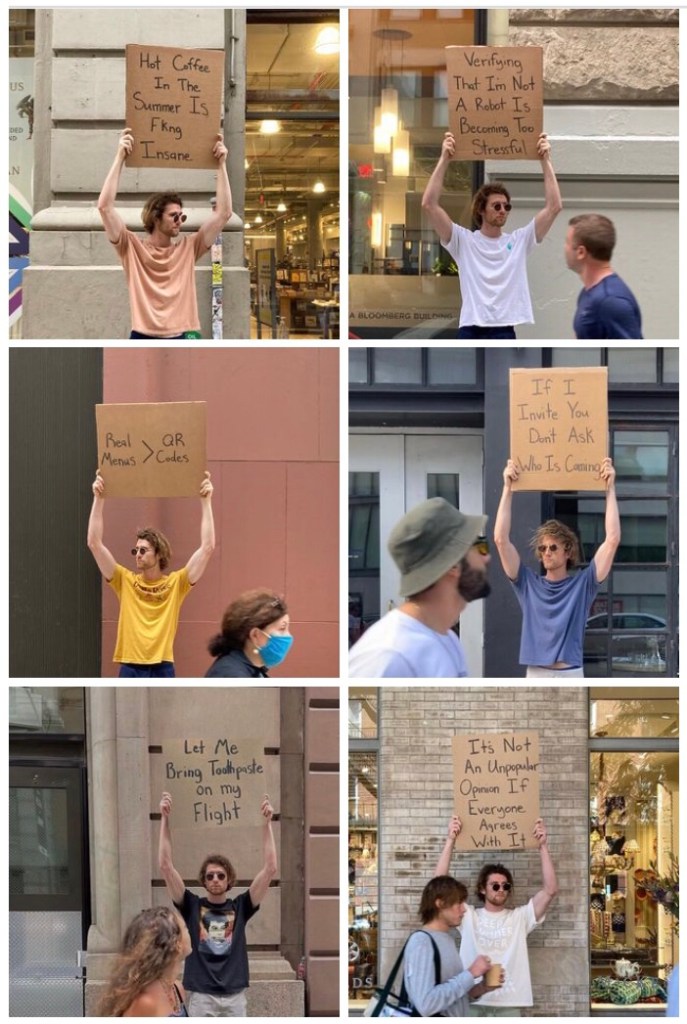
I will resume my “reflections” in the next day or two; in the meantime, check out Seth’s Instagram page (@dudewithsign) here.
Thus far, I have reflected on my college and law school years and on my first few years in Old San Juan, Puerto Rico. Today, I will write about my transition into academia. At the time, I was an associate attorney at the largest law firm in Latin America, but truth be told I did not find the practice of law to be intellectually rewarding, so I was elated when in the spring of 1998 I was offered my first teaching job at the law school of the Pontificia Universidad Catolica de Puerto Rico (PUCPR), where I was assigned to teach two courses: (1) a new survey course on “The Evolution and Development of the Institutions of the Civil Law”, and (2) a two-semester course on the U.S. Constitution, and I could not have been happier! (Shout out to Charles Cuprill Oppenheimer (1916-2012), the venerable dean of the PUCPR law school, to whom I owe this happy state of affairs.)
During my first few years in academia, I decided to take an openly historical approach to my subjects. For my civil law lectures, for example I turned to the law of ancient Rome, consulting the Institutes of Gauis and the Corpus Juris Civilis. In addition to these primary Roman law sources, I read a wide variety of classics in legal history, legal theory, and anthropology, including books by Barry Nicholas, John Merryman, Oliver Wendell Holmes, Sir Henry Maine, and E. Adamson Hoebel. Summing up, like the renaissance humanists of the quattrocento, I turned to Roman Law and other bygone legal sources since the European civilian tradition and Puerto Rico’s civil law institutions can ultimately be traced back to ancient Rome. My students and I thus turned to history to discover and reconstruct the origins of the civil law in Western civilization, such as the evolution of delictal (i.e. tort) actions from the early lex talionis, to the more developed lex Aquilia of classical times, up to article 1802 of the Puerto Rico Civil Code.
Likewise, for my course on the United States Constitution, I began to read such classics as The Federalist Papers, Alexis de Tocqueville’s Democracy in America, and the judicial opinions of Chief Justice John Marshall. I also read the works of leading contemporary constitutional scholars, including Akhil Amar’s The Bill of Rights: Creation and Reconstruction, John Hart Ely’s Democracy and Distrust, and José Trías Monge’s masterful four-volume constitutional history of Puerto Rico. Moreover, instead of organizing my “conlaw” course around Supreme Court cases (as most conlaw professors do), I organized my course around the major historical events in U.S. history: the Revolution, the Founding, the Whiskey Rebellion, the Louisiana Purchase, the Seminole Wars, the Treaty of Guadalupe Hidalgo, etc.
Though this was only a beginning, it was a fairly productive period in my intellectual life. All told, I had devoured dozens of scholarly books and hundreds of academic articles, and I had prepared detailed and meticulous lecture notes and course outlines. Furthermore, it was only a matter of time before I moved from legal history to history qua history and to give serious and sustained thought to the problems of historical analysis. I eventually discovered a wonderful book entitled The Historian’s Craft, written by the French historian Marc Bloch, who was brutally executed by the Nazis in 1942. His was the most thoughtful book I had read about the work of the historian. He treated such eternal problems as subjectivity, historical causation, and historical time itself with such a degree of humility and humanity that his ideas have left a lasting impression on me.
Now that I look back on this transition, I cannot help but notice that, because of my historical focus, I hardly read any contemporary law cases, but little did I know that my most important intellectual development was yet to come, for I had yet to meet Orlando I. Martínez-Garcia, a future colleague and friend who would gently nudge me in a different direction …

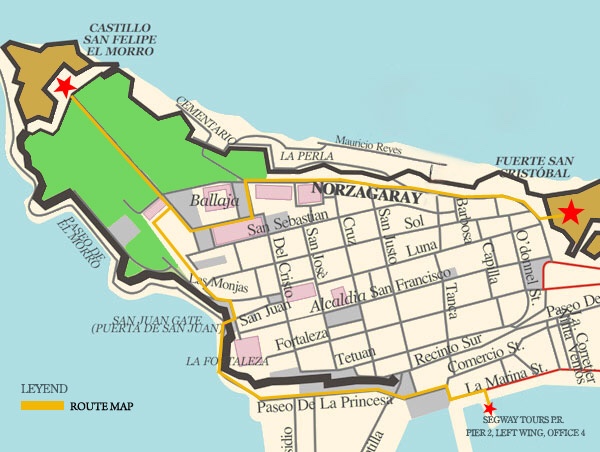
I wrote about my college and law school years (1986 to 1993) in my previous two posts in this series; today, I will reflect on my first few years of “island life” in the Commonwealth of Puerto Rico (1993 to 1995). During that first fateful summer after law school (the summer of ’93), I bought my first car (a dark blue Jeep Wrangler with manual transmission), studied the intricacies of the Puerto Rico Civil Code and other areas of P.R. law at the University of Puerto Rico, where I took Professor Ernesto Chiesa’s excellent “JTS” bar review course (I passed the notoriously difficult P.R. bar exam on my first try), and began my legal career as an associate attorney at the prestigious firm of McConnell Valdes, the largest law firm in Latin America. But what I remember the most are not my material possessions or my early professional accomplishments. What I cherish the most from this time are my memories of the walled city of Viejo San Juan, one of the most romantic and magical places in the world. Like a moth attracted to light, I made my way to the old city as soon as I graduated from law school and checked in at the Gallery Inn on Norzagaray Street, overlooking the ocean-side neighborhood of La Perla. The legendary proprietress of the Gallery Inn, the artist Jan D’Esopo, put me in touch with a local realtor, Merce Roca, and that is how I somehow ended up renting the first floor of Ms Rosa’s charming colonial-era building on Calle Caleta de San Juan #58, between the Cathedral and La Puerta de San Juan, where I lived for the next 24 months. Ms Roca’s first-floor apartment had tall ceilings and was furnished with many pieces of Caribbean art–paintings, sculptures, even an old-fashioned barber’s chair–and the tall doors of the main living room and the small colonial-style kitchen all opened out into a garden. Moreover, I had to walk through the garden to reach the bedroom, which was nestled in a small cozy room behind the garden, where tiny tree frogs (the famed coqui) would sing their two-note lullabies late at night. Alas, all good things must come to an end. I eventually left Old San Juan behind when I bought my own place in the historic neighborhood of Miramar and began my academic career at the Catholic University of Puerto Rico, but my metaphorical heart will always belong to Old San Juan …

I will resume my “reflections” series in my next post; in the meantime, here are some of my favorite summer songs; enjoy …
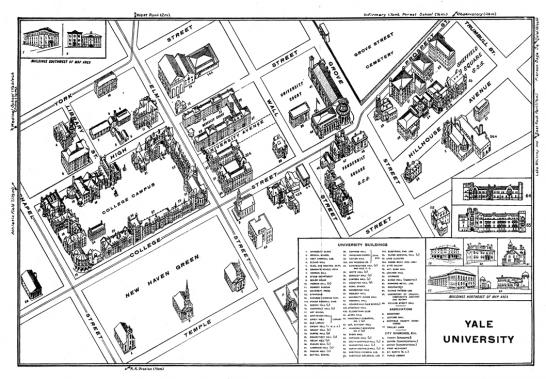
I talked about my college years at UCSB in my previous “reflection”; today, I will talk about my Yale Law School years (1990 to 1993). Beyond the wonderful friendships I made during my three years of law school, several highlights stand out in my mind: (1) reading “The Problem of Social Cost” and being exposed to the “Coase theorem” for the first time in Guido Calabresi’s torts class; (2) finding out that most private property in the world is held in common (I discovered this fact while I was editing a large chunk of Bob Ellickson’s “Property in Land” law review article for Volume 102 of the Yale Law Journal); and (3) attending, along with a small handful of other Yalies, a Herbie Hancock concert as well as a guest lecture by the great Mexican writer and thinker Octavio Paz. (I had previously written my senior honors thesis in Spanish about one of Paz’s works.) In addition to these intellectual and cultural experiences, I twice had the privilege of being one of Steven M. Gillon’s teaching assistants for his survey U.S. history course. As part of my duties, I attended all of Professor Gillon’s excellent lectures and led two discussion sections every week. More importantly, that’s when I knew for sure that I wanted to become a college professor myself!
Starting today, I will be reflecting on some of the milestones in my life, beginning with my college years at UC Santa Barbara (1986 to 1990), the happiest time of my life! I took daily walks or bike rides along the beach and expanded my intellectual and cultural horizons, double-majoring in International Relations and Spanish Literature, and I also had the opportunity to live abroad two summers in Cuernavaca, Mexico. Suffice it to say I fell in love with Mexican culture and history and henceforth considered myself to be an honorary citizen of Mexico!
(As a postscript, looking back now, one of the most amazing aspects of my college years is the fact that, outside high-level military research circles, none of us had cell phones or email accounts, and furthermore, e-books and “learning management systems” like Canvas and Blackboard did not yet exist. What bliss!)

Below is the last (for now) but most important part of my Conspiracy Theory Betting Market proposal from my forthcoming paper “Betting on Conspiracies” (footnotes below the fold):
One practical objection to my proposal is that conspiracy theories generally refer to past events, like the JFK assassination, 9/11, or the election of 2020. The objection here is that one cannot use a market to “predict” a past event. In reality, though, betting markets are versatile and can be used for a wide variety of purposes beyond forecasting. Among other things, betting markets can provide financial services such as risk-management and the funding of public goods.[1] In addition, betting markets can be used to detect lies, encourage and protect whistleblowers, and provide decision makers with honest advice.[2] In principle, then, we should be able to extend betting markets to conspiracy theories as well.
The most serious practical objection to my proposal, however, is the “Who Decides?” question. Simply put, who decides whether a particular conspiracy theory is true or whether a particular claim or allegation is “fake news”? To the point, what separates actual or true conspiracies, like the assassination of the President of Haiti on July 7, 2021,[3] from improbable or far-fetched conspiracy theories, like Gödel’s “Leibniz Conspiracy”? In short, where should we draw the line, and how should we draw it? [Note to my readers: I devote the first two parts of my paper to Kurt Gödel’s “Leibniz Conspiracy”.]
To solve this dilemma, I would consider the creation a special “conspiracy court”–perhaps consisting of retired judges as well as randomly-selected citizen-jurors–and turn to the actual law of conspiracy.[4] This court would hold hearings and allow anyone to make arguments or present evidence. The court would then have to decide, does the alleged conspiracy theory satisfy the elements of conspiracy law?, perhaps using “the preponderance of the evidence” or “more likely than not” standard used in civil cases. That is, instead of asking whether a given conspiracy theory is simple or falsifiable or questioning the mental health of conspiracy proponents, we should be asking a series of practical or legal questions: (1) Is the agreement an illicit one? (2) Which conspirator has performed an overt act in furtherance of the conspiracy? And (3) which standard of proof should apply to the previous two questions?
By way of example, the general federal conspiracy statute, which is codified at 18 U.S.C. § 371,[5] defines a conspiracy as follows:
If two or more persons conspire either to commit any offense against the United States, or to defraud the United States, or any agency thereof in any manner or for any purpose, and one or more of such persons do any act to effect the object of the conspiracy, each shall be fined under this title or imprisoned not more than five years, or both.
In other words, the crime of conspiracy refers to an illicit agreement between two or more persons, i.e. an agreement to commit a crime or a civil offense, such as common law fraud.[6] The conspirators must intend to achieve the goal of the conspiracy, and at least one of the conspirators must commit an “overt act” in furtherance of the conspiracy.[7] As an aside, it is worth noting here that a conspiracy need not be successful in order to constitute a crime; it is the illicit agreement itself that it is illegal, regardless of whether the conspiracy is successfully carried out beyond the commission of an overt act in furtherance of the conspiracy.[8] Given this well-developed body of law, a specially-constituted “conspiracy court,” as I have outlined here, could turn out to be an ideal neutral party that could be trusted with resolving the specific claims underlying the bets in my proposed market.[9] People will participate in a betting market only to the extent they trust that the methods and processes used to resolve bets are fair, accurate, and unbiased. A special “conspiracy court,” staffed with experienced judges and randomly-selected citizen-jurors and basing its decisions on the law of conspiracy, would go a long way to building and cultivating this trust.

Instead of trying to censor conspiracy theories, why not allow people to bet on them? Below is the next part of my Conspiracy Theory Betting Market proposal from my forthcoming paper “Betting on Conspiracies” (emphasis added, footnotes below the fold):
“My proposed Conspiracy Theory Betting Market is a retrodiction market: people would be able to buy or sell ‘conspiracy theory contracts,’ and each one of these conspiracy theory contracts would be structured as simple questions with discrete ‘Yes’ or ‘No’ outcomes. People would buy such ‘Yes’ or ‘No’ conspiracy theory contracts depending on whether they believed the answer to the specific question being bet on will turn out to be ‘Yes’ or ‘No,’ and each contract settles to some sum, say $1, if one’s answer turns out to be right, or $0 otherwise. Anyone who disagrees with the current consensus about a particular conspiracy theory would have a profit motive to participate in the market.
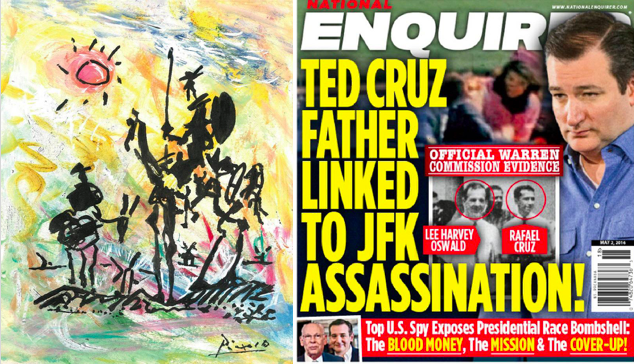
“For example, if you think Lee Harvey Oswald was part of a conspiracy or that 9/11 was an ‘inside job,’ you would be able to buy ‘Yes’ contracts on these topics, and conversely, if you think Oswald acted alone (i.e. was not part of a conspiracy to kill President John F. Kennedy) or that 9/11 was not an inside job, you would be able to buy ‘No’ contracts. The prices of these bets would be based on supply on demand, depending on how many people buy ‘Yes’ or ‘No’ contracts. If more people believe Oswald was part of a conspiracy, the price of the ‘Yes’ contract will rise, and if more people believe Oswald acted alone, the price of the ‘No’ contract will rise. The more participants or bets there are, the more likely that prices will reflect the true probabilities of the various conspiracy theories being bet on.[1]
“Imagine that a research university were to subsidize my proposed retrodiction market.[2] Further imagine that a select group of academics, pundits, and other “experts” could be allocated tokens in order to encourage them to participate in this betting market, and that statistics were collected (say, via a scoreboard) on how well they played.[3] However this proposed market is designed, it is possible to imagine a retrodiction market on most disputed conspiracy theories, with the ‘going odds’ or prices of bets based on the current academic or popular consensus. Either way, people–laymen and experts alike–would have to either ‘put up or shut up’ by supporting their claims with real money.[4] Admittedly, the details and design of my proposed Conspiracy Theory Betting Market are still open for discussion [see Part 3 of my series tomorrow], but the novelty of a retrodiction market–a betting market on past events–should not count against it, for historically speaking, markets often evolve by trial and error.”
As promised, here is an excerpt from the latest draft of my paper “Betting on Conspiracies“, forthcoming in The Journal of Law & Public Policy, in which I propose a betting market in conspiracy theories (footnotes omitted):
“Do conspiracy theories threaten democracy and constitutional values, or do they help to strengthen such values by putting them to the test? Also, how should we decide which conspiracy theories to keep an open mind about and which to dismiss out of hand? I propose a Conspiracy Theory Betting Market or ‘retrodiction market’ to resolve these questions. In other words, instead of trying to suppress conspiracy theories, why not allow people to make trades or place bets about the probable truth-values of such conspiracies?
“Why a retrodiction market for conspiracy theories? Why frame conspiracy theories as wagers or bets? *** Among other things, a betting market in conspiracy theories would aggregate disparate sources of information, would provide financial and reputational incentives to place winning bets, and would scale well with the number of people and opinions. Such a betting market would also generate unambiguous outputs that are easy to measure. In the case of my proposed betting market in conspiracy theories, success could be measured in terms of the number of participants in the market, and the volume of trades.
“Another important property of my proposed conspiracy theory betting market is that the truth-value of any given conspiracy claim would be aggregated and reflected in the price of a particular bet. Indeed, this information aggregation function is a fundamental feature of markets generally: a group’s collective model is generally more accurate than any individual model, or in the words of one proponent of prediction markets: ‘when dealing with complex issues involving many variables or moving parts, no one can claim to have a complete model or theory from which to make fail-safe predictions. More likely everyone has a partial understanding of the situation, further clouded by his own biases. But when all these partial, biased models are put together … knowledge accumulates, gaps get filled, while the various biases cancel each other.’ Similarly, my proposed retrodiction market would allow people, regardless of their aesthetic preferences (political, moral, religious, etc.) to trade on their beliefs about past events.”
More excerpts coming soon!

Debbie Harry a/k/a “Blondie” was one of my favorite artists when I was growing up!










Welcome to the online home of the IASS
Hopefully It’s Interesting.
In Conversation with Legal and Moral Philosophers
Relitigating Our Favorite Disputes
PhD, Jagiellonian University
Inquiry and opinion
Life is all about being curious, asking questions, and discovering your passion. And it can be fun!
Books, papers, and other jurisprudential things
Ramblings of a retiree in France
BY GRACE THROUGH FAITH
Natalia's space
hoping we know we're living the dream
Lover of math. Bad at drawing.
We hike, bike, and discover Central Florida and beyond
Making it big in business after age 40
Reasoning about reasoning, mathematically.
I don't mean to sound critical, but I am; so that's how it comes across
remember the good old days...
"Let me live, love and say it well in good sentences." - Sylvia Plath
a personal view of the theory of computation
Submitted For Your Perusal is a weblog wherein Matt Thomas shares and writes about things he thinks are interesting.
Logic at Columbia University
Just like the Thesis Whisperer - but with more money
the sky is no longer the limit
Technology, Culture, and Ethics
Just like the horse whisperer - but with more pages
Poetry, Other Words, and Cats

 prior probability