Crazy, quixotic, or feasible? (Part 2 of 3)

Instead of trying to censor conspiracy theories, why not allow people to bet on them? Below is the next part of my Conspiracy Theory Betting Market proposal from my forthcoming paper “Betting on Conspiracies” (emphasis added, footnotes below the fold):

“My proposed Conspiracy Theory Betting Market is a retrodiction market: people would be able to buy or sell ‘conspiracy theory contracts,’ and each one of these conspiracy theory contracts would be structured as simple questions with discrete ‘Yes’ or ‘No’ outcomes. People would buy such ‘Yes’ or ‘No’ conspiracy theory contracts depending on whether they believed the answer to the specific question being bet on will turn out to be ‘Yes’ or ‘No,’ and each contract settles to some sum, say $1, if one’s answer turns out to be right, or $0 otherwise. Anyone who disagrees with the current consensus about a particular conspiracy theory would have a profit motive to participate in the market.

“For example, if you think Lee Harvey Oswald was part of a conspiracy or that 9/11 was an ‘inside job,’ you would be able to buy ‘Yes’ contracts on these topics, and conversely, if you think Oswald acted alone (i.e. was not part of a conspiracy to kill President John F. Kennedy) or that 9/11 was not an inside job, you would be able to buy ‘No’ contracts. The prices of these bets would be based on supply on demand, depending on how many people buy ‘Yes’ or ‘No’ contracts. If more people believe Oswald was part of a conspiracy, the price of the ‘Yes’ contract will rise, and if more people believe Oswald acted alone, the price of the ‘No’ contract will rise. The more participants or bets there are, the more likely that prices will reflect the true probabilities of the various conspiracy theories being bet on.[1]

“Imagine that a research university were to subsidize my proposed retrodiction market.[2] Further imagine that a select group of academics, pundits, and other “experts” could be allocated tokens in order to encourage them to participate in this betting market, and that statistics were collected (say, via a scoreboard) on how well they played.[3] However this proposed market is designed, it is possible to imagine a retrodiction market on most disputed conspiracy theories, with the ‘going odds’ or prices of bets based on the current academic or popular consensus. Either way, people–laymen and experts alike–would have to either ‘put up or shut up’ by supporting their claims with real money.[4] Admittedly, the details and design of my proposed Conspiracy Theory Betting Market are still open for discussion [see Part 3 of my series tomorrow], but the novelty of a retrodiction market–a betting market on past events–should not count against it, for historically speaking, markets often evolve by trial and error.”

Screen Shot 2021-07-16 at 12.13.00 PM

Continue reading

Posted in Uncategorized | Leave a comment

Crazy, quixotic, or feasible?

As promised, here is an excerpt from the latest draft of my paper “Betting on Conspiracies“, forthcoming in The Journal of Law & Public Policy, in which I propose a betting market in conspiracy theories (footnotes omitted):

“Do conspiracy theories threaten democracy and constitutional values, or do they help to strengthen such values by putting them to the test? Also, how should we decide which conspiracy theories to keep an open mind about and which to dismiss out of hand? I propose a Conspiracy Theory Betting Market or ‘retrodiction market’ to resolve these questions. In other words, instead of trying to suppress conspiracy theories, why not allow people to make trades or place bets about the probable truth-values of such conspiracies?

“Why a retrodiction market for conspiracy theories? Why frame conspiracy theories as wagers or bets? *** Among other things, a betting market in conspiracy theories would aggregate disparate sources of information, would provide financial and reputational incentives to place winning bets, and would scale well with the number of people and opinions. Such a betting market would also generate unambiguous outputs that are easy to measure. In the case of my proposed betting market in conspiracy theories, success could be measured in terms of the number of participants in the market, and the volume of trades.

“Another important property of my proposed conspiracy theory betting market is that the truth-value of any given conspiracy claim would be aggregated and reflected in the price of a particular bet. Indeed, this information aggregation function is a fundamental feature of markets generally: a group’s collective model is generally more accurate than any individual model, or in the words of one proponent of prediction markets: ‘when dealing with complex issues involving many variables or moving parts, no one can claim to have a complete model or theory from which to make fail-safe predictions. More likely everyone has a partial understanding of the situation, further clouded by his own biases. But when all these partial, biased models are put together … knowledge accumulates, gaps get filled, while the various biases cancel each other.’ Similarly, my proposed retrodiction market would allow people, regardless of their aesthetic preferences (political, moral, religious, etc.) to trade on their beliefs about past events.”

More excerpts coming soon!

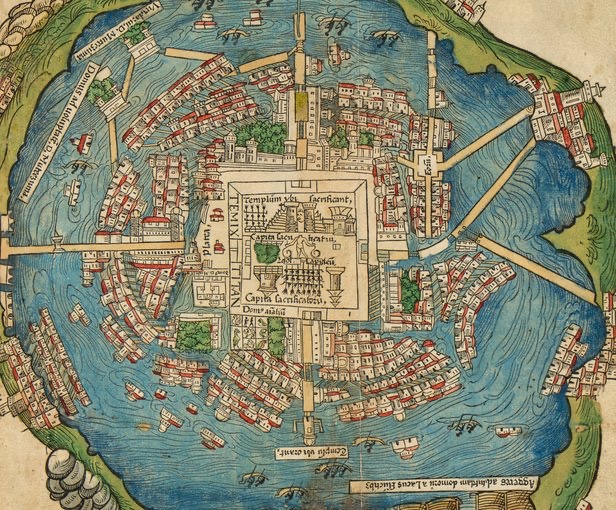
Artist credit: Radosveta Zhelyazkova (Saatchi Art)
Posted in Uncategorized | Leave a comment

Throwback Thursday: Blondie

Debbie Harry a/k/a “Blondie” was one of my favorite artists when I was growing up!

Posted in Uncategorized | Leave a comment

Vive le 14 juillet!

Today (14 July) is “Bastille Day” in France!

Posted in Uncategorized | Leave a comment

Do you know who won the Seven Years’ War?

In his latest New York Times column, Ross Douthat explains the significance of the Seven Years’ War, also known as the French and Indian War. (Hat tip: who else but the amazing Tyler Cowen?) Here is an excerpt from Douthat’s excellent essay (italics in the original):

“Once you recognize that kind of deep historical complexity, you can go in two directions. Along one path lies a kind of cynicism about almost every aspect of the past, where the reader of history is encouraged to basically root for nobody, and the emphasis is always on the self-interest lying underneath every expression of idealism. The French might have modeled what seemed like a kindlier form of colonization, but they were only following their own self-interest as greedy traders and proselytizing Catholic zealots. The New England colonies might have pioneered what seemed like an impressive form of egalitarian democracy, but they achieved their wide distribution of property by ruthlessly crushing the Pequot and the Wampanoag.

Posted in Uncategorized | Leave a comment

Helping Haiti

In response to Tyler Cowen’s recent post “Is Haiti governable right now? (at all)” — spoiler alert: his answer is “no” — I want to ask a different and more pragmatic question: What would be the best way to help the people of Haiti given their ongoing constitutional crisis? Without further ado, here is my modest proposal: Instead of another short-term or ad hoc “solution,” such as military or economic aid, why not think big and invite Haiti to become a U.S. State instead of (or in addition to) D.C. or Puerto Rico? The Congress has the exclusive power to admit new States into the union, so Congress could enact a joint resolution inviting Haiti to become the 51st State, subject to approval by the people of Haiti in a “yes” or “no” referendum. This idea may sound crazy, but hear me out: although Haiti is poor, she would have a lot to offer the USA in terms of art, culture, language, and religion (think of Louisiana, but even more awesome!); furthermore, according to the U.S. Census Bureau (2019), there are over one million Haitian Americans living in the United States (see here), almost 10% of Haiti’s population (see here, for example). #HaitianLivesMatter

Pins USA-Haiti | Friendship Pins USA-XXX | Flags U | Crossed Flag Pins Shop

Posted in Uncategorized | Leave a comment

Tuesday TikTok

Is TikTok the best thing since sliced bread? I have recently been featuring a wide variety of Tweets on most Tuesdays, so why not a “Tuesday TikTok” series as well? As it happens, now that TikTok has extended the maximum video length to three minutes (see here, for example; previously, the time limit per video was 60 seconds), I am considering combining my love of music with my love of the law by a creating a fun series of three-minute TikTok videos on various topics for my survey course on business law in the fall. (By way of example, check out “The Iconoclass,” Professor Mary McGillivray’s TikTok videos on art history, and this essay about Professor McGillivray’s unorthodox but entertaining teachings methods.)

@alex.stemp

I saw this cute couple and asked them to do a photoshoot! Results will be up soon #viral #photograph @jasminechiswell @maverickmcneilly @jess.billings

♬ Kiss Me More (feat. SZA) – Doja Cat
Posted in Uncategorized | Leave a comment

Memo to the dictators of the world

Fuck you! You can beat us, call us names, throw us in jail, cut off our Internet, etc., but you will never defeat or destroy our desire for liberty.

Posted in Uncategorized | Leave a comment

Free Cuba!

¿Quién le dijo que Cuba es de ustedes?/Si mi Cuba es de toda mi gente — from the song “Patria y Vida,” see my previous blog post.

Posted in Uncategorized | Leave a comment

Monday Music: Patria y Vida

Update (7/13): More details here, via NPR.

This Cuban hip-hop song (see video below), has become one of the unofficial anthems for young people in Cuba. The song’s title “Patria y Vida” offers a powerful symbolic rebuttal to the official Cuban revolution’s slogan of “Patria o Muerte,” made famous by Fidel in the 1960s. Inspired by this song, thousands of ordinary Cubans took to the streets and defied the State Police on Sunday (July 11) to demand freedom. (See this report, for example, via The Havana Times.) Down with Diaz-Canel! Down with the Dictatorship! ¡Viva Cuba Libre!

Posted in Uncategorized | Leave a comment