Happy Sunday! Reflecting back on the first stage of my teaching career at the Pontificia Universidad Catolica de Puerto Rico (PUCPR), especially the years 1998 to 2004, I wrote about some of my PUCPR colleagues and friends in my previous post. Today and tomorrow, I want to pay homage to some of the scholarly friends I made outside of my home institution, including Julio Fontanet Maldonado, Gustavo Gelpi, Daniel Nina, Efren Rivera Ramos, and Carlitos del Valle.
Let me begin with Julio Fontanet Maldonado, the Dean of the law school of the Inter-American University (IAU) in San Juan, P.R. What I have always admired the most about Julio is his commitment to truth and research. In fact, my first external grant was due to Julio’s good efforts when he was President of the Colegio de Abogados de Puerto Rico from 2004 to 2006, and one of the first scholarly conferences I ever attended was the first meeting of “The South-North Exchange” (see here) in December of 2003 (if I recall correctly) at the IAU law school, a conference that led to the publication of my first scholarly paper (“Deconstructing Darwin”) and that would not have been possible without Julio’s support.
In addition to Julio, two more kindred souls, Gustavo Gelpi and Efren Rivera Ramos, also deserve a shout out. I met Efren for the first time in 1998 or 1999, at a seminar at the University of Puerto Rico on H.L.A. Hart’s philosophy of law, and I met Gustavo around the same time when he gave the first of many guest lectures at the PUCPR law school, my home institution at the time. Among many other accomplishments, my friends Efren and Gustavo deserve special mention for having written some of the most original and thought-provoking works about “the insular cases”–perhaps the most important group of cases ever decided by the U.S. Supreme Court. Furthermore, all of these men of legal letters–Julio, Gustavo, and Efren–share two core qualities I admire the most: intellectual integrity and a love of their native island. If Puerto Rico ever outgrows her current colonial status, it will in some small measure be because Julio, Gustavo, and Efren led the way.
That still leaves Daniel Nina and the late Carlitos del Valle, both of whom were affiliated with the now defunct Maria Eugenio de Hostos law school in Mayaguez, P.R. Daniel, Carlitos, and the Hostos law school occupy a special place in my heart and thus deserve a separate “reflection” of their own …
As promised, I shall resume my reflections. I already wrote about my close friendship with El Gallo, as my colleague and friend Orlando I. Martinez Garcia is known in his beloved hometown of Manati, P.R., and how our friendship changed the trajectory of my research agenda, in my last two reflections. Today, I will reminisce about some of the many other friends and acquaintances I made after joining the Puerto Rico legal academy. Since I began my academic career at the law school of the Pontificia Universidad Catolica de Puerto Rico (PUCPR), I will begin with my fellow PUCPR colleagues Jorge Cordava, Hector Cuprill, Ramon Antonio Guzman, Ruben Nigaglioni, and last but not least, Don Pedro Ortiz Alvarez. (I will pay homage to my non-PUCPR colleagues and friends in my next post.)
I previously eulogized the late Jorge Cordava in this post dated June 25, 2015. (I cannot believe it has been six years since I attended his funeral.) And as I mentioned in my 2015 post, I ended up spending countless hours in Jorge’s company in his law school office, which was right next door to mine, and we also shared many lunches together at one of our favorite local restaurants “La Casa del Chef.” His office was a treasure trove of mementos designed to make you feel at home. I can still remember his big, blue reclining chair, the over-sized picture of his sailboat, and various odds and ends from his Washington, D.C. days. His door was always open–both literally as well as figuratively–unless he had some juicy gossip to share! Suffice it to say that I admired Jorge as an academic role model, and I made good use of his sound counsel on many occasions. I will always cherish his memory in my heart.
My office at the PUCPR law school was next door to Jorge’s office (to the right). Down the hall to the left were the offices of my colleagues Hector Cuprill and Ruben Nigaglioni, two distinguished and veteran law professors who had taught at PUCPR for decades. As it happens, I met Ruben and Hector for the first time in the spring of 1998 at a screening interview, when I was first being considered for a university teaching post, and I am forever grateful to them for giving me the opportunity to launch my academic career. Hector and Ruben wanted to recruit someone with a U.S. legal education and a common law background (like myself) in order to reinvigorate the intellectual life of the law school. Little did I know at the time, however, that there was another faction of the PUCPR law school, a minority one composed of such stalwarts as Olga Soler Bonnin and others, who were opposed to my hire. At my first faculty meeting, for example, Olga openly questioned my ability to teach “civil law” courses. (Historically speaking, Puerto Rico was a crown colony of Spain for many centuries and the Island’s legal tradition was based in large part on Spanish law and the Spanish Civil Code, which in turn was inspired by the famous Napoleonic Code of 1804.) But I did not allow these parochial and small-minded civil law vipers on the faculty to dampen my spirits or slow me down. Instead, I did my best to win them over and was promoted to associate professor and awarded tenure within six years of my appointment (2004).
Next, I want to shout out two more of my PUCPR colleagues–my mentors Don Ramon Antonio Guzman and Don Pedro Ortiz Alvarez. I had met Don Pedro for the first time in the summer of 1993, when I was studying for the bar. As part of my “JTS” bar exam course, Don Pedro had lectured on the subjects of constitutional law and administrative law. In short, Don Pedro’s lectures that summer were not just lucid, clear, and to the point; they were, to this day, the best lectures on these subjects that I have ever attended, period. In short, Don Pedro set the standard, a living exemplar that I would always try to emulate. For his part, Don Ramon Antonio was a scholar’s scholar and an accomplished artist in his own right. Among other things, Don Ramon Antonio organized an annual outing in the spring, La Noche de Arte y Derecho, at the Puerto Rico Museum of Art to showcase the artistic talents of our students. In addition, he had invited me on several occasions to chaperone the students attending our law school’s summer program in Spain. Before I conclude this post, a few words about the summer program and my travels are thus in order.
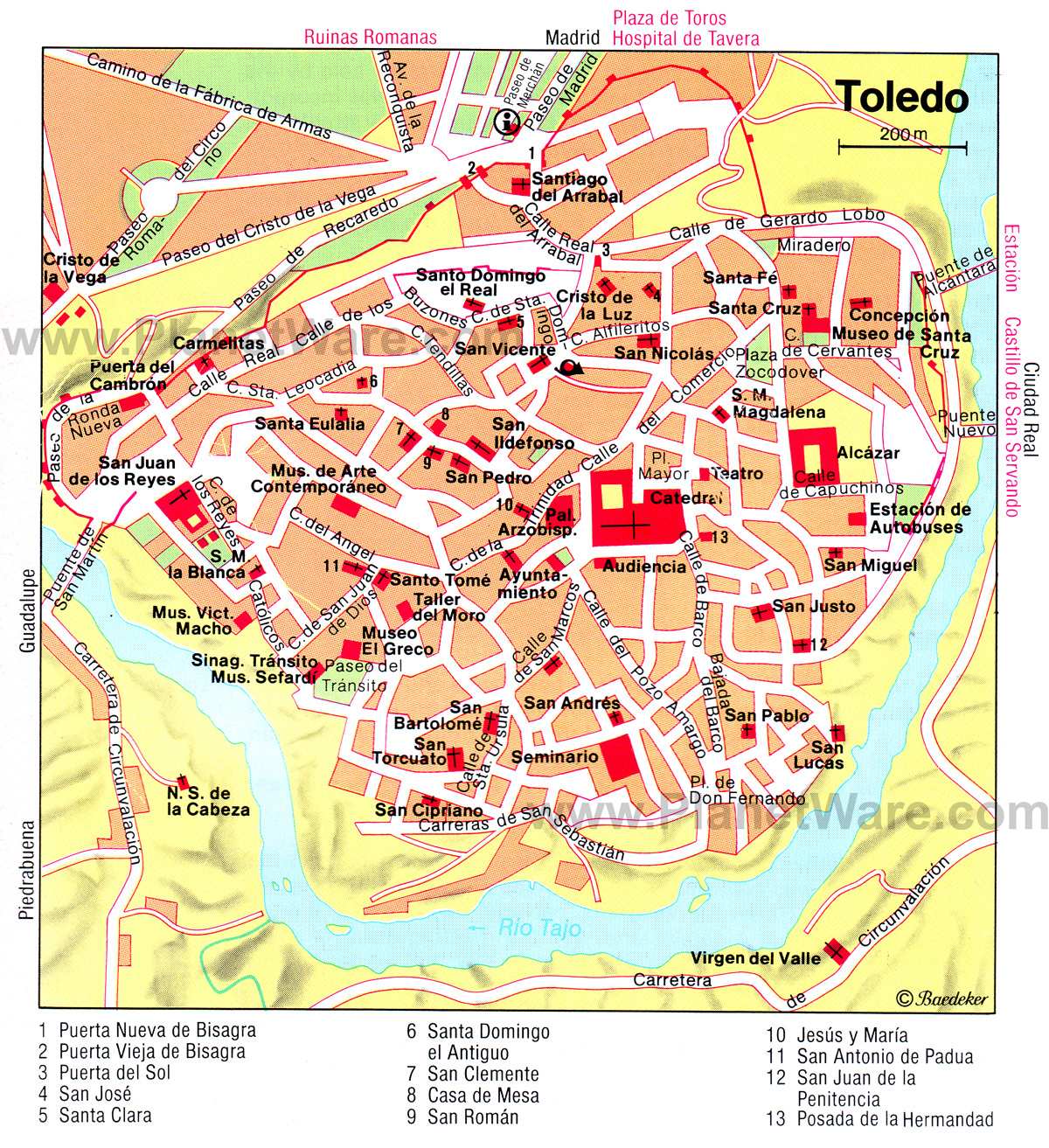
The first part of the study-abroad program usually began at the end of May and consisted of several four-week courses in European and public international law at an old monastery owned by the Fundacion Ortega y Gasset in the historic city of Toledo, some 42 miles south of Madrid, while the second part of the program consisted of a week-long jaunt in the south of Spain, with overnight stays in the historic towns of Cordoba, Sevilla, and Granada, as well as a day trip to Tangiers in Morocco. These summers in Spain would launch my love affair with travel (of which I will write about in greater detail in some future posts). For now, it suffices to say that I would extend my summer sojourns in order to visit as many other places in Europe and North Africa as I could after the Toledo study-abroad program had come to a close. But of all the places I had the honor of visiting during these various summers in the late 1990s and early 2000s my favorite was and still is the medieval town of Toledo, a small walled city full of secret gardens, fountains, and courtyards. Her winding streets were too narrow to accommodate any cars or trucks. I always felt transported in time whenever I was in Toledo, as if I was living in the Golden Age of Cervantes and Lope de Vega …
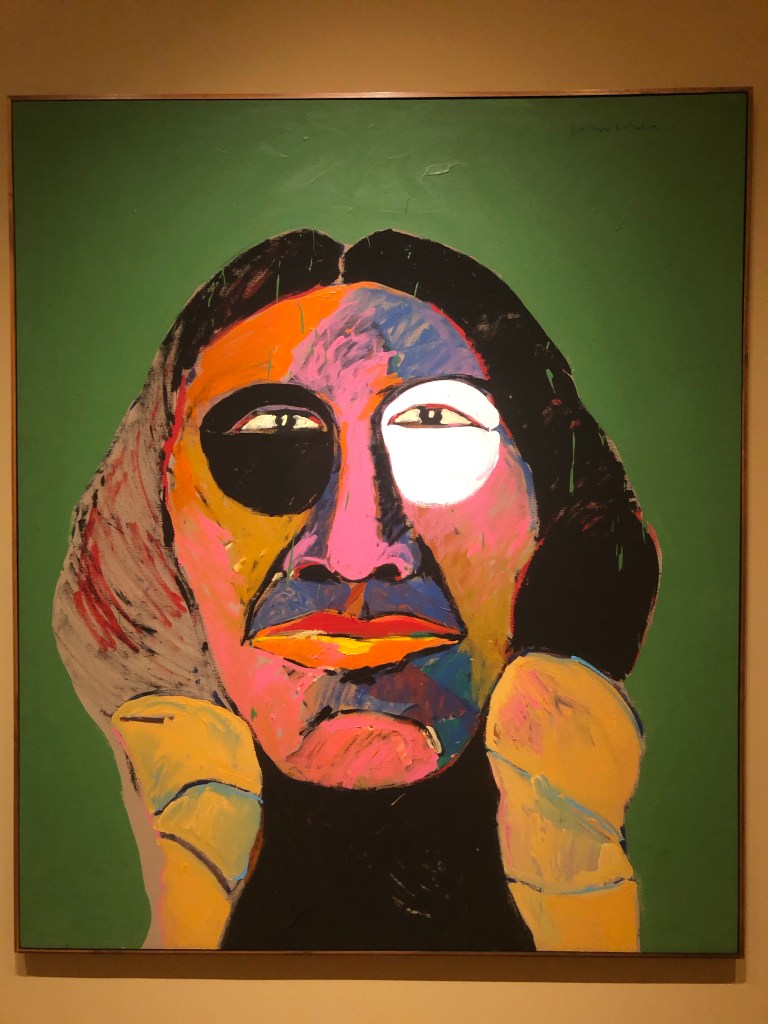
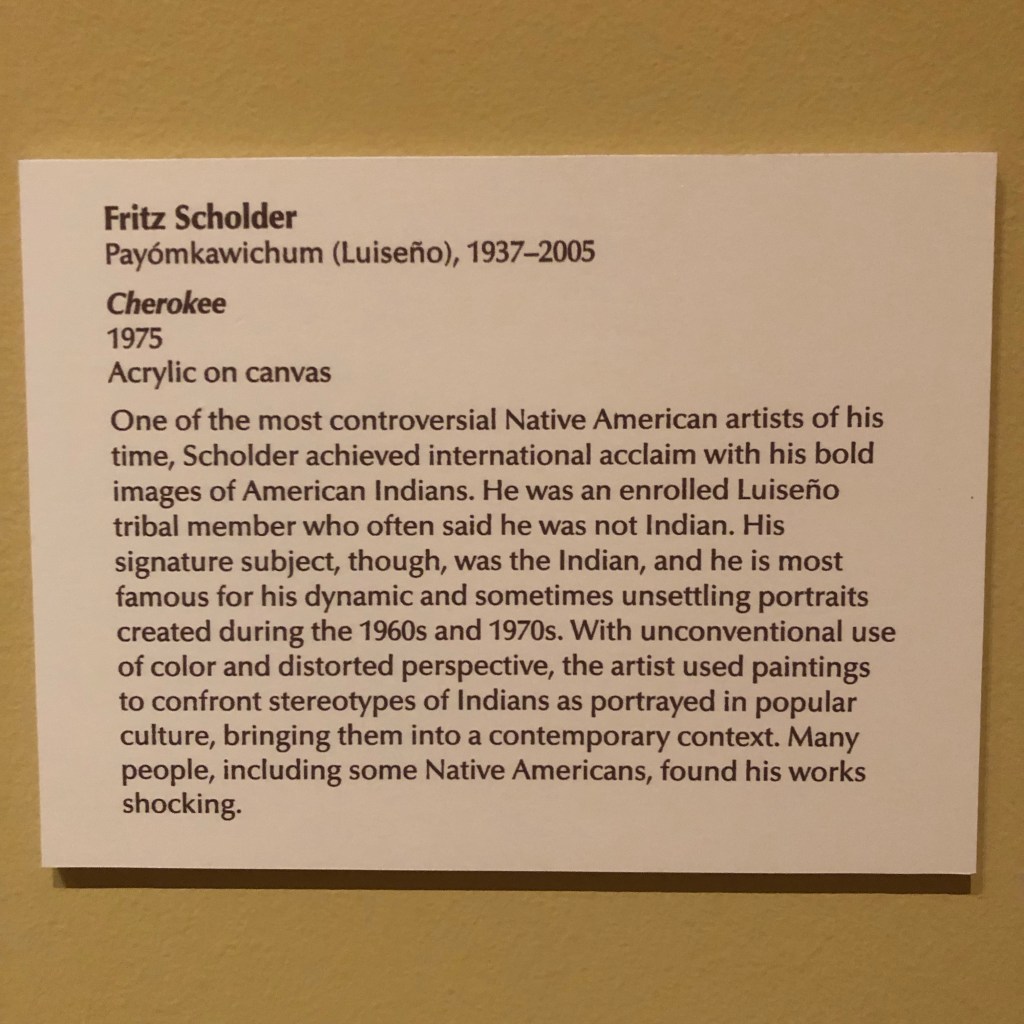
I will resume my reflections in my next post, in the meantime, below is a work of Native American art from the collection of the James Museum in Saint Petersburg, Florida:
Update (12 noon): I have added three additional paragraphs to explain how a decision of the Supreme Court can itself be “unconstitutional.”
I am interrupting my reflections series yet again to call out my colleague and friend Randy Barnett, a law professor who claims to be an “Originalist”, i.e. someone who believes that our courts must strictly construct the text of the Constitution. To the point, Professor Barnett has recently written a 19-page memo, available here, in which he attempts to explain why any court-packing legislation enacted by Congress to expand the number of judges on the Supreme Court of the United States (SCOTUS) would supposedly be “unconstitutional.”
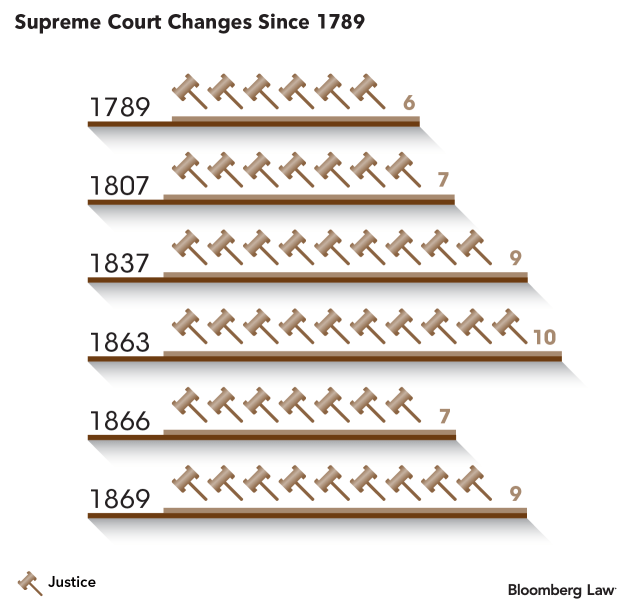
Seriously, dude? Let’s put aside the historical fact that Congress has always had the power to establish SCOTUS’s size and organization (see infographic below), and the further fact that this power is perfectly consistent with the text of Article III, Section 1 of the Constitution. The main problem with Barnett’s analysis is that any attempt by five members of SCOTUS to strike down a court-packing measure would not only be nakedly self-serving; such a judicial declaration would itself be unconstitutional [*] and quite possibly produce a constitutional crisis. Court-packing might be unwise, but no, it is not unconstitutional!
[*] How can a SCOTUS decision itself be unconstitutional? First off, unless you mistakenly believe in the theory of “judicial supremacy”, the meaning of the Constitution does not depend on what five judges on SCOTUS happen to decide at any given moment in time. Instead, the text, history, and structure of the Constitution make it abundantly clear that members of Congress as well as the president also have a say in deciding what the meaning of the Constitution is. (Relatedly, to quote the immortal words of Alexander Hamilton in Federalist Paper #78, the main reason why “judicial supremacy” is wrong is because SCOTUS lacks both the power of the purse and the power of the sword.)
Furthermore, unless a challenged law creates a suspect classification (e.g., a legislative classification based on race, religion, or national origins) or restricts a fundamental right (like speech), SCOTUS generally applies something called the “rational basis test” or “clear mistake doctrine” to evaluate the constitutionality of most laws. That is to say, a given law is constitutional so long as there is some logical connection (real or imagined) between the goals of the law and the methods selected by the legislature to achieve those goals. This is an easy test to pass, and for good reason, because we don’t want SCOTUS acting like a super-legislature itself.
Lastly, let’s imagine for the sake of argument that Congress were to enact legislation expanding the size of SCOTUS to 12 or 13 members in order to allow Joe Biden to appoint a bunch of pro-abortion judges, which is what this court-packing debate is really about, by the way. Who would have standing to challenge such a court-packing law?
I wrote about my friendship with Orlando I. Martinez Garcia, who I first met in 2000 or 2001, in my previous reflection. To make a two-decade-long (and counting!) story short, Orlando’s love of mathematics and science eventually rubbed off on me and changed the entire trajectory of my research agenda. Although I continued to teach my introductory Roman law course as well as an upper-level seminar on The Federalist Papers, I became a full-fledged “legal realist” when it came to contemporary law–that is, I realized that appellate court decisions, especially in the area of constitutional law, were mostly just sloppy and shoddy ex post justifications of the judges’ own political preferences–so I wanted to find a more accurate way of modelling and predicting court decisions.
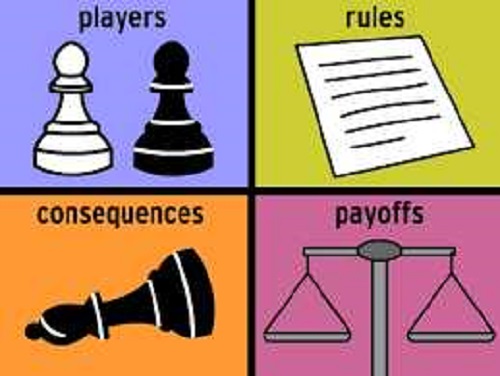
To this end, I decided to teach myself a branch of mathematics popularly known as game theory (see, for example, the image below). Among other things, I participated in an advanced research seminar on “institutional economics” at the Universitat Pompeu Fabra in Barcelona in the fall of 2005; I took Yale professor Ben Polak’s excellent online course on game theory (Econ 159) in the spring of 2007; and Orlando and I both attended NYU professor Rebecca Morton’s summer seminar on formal mathematical modelling at the University of Ljubljana in Slovenia in July and August of 2007. With these rigorous and time-consuming studies under my belt, I then began to write up a series of novel papers (two of them with Orlando Martinez himself!) applying a wide variety of mathematical methods to law. By way of example, below is a listing of my “top ten” formal papers–i.e. papers in which I thoroughly analyze an existing mathematical model (like the famous Prisoner’s Dilemma) or build a new one (like my algebraic model of the Coase theorem; see item #5):
A Game-Theoretic Analysis of the Puerto Rico Status Debate: Part 1 (2008)
A Game-Theoretic Analysis of Public-Private Partnerships in the Water Sector (2009)
A Game-Theoretic Analysis of the Puerto Rico Status Debate: Part 2 (2010)
Clones and the Coase Theorem (2011) (with Orlando)
Modelling the Coase Theorem (2012)
Modelling the Optimal Level of Rule Evasion (2013)
Does the Prisoner’s Dilemma Refute the Coase Theorem? (2014) (with Orlando)
The Poker-Litigation Game (2015)
The Colonel Blotto Litigation Game (2016)
So Long Suckers: Bargaining and Betrayal in Breaking Bad (2018)
At the same time, my interest in mathematical modelling would lead me to the wonderful world of probability theory, but that is getting ahead of my story. Rest assured, I will write about my conversion to Bayesian reasoning and subjective probability in a future “reflection” post. In my next post, however, I want to pay homage to a few of the other scholarly friends that I made while I was at the PUCPR law school in Ponce, P.R., including Jorge Cordava, Hector Cuprill, Julio Fontanet, Gustavo Gelpi, Ramon Antonio Guzman, Ruben Nigaglioni, Daniel Nina, Pedro Ortiz-Alvarez, Efren Ramos, and Carlitos del Valle.
Update (1:17 pm): Since this post is dedicated to my colleague and friend Orlando I. Martinez-Garcia, I have added a picture of Orlando and I below the fold. (Orlando is on the left.)
I wrote about my transition into academia, including my sustained study of Roman Law, in my previous post in this series; today, I will write about my close friendship with Orlando Martinez Garcia, who began teaching full-time at the PUCPR law school in the fall of 2000 or 2001. Little did I suspect at the time that this new colleague would exert such a large influence on my intellectual life, for Orlando and I were complete opposites in many ways. I was quiet and shy, a lone wolf, while Orlando was always gregarious and outgoing, the life of the party. I was a meticulous planner, like a general preparing for battle. Orlando, by contrast, had a hurried-air about him; his personal credo was to “go with the flow.” At the same time, Orlando’s clothes and appearance were always impeccable (suit and tie), while I usually wore casual clothes, like cargo shorts and tennis shoes, and shaved only every other week.
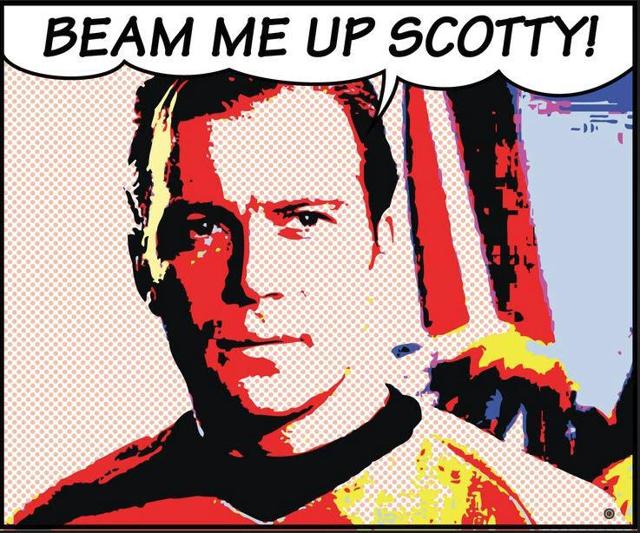
Nevertheless, despite our outward differences and differing temperaments, I was won over by Orlando’s magnanimous personality, his can-do spirit, and his sincere and unpretentious demeanor. We soon became close friends, sharing a residence across the street from the law school, and we would often stay up late at night to discuss ideas, the crazier and more far-fetched the idea the better! One evening, for example, after dinner at our favorite local restaurant (Blankita’s), Orlando began to discuss the science of transmogrification, i.e. the instantaneous transportation of solid matter from point A to point B like in the popular science-fiction series Star Trek. True to form, we took opposing sides. I was the incredulous doubter and staunch skeptic; Orlando, the eternal optimist and resolute futurist. His face would light up and his ears twitch as he explained his wild-eyed theory to me. Suffice it to say, there we were, an unlikely pair of budding scholars debating the mechanics of transmogrification until the crack of dawn.
More importantly, our myriad late-night discussions—whether on campus, at a bar, or in his backyard—taught me the intellectual value of thought-experiments. First, a thought-experiment, especially an outrageous and far-fetched one like transmogrification, is often capable of producing the most rewarding and uncommon insights. Suppose, by way of example, that we could indeed transmogrify goods and even human beings across international borders, like in Star Trek. How would such a technological change affect law? Would immigration controls and protectionist tariffs become a thing of the past? Would the concept of the nation-state and the distinction between domestic and international law become meaningless? These were the questions that made our discussions so lively, unpredictable, and stimulating. In short, we are forced to reconsider the relationship between law and technological change.
Furthermore, who is to say that transmogrification will not become a viable method of transportation in the distant future? After all, the idea of traveling faster than the speed of sound on supersonic airplanes, the thought of supercomputers defeating chess grandmasters, and the possibility of landing men on the moon and returning them safely to Earth—were not these ideas once considered the fanciful inventions of deranged science-fiction writers? But above and beyond our late-night discussions what influenced me the most during this time (the first decade of the 2000s) was Orlando’s genuine love of mathematics and the natural sciences. To this day, he possesses more math and science books than law books, and his passion and enthusiasm for these subjects eventually rubbed off on me and my scholarly work …
I will resume my reflections in my next post. For now, I just want to voice my support for cancelling or postponing the Olympics. Sorry, NBC, but public health is more important than selling ads. Also, why are so many universities (including my home institution) insisting on returning to in-person lectures in the fall? Why not wait until at least 75% of the local population is vaccinated or until we otherwise get the new “Delta variant” from India under control? In other words, if coronavirus cases are surging again, why are we letting our guard down now? What happened to “save grandma”?
Thus far, I have reflected on my college and law school years and on my first few years in Old San Juan, Puerto Rico. Today, I will write about my transition into academia. At the time, I was an associate attorney at the largest law firm in Latin America, but truth be told I did not find the practice of law to be intellectually rewarding, so I was elated when in the spring of 1998 I was offered my first teaching job at the law school of the Pontificia Universidad Catolica de Puerto Rico (PUCPR), where I was assigned to teach two courses: (1) a new survey course on “The Evolution and Development of the Institutions of the Civil Law”, and (2) a two-semester course on the U.S. Constitution, and I could not have been happier! (Shout out to Charles Cuprill Oppenheimer (1916-2012), the venerable dean of the PUCPR law school, to whom I owe this happy state of affairs.)
During my first few years in academia, I decided to take an openly historical approach to my subjects. For my civil law lectures, for example I turned to the law of ancient Rome, consulting the Institutes of Gauis and the Corpus Juris Civilis. In addition to these primary Roman law sources, I read a wide variety of classics in legal history, legal theory, and anthropology, including books by Barry Nicholas, John Merryman, Oliver Wendell Holmes, Sir Henry Maine, and E. Adamson Hoebel. Summing up, like the renaissance humanists of the quattrocento, I turned to Roman Law and other bygone legal sources since the European civilian tradition and Puerto Rico’s civil law institutions can ultimately be traced back to ancient Rome. My students and I thus turned to history to discover and reconstruct the origins of the civil law in Western civilization, such as the evolution of delictal (i.e. tort) actions from the early lex talionis, to the more developed lex Aquilia of classical times, up to article 1802 of the Puerto Rico Civil Code.
Likewise, for my course on the United States Constitution, I began to read such classics as The Federalist Papers, Alexis de Tocqueville’s Democracy in America, and the judicial opinions of Chief Justice John Marshall. I also read the works of leading contemporary constitutional scholars, including Akhil Amar’s The Bill of Rights: Creation and Reconstruction, John Hart Ely’s Democracy and Distrust, and José Trías Monge’s masterful four-volume constitutional history of Puerto Rico. Moreover, instead of organizing my “conlaw” course around Supreme Court cases (as most conlaw professors do), I organized my course around the major historical events in U.S. history: the Revolution, the Founding, the Whiskey Rebellion, the Louisiana Purchase, the Seminole Wars, the Treaty of Guadalupe Hidalgo, etc.
Though this was only a beginning, it was a fairly productive period in my intellectual life. All told, I had devoured dozens of scholarly books and hundreds of academic articles, and I had prepared detailed and meticulous lecture notes and course outlines. Furthermore, it was only a matter of time before I moved from legal history to history qua history and to give serious and sustained thought to the problems of historical analysis. I eventually discovered a wonderful book entitled The Historian’s Craft, written by the French historian Marc Bloch, who was brutally executed by the Nazis in 1942. His was the most thoughtful book I had read about the work of the historian. He treated such eternal problems as subjectivity, historical causation, and historical time itself with such a degree of humility and humanity that his ideas have left a lasting impression on me.
Now that I look back on this transition, I cannot help but notice that, because of my historical focus, I hardly read any contemporary law cases, but little did I know that my most important intellectual development was yet to come, for I had yet to meet Orlando I. Martínez-Garcia, a future colleague and friend who would gently nudge me in a different direction …
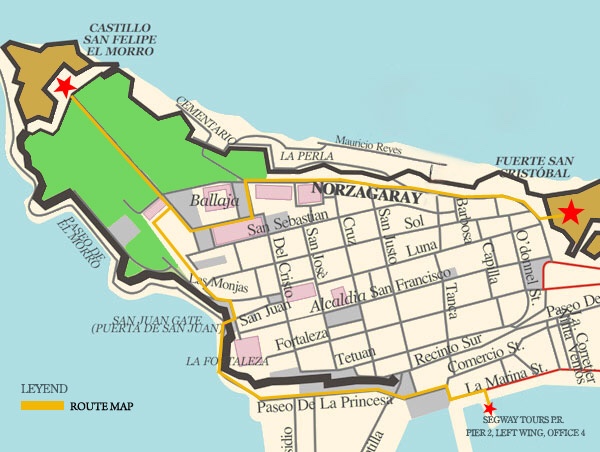
I wrote about my college and law school years (1986 to 1993) in my previous two posts in this series; today, I will reflect on my first few years of “island life” in the Commonwealth of Puerto Rico (1993 to 1995). During that first fateful summer after law school (the summer of ’93), I bought my first car (a dark blue Jeep Wrangler with manual transmission), studied the intricacies of the Puerto Rico Civil Code and other areas of P.R. law at the University of Puerto Rico, where I took Professor Ernesto Chiesa’s excellent “JTS” bar review course (I passed the notoriously difficult P.R. bar exam on my first try), and began my legal career as an associate attorney at the prestigious firm of McConnell Valdes, the largest law firm in Latin America. But what I remember the most are not my material possessions or my early professional accomplishments. What I cherish the most from this time are my memories of the walled city of Viejo San Juan, one of the most romantic and magical places in the world. Like a moth attracted to light, I made my way to the old city as soon as I graduated from law school and checked in at the Gallery Inn on Norzagaray Street, overlooking the ocean-side neighborhood of La Perla. The legendary proprietress of the Gallery Inn, the artist Jan D’Esopo, put me in touch with a local realtor, Merce Roca, and that is how I somehow ended up renting the first floor of Ms Rosa’s charming colonial-era building on Calle Caleta de San Juan #58, between the Cathedral and La Puerta de San Juan, where I lived for the next 24 months. Ms Roca’s first-floor apartment had tall ceilings and was furnished with many pieces of Caribbean art–paintings, sculptures, even an old-fashioned barber’s chair–and the tall doors of the main living room and the small colonial-style kitchen all opened out into a garden. Moreover, I had to walk through the garden to reach the bedroom, which was nestled in a small cozy room behind the garden, where tiny tree frogs (the famed coqui) would sing their two-note lullabies late at night. Alas, all good things must come to an end. I eventually left Old San Juan behind when I bought my own place in the historic neighborhood of Miramar and began my academic career at the Catholic University of Puerto Rico, but my metaphorical heart will always belong to Old San Juan …