According to this recent report by Susan Adams (via Forbes), more and more college students are using Chegg and other similar “study” platforms to cheat on their online exams and assignments. Starting next month, I will begin a new series on “the law and ethics of Chegg” and make the case that Chegg should be criminally charged with wire fraud and with conspiracy to commit wire fraud. In the meantime, however, I will remain offline while my family and I take a well-deserved beach vacation …
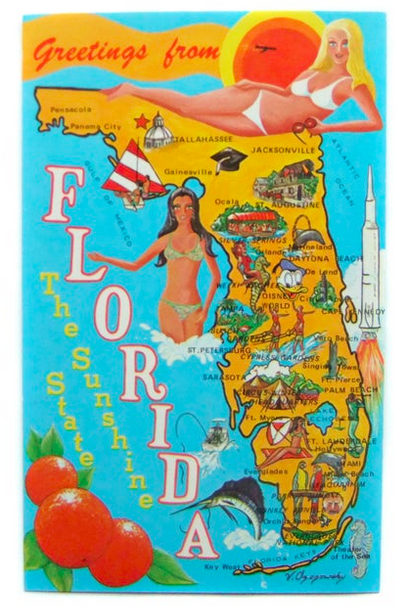
I described in my previous post the circumstances surrounding my decision to relocate to Central Florida. Although this decision was a difficult and painful one, it turned out to be the right call in my case. To the point, I was able to turn things around in short order and get my professional and private lives back on track:
Teaching. Although I had to start my academic career from scratch, I resumed my teaching duties at the business college of a reputable public research university, and as an added bonus, my salary went from x to 2x, and I have made many new scholarly friends.
Research. My “Bayesian conversion” occurred in Central Florida, and I have written my most important work since re-locating here, including my 2014 paper “Gödel’s Loophole,” which has been downloaded over 7,000 times and now has its own Wikipedia page! (See here.)
Private Life. My children ended up relocating to Central Florida as well and excelling in school. Moreover, I eventually met the love of my life, and we have been happily (for the most part!) married since 2012.
I most certainly have a lot more to say, both good and bad, about my post-Puerto Rico life in Central Florida and about each one of these categories, and I will do so in a second series of reflections in the near future …
The champion heavy-weight boxer Mike Tyson is reported to have once said, “Everyone has a plan until they get punched in the mouth.” In my case, this quote could not be more apt. Although I loved living in Puerto Rico and had already garnered many academic laurels (promotion to associate professor and tenure in 2004, appointment as a Ronald Coase Fellow in 2005, my first external grant and overseas publication in 2006, and my first invitation to teach in the United States in 2008), my world was starting to unravel. By the spring of 2009, I had suffered several metaphorical gut punches in my professional and private life. Alas, some of these wounds were self-inflicted.
Coup d’Etat at the PUCPR Law School. In a turn of events that took me by surprise, my benefactor Charles Cuprill-Oppenheimer, the venerable dean of the PUCPR law school, was abruptly forced to retire and replaced with a new dean from out of nowhere. I know about this sordid academic affair first-hand because I was on the official search committee, and our committee had voted unanimously to reappoint Dean Cuprill-Oppenheimer to an unprecedented fourth term. Without any notice, however, the president of the university unilaterally appointed one of his own cronies to the deanship, and once this new dean was installed, the vipers on the faculty came out of the woodwork. This faction forced out my best friend Orlando I. Martinez Garcia (the new dean decided to not renew his contract) and voted to kill my survey course on the Evolution and Development of the Institutions of the Civil Law. Although I had tenure, the knives were out; the handwriting was on the wall.
The End of an Affair. The most painful chapter of my life, however, was in large part the result of my own bad behavior. I was in a toxic relationship with a woman who did not love me, but she was the mother of my children, two beautiful children that I loved more than anything in the world. I had used up my life savings to buy a home on Calle Las Palomas, just off the hustle and bustle of Calle Loiza in Santurce, walking distance to my children’s school (Academia San Jorge), and two blocks from my favorite beach, Ocean Park. But I was unfaithful, and instead of Christian forgiveness, I was condemned to the worst kind of Hell on Earth. The mother of my children kicked me out of the Las Palomas house and kept me from seeing my children.
In short, I had been punched in the mouth–twice over. So, with the sudden coup d’etat at the university and my family life obliterated, I decided to cut my losses, leave the island, and start over …
I will resume my reflections in my next post, but in the meantime, I just figured out why I hate driving on Florida roads so much. According to this report in the Daily Mail (hat tip: the Amazing Tyler Cowen), many popular trucks and SUVs are larger than WWII tanks!
Today, I will continue my reflections by writing about two more Puerto Rican legal scholars and friends who played a pivotal role in my intellectual development: Daniel Nina and the late Carlitos del Valle, both of whom I met during the second half of my tenure at the law school of the Pontificia Universidad Católica de Puerto Rico (PUCPR). At that time, both Daniel and Carlitos were affiliated with the now-defunct Eugenio María de Hostos Law School in Mayagüez, P.R. Every spring, the Hostos Law School held an annual academic conference whose unorthodox motto was “Ni una vida mas para el derecho.” (In English, this motto translates to “Not one more life to law.”) I had been invited to attend this unconventional scholarly conference in the spring of 2007, which is where I met Daniel and Carlitos for the first time.
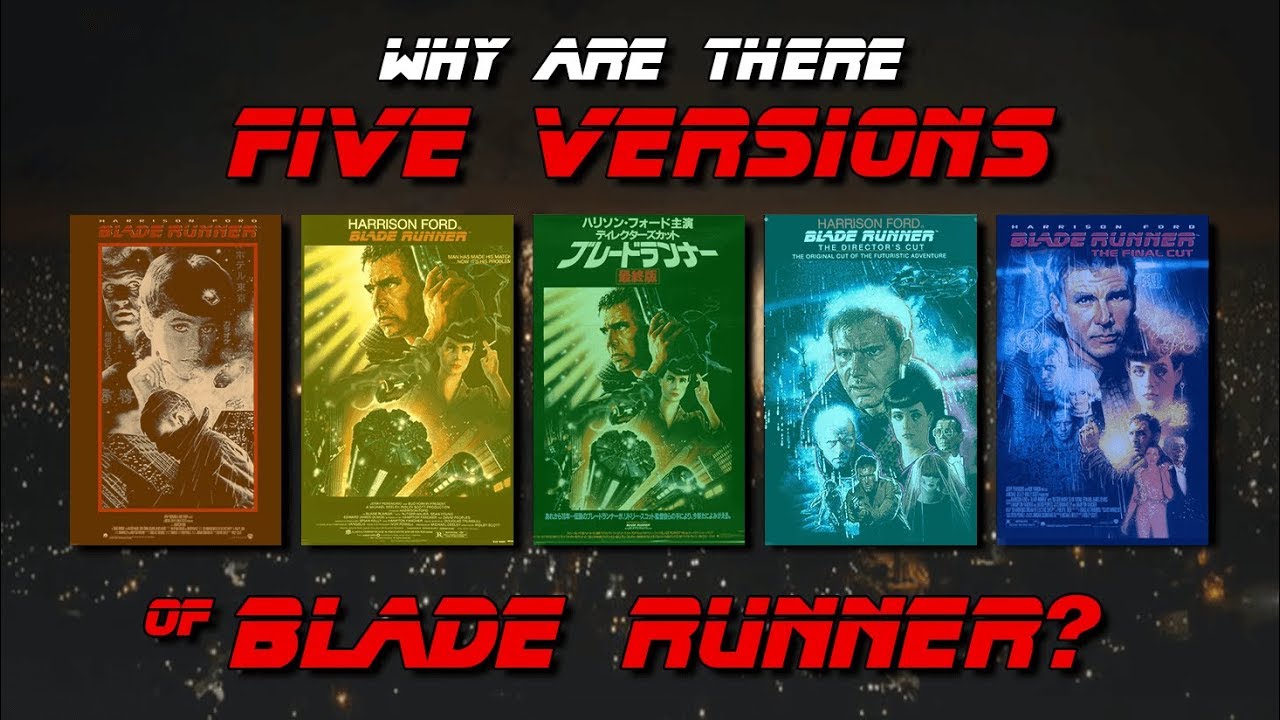
The general theme of the 2007 Hostos conference was the dystopian world depicted in the original “Blade Runner” film. Daniel had not only organized this remarkable international conference, which featured academics from Latin America, Spain, and Portugal; he also served as its indefatigable moderator. His comments were always original, thoughtful, and politically incorrect when necessary, and his sharp wit as well as his mischievous sense of humor were a refreshing antidote to all those dull and boring academics who tend to take themselves and their work too seriously. In addition, Daniel had arranged to screen one of the many versions of Ridley Scott’s cult classic (the “director’s cut,” if I recall correctly) in the Old World colonial courtyard of the Hostos Law School on the second night of the conference.
For my part, I have to confess that I had never seen any version of the movie “Blade Runner” until that magical evening in the spring of 2007, but that fateful screening would represent another unexpected “turning point” in my academic and intellectual life. To begin with, the film would inspire me to contribute a book chapter (in Spanish) about the Immortal Game depicted in Blade Runner for an anthology of essays edited by Daniel himself–his beautiful book, the cover of which is pictured below, is available here–as well as a full-length law review article on “Clones and the Coase Theorem.” (Also, I would henceforth become a huge fan of the “Film Noir” genre that was popular in the 1940s and 50s.) More importantly, Daniel’s screening of “Blade Runner” would further inspire me to explore other possible connections between law, ethics, and popular culture generally–something I now devote time and effort to in every one of my lectures.
But Daniel’s most significant contribution to my intellectual life was introducing me to Carlitos del Valle. In fact, thanks to Daniel’s good efforts and Carlitos’ generosity, I had ended up staying in the basement of Carlitos’ split-level tropical home in the hills of Mayagüez for the duration of the Blade Runner conference. Ironically, however, I did not see much of my gracious host on the first night of my stay, as he was holed up in his living quarters on the upper level of his home, putting the finishing touches on the paper he was scheduled to present the next day (“Soñando con ovejas eléctricas” or “Dreaming of electric sheep”). Nevertheless, I immediately sensed that Carlitos and I were kindred spirits the moment I had walked through the door of his abode. The walls were lined with bookshelves, and the bookshelves were filled with books. There were books in the living room, books in the dining room, books in the bedrooms. Like Ernest Hemingway’s tropical Finca Vigía on the outskirts of Havana, Carlitos’ home was one big Borgesian library overflowing with well-worn books of all shapes and sizes.
Suffice it to say, both Daniel and Carlitos were not only truth-seeking scholars but also open-minded bon vivants and fellow lovers of art. Beginning with that fateful Blade Runner conference, I would often visit Daniel and Carlitos in Mayagüez or in San Juan or wherever and exchange ideas with them at every opportunity. Alas, while this intellectual friendship was flourishing, I was about to hit rock bottom in my private life; my beautiful world was beginning to unravel …