Conspiracies and Religion

Alternative Title: Douthat’s Achilles’ Heel

(Note: This is the fourth blog post in a multi-part series.)

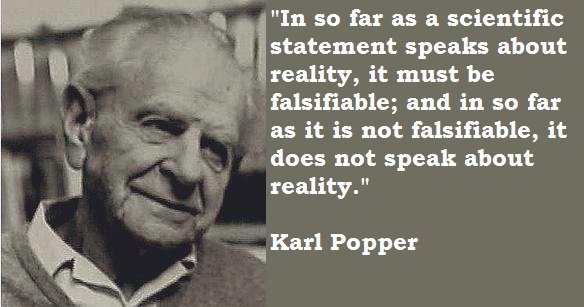
When are conspiracies real? We have been reviewing Ross Douthat’s recent New York Times column on this question, “A Better Way to Think about Conspiracies,” which contains a multi-part test for deciding which alleged conspiracies to keep an open mind about. Aside from simplicity and stochastic selectivity, Douthat also tells us to “avoid theories that seem tailored to fit a predetermined conclusion.” This key criterion appears to be inspired by Sir Karl Popper’s famous falsifiability principle. (Professor Popper, pictured below, was an influential 20th-Century philosopher of science who introduced the concept of falsifiability in his 1934 book Logik der Forschung, which was further revised and translated into English in 1959 as The Logic of Scientific Discovery.)

In brief, the Popperian concept of falsifiability refers to “testability” or “refutability”: the capacity for some proposition, statement, theory, or hypothesis to be tested and proven wrong, i.e. contradicted by evidence or “falsified.” As a result, conspiracy theories that are designed to confirm our pre-determined conclusions don’t deserve our respect; theories need to be falsifiable before they can be taken seriously. At first glance, Douthat’s version of this falsifiability criterion–which was originally used by Karl Popper to separate science from pseudo-science–would appear be an especially useful technique to distinguish “legitimate” or plausible conspiracy theories from imagined or invented ones. But upon closer inspection, one can make a psychological or “Kuhnian” objection to Popper’s falsifiability principle in the context of conspiracy theories. Such theories are more like religious beliefs: they are often a product of people’s deep-seated intuitions and implicit assumptions about the world, and those intuitions, beliefs, and assumptions are generally impossible to test or “falsify”!

As it happens, Douthat himself concedes in his NY Times essay that “to be a devout Christian or a believing Jew or Muslim is to be a bit like a conspiracy theorist, in the sense that you believe that there is an invisible reality that secular knowledge can’t recognize ….” In other words, religious beliefs, like many conspiracy theories, are usually the product of one’s private intuitions, not rational deliberations. These intuitions often reflect one’s most deeply-held beliefs and thus cannot be tested or falsified in any meaningful sense. To return to my favorite historical example, consider the German “Stab-in-the-Back” Myth from the Weimar Republic era (1919 to 1933). Not only is this conspiracy theory relatively simple and selective; it also solves a major mystery: why did Germany lose WWI? Alas, this myth is not amenable to rational analysis because it is unfalsifiable. If you really believe that the German Army was stabbed in the back by internal enemies, no amount of new evidence will be able to refute this narrative of Imperial Germany’s defeat.

Either way, whether we are in the domain of religion or the domain of politics, the main problem with Douthat’s analysis of conspiracy theories is that all such theories are, by definition, tailored to fit a pre-determined conclusion; that’s what makes it a conspiracy theory! As a result, conspiracy theories and alternate realities are impossible test or otherwise falsify. Like Freudian psychoanalysts or Marxist critics of capitalism, conspiracy theorists will always update their priors in favor of their pre-existing beliefs whenever they are presented with new or additional information. Put another way, no amount of evidence will be able to convince a “true believer” that a particular conspiracy theory or alternate reality is contrived. Perhaps, then, we should take a different approach. Instead of asking which conspirary theories we should keep an open mind about, what if we were to ask a different question. Specifically, what if we asked, Why are conspiracy theories so popular in the first place? I will proceed to address this question in my next set of blog posts starting on Monday, March 22.
Posted in Uncategorized | 8 Comments

Stochastic Conspiracies?

Note: This is the third blog post in a four part series.

When are conspiracies real? We have been reviewing a recent New York Times column on this question, “A Better Way to Think about Conspiracies,” in which Ross Douthat formulates an elaborate four-part test for deciding which alleged conspiracies to keep an open mind about. Two of Douthat’s rules of thumb can be combined into a single global criterion: stochastic selectivity. Specifically, Douthat concludes his essay with the following two guidelines: (1) we should consider taking conspiracy theories more seriously only when “the mainstream narrative has holes,” and (2) just because one particular fringe theory or myth might be true doesn’t mean all of them are.

Alas, Douthat’s stochastic selectivity criterion is neither here nor there. Why? For starters, because even so-called “mainstream” or consensus narratives, will always have gaps or holes in them. A narrative is just a story, and by definition all stories are necessarily incomplete. Furthermore, even a story with a single hole or gap might be called into question, depending on the size of that gap or its nature. The German stab-in-the-back myth of the Weimar Republic era (1919 to 1933), for example, fills a gap in the story of Imperial Germany’s defeat in the First World War. After all, how could one of the best-trained and most well-equipped military forces in the world, an invincible army that was said to be “undefeated on the battlefield,” lose the war? Although the mainstream view today is that Imperial Germany had lost the war by late 1918 because her army was out of reserves and was overwhelmed by the entrance of the United States into the war, there are still significant holes in this story, especially from the perspective of a post-war demoralized German public. After all, the United States’ first major offensive in WWI did not occur until the Battle of Cantigny in mid-1918, and in any case, the German public at that time had no way of knowing the true number of Germany’s reserves, as that number was classified information.

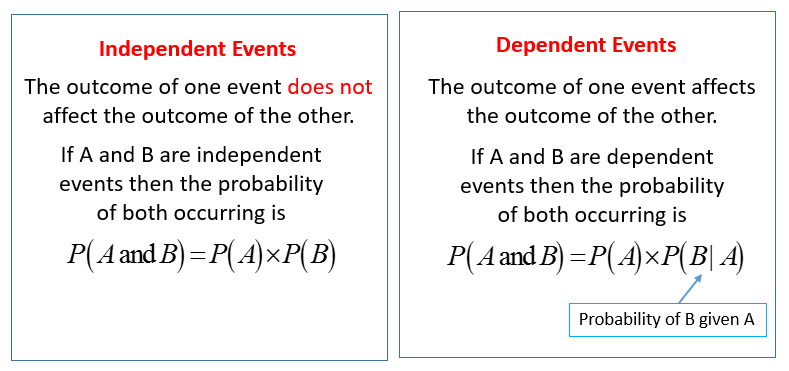
That said, to the extent that two or more imagined conspiracies are stochastically independent, then point #2 appears to be logically sound, since the probability of all such conspiracies being true is the product of their individual probabilities. But (wait for it!) what happens if we are considering overlapping conspiracies, i.e. conspiracies with similar goals or with the same subset of members? Stated formally, what happens when the conspiracies or secret plots under consideration are dependent events instead of independent ones? (Two events are said to be “independent” if knowing that one event has occurred doesn’t change the probability of the other event’s occurrence.) By way of historical example, given the anti-Semitic origins of many interwar European conspiracy theories, many people in Weimar Germany who fell for “The Protocols of the Elders of Zion” hoax might be more likely to believe in stab-in-the-back betrayal myth as well. Either way, whether we classify two or more conspiracies as dependent or independent events, there is a much bigger problem with Douthat’s approach to conspiracy thinking. I shall identify this fatal flaw in my next post.

Dependent Events (video lessons, examples and solutions)
Image credit: Online Math Learning
Posted in Uncategorized | 1 Comment

Ross Douthat’s Razor

Note: This is the second blog post in a four part series.

As I mentioned in my previous post, Ross Douthat’s recent NY Times column on conspiracy thinking, “A Better Way to Think about Conspiracies,” formulates a four-part test for deciding which alleged conspiracies to keep an open mind about, or in Douthat’s own words, “a tool kit for discriminating among different fringe ideas.” Among other things, Douthat recommends: “Prefer simple theories to baroque ones.” This first criterion can thus be restated in Occam’s Razor terms as follows: prefer simpler conspiracy theories to more complex ones. Let’s call this principle “Ross’s Razor.”

In brief, Ross’s Razor tells us that when we are presented with competing explanations of the same event (e.g., Germany’s defeat in World War I; Trump’s loss in 2020 despite winning in Florida and Ohio), we should select the simplest explanation, the explanation with the fewest assumptions. As an aside, this preference for simplicity, though attributed to William of Ockham (1287?–1347), a Franciscan theologian and scholastic philosopher (see image below), may, in fact, go as far back as Aristotle’s treatise Physics, which states, “Nature operates in the shortest way possible.” As a further aside, whether we define simplicity in terms of the number of background assumptions or in terms of how nature or the world operates, I personally prefer to frame the simplicity/parsimony criterion in probabilistic terms, since one of the rationales for this preference for parsimony is a probabilistic one: the idea that the simplest explanation is most likely to be the correct one.

Either way, however, what does “simpler” mean in the domain of alternate realities or conspiracy theories? Does simplicity refer to the number of conspirators? The goal of the conspiracy? The number of steps necessary for the conspiracy to succeed? Worse yet, however we answer the foregoing questions, one of the supreme ironies of many conspiracy theories is that they pass Douthat’s parsimony test with flying colors, especially when it is the truth that is often ambiguous and messy! By way of illustration, consider the German “Stab-in-the-Back” Myth that I mentioned in my previous post. In many ways, this particular conspiracy theory provides a far simpler and parsimonious explanation of Germany’s defeat in World War I than the truth does.

Yes, the German Army was low on reserves, and yes the United States changed the course of the war after the Battle of Cantigny (28 May 1918), but how could the German public know these things at the time? Also, even if the number of German reserves and the number of U.S. troops were publicly-available information, what could be more simpler than to believe that Germany was stabbed-in-the-back by a visible group of traitors, the “November Criminals” who signed the armistice in November of 1918? Simply put (pun intended), it is this tempting yet misleading simplicity that is one of the main attractions of so many fringe conspiracy theories! That said, I will consider the remaining three factors in Douthat’s four-part test in my next few blog posts.

Applying Occam's Razor to your writing - Punchline

Posted in Uncategorized | 1 Comment

When are conspiracies real? Reply to Ross Douthat, part 1

Happy St. Patrick’s Day! Ross Douthat, an influential columnist for The New York Times, recently wrote a fascinating essay titled “A Better Way to Think about Conspiracies.” As it happens, I have always been puzzled by one of the most famous conspiracy theories of all time, the “stab-in-the-back” myth that was popular in Germany during the ill-fated Weimar Republic era (1919 to 1933). How did the Imperial German Army–an army that was said to be “undefeated on the battlefield”–end up losing the First World War (WWI)? According to one popular conspiracy theory at the time, Germany lost WWI because she was “stabbed in the back” by a wide variety of left-wing politicians and intellectuals, who were collectively referred to as “the November Criminals” for agreeing to Germany’s surrender on 11 November 1918. In reality, however, Germany had lost the war because her army lacked sufficient reserves and because the USA had entered the war in full force in mid-1918. So, how did this dangerous myth persist for so long and win over so many hearts and minds?

Now, fast forward to the JFK assassination or, even more recently, to 2020? Did Harvey Lee Oswald act alone? Were the 2020 elections stolen from President Trump? If the JFK plot or Trump’s election fraud claims are just crazy conspiracy theories, why do so many people still believe in them? In short, where do we draw the line between plausible conspiracy theories and far-fetched ones? Here is why Douthat’s conspiracy theory essay is worth reading: he formulates a four-part test for deciding which alleged conspiracies to keep an open mind about, “a tool kit for discriminating among different fringe ideas.” In brief, Douthat’s conspiracy theory test consists of the following four criteria:

  1. “Prefer simple theories to baroque ones.”
  2. “Avoid theories that seem tailored to fit a predetermined conclusion.”
  3. “Take fringe theories more seriously when the mainstream narrative has holes.”

  4. “Just because you start to believe in one fringe theory, you don’t have to believe them all.”

Alas, Douthat’s four-part test is woefully inadequate for several reasons, which I shall discuss in detail in my next few posts. For now, it suffices to say that both the German “stab-in-the-back” myth as well as Trump’s stolen election story–indeed, most of the conspiracy theories mentioned in the chart below–would most likely pass Douthat’s four-part test with flying colors.

Chart: Belief in Conspiracy Theories in the United States | Statista
Posted in Uncategorized | 3 Comments

Bayes 15: closing confession

I shall close this series of Bayesian blog posts with a confession. Ex ante, before I began building my Bayesian model of the litigation process, I had taken a dim view of the legal game. Given the complexity and ambiguity of substantive as well as procedural rules, the indeterminate nature of most legal standards, and the high levels of strategic behavior by both litigants and judges, I expected my Bayesian model to confirm my negative view of the legal process. Ironically, however, the results of my Bayesian model of the litigation game were very surprising. In essence, my model shows that, regardless of the operative rules of procedure and substantive legal doctrine, a guilty verdict is nevertheless a highly reliable indicator of a defendant’s actual guilt. Specifically, my model demonstrates that when a defendant is found guilty of committing a wrongful act (civil or criminal), there is a high posterior probability that the defendant actually committed such a wrongful act, even when the underlying process of adjudication is random and even when the moving parties are risk-loving or less-than-virtuous!

Note: Because of two other research projects I am currently working on right now–both of which must be completed by April 16–as well as my regular spring semester teaching duties, I will be suspending my series of Bayesian blog posts for the time being. (After April 16, I will resume this series by showing how Bayesian methods can solve the blue bus problem and other evidentiary paradoxes.) In the meantime, I will switch gears, so to speak, and blog about my two ongoing research research projects in the days ahead …

Screen Shot 2021-03-16 at 10.37.25 AM

Posted in Uncategorized | 3 Comments

Bayes 14: random adjudication with risk-loving moving parties

Note: This is my fourteenth blog post in a month-long series on the basics of Bayesian probability and its application to law.

Happy Monday! Let’s now suppose that litigation is still a crapshoot but that plaintiffs and prosecutors are risk-loving or ‘less-than-virtuous’; that is, let’s assume that the moving parties are more willing to gamble than their virtuous colleagues. Specifically, I will assume that the litigation game is 50% sensitive and 50% specific and that plaintiffs and prosecutors are willing to play the litigation game even when they are only 60% certain that the named defendant has committed a wrongful act. Although these assumptions do not appear to be plausible, this permutation of my model, however implausible, may nevertheless provide an instructive counter-factual or hypothetical illustration of my Bayesian approach to litigation.

Continue reading

Posted in Uncategorized | Leave a comment

Bayes 13: random adjudication with risk-averse moving parties

Note: This is my thirteenth blog post in a month-long series on the basics of Bayesian probability and its application to law.

Suppose that litigation is a crapshoot (to quote my mentor and favorite law school professor John Langbein); that is, what if litigation outcomes are only 50% sensitive and 50% specific? In other words, what if litigation games are completely random? Under this scenario, the process of adjudication is no better than a coin toss. Although this assumption may appear fanciful, as I explained in a previous post (see “Bayes 10“), the randomness of adjudication might be a function of the level of the complexity or the level of ambiguity of the applicable legal doctrines (e.g., assumption of risk) or procedural rules (e.g., res judicata). Simply put (pun intended), the more complex or ambiguous the applicable law is, the more random or arbitrary the outcome of litigation will be.

Continue reading

Posted in Uncategorized | Leave a comment

Bayes 12: non-random adjudication with risk-loving moving parties

Note: This is my twelfth blog post in a month-long series on the basics of Bayesian probability and its application to law.

Suppose the litigation game is still highly sensitive and specific as before (i.e., 90% sensitive and 90% specific), but that plaintiffs and prosecutors are risk-loving or less-than-virtuous actors. Specifically, assume that the moving parties are willing to play the litigation game even when they are only 60% certain (instead of 90% certain, as we assumed earlier) that the named defendant has committed a wrongful act. (Such behavior is ‘less-than-virtuous’ in my model because the moving party is less concerned with the defendant’s actual guilt than a risk-averse or virtuous moving party is.) The intuition behind this revised assumption is that, in reality, the litigation game might be played by litigants who are engaged in rent-seeking and self-serving behavior. [1]

Continue reading

Posted in Uncategorized | 1 Comment

Bayes 11: non-random adjudication with risk-averse moving parties

Note: This is my eleventh blog post in a month-long series on the basics of Bayesian probability and its application to law.

Suppose the litigation game is 90% sensitive and 90% specific, that is, suppose the process of litigation is able to determine correctly, at least 90% of the time, when a defendant has committed a wrongful act, and suppose further that the process will also determine correctly, again at least 90% of the time, when a defendant has not, in fact, committed a wrongful act. The intuition behind this assumption (non-random adjudication) is that reliable legal procedures will tend to produce just and fair results. See, for example, Henry M. Hart and Albert M. Sacks, The Legal Process (William N. Eskridge and Philip P. Frickey eds, Foundation Press, 1994). [1] Simply put, such a litigation game appears to be a highly accurate one, since it will correctly determine with 90% probability, or nine times out of 10, whether the defendant has or has not committed a wrongful act, an essential precondition before liability may justly be imposed.

Continue reading

Posted in Uncategorized | 1 Comment

Bayes 10: the model (four scenarios)

Note: This is my tenth blog post in a month-long series on the basics of Bayesian probability and its application to law.

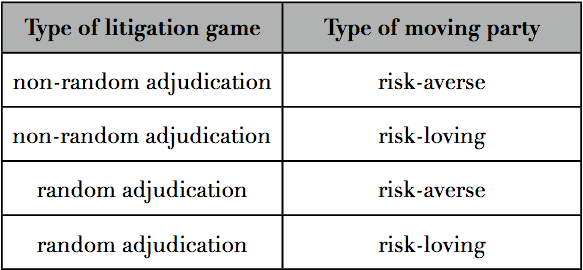
I will now consider four possible scenarios or types of litigation games:

  1. non-random adjudication with risk-averse or ‘virtuous’ moving parties,
  2. non-random adjudication with risk-loving or ‘less-than-virtuous’ moving parties,
  3. random adjudication with risk-averse moving parties, and
  4. random adjudication with risk-loving moving parties.

This schema may thus be depicted in tabular form as follows:

Screen Shot 2021-03-09 at 7.32.10 PM

In summary, the adjudication variable in my model refers to the reliability or screening effectiveness of the process of adjudication. Specifically, ‘non-random adjudication’ refers to litigation games that are 90% sensitive and 90% specific, an assumption based on the classic and oft-repeated legal maxim ‘it is better that ten guilty men escape than that one innocent suffer’.

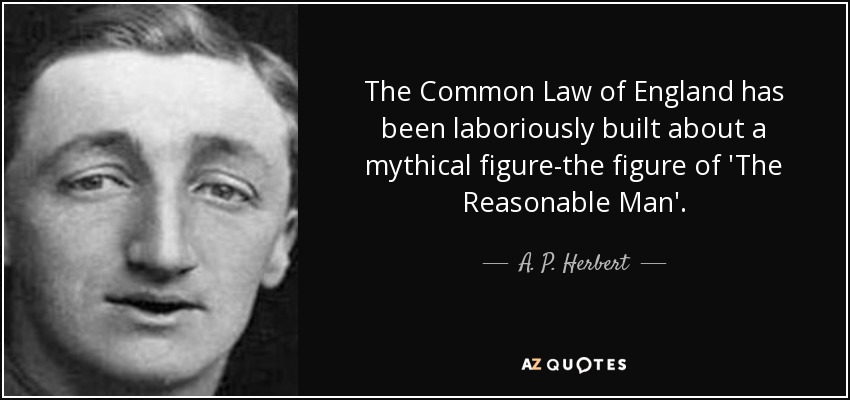
Random adjudication, in contrast to non-random adjudication, occurs when litigation games are only 50% sensitive and 50% specific and thus no more reliable than the toss of a coin. As an aside, it is worth asking, why would the process of adjudication ever produce a ‘random’ outcome in the real world? One possibility is that the level of randomness or unpredictability of adjudication might be a function of the level of complexity or ambiguity of legal rules. Consider, for example, the ‘reasonable man’ standard in tort law: the more complex or ‘open-textured’ the rules of substantive and procedural law are, the more random the litigation game will be. Also, before proceeding, notice that the adjudication variable can never be 100% sensitive nor 100% specific since errors are inevitable in any process of adjudication, regardless of the litigation procedures that are in place. 

In addition, the term ‘risk-averse’ or ‘virtuous’, as applied to moving parties, refers to plaintiffs and prosecutors who play the litigation game only when they are at least 90% certain that the named defendant has committed an unlawful wrongful act, while ‘risk-loving’ or ‘less-than-virtuous’ moving parties refers to plaintiffs and prosecutors who are willing to play the litigation game even when they are only 60% certain that the named defendant has committed a wrongful act. Stated colloquially, virtuous plaintiffs are civil plaintiffs who rarely file frivolous claims and criminal prosecutors who rarely abuse their discretion; by contrast, less-than-virtuous moving parties are more willing to gamble on litigation games than their more virtuous colleagues.

In my next post, I will focus on-random adjudication with risk-averse moving parties.

A. P. Herbert quote: The Common Law of England has been laboriously built  about...

Posted in Uncategorized | 1 Comment