
Here is the list by Alex Greenburger (ArtNews). Hat tip: @kottke. (If you wish to compare notes, so to speak, here is a separate listing of the top-ten art heists of all time.)

Here is the list by Alex Greenburger (ArtNews). Hat tip: @kottke. (If you wish to compare notes, so to speak, here is a separate listing of the top-ten art heists of all time.)
… to paraphrase FDR’s famous remark in response to Japan’s attack of Pearl Harbor. On this day in history, two months after Pearl Harbor and fearing the threat of military invasion on the West Coast, FDR signed Executive Order 9066 into law, a modern-day “removal act” creating a legal framework for the internment of all persons of Japanese ancestry in the U.S. More details about E.O. 9066 are available here, via Josh Blackman & Randy Barnett.

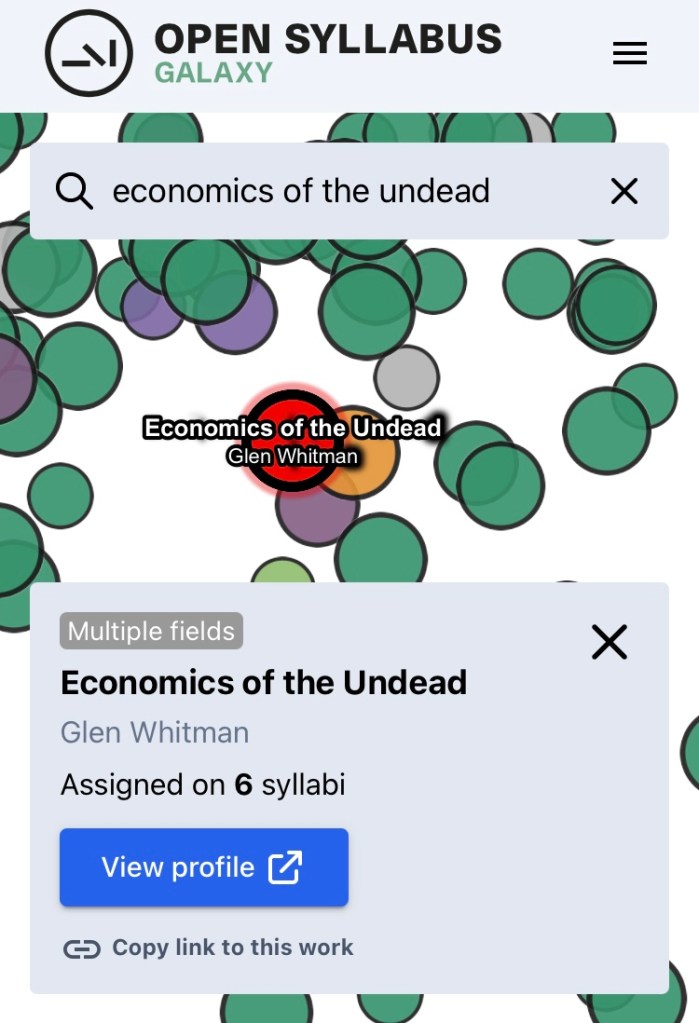
Check out this amazing tool from the Open Culture Syllabus Project, which contains a database of 7,292,573 college course syllabi and 1,138,841 of the most frequently assigned books and scholarly papers on those syllabi. (#1 is Strunk & White; “The Economics of the Undead,” to which I contributed a chapter, is assigned in six courses!) This database is presented visually on a searchable, user-friendly, Google Maps-style interface. More details about this fantastic project are available here. Hat tip: Christine Corcos (@LpcProf).
Last night, my wife Sydjia and I saw the movie “Judas and the Black Messiah,” which tells the story of how the FBI and Chicago police assassinated Fred Hampton, the charismatic leader of the Chicago chapter of the Black Panther Party. This movie left me stunned … and extremely angry. (Check out Elizabeth Hinton’s review of the movie here.)
A strong case can be made that “ethnic cleansing” began in the USA. Exhibit A: The Indian Removal Act of 1830.


“The personal library of retired John Hopkins University Humanities professor Richard A. Macksey, housed in his home.” Check out the full thread here, via Twitter. Hat tip: @DrLindseyFitz. Also, thanks to Sheree, whose ViewFromTheBack blog is one of my faves, for the “Wordless Wednesday” blog post concept.
What if Texas were to split up into five smaller States? This scenario, though it may sound strange–outlandish even–, is not that far-fetched; see, for example, this thought-provoking paper “Let’s Mess with Texas” by Vasan Kesavan (an independent scholar) and Michael Stokes Paulson (a law professor at the University of Minnesota). As an aside, this paper was the subject of one of Malcolm Gladwell’s “Revisionist History” podcasts (see here).

Remember Brady Sluder? He was the spring breaker from Ohio who famously said, “If I get corona, I get corona. At the end of the day, I’m not going to let it stop me from partying …” Sluder was lambasted by the lamestream media at the time, but the virus certainly didn’t stop the massive anti-police protests last summer or the Super Bowl earlier this month. Maybe he was right, after all.
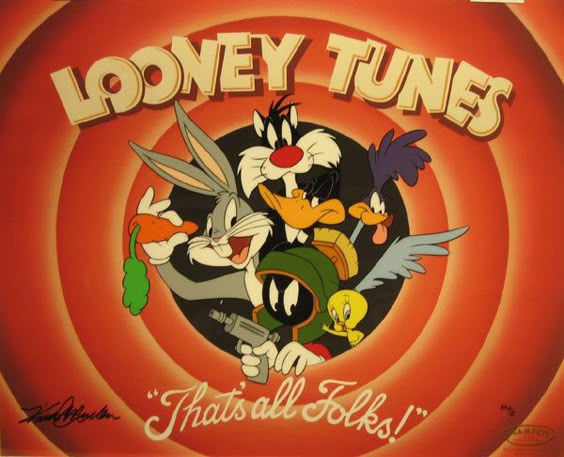
Alternative Title: “That’s all folks!”
Thus far, I have devoted several blog posts (seven separate posts in all!) to the substance of Ryan Patrick Hanley’s new book on Adam Smith: Our Great Purpose: Adam Smith on Living a Better Life (Princeton U Press, 2019). I now want to conclude my review of his book by saying a few words about its beautiful style. Instead of a dense or dry scholarly tome, Hanley’s chapters are crisp and short, and he has kept his citation notes to a minimum. [Memo to the editors at Princeton U Press: what is preventing you from replacing the end notes with footnotes?] In addition, Hanley begins each chapter with a direct quotation from the works of Adam Smith. (Note: Although most of the chapter quotations are from the sixth edition of The Theory of Moral Sentiments, some are from The Wealth of Nations, showing us the essential unity of Smith’s world view.)
For my part, although I found Hanley’s approach to be appealing (starting off each chapter with a direct quotation from Smith), as it invites us to focus on the immortal words of Adam Smith, I want to respectfully point out a danger with this strategy, the danger of selection bias, of taking Smith’s words out of their proper context. To his credit, Hanley does an excellent job of presenting Smith’s main philosophical ideas. Nevertheless, although Hanley resolves the apparent contradiction in Smith’s works between self-regarding and other-regarding behavior, many other tensions and problems are left unanswered or unresolved. (See some of my previous posts, for example.) Hanley himself concedes (pp. 61-62, internal quotation marks omitted), when reading Smith “it often feels like Smith giveth on one page, and taketh away on another,” and that one of the challenges of reading Adam Smith’s works today “consists in figuring out how all of his claims go together, even (and maybe especially) when they don’t seem to match perfectly on their face.” What if we took a different approach, then? Specifically, what if were to point out the many apparent contradictions and inconsistencies in Smith’s works instead of trying harmonize Smith’s ideas into a coherent whole? That, of course, would be the subject of another book; perhaps the next generation of Smith scholars will write that book soon …
In honor of Saint Valentine’s Day and Adam Smith, I am re-posting a link to my paper “Adam Smith in Love.” (See here.) I will be uploading a significantly-revised version of the paper soon, but in the meantime, immediately below you will find one of the most beautiful love ballads ever-recorded, the original version of “Sabor a mi” by the legendary Trio los Panchos, followed by an Andean-inspired rendition of the same song, as well as a third bonus version with Manoella Torres. (P.S.: Sydjia, you will forever be the love of my life!)







Welcome to the online home of the IASS
Hopefully It’s Interesting.
In Conversation with Legal and Moral Philosophers
Relitigating Our Favorite Disputes
PhD, Jagiellonian University
Inquiry and opinion
Life is all about being curious, asking questions, and discovering your passion. And it can be fun!
Books, papers, and other jurisprudential things
Ramblings of a retiree in France
BY GRACE THROUGH FAITH
Natalia's space
hoping we know we're living the dream
Lover of math. Bad at drawing.
We hike, bike, and discover Central Florida and beyond
Making it big in business after age 40
Reasoning about reasoning, mathematically.
I don't mean to sound critical, but I am; so that's how it comes across
remember the good old days...
"Let me live, love and say it well in good sentences." - Sylvia Plath
a personal view of the theory of computation
Submitted For Your Perusal is a weblog wherein Matt Thomas shares and writes about things he thinks are interesting.
Logic at Columbia University
Just like the Thesis Whisperer - but with more money
the sky is no longer the limit
Technology, Culture, and Ethics
Just like the horse whisperer - but with more pages
Poetry, Other Words, and Cats

 prior probability