This looks like a post-apocalyptic scene from a Cinderella nightmare, but these faux chateaux are real!
It was to be a luxury housing development for wealthy Gulf tourists w/ 732 French-style chateaux, along with a shopping center, Turkish baths, cinemas, and sporting facilities pic.twitter.com/2tMoXmik6Z
In addition to “No me queda mas“, another one of my favorite Selena songs is her 1995 single “Fotos y recuerdos.” Alas, I was disappointed that this beautiful song was not featured for some reason on the recent Selena series on Netflix.
The Chinese government is committing cultural genocide against the Uyghur Muslims in Xinjiang province (East Turkestan), detaining approximately one million people over the past five years, subjecting them to abuse and “re-education” and forcing them to denounce their religion. See here, here, here, and below:
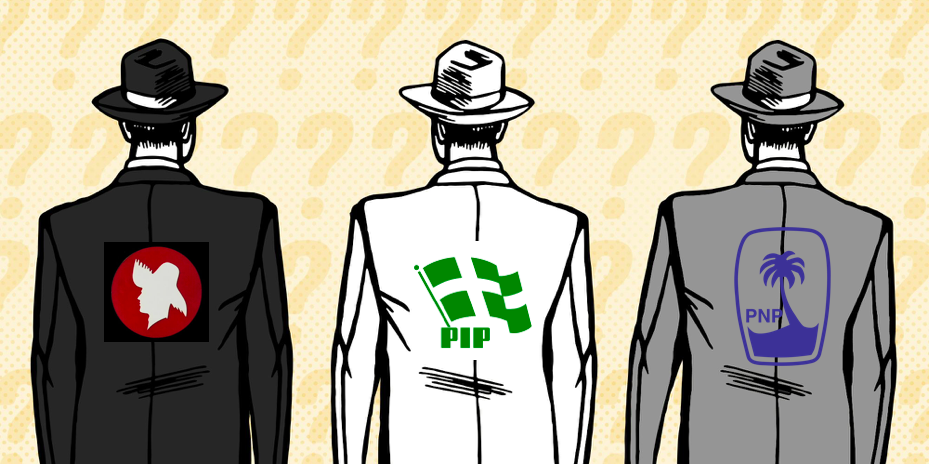
In a previous Throwback Thursday I featured my 2005 paper “Deconstructing Darwin.” Today, I want to feature my 2008 paper on “A Game-Theoretic Analysis of the Impasse over Puerto Rico’s Status,” which is available here via the magic of SSRN. In my 2008 paper, I model the century-old debate over the Island’s future political status as a truel: a three-person, sequential, random-order standoff among Puerto Rico’s three major political parties, the PDP, the PIP, and the PNP, in which no single player is able to eliminate the other two players. To learn more about truels, check out this Riddle of the Week via Popular Mechanics.
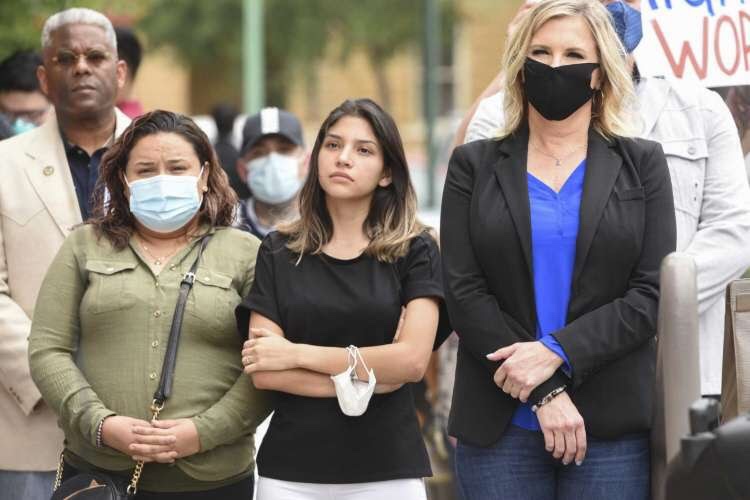
“When undercover police officers arrested Ana Isabel Castro-Garcia (pictured below, left) and Brenda Stephanie Mata (middle) in Laredo, Texas for working from their homes in violation of local lockdown orders, Jose Baeza Jr., an investigator with the Laredo Police Department said, without any sense of irony or shame, ‘These two ladies were not even licensed beauticians. There’s a health issue at hand.’ Similarly, when Dallas salon owner Shelley Luther (also pictured below, right), who presumably did have a license, was sentenced to seven days in jail and ordered to pay a $7,000 fine for refusing to shut down her beauty salon in violation of local shelter-in-place orders, Dallas Civil District Judge Eric Moyé told her, again with no sense of irony or shame, ‘The rule of law governs us. People cannot take it upon themselves to determine what they will and will not do.’
“The irony here is that it was the judge in the Luther case and the police in the Castro-Garcia and Mata cases who violated the most universal and sacred of our laws–the law of self-ownership–and who should arguably be thrown in jail for their abuses of power. Specifically, the property rights of all three women were violated by these shameless Texas authorities. In summary, although State governments do have the general police power to enact measures to protect the health, safety, and welfare of their residents, this paper will explain why such governments must comply with the Takings Clause whenever their police-power enactments significantly interfere with a person’s self-ownership rights.”
Photo Credit: Danny Zaragoza (Laredo Morning Times)
I nominate all the State and local government officials who took people’s labor rights during the pandemic without the payment of just compensation. In a nutshell, my thesis is that labor is property and that lockdown orders thus constitute a taking of property under the Takings Clause. I sketch my simple theory of Lockean lockdown takings in my most recent paper “The Law of Self-Ownership,” which is available here via SSRN. Below the fold is the table of contents of my paper:
That is the title of my most recent work-in-progress, available here via SSRN. Among other things, my paper surveys the greatest and largest-scale “taking” in the history of the United States: the taking of labor of non-essential workersduring the Wuhan coronavirus pandemic. In brief, many State and local governments across the U.S. enacted emergency lockdown orders that deprived “non-essential” workers of their self-ownership rights by preventing them from making a living. Yet, aside from ad hoc stimulus checks and the payment of fraud-ridden and inefficient unemployment benefits, not a single one of these workers received any “just compensation” as required by the Takings Clause of the Constitution. Meanwhile, billionaires avoid paying their fair share of taxes …