David Hume vs. Adam Smith

Before we discuss the main features of Adam Smith’s approach to moral philosophy (sympathy or fellow-feeling, the imaginary impartial spectator, and virtue), I want to share with you two quotes by David Hume: one about the limited role of reason in matters of morality; the other on Hume’s famous “is-ought” distinction, i.e. the notion that facts and values are two different domains. In many ways, Smith’s Theory of Moral Sentiments can be seen as an extended reply to Hume. (An in-depth survey of Hume’s moral philosophy can be found here.)

Posted in Uncategorized | 3 Comments

Life is full of opportunity costs

Ryan Patrick Hanley poses two deep philosophical questions on the first two lines of the first page of his new book Our great purpose: Adam Smith on living a better life: “What does it mean to ‘live a [good] life’? And for that matter, what exactly does it mean to ‘live a life’ in the first place?” These are perennial questions. How should we go about answering them? At a minimum, we can all agree that life is full of choices, of paths not taken. (Fun fact: according to this source, the average person makes around 2,000 decisions per hour; from a purely economic perspective, then, we might say that our lives can be defined in terms of “opportunity costs,” since life is full of delicate tradeoffs.) This insight, in turn, poses more deep philosophical questions:

  1. What makes one path better than another?
  2. What standard should we use to judge what choices we make?
  3. And where should we turn for guidance on all this?

All of these eternal questions appear on page 1 of Hanley’s beautiful new book. His contribution is to show how the ideas of Adam Smith are relevant to these moral questions–not the ideas of Adam Smith the father of capitalism and champion of liberty–but rather the ideas of Adam Smith the great moral philosopher. For as Hanley correctly reminds us, before Smith authored his critique of mercantilism and defense of economic freedom, he was a Professor of Moral Philosophy for many years; before he wrote The Wealth of Nations (1776), he first wrote The Theory of Moral Sentiments (1759).

More specifically, three important themes in Smith’s first book are going to be especially relevant to these big questions and to our contemporary controversies today: (1) Smith’s notion of “sympathy”; (2) his imaginary “impartial spectator”; and (3) his theory of human virtue. What does Smith have to say about each one of these themes, and why are Smith’s observations relevant to our world today? I shall address those second-order questions in my next few posts …

Image result for opportunity cost
Posted in Uncategorized | 2 Comments

Best Adam Smith Bibliography Ever?

As I mentioned in a previous post, in the days ahead I will be reviewing Ryan Patrick Hanley’s new book about Adam Smith: “Our great purpose: Adam Smith on living a better life” (Princeton U Press, 2019), one of the most fascinating and beautiful books I have read in a long time. But before I begin, allow me first to fast-forward to the end of Professor Hanley’s tome–the next-to-last section titled “Texts and Further Readings” (pp. 141-148). For after I finished reading the book proper, the nerdy academic in me pressed on and perused Hanley’s annotated bibliography and suggestions for further reading. Suffice it to say what I found there was nothing less than a scholarly treasure trove of erudite gems. More specifically, Hanley has done his readers a great service by organizing his carefully curated yet comprehensive bibliography (see table below) by theme or subject area, pointing out the two or three most relevant papers or books about each theme and area. By way of example, Hanley’s thematic bibliography contains entries for such recondite topics as Smith’s concern for the poor, his commitment to moral pluralism, and his intellectual debts to Socrates and Plato, among many others entries. (I have compiled below a table of all the themes and subject areas covered in Hanley’s excellent bibliography. Anyone wishing to pursue any of these fascinating topics further would be well to begin here.) With this preliminary observation out of the way, we will formally get started in my next post tomorrow …

citation bibliography meme

Some Themes and Subject Areas in Hanley’s Bibliography

  1. Biographies of Adam Smith
  2. Overviews of Smith’s thoughts on ethics and economics
  3. Introductions to Smith’s first book “The theory of moral sentiments”
  4. Smith’s views on self-interest
  5. Smith’s approach to egoism and altruism
  6. Smith’s concept of sympathy
  7. The role of the imagination in Smith’s moral system
  8. Smith’s concern for the poor
  9. The role of happiness in Smith’s theories
  10. Das Adam Smith Problem
  11. Smith’s views on corruption
  12. Smith’s ideas about friendship
  13. Smith’s treatment of anxiety
  14. Smith’s theory of law (jurisprudence)
  15. Smith’s treatment of justice
  16. Smith’s commitment to pluralism
  17. Smith’s critique of the man of system
  18. The distinction between the love of praise and the love of praiseworthiness in Smith’s thought
  19. Smith’s theory of the impartial spectator
  20. Smith’s commitment to equality and human dignity
  21. Smith theory of virtue
  22. Smith’s relationship to ancient thinkers like Socrates and Plato
  23. Smith’s friendship with Hume
  24. Smith’s views on religion
  25. Additional books about Adam Smith by Ryan Patrick Hanley
Posted in Uncategorized | Leave a comment

PSA: Can we just cancel Super Bowl LV?

What happened to “saving grandma”? The covid coronavirus is peaking, new strains are popping up everywhere, and yet we are still plowing ahead with this totally unnecessary super-spreader event. I respectfully reiterate my call that the Super-Spreader-Bowl be cancelled or postponed.

F. E. Guerra-Pujol's avatarprior probability

View original post

Posted in Uncategorized | Leave a comment

Social media mafia?

I was on the verge of deleting my Facebook account again, but to paraphrase Michael Corleone in The Godfather: just when I thought I was out, Day 1 of the Meltwater Champions Chess Tour has pulled me back in! #ChessChamps #FacebookLive (On another note, I will begin my review of Ryan Patrick Hanley’s beautiful new book on Adam Smith’s moral philosophy on Monday.)

Screen Shot 2021-02-06 at 11.29.56 AM

Screen Shot 2021-02-06 at 11.26.34 AM

Posted in Uncategorized | Leave a comment

My spring semester reading list

Among many other things (essays, articles, blogs, etc.), I am reading–or am about to start reading–the following books (presented alphabetically):

Ryan Patrick Hanley, Our great purpose: Adam Smith on living a better life (Princeton, 2019). I have just finished reading this short but surprisingly comprehensive tome and will be blogging about it soon.

Zena Hitz, Lost in thought: the hidden pleasures of an intellectual life (Princeton, 2020). The cover of this beautiful book is pictured below. As of today, I have read up to p. 80.

Erik Larson, The splendid and the vile: a saga of Churchill, family, and defiance during the Blitz (Crown, 2020). I ordered this book on the strength of Alex Tabarrok’s short review (available here; see the fourth paragraph), opened it last night, and am up to p. 31.

Stephanie Murphy-Lupo, All aboard! A history of Florida’s railroads (Globe Pequot, 2016). I love trains, and I love history, so I was lucky enough to have found a copy of this perfect book in one of the “free little libraries” that now dot the urban Orlando landscape.

James Otteson, editor, What Adam Smith knew: moral lessons on capitalism from its greatest champions and fiercest opponents (Encounter Books, 2014). I received a copy of this excellent collection of essays when I became a member of The Adam Smith Society last December.

Adam Smith, The theory of moral sentiments (Glasgow edition, Liberty Fund). I have decided to bite the proverbial bullet and read the damn thing for myself!

Image result for lost in thought
Posted in Uncategorized | Leave a comment

What’s inside a 9-volt battery?

Six tiny AAAA batteries! More details here, via Chad Upton.

hat tip: @pickover
Posted in Uncategorized | Leave a comment

Love songs

Alternative title: That was then, this is now

I confess I really love (pun intended) the melody and rhythm of the new Ariana remix, but don’t the lyrics violate YouTube’s “community standards”? Yes, they probably do …

Posted in Uncategorized | Leave a comment

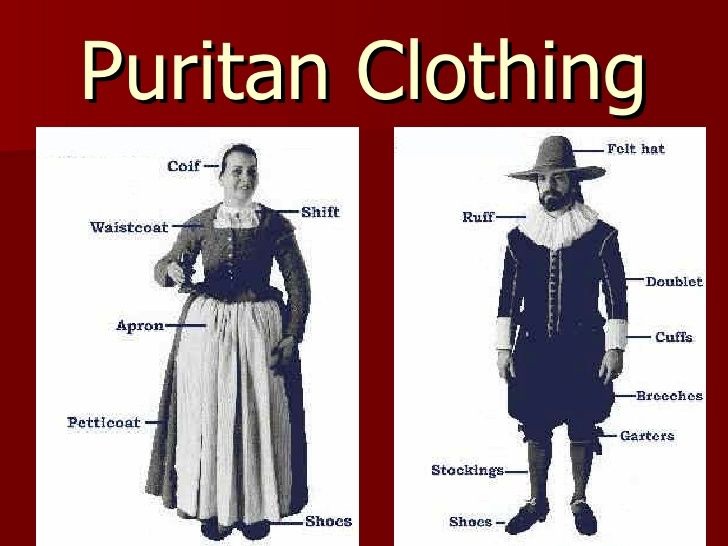
Hats maketh the man?

With apologies to German dadaist/surrealist Max Ernst. Hat tip: Craig Collins. (Also, check out Craig’s blog The 100 Billionth Person; you will be amply rewarded.)

Posted in Uncategorized | 2 Comments

Reference Letter Hall of Fame: John Nash

Hat tip: @ryancbriggs
Posted in Uncategorized | 2 Comments