Corporate Governance with Bayesian Voting: The Case of Facebook’s New Supreme Court
F. E. Guerra-Pujol, University of Central Florida
Mark Zuckerberg recently established an ostensibly-independent Oversight Board or private court (“the Facebook Supreme Court”) with the power to review some of Facebook’s content moderation decisions.
But as the old saying goes, the devil is in the details.
Without going into all the background history and procedural details of this new private court (due to my time limit), I just want to say up front that I think this is a really cool and exciting idea.
But to stay within my time limit, I will review the following five aspects of this private court (and five potential blind spots) in the remainder of my talk:
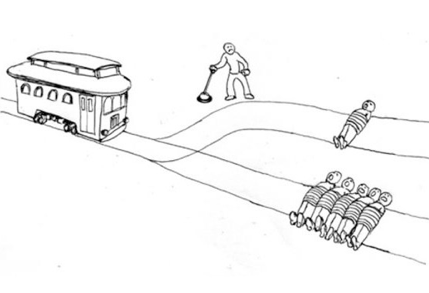
As I mentioned in my previous post, Class #5 is devoted to the Trolley Problem–a classic moral dilemma in which we must make a split-second decision whether to save five innocent lives at the cost of one innocent life. Generally speaking, this dilemma is a no-brainer if you are a “crude consequentialist.” You will simply choose the lesser evil. But what if you are a hardcore “Kantian” or devotee of moral duties; that is, what if you believe that it is always impermissible to take a life unless your own life is being threatened? Or what if you are a moral “contractarian“; in other words, what if you believe that some sort of consent is necessary before you can take an action that would endanger another soul? Either way, whatever your moral intuitions or preferences are, how should the law deal with the Trolley Problem? Also, does the law have any moral foundations, and if so, what are they? These are just some of the questions I will pose in my next class …
I will provide an overview of my next class session in Advanced Topics in Law (Class #5), which will be devoted to the trolley problem, in the next day or two. Today, however, I would like to say one more thing about Class #4, which was about the prisoner’s dilemma and strategic behavior generally. One of the things we discussed during that class was whether the famous “Ignore the Blonde” scene in the movie A Beautiful Mind is a prisoner’s dilemma or not. (See the film clip for yourself, which is posted below.) Many commentators have explained why that scene does not, in fact, depict a prisoner’s dilemma; see, for example, this analysis of the scene by Presh Talwalkar or this essay by James R. Rogers. Putting aside the fact that the blonde in that scene is not really all that hot, and also putting aside the fact that this scene is more sexist than sexy, why is this question worth discussing? Among other things, one reason this question is important is because it invites us to apply game theory to a real life strategic situation. (Note to my readers: a strategic situation is simply any situation in which the outcome depends upon the actions of two or more persons.)
Broadly speaking, the movie scene below definitely depicts a strategic situation, but whether it constitutes a prisoner’s dilemma or not will depend on three variables: the choices available to the players (i.e. whether to cooperate or defect), the “payoffs” or utility generated by these choices, and the rankings of these payoffs or the “payoff structure” of the game. I won’t delve any further into the details of these three variables here; instead, it suffices to say that one major weakness with this scene–from a purely game theory or amoral perspective–is that the John Nash character (played by Russell Crowe) does not even attempt to model the strategy sets of the girls or assign payoffs to them!
Update (9/25): Professor Landsburg wrote up a thoughtful and excellent explanation of his position here (see comment #12). Because I am busy preparing for two different talks this weekend and two sets of law lectures thereafter (one on Monday; the other on Tuesday), I will return to this theoretical question later next week.
My colleague and friend Steven E. Landsburg says “yes” (see below); I, however, say “no” because axioms, by definition, are assumed to be true. Who’s right? Professor Landsburg or me?
Check out Jonathan Dancy’s short intellectual biography of the late great Derek Parfit (pictured below), an Anglo moral philosopher who developed a new field of “meta-ethics.” Here is an excerpt from Dancy’s tribute to Parfit: “But by the end of the century Parfit’s interests had moved to a focus on two main themes. The first theme is the question of whether three great philosophical understandings of ethics—consequentialism, contractualism, and Kantianism—could not in the end be shown to be different expressions of the same position…. The second theme is an uncompromising realism about the moral and more generally the normative, as evidenced in the title he chose for his great three-volume work On What Matters.” Hat tips: Brian Leiter/Tyler Cowen.
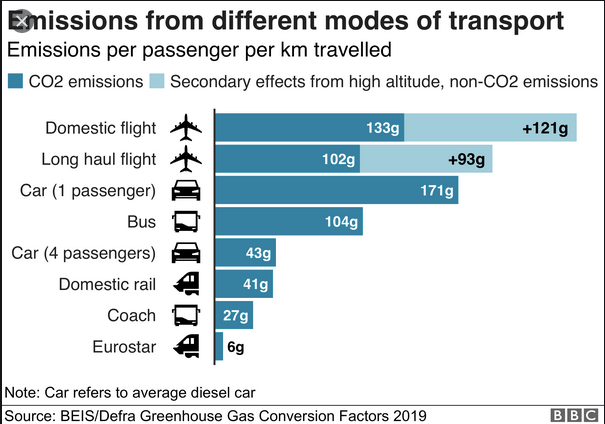
I described the game theory logic of “social dilemmas” or multi-player prisoners’ dilemmas in a previous post. In this follow-up post, let’s consider a specific example of a social dilemma: the problem of “climate change” or global warming. As the chart above shows, aviation is a significant source of greenhouse gas (GHG) emissions.[1] Commercial jets emit enormous amounts of carbon into the atmosphere. A single round-trip flight from London to New York, for instance, generates roughly the same level of emissions as the average person does by heating their home for a whole year.[2]
Imagine you are the CEO of American Airlines and that you are committed to protecting the environment. Also, assume there are no applicable U.S. or international laws regulating the levels of GHG emissions in the aviation industry. Lastly, let’s assume that you can reduce your emission levels in half if you reduce the number of long-haul flights or replace your airline’s fleet with smaller, more fuel-efficient aircraft or some combination of both strategies.
Unfortunately, when everyone else’s jets are emitting large amounts of greenhouse gases into the atmosphere, it is (in theory) a best response for you not to reduce your level of emissions as well because your airline’s lone decision to “go green” will only increase your costs of production and won’t save the environment, since everyone else in your industry is polluting anyways.
But even if everyone else in the airline industry has decided to “go green” and take costly steps to reduce carbon emissions (say, by reducing the number of flights or using smaller aircraft), it is still (in theory) a best response for you to defect, since you can gain a competitive advantage by doing so. Also, if you’re the only airline defecting, your airline’s carbon emissions alone won’t most likely create any catastrophic effects on the Earth’s temperature.
Alas, if too many people and firms behave selfishly–trying to maximize their own individual outcomes, for example–then everyone as a whole eventually suffers and we are all left with dirty air. Environmental law, however, might be able to promote cooperation in this domain by nudging every firm in the industry to reduce their emissions. Broadly speaking, there are three possible regulatory approaches when we confront a large-scale Prisoner’s Dilemma or social dilemma like aircraft GHG emissions. One approach is no regulation. Another approach involves direct regulation by imposing strict limits on the amount of emissions generated by each airline. Yet another possible approach is self-regulation via “cap-and-trade.” Let’s examine each approach in turn:
No Regulation
Although no regulation may seem absurd given the potential gravity of global warming, at the present time there is no direct federal regulation of aircraft emissions in the United States. In fact, no regulation is usually the default “solution” until Congress acts by enacting a law to address a given environmental problem.
Direct Regulation (“Command & Control”)
The standard proactive regulatory approach to a social dilemma, however, is “command and control” or direct regulation of the people and firms creating the problem. The EPA, for example, recently initiated a formal rulemaking process to “make a final determination on whether aircraft GHG emissions cause or contribute to air pollution which may reasonably be anticipated to endanger public health or welfare.”
If the EPA finds that aircraft emissions threaten public health, the EPA could decide to regulate aircraft emissions by imposing strict limits on the level of such emissions in much the same way that emissions from passenger cars and light trucks are regulated. In response to several oil price shocks in the early 1970s, for example, Congress enacted a law in 1975 authorizing the National Highway Traffic Safety Administration (NHTSA) to set fuel-economy levels or “Corporate Average Fuel Economy” standards for passenger automobiles and light trucks. The 1975 law called for a doubling of passenger-vehicle efficiency—to 27.5 miles per gallon (mpg)—within 10 years.[3]
Self-Regulation (“Cap and Trade”)
The European Union (EU), by contrast, has adopted a “cap-and-trade” or market approach to the aviation emission problem. The EU approach–which operates in the 28 EU countries as well as Iceland, Liechtenstein, and Norway–is called the Emissions Trading System or “ETS.” Under the cap-and-trade approach, the regulator first sets a maximum level or “cap” on the total amount of greenhouse gases or CO2 that airlines are allowed to emit from their flights per year. The regulator then allocates “pollution permits” or “allowances” to the airlines, granting each airline the legal right to emit a certain level of CO2 emissions per year. The total number of permits cannot exceed the cap, thus limiting total allowable CO2 emissions to the overall cap.[4]
An important feature of this system is that the pollution permits are tradeable. This means that an airline that reduces its emissions below its allowable level can sell its spare allowances to other airlines. Thus, if an airline’s emissions exceed the amount specified in its allocated allowance, it must either pay a substantial fine to the regulator or purchase a spare allowance from another airline to cover its emissions. Conversely, if an airline’s emissions are less than the amount specified in its allowance–that is, if an airlines ends the year with spare allowances–it can keep the spare allowances to cover its future needs or sell them to another airline that is short of allowances.
Conclusion
To sum up, whenever individuals or firms are trapped in a socially-destructive Prisoner’s Dilemma, legal rules backed by enforcement mechanisms or market devices can help us escape the dilemma by requiring (law) or encouraging (markets) the players to “do the right thing.” Of the major approaches we have discussed in this section, which one do you prefer and why?
End Notes
[1] See also Ian Waitz, et al., “Aviation and the Environment,” Report to the United States Congress (Dec., 2004).
[3] Recently, the EPA and DOT released a joint notice of intent to formulate enhanced CAFE standards for cars and light trucks in model years 2017 to 2025. The EPA is currently considering a range of 47 to 62 mpg by 2025, or an annual fuel-economy increase of 3 to 6 percent. See EPA and DOT, Notice of Upcoming Joint Rulemaking to Establish 2017 and Later Model Year Light Duty Vehicle GHG Emissions and CAFE Standards, Notice of Intent (Washington, DC: EPA and DOT, Sept. 30, 2010).
I had the great honor of meeting Ruth Bader Ginsburg on 29 May 2007, the day on which I officially joined the bar of the Supreme Court of the United States (SCOTUS). Some background: I was part of a small group of attorneys from Puerto Rico and from across several of the States who had applied to join the SCOTUS bar that year. Our bar membership applications had already been approved by the clerk, and so my colleagues and I were in Washington, D.C. to attend our swearing-in ceremony in open court.
Alas, I don’t remember if it was before or after the formal oath ceremony, but Chief Justice John Roberts and Justice Ginsburg both took the time out of their busy schedules to meet with us. Yet even more memorable than meeting two justices was having the opportunity to hear RBG deliver one of her famous dissents on that same day! You see, that was also the day in which SCOTUS would announce its nefarious decision in the controversial case of Ledbetter v. Goodyear Tire Company. (The court’s opinion is available here.) In summary, the majority in that case had relied on a technicality in the law to deny Lilly Ledbetter’s equal pay claim against the Goodyear Tire Company, but Justice Ginsburg was having none of it. She used the occasion to read out loud her dissenting opinion in open court, a dissent that I found both powerful and persuasive in spite of RBG’s gentle and soft-spoken nature. (Here is a link to her dissent.)
Indeed, RBG’s Ledbetter dissent would not only turn out to be one of her most influential dissents of all time; it also changed the way I see the law. Among other things, Justice Ginsburg scolded the majority for their narrow reading of federal anti-discrimination law, and she then invited Congress to take matters into their hands: “This is not the first time the Court has ordered a cramped interpretation of Title VII, incompatible with the statute’s broad remedial purpose. Once again, the ball is in Congress’s court …“
In other words, what struck me the most about RBG’s remarkable dissent is that SCOTUS does not have to have–and should not have–the last word in cases involving federal statutory interpretation. (In fact, later that same day, New York Senator Hillary Rodham Clinton introduced “The Lilly Ledbetter Equal Pay Act,” which was eventually enacted into the law.) Ever since that day, I have also asked, why should SCOTUS have the last word in matters of federal constitutional interpretation as well? SCOTUS is just one branch of our federal government, and it lacks both the power of the purse as well as the power of sword, to quote Hamliton’s immortal words in Federalist Paper No. 78. Be that as it may, may RBG rest in peace; we lost an iconic woman, a leading jurist, and a great American last night …