The case of the saucy intruder

Note: This is the second of several blog posts devoted to Module 3 of my business law survey course (Tiger King edition).

In my previous post, I presented an overview of Module 3 of my survey course in business law. Here, I will delve into the details of Module 3, which is devoted to three important areas of the Common Law: Property, Contracts, and Torts. Because I am teaching a survey course, I have (once again) tried my best to reduce the amount of reading materials in Module 3, limiting this module to just three common law cases, Pierson v. Post for the property section, Leonard v. PepsiCo for the contract section, and a cattle trespass case out of Florida (Rockow v. Hendry) for the torts section. In addition to these law cases, this module also contains picture prompts and video clips about several incidents in “Tiger King” that raise important legal issues under the common law, like Joe Exotic’s $10,000 reward offer and the time when one of his employees (Saff) got his arm chewed off by a tiger.

With this basic background in mind, let’s now delve into the Law of Property and discuss the first of our classic common law cases, Pierson v. Post, which is considered by many students of the common law to be the most famous property case in North American legal history. (Also, check out some of the sundry Pierson v. Post merchandise pictured below!) One of the reasons this case is deservedly famous is because it poses a fundamental question: how can something of value be first owned by a human being?

In summary, the facts of Pierson v. Post are as follows: Post was out hunting with his dogs at an uninhabited beach near Southampton in New York State. They were giving chase to a wild fox, but just when Post was about to capture the creature, another man, Pierson, snatched it and carried it off for himself. The rest is legal history. Post was indignant at this breach of local custom and good sportsmanship, so he filed a lawsuit against Pierson claiming that because he and his dogs had already begun pursuing the fox, the property of the fox’s pelt and carcass were rightfully his, not Pierson’s, and the local justice of the peace ruled in favor of Post. Pierson, however, appealed the ruling to the New York Supreme Court of Judicature, who reversed the justice’s decision and ruled in favor of Pierson.

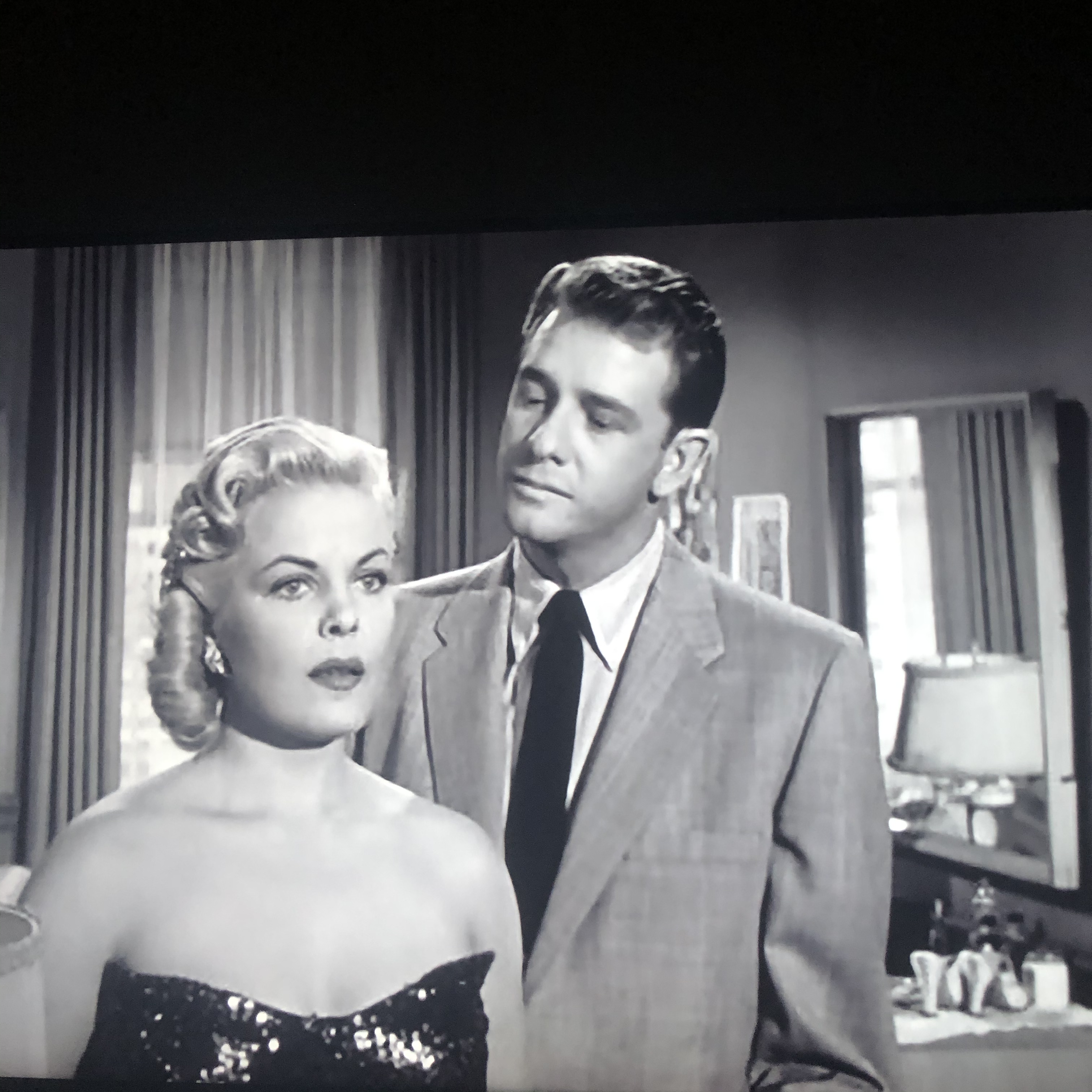
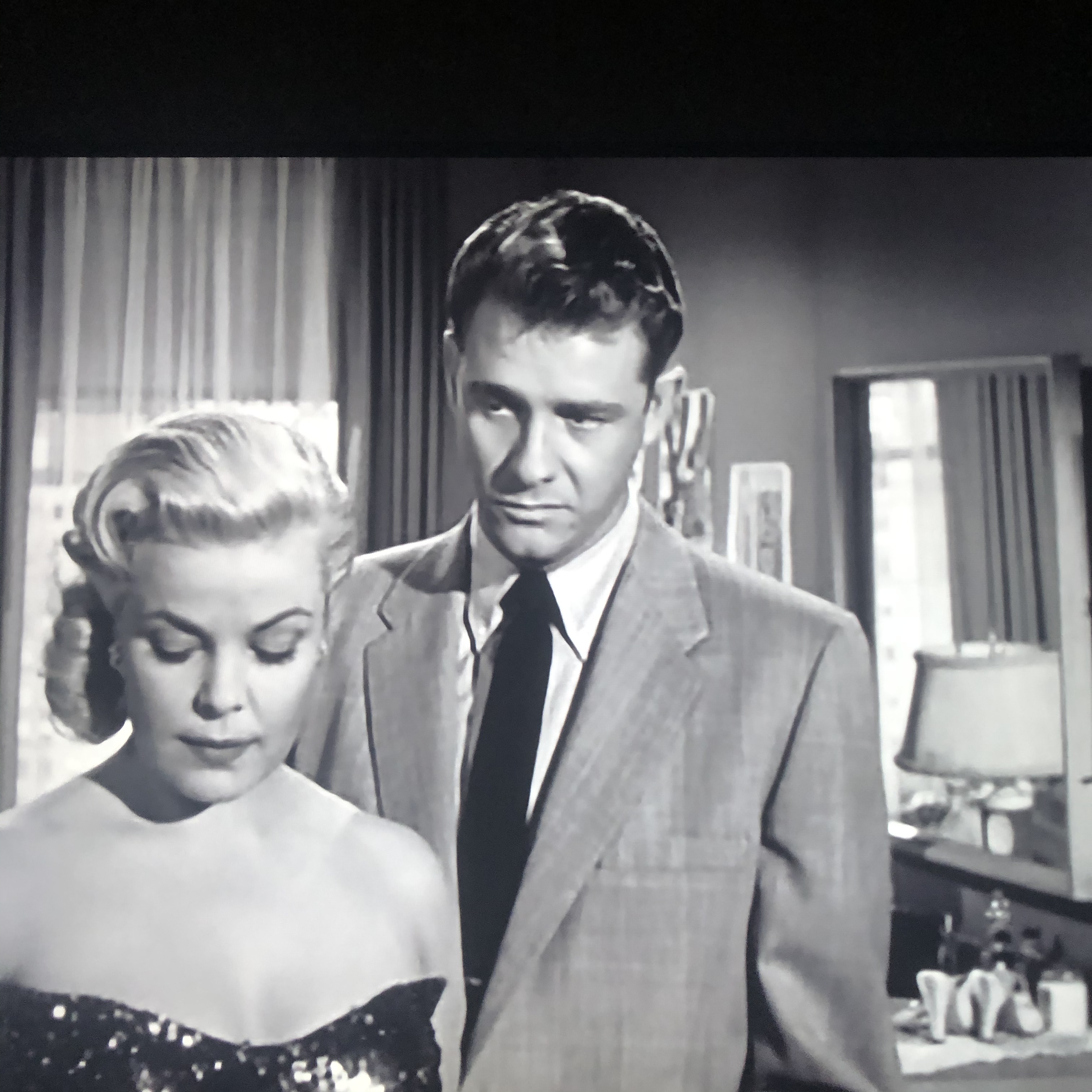
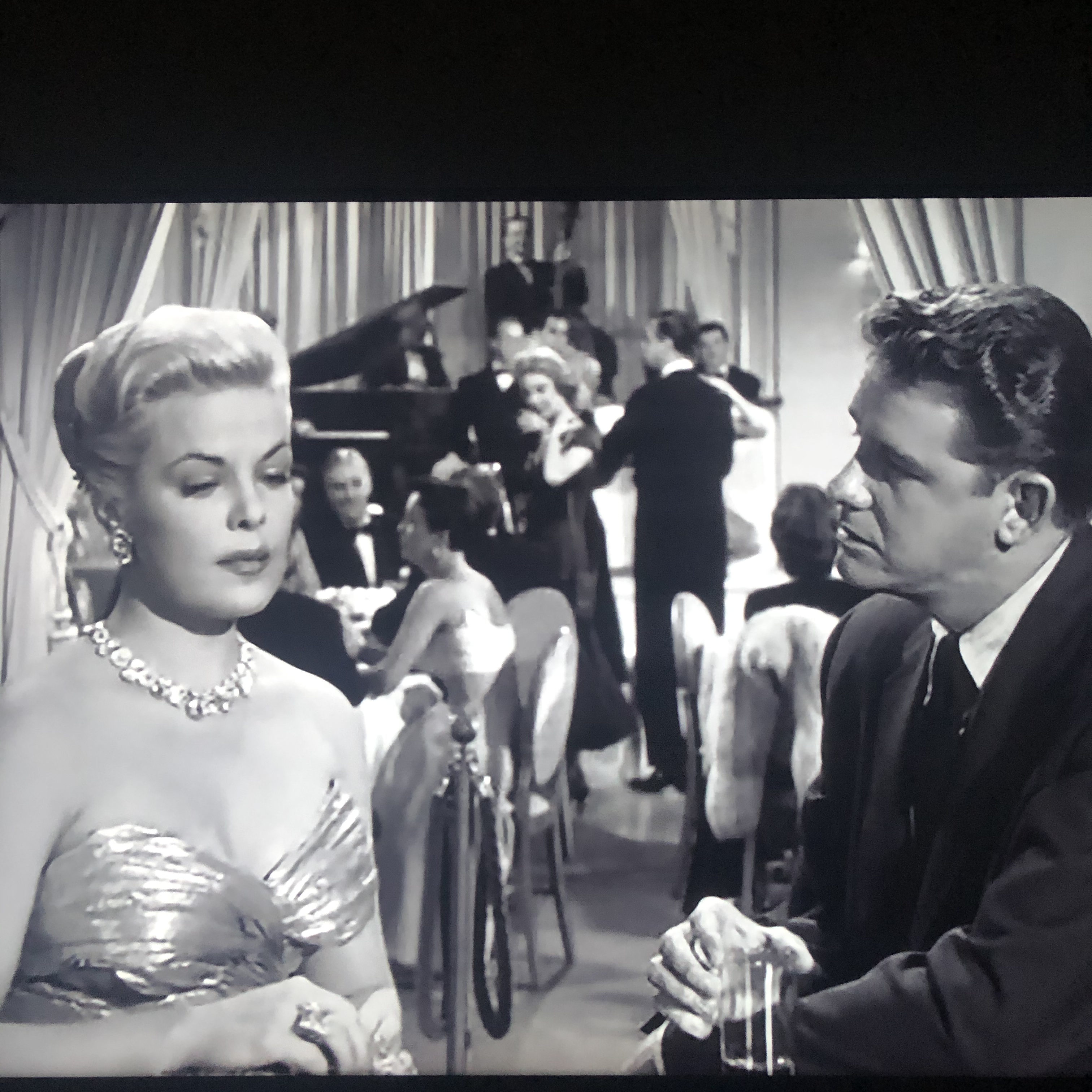
In deciding this case, the majority opinion refers to a wide variety of historical legal treatises, including the Institutes of Justinian from the 5th century A.D. and the writings of Henry de Bracton in the 13th century as well as of Samuel von Pufendorf in the 17th century, and concludes that the time and effort Post spent giving chase to the fox was not sufficient to create a property right. Something more is needed, and that “something more” is actual physical possession. The dissenting judge, by contrast, called Pierson out as a “saucy intruder”, a violator of norms. Simply put, if you were to ask local hunters in Southhampton, N.Y. how they would have decided this case, they would have “regarded hot pursuit as giving rights to take an unimpeded first possession.”

Putting aside the particulars of this property dispute for a moment, this case is important not only for its substantive ruling but also because it illustrates the two main ways judges decide cases. On the one hand, the majority chose to apply a simple bright-line rule to decide the case (the rule of physical possession), while the dissent would have applied a flexible standard (the rule of hot pursuit) based on local customs. Both of these rules have advantages and disadvantages. By way of example, how is the rule of hot pursuit to be applied? Although a bright-line rule is easier to apply than a general standard, it can produce unfair results in murky cases. Pierson v. Post is a case in point! General standards, on the other hand, are more flexible and fair, since they can be tailored to each individual case, but if a standard is too general and flexible, it can produce indeterminate results. How much time and effort, for example, must be expended to create a property right in a wild animal? Does it depend on the type of animal being hunted? Unlike a simple rule like first possession, the rule of hot pursuit can give way to endless disputes and thus invite greater amounts litigation …

So much for property rights and saucy intruders. We will proceed to the Law of Contracts in my next post …

Screen Shot 2020-05-26 at 10.56.50 AM

Posted in Uncategorized | 2 Comments

Overview of Module 3 of Tiger Law

Notes: This is the first of several blog posts devoted to Module 3 of my business law survey course (Tiger King edition). This post was updated on 9/29/20.

If you are new to this blog, we are teaching an online survey course in business law this fall and have assigned our students to watch the surprise hit Netflix show “Tiger King: Murder, Mayhem, and Madness.” In summary, the course consists of six separate modules. Last time, we featured Module 2 on “Sources of Law” (State law, federal law, and international law); this time, I will provide a general overview of Module 3 of the course, which covers three major areas of the Common Law: Property, Torts, and Contracts.

In brief, the Common Law is not only one of the greatest intellectual achievements of the Anglo-American world; the Common Law also permeates almost every aspect of our lives and is probably the single-most important area of law for most business firms. Why? Because without property rights, without contract rules for being able to transfer or rearrange these rights, and without rules of tort liability for intentional and accidental injuries, we could not have markets, and without markets, we would not have business firms. Accordingly, my module on the Common Law is divided into six parts as follows:

  • Theme Song and Playlist of Lectures
  • Property
  • Contracts
  • Torts
  • Bonus Section on “Illegal and Immoral Promises”
  • Assignments

Like the previous module (Module 2), the first five parts of Module 3 contain videos and reading materials, while the last part contains a quiz, a discussion post, and a survey. (The survey question is, Should President Trump pardon Joe Exotic or commute his 22-year sentence?) Moreover, because of my Tiger King theme, every section in this module features problems, questions, and materials involving wild or domesticated animals. By way of example, the Property Law section is devoted to the classic common law case of Pierson v. Post, involving a dispute over the ownership of a wild fox, while the Tort Law section contains a cattle trespass case to illustrate the difference between strict liability and negligence. Even the bonus section contains a book chapter devoted to outlaw contracts with vampires! But I am getting ahead of myself … I will delve into the details of Module 3 in my next few blog posts.

Tiger King Memes That Are Almost As Good As The Documentary

Posted in Uncategorized | 1 Comment

Posted in Uncategorized | Leave a comment

In memoriam

Kindly join me in taking a moment to honor the brave men and women of our armed forces, especially those who have made the ultimate sacrifice for our freedoms.

Flag of the United States - Wikipedia
Posted in Uncategorized | 1 Comment

Mooney’s mistake (Coase & COVID-19)

In a previous post, I mentioned that I would elaborate on my Coasean approach to the current pandemic. So, here it goes. To begin with, when my fellow legal scholars hear the words “Coase” or “Coasean”, most of them immediately conjure up something called the “Coase Theorem.” This so-called theorem has been formulated in many different ways, and I myself have written several scholarly papers about it, but guess what? We don’t need to go into the details of Coase’s influential theorem for this post. Instead, I am going to refer to another aspect of Coasean thinking, one that is often neglected but that is far more important. Specifically, I am going to focus on Ronald Coase’s revolutionary insight that most moral conflicts or legal disputes are “reciprocal problems.”

Full disclosure: along with Robert Nozick, Ronald Coase is one of my intellectual heroes, and years ago, I explained the theoretical significance of Coase’s counter-intuitive idea in the inaugural issue of the Indian Journal of Law & Economics, which is available here. For now, we can illustrate this idea with COVID-19. Simply put, how is COVID-19 a “reciprocal problem”? To see why COVID-19 is a reciprocal problem, let’s take a look at this essay by Graham Mooney, a historian of public health at John Hopkins University. (FYI: Professor Mooney’s excellent essay was published in The Atlantic and featured on Jason Kottke’s blog earlier this week.) Among other things, Professor Mooney makes two observations:

Observation #1:

Many of the people pushing to reopen see the issue in terms of freedom. They argue that quarantine and government-mandated closures infringe on their individual rights to do as they please, to make their own choices about health risks. The United States was founded on the idea that individual liberty … is inviolable, and for many of its residents this argument resonates deeply.

Observation #2:

In response to these vehement appeals to individual freedom, public-health leaders in [19th Century England] and elsewhere developed a powerful counterargument. They too framed their argument in terms of freedom—freedom from disease. To protect citizens’ right to be free from disease, in their view, governments and officials needed the authority to isolate those who were sick, vaccinate people, and take other steps to reduce the risk of infectious disease.

These two observations show us why COVID-19 is a reciprocal problem. Professor Mooney’s mistake is to assume that Observation #2 somehow trumps Observation #1, while “Red State Republicans” commit the opposite fallacy. In reality, both of Mooney’s observations are equally true, or to put it in Coasean or economic terms: allowing people the freedom to congregate in close quarters during a pandemic generates a harmful effect or social cost. The disease is more likely to spread and infect many more people in the absence of quarantines, business closures, and other aggressive public health measures. But at the same time (paging Dr Mooney), these aggressive health measures also generate a harmful effect, since such measures reduce our liberties and, in many cases, our livelihoods as well!

So, what is to be done? Coase’s solution has two steps. The First Step is to realize that most, if not all, harms are reciprocal problems. But that is only the first step. The Second Step is to figure out which of these two competing harms is the lesser evil. Of course, the Coasean rub is that it is not always obvious what the lesser harm is. COVID-19, for example, is a case in point. With all due respect, however, Mooney’s mistake is to assume away or ignore the costs to liberty. The Coasean approach, by contrast, invites us to measure and weigh the harms on both sides. Change my mind!

In my youth it was said that what was too silly to be said may be ...


Posted in Uncategorized | 1 Comment

Questions rarely asked (chex mix edition)

https://twitter.com/naahrun/status/1263247361633124354

Posted in Uncategorized | 1 Comment

Property rights panel: four questions

Following up on my previous post, the moderator of our panel, the excellent Robert H. Thomas, formulated four thought-provoking questions for the members of our May 15 property rights panel. Here are his questions (edited by yours truly for clarity):

1. Are there degrees of “police power,” and can or should a court be *more* deferential to the government’s claim that it is acting in response to an emergency, than the already-high degree of deference courts already pay to assertions of health, safety, and welfare measures during normal times under the rational or conceivable basis test?

2. I am intrigued by Professor Guerra-Pujol’s assertion that Kelo–the Supreme Court’s controversial ruling that exercises of eminent domain power need only pass a very low bar under the Public Use Clause–actually is a decision supporting a “strong argument for takings clause lockdown compensation.” In one of the citrus canker cases, the Florida Supreme Court agrees with this approach–where it held “that if a regulation creates a public benefit it is more likely that there is a taking.” Are emergency measures done as a public benefit, or as harm prevention? Is there any difference?

3. What is the role of the “wartime” cases such as U.S. v. Caltex Philippines or U.S. v. Pacific Railroad (no compensation for destruction of property to keep it from falling into enemy hands in wartime), and Mitchell v. Harmony, where the Court held that the military may take or commandeer property to prevent it from falling into enemy hands, but compensation can only be avoided if the danger is “immediate and impending and not remote or contingent”? Does this approach get courts into the business of evaluating the need and actual necessity for the emergency measures?

4. Is the takings question–should compensation be provided?; is this property owner bearing more than their fair share of public benefits?–solved by the type of governmental power being asserted (as many courts have concluded)–in other words, the police power versus the eminent domain power?

These are excellent questions. For my part, my tentative global reply is a “Coasean” one: people have rights, but these rights are going to be in reciprocal conflict (e.g. the right to put others at risk versus the right to be free from risk), so if the government is going to use the pretext of an emergency to curtail one set of these rights, then it must provide compensation in exchange for our cooperation. I will elaborate on my Coasean approach to the pandemic in a future blog post.

8 Sales Qualifying Questions to Ask Your Next Prospect ...

Posted in Uncategorized | 2 Comments

Property rights panel: a recap

Revised and corrected (11:00 AM): Last Friday (May 15, 2020), Professor Ilya Somin and I debated whether coronavirus lockdown orders are “takings” under the Constitution. We are still waiting on the Federalist Society to post an audio recording of our virtual panel; in the meantime, I will share some of my thoughts about our exchange. First off, I have to confess at the outset that I was very nervous, terrified even, in the days leading up to the panel. Professor Somin literally wrote the book on the takings clause. Furthermore, he is not only a leading expert on takings law; he is also an accomplished and eloquent speaker. As a result, in the face of such a formidable scholarly opponent, I decided to return to first principles and make a “natural law” argument, or to paraphrase the late great Robert Nozick (pictured below, bottom right), one of my intellectual heroes: individuals–even non-essential ones–have rights!

Here is a brief recap. After dedicating my talk to Shelley Luther (pictured below, bottom left) of Dallas, Texas, who was thrown in jail for opening her small business in defiance of a court order, I immediately took the position that this issue is too important to leave to the courts. That is, instead of waiting for the courts to decide the legal ramifications of coronavirus lockdown orders under the Takings Clause, government officials should just “do the right thing” by unilaterally declaring these orders to be takings and by agreeing, in principle, to pay just compensation to affected business firms. Lastly, I also argued that these lockdown orders are the equivalent of a physical invasion or ouster of property rights under the takings framework established in Lingle v. Chevron, since many State and local governments are using their coercive powers, including the imposition of severe fines and even jail time, in order to enforce these orders. (Cf. the case of Shelley Luther.)

Without the benefit of the recording, I would sum up Professor Somin’s position in four words: “police power” and “Penn Central.” Although not all police power measures are automatically exempt from takings liability, those measures where the activity or property targeted is itself a threat to public health (as opposed to seized or destroyed in order to counter some external danger) are usually exempt from such liability. Furthermore, even if a potential takings plaintiff could get around the police power issue, the multi-factored Penn Central framework would most likely sink most coronavirus shutdown claims (a framework that applies to all temporary takings even if the police power exemption does not).

In addition to Somin’s police power and Penn Central points, he also posed an important practical objection, which I suspect is the real reason he thinks courts will not apply the takings clause to coronavirus lockdown orders. Simply put, applying the takings clause to such orders would be an administrative and logistical nightmare. In other words, my natural rights approach would open the “floodgates” of takings litigation–there would be too many claims for the courts to handle, and it would be extremely difficult for the courts to assign a monetary value to each of these claims.

For my part, I responded to Somin’s powerful police power argument by going back to the Federalist Papers and to our constitutional first principles. Under the timeless natural rights logic of our Constitution, all public laws, even emergency ones enacted under the police power, are subject to limits, and one of these limits is the Takings Clause. What about Somin’s logistical or practical point? I had to concede that applying the takings clause to lockdown orders would entail enormous administrative costs, but nevertheless, citing the BP Claims Facility and 9/11 Victims Compensation Fund, I also emphasized that these costs are not insurmountable. To sum up, then: my position is that our State Governors should “man up” for once and do what they were elected to do–uphold the Constitution by unilaterally declaring their lockdown orders to be takings. Yes, this approach could open the floodgates of litigation, but I am confident in the ability of lawmakers in different States to figure out the logistical details later.

Lastly, I should also mention the moderator of our virtual panel, the excellent Robert Thomas, and several members of the audience posed a number of excellent questions regarding the legal and constitutional status of these coronavirus lockdown orders. If I can find my notes, I will restate these questions, as well as my tentative replies, in my next post.

Screen Shot 2020-05-20 at 12.27.36 PM

What would Nozick say?

Posted in Uncategorized | 1 Comment

Law’s little spiders: building the seamless web

Note: This is the last of five blog posts covering Module 2 of my summer “Tiger Law” course.

Thus far, we have described law as a “seamless web” and have explored three major areas of this massive tangled cobweb: State law, federal law, and international law. But Maitland’s memorable and poignant metaphor has one big blind spot: who are the adroit and cunning little spiders weaving such a large and intricate legal cobweb?

Part E of Module 2 is devoted to this creative aspect of the seamless web: the courts or what I like to call “the problem of legal interpretation.” If you have been paying close attention to my previous blog posts on State, federal, and international law, you will have noticed that in addition to existing treaties like the International Whaling Convention or actual laws like Florida’s animal cruelty law or the federal Endangered Species Act, I have also talked about legal disputes and courts, cases like Wilkerson v. Florida (the State case in which Florida’s animal cruelty law was challenged under the vagueness doctrine) and Lujan v. Defenders of Wildlife (the federal case that tells us when a private party can sue the government to enforce its own laws).

In short, legislatures, autocrats, and customs are not the only sources of law; we also need courts and judges to help us interpret inevitable ambiguities in the law and to help fit each individual part of the law into the seamless whole. As a result, our courts are also, for all practical purposes, a major source of law. Accordingly, to further illustrate the indispensable role that courts play in our legal system, Part E of Module 2 introduces students to one of my favorite fish cases of all time–Yates v. United States, a case involving the Sarbanes-Oxley Act of 2002, a federal business fraud law often referred to as the “SOX Act” or just “SOX” for short–as well as two videos on the problem of legal interpretation, one in which I lay out the facts of Yates v. U.S. and another in which I explain how this fish case was decided by the Supreme Court of the United States.

Although this case does not involve big cats or other exotic animals, the Yates in Yates v. U.S. was a commercial fisherman who, like Joe Exotic, was charged with committing a federal crime. In brief, Captain Yates and his crew were fishing in the Gulf of Mexico when a federal Fish & Wildlife agent conducted an offshore inspection of their catch and found that it contained undersized red grouper in violation of federal wildlife regulations. The federal agent instructed Captain Yates to keep the undersized fish segregated; Yates, however, decided to get rid of the evidence and instructed his crew to throw the undersized fish overboard.

When they returned to shore, Yates was charged under the SOX Act, a law designed to punish financial fraud on Wall Street. This law states that a person may be fined or imprisoned for up to 20 years if he “knowingly alters, destroys, mutilates, conceals, covers up, falsifies, or makes a false entry in any record, document, or tangible object with the intent to impede, obstruct, or influence” a federal investigation. At trial, Yates’s lawyer sought an acquittal, arguing that fish were not tangible objects related to record-keeping or financial fraud.

If you want to see how this fish case played out, I am posting my second video below. FYI: Looking ahead to Module 3, the next module of this course will be devoted to something called “the common law.” For now, it suffices to say that the common law includes such areas of private law as property, torts, and contracts and is so important that it deserves its own separate module. Hasta pronto.

Posted in Uncategorized | 1 Comment

College Park

Happy Cuban Independence Day! I am still dreaming of a Cuba Libre; in the meantime, I am interrupting (once again) my extended review of Week 2 of my “tiger law” course in order to share some delightful pictures I took on my smart phone during my daily walk in the College Park neighborhood of Orlando, Florida, my home until Cuba becomes free again.

Posted in Uncategorized | 2 Comments