Critical thinking in the age of A.I.: epilogue

I have spent a lot of time this month reading and thinking about the following question: What impact overall will A.I. have on our critical thinking skills? In plain English, will A.I. makes us smarter and better informed citizens, or will A.I. make us dumber or more mentally lazy? Today, I want to conclude my series of blog posts on this big question with a procedural point. Specifically, who should have the burden of proof in this debate, the proponents of A.I. or the opponents? And secondly, how high should their burden be? Proof beyond a reasonable doubt? Clear and convincing evidence? Preponderance of the evidence? Probable cause? Or something else?

In summary, the burden of proof is a key feature of legal trials, for in order to secure a conviction in a criminal case or an award of money damages in a civil case, the moving party must produce sufficient evidence or proof that his allegations are true. (In the Anglo-American legal tradition, the burden is “proof beyond a reasonable doubt” in criminal cases, while the “preponderance of the evidence” standard is used in most civil cases.) This concept is also relevant to many areas of life beyond law, including the ongoing debates about A.I.

For my part, I agree with Tyler Cowen that the burden of proof should be on the opponents of A.I. (Professor Cowen, a proponent of A.I., had replied to one of my previous posts by email that the “Burden of proof [is] not on me!”) Why? Because we don’t want to hamper innovation and technical progress unless and until we have sufficient evidence that the harms of X innovation outweigh its benefits. In addition, the burden of proof should not only be on the opponents of innovation; I would further add that their burden should be a high one: “clear and convincing” proof.

Burdens of proof | prior probability

Posted in Uncategorized | 2 Comments

The p-hacking of the ChatGTP wolves

I mentioned in passing in a previous post that the authors of a new study titled “Your Brain on ChatGPT” may have p-hacked or cherry-picked their results. It’s now time to take a closer look at this possibility. To begin (sorry, Richard!), I think it would be fair to say that the practice of p-hacking or data dredging — i.e. of manipulating or “massaging” one’s data in order to find a noteworthy result — has reached epidemic proportions in all of the so-called “social sciences”, even accounting research (see here, for example), and I have blogged about several variants of this problem many times before; see:

  1. p-hacking primer (14 January 2017)
  2. Cherry picking (31 March 2019)
  3. Data dredging (1 April 2019)
  4. Publication bias (3 April 3019)
  5. Tentativew reply to Gow 2023 (17 October 2023)

Now, let’s turn to “Your Brain on ChatGPT” by Kosmyna, et al. (2025). In part 4 of this 19 June blog post, Ben Shindel makes a strong case why the results in this paper are most likely p-hacked. To the point, he explains that the Kosmyna study “tested virtually every possible qualitative and quantitative measure in order to determine statistical significance and evaluate interesting-looking findings” (emphasis omitted). Moreover, it is the centerpiece of the Kosmyna study — the EEG results — that is most suspect. To see why, check out this revealing methodological disclosure buried in pages 77-78 of the Kosmyna paper:

“For all the sessions [in our experiment] we calculated dDTF for all pairs of electrodes 32 × 32 = 1024 and ran repeated measures analysis of variance (rmANOVA) within the participant and between the participants within the groups. Due to complexity of the data and volume of the collected data we ran rmANOVA ≤ 1000 times each. To denote different levels of significance in figures and results, we adopted the following convention:

  • p < 0.05 was considered statistically significant and is marked with a single asterisk (*)
  • p < 0.01 with a double asterisk (**)
  • p < 0.001 with a triple asterisk (***)”

But as Shindel correctly notes, the MIT Media Lab team was “bound to get tons of false positives” from their EEG results because this particular method will produce “perhaps tens of thousands of possible correlations to test for. Hundreds of these will meet their criteria for statistical significance by chance, probably even with FDR [False Discovery Rate] implemented.” For my part, as I disclosed when I began to consider the impact of A.I. models on critical thinking (see here), this is why I am still agnostic on this question.

Data Dredging, Snooping, p-hacking, and Fishing
Posted in Uncategorized | Leave a comment

Knives out for Kosmyna: Cowen’s counterfactual

This week, I have been attending the Inaugural Space and Spectrum Policy Conference at the law school of the University of Colorado Boulder (see here), of which I will have a lot to say soon. (Shout out to Phil Weiser, the former dean of Colorado Law and Founder of Silicon Flatirons, for hosting this excellent event.) In the meantime, however, I want to respond to several criticisms of “Your Brain on ChatGPT” (Kosmyna, et al., 2025), a new study that I had highlighted in one of my previous posts. One of the critiques directed at Kosmyna’s study is by the world’s greatest-living “information monster” Tyler Cowen (see here); the others are by the self-described “bullshit detector” Ben Shindel (here). Professor Cowen’s critique is the easiest to refute, so I will begin with him.

In brief, Professor Cowen concedes that ChatGPT and other large language models reduce our levels of “cognitive engagement” (i.e. makes us dumber). His critique, however, consists of a conjecture or counterfactual: ChatGPT will be good for our brains overall because using ChatGPT to complete mundane tasks frees up a lot of time and time and mental energy to engage in other activities, and many of those other other activities that we can now engage in will require even higher levels of “cognitive engagement” or critical thinking! To illustrate his critique, Professor Cowen provides the following example:

It took me a lot of “cognitive load” … to memorize all [the] state capitals in grade school, but I am not convinced it made me smarter or even significantly better informed. I would rather have spent the time reading an intelligent book or solving a math puzzle. Yet those memorizations, according to the standards of this new MIT paper, would qualify as an effective form of cognitive engagement.

Alas, Cowen’s counterfactual, though logically sound, is based on pure speculation, since he provides no evidence one way or another about user behavior. Instead, he simply assumes that ChatGPT users will now use all the mental energy they have saved from relying on ChatGPT to engage in new high-level critical-thinking activities, but for all we know, the opposite could also be true: we could use up all that free time doom-scrolling our social media feeds or watching TV!

More ironically, Professor Cowen commits the fallacy of “mood affiliation”! As Cowen himself has explained (see here), a person commits this fallacy when he lets his mood or mental attitude dictate his beliefs and justifications. Cowen is a self-described “A.I. optimist” (see here, for example), and that is probably why the best argument he can make against the Kosmyna paper is built on such a shaky foundation: he is grasping at counterfactual straws in order to maintain his pro-A.I. priors!

For his part, “bullshit detector” Ben Shindel presents several additional criticisms of Kosmyna’s study, and these criticisms will be much harder to refute. I will turn to them in my next post …

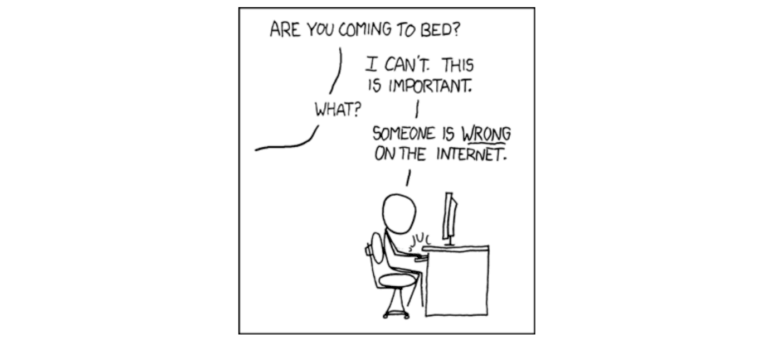
Why Everyone on the Internet Is Wrong
Posted in Uncategorized | 1 Comment

John List’s contributions to the critical thinking literature

In a previous post, I mentioned a new paper by my colleague and friend John A. List (University of Chicago) titled “Enhancing Critical Thinking Skill Formation: Getting Fast Thinkers to Slow Down”, available here. Now that I have read this work, allow me to highlight some contributions Professor List makes to the critical thinking literature:

  1. Multiplicity of critical thinking definitions — Professor List begins his paper with this provocative statement: “I asked 30 people to define critical thinking. I received 25 different answers.”
  2. Critical thinking as “connecting the dots” — List describes critical thinking as “connecting the dots” and he also identifies two ways these metaphorical dots can be connected: “Connecting the dots with empiricism: developing and assimilating empirical evidence and updating of one’s beliefs” and “Connecting the dots with abstract thought: putting the puzzle together with conceptual reasoning; thought experiments”
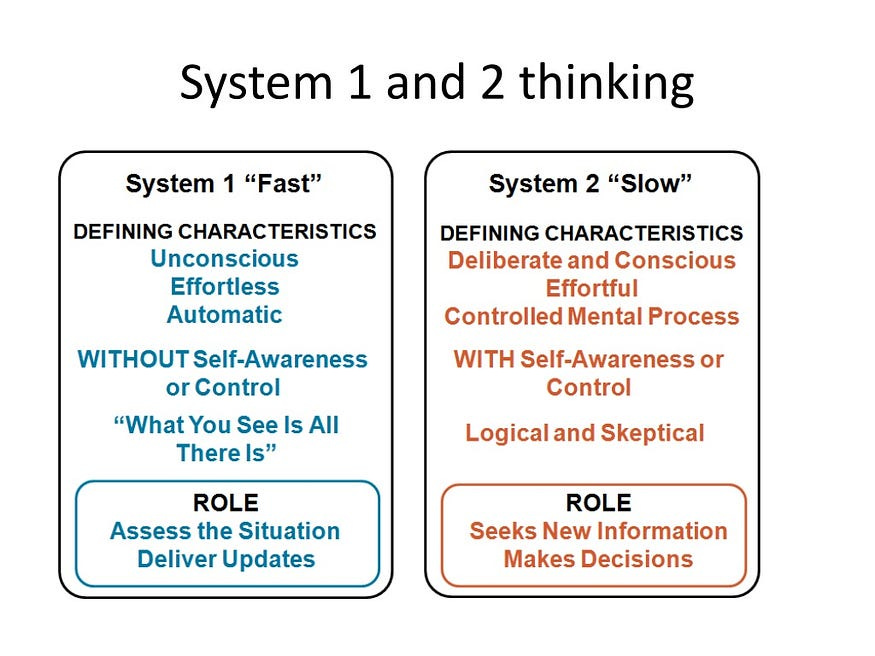
  3. Critical thinking as “slow thinking” — He then compares and contrasts so-called “slow” and “fast” thinking (see table below) and associates critical thinking with slow thinking. List writes, “… applying heuristics (‘fast thinking’) works well enough in most cases, making more effortful ‘slow thinking’ not worth it. The economic and psychological roots of this idea go back decades, and Kahneman scribed of its import in his 2011 popular book Thinking Fast and Slow. The unfortunate aspect of this human tendency is that in many cases cognitive biases creep into decisionmaking, so if we are not able to habitually think slowly, we will find it difficult to [engage in critical thinking].” (Postscript: For reference, here is a PDF of Kahneman’s influential book.)

Last but not least, Professor List describes “six basic tenets” of slow thinking/critical thinking on page 9 of his paper as follows:

  1. state, explain, and clarify the question(s)
  2. think through the question(s) from multiple points of view, expressing their own priors using logical thinking
  3. gather, organize, assimilate information and data
  4. identify assumptions, shortcomings, and implications of the data generation process
  5. update priors, both their own priors and consider how other’s views might change
  6. explain and apply what they learn, connecting what they just learned to other economic
    concepts, learnings from another course, and/or their everyday life

For my part, I just want to add that Professor List’s set of “six basic tenets” looks a lot like my more simple Humean/Bayesian approach to critical thinking: careful evaluation and scrutiny of the available evidence, followed by periodic “updating” of one’s priors as new evidence becomes available. But that said, I really like how List breaks down both parts of my Humean/Bayesian approach into smaller components or steps. Now, with respect to the Generative A.I., however, the $64 question is this: do large language models like ChatGPT help us develop good questions, gather evidence, or update our priors, or do these models end up having the opposite effect? Alas, your guess is as good as mine!

What I learned from Thinking Fast and Slow - by Devansh

Posted in Uncategorized | Leave a comment

*Your brain on ChatGPT*

That is the title of this new paper by a team of researchers affiliated with the MIT Media Lab (Kosmyna, et al., 2025). Although the sample size of their study is small (n = 54), this work is one of the few in the critical thinking literature to conduct an actual experiment: the participants in their study were randomly assigned into one of three groups — the ChatGPT group, the Google Search group, and the “brain-only” group — and the members of each group then had to complete a critical-thinking essay-writing task while they were hooked up to an electroencephalogram (EEG), a machine that measures electrical activity in the brain. Although it looks like the the MIT Media Lab team may have cherry-picked or p-hacked their results (see here), they claim that ChatGPT decimates critical thinking! (Here is a plain-English summary of their findings.) For further reference, below is a compilation of my previous posts on the subject of “Critical thinking in the age of A.I.”:

  1. The impact of ChatGPT on critical thinking: prologue (11 June)
  2. What is *critical thinking*? A Humean-Bayesian approach (16 June)
  3. Critiques of *critical thinking* theory, pedagogy, and practice: an annotated bibliography (17 June)
  4. ChatGPT’s pincer attack on critical thinking (18 June)
  5. Critical thinking as a communal activity (19 June)
  6. John List on critical thinking in the age of A.I. (20 June)
🧠 Your Brain Is Quietly Paying a Price for Using ChatGPT | Pascal BORNET

Posted in Uncategorized | 3 Comments

Update re: domestic constitutional violence in Los Angeles

As a follow-up to one of my previous posts on “Domestic Constitutional Violence: Los Angeles” (see here), I want to mention that a federal appellate court in California recently affirmed President Trump’s decision to deploy the California National Guard, ostensibly to restore law and order in downtown Los Angeles. (The case is Newsom v. Trump, and for reference, here is a PDF of the court’s opinion.)

In summary, when President Trump ordered this initial military deployment in downtown L.A. (see map below), he invoked a federal law, codified at 10 U.S. Code §12406 (see here), that authorizes the president to comandeer local national guard units in one of the three following situations (emphasis added):

  1. the United States … is invaded or is in danger of invasion by a foreign nation;
  2. there is a rebellion or danger of a rebellion against the authority of the Government of the United States; or
  3. the President is unable with the regular forces to execute the laws of the United States …

The open legal question, however, is this: Who decides? Who gets the final say as to when any of these three preconditions are met? The president? The courts? Or the Congress? In reaching its decision, the federal appellate court in Newsom v. Trump concluded that “the text of the statute does not make the President the sole judge of whether one or more of [these] statutory preconditions exist.” (See page 18 of the court’s decision, available here.) But the court’s conclusion is flat-out wrong. In Martin v. Mott, 25 U.S. (12 Wheat.) 19 (1827), a case involving a predecessor statute to 10 U.S.C. §12406, the Supreme Court of the United States — in an opinion authored by the legendary Joseph Story — held that “the authority to decide whether the exigency has arisen, belongs exclusively to the President, and that his decision is conclusive upon all other persons.”

My colleague and friend Ilya Somin (George Mason University) tries to distinguish Martin v. Mott in this otherwise erudite blog post. Alas, whether one agrees with Trump’s draconian and mean-spirited ICE-enforcement actions in Los Angeles, Justice Story’s reading is the only one that makes any logical or practical sense. Why? Simply put, because the courts lack the power to enforce their own interpretations of §12406, since (as Alexander Hamilton taught us long ago) they lack both the power of the sword and the power of the purse.

Postscript/historical note: The law codified at 10 U.S.C. §12406 was enacted as part of the Militia Act of 1903 (see here), and that law, in turn, repealed and replaced the George Washington-era Militia Acts of 1792 and 1795. I wrote about the history of these original Militia Acts in my 2019 paper “Domestic Constitutional Violence“, which is available here.

All of L.A. is not a 'war zone.' We separate facts from spin and  disinformation amid immigration raids - Los Angeles Times
Posted in Uncategorized | Tagged , , , | Leave a comment

Sunday summer song

I forgot to wish everyone a “Happy Juneteenth” on 19 June. My bad! Also, shout out to my family and friends in the beautiful island of Jamaica; hope to see you soon!

Posted in Uncategorized | 1 Comment

¡Que tengas un verano estupendo!

Translation: Have a great summer! Below are two melodious classics to officially kick off the summer season:

Posted in Uncategorized | Leave a comment

John List on critical thinking in the age of A.I.

I want to conclude (for now) my series on “Critical thinking in the age of A.I.” with an insight from my colleague and friend John A. List (a/k/a @Econ_4_Everyone), an experimental economist at the University of Chicago. When asked, What skills will A.I. models like ChatGPT make more important? Without skipping a beat, his response was “critical thinking skills”! (See his tweet from 21 May, which I have reposted below. Hat tip: information monster Tyler Cowen.)

But for me, even more important than this response was his economic reasoning: critical thinking is more essential than ever because A.I. models have reduced the cost of creating information to almost zero. In Professor List’s own words, “in the past there was value in creating large quantities of information. That is now costless. The new currency is how to generate, assimilate, interpret, and make that large amount of information actionable”. But this observation begs the $64 question: how can we teach critical thinking or improve our own critical thinking skills?

As it happens, Professor List has written up a new paper titled “Enhancing Critical Thinking Skill Formation: Getting Fast Thinkers to Slow Down”, which is available here, and now all I can say is that I wish I had discovered this paper sooner! Professor List has not only conducted some of the most ingenious field experiments of all time; he is also my favorite living economist. I have therefore decided to hit pause on my series on “Critical thinking in the age of A.I.” in order to go back to the drawing board, so to speak. I will study List’s new paper as well as this devastating critique of education research by my colleagues James Rebele and E. Kent St Pierre and will report back soon …

Works cited:

John List, “Enhancing Critical Thinking Skill Formation: Getting Fast Thinkers to Slow Down“, Artefactual Field Experiments 00726, The Field Experiments Website (2021).

James E. Rebele and E. Kent St Pierre, “Stagnation in accounting education research”, Journal of Accounting Education, Vol. 33, no. 2 (2015), pp. 128-137.

Posted in Uncategorized | 2 Comments

Critical thinking as a communal activity

N.B.: This is Part 5 of my series on “Critical thinking in the age of A.I.”

Yesterday (see here), I responded to John McPeck’s critique that there are no general thinking skills; today, I will respond to the other objections to the theory, pedagogy, and practice of critical thinking that I had surveyed in a previous post, including those by Alston (2001), Martin (2002), Paul (1981), and Thayer-Bacon (2000). Broadly speaking, the common thread tying together these sundry criticisms is “dissatisfaction with focusing [exclusively] on the logical analysis and evaluation of reasoning and arguments” (Hitchcock 2024, 12.2). Instead, these critics see critical thinking as “a social, interactive, personally engaged activity like that of a quilting bee … rather than as an individual, solitary, distanced activity symbolized by Rodin’s The Thinker” (ibid.).

For me, one of the most memorable and moving examples of this more social or communal approach to critical thinking is bell hook’s innovative “engaged pedagogy” method of teaching: in her introductory course on black women writers, students are required to write an autobiographical paragraph about an early racial memory and then to read their work aloud to the class as whole. (hooks 1994: 84) The goal of hook’s communal approach to critical thinking is thus to affirm “the uniqueness and value of each voice” in the class by “creating a communal awareness of the diversity of the group’s experiences” (Hitchcock 2024, 12.2).

On this note, one of the advantages of my own Humean/Bayesian approach to critical thinking (see here) is that this approach can be practiced by groups as well as by individuals. In fact, the original inspiration for my Humean/Bayesian approach is the common law jury of lore, where a group of six or 12 ordinary people are chosen at random and asked to evaluate the evidence presented by the parties in the case. Although a single judge acts as a gatekeeper both before and during the trial (overseeing the jury-selection process and deciding which pieces of evidence are relevant and which are “privileged”, “prejudicial”, or otherwise inadmissible), it is the jury as a whole, meeting outside the presence of the judge, who decides how much weight to assign to the evidence.

Both my common law jury model and bell hooks’ communal approach to critical thinking highlights another limitation of large language models like ChatGPT: although these models share a communal aspect, since they are trained on massive datasets created by a large number of people, at the same time they are designed to be used by a single user only. But is ChatGPT an inherently individualized and atomistic tool, isolating (and perhaps alienating) its users from each other and the world at large, or is there any way to make ChatGPT usage more of a communal, social, or shared experience (like, say, Wikipedia)? I will conclude my series on “ChatGPT and critical thinking” in my next post.

Faith Ringgold, "The Sunflower Quilting Bee at Arles, 1991" (1996) | PAFA -  Pennsylvania Academy of the Fine Arts
Faith Ringgold, The Sunflower Quilting Bee at Arles (1991)

Work cited: bell hooks, Teaching to Transgress: Education as the Practice of Freedom, New York & London: Routledge (1994).

Posted in Uncategorized | 2 Comments