Parisian focal points

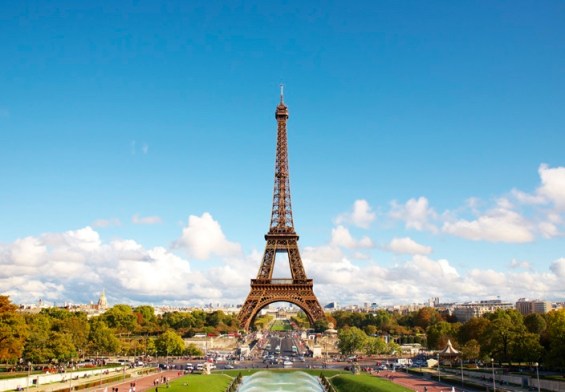
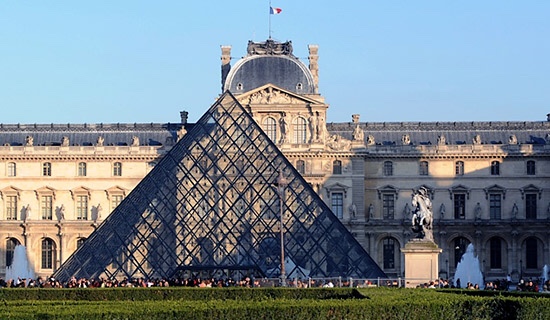
The self-described “errant economist” Thomas Schelling once illustrated his idea of a “focal point” with the following coordination game: Tomorrow you have to meet some friends in New York City, but you have no way of communicating with them. Where and when would you meet your friends? In a coordination game, all the players are capable of winning (i.e. obtaining the highest payoff) only if they choose the same strategy. The problem with the NYC example is that any place and time in the City could work as an equilibrium solution. Yet, when Schelling presented his game scenario to a group of his students, he found the most common answer was noon at Grand Central Terminal. But what if we were to change the city in this Schelling game to Paris, where there are many possible focal points, such as the Eiffel Tower, Notre Dame Cathedral, la Place Vendome, the Louvre, and the Pont Neuf, just to name a few?
Posted in Uncategorized | 1 Comment

Le mur des je t’aime

My wife Sydjia and I are back in the City of Love. Pictured below is one small section of the I Love You Wall, which is located in a small garden (the Square Jehan-Rictus) in the Montmartre neighborhood of Paris. The entire work is composed of 612 tiles and measures 40 square meters (430 square feet) and was created by the calligraphist Fédéric Baron and mural artist Claire Kito. Their love wall repeats the phrase “I love you” 311 times in 250 languages, including Navajo, Inuit, and Esperanto. (More details about this wonderful work of art are available here.)

Related image
Posted in Uncategorized | Comments Off on Le mur des je t’aime

Ghana Pavilion

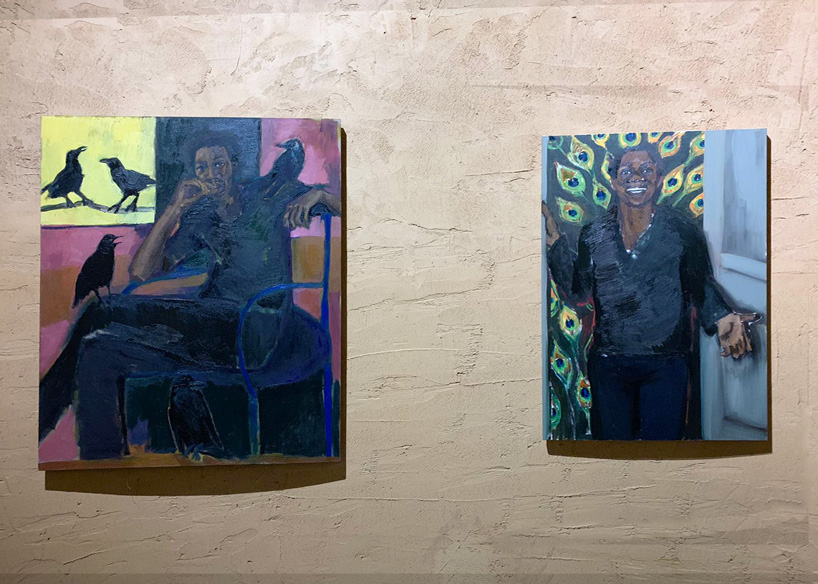
The Republic of Ghana is making her debut appearance in this year’s Venice Biennale. Lynette Yiadom-Boakye, one of our favorite contemporary artists, is also one of several artists representing the West African nation. Below is a sample of her work:

Image result for lynette yiadom-boakye venice biennale
Posted in Uncategorized | Leave a comment

Dueling for Dummies?

Following up on my previous post, it turns out that one of the earliest manuals on the practice of dueling–“Il Duello” by Girolamo Muzio, a.k.a. Mutio Iustinopolitano, b.1496—d.1576–was published in Venice in 1550. I am unable to locate an English translation of this 16th-century Venetian manual, nor am I able to find any reliable statistics about the number of duels in European history, so for now I have ordered Barbara Holland’s classic book on the history of dueling. Also, here are some bonus links for our loyal followers: (1) a vintage Marginal Revolution blog post about the economics of dueling; (2) this history of dueling in 16th-century Italy by David Quint; (3) this comparative study by Mehrdad Vahabi and Behrooz Hassani Mahmooei (review of dueling in England, France, and Germany); and (4) this formal paper by Douglas W. Allen and Clyde G. Reed (presenting a costly-signalling model of dueling).

Image result for Girolamo MuzioImage result for dueling for dummies

Posted in Uncategorized | 3 Comments

Dispatch from Venice

The Republic of Venice lasted for over 1000 years (726-1797 A.D.). Three things about “Old Venezia” continue to fascinate me: (1) How common were duels in Venice? (2) Why did such a small city-state have so many chapels, churches, and other houses of worship? And (3) why did the Venetian Republic develop such a complicated and cumbersome multi-stage electoral system? We will explore all three of these features of Old Venezia (duels, religion, and voting rules) in future blog posts, but for now let’s focus on the third one. Among other things, Venice’s bygone voting system poses a difficult theoretical and practical puzzle: What is the optimal level of electoral complexity and randomness? Below is a brief survey of the literature:

  1. Marji Lines, “Approval voting and strategy analysis: A Venetian example” (1986) (gated version).
  2. Jay S. Coggins and C. Federico Perali, “64% Majority Rule in Ducal Venice: Voting for the Doge” (1998) (available here).
  3. Miranda Mowbray and Dieter Gollmann, “Electing the Doge of Venice: Analysis of a 13th Century Protocol” (2007) (available here).
  4. Dalibor Rohac, “Mechanism Design in the Venetian Republic” (2013) (available here).
  5. Toby Walsh and Lirong Xia, “Venetian Elections and Lot-based Voting Rules” (not dated) (available here).
Image result for flag of venice
Posted in Uncategorized | 1 Comment

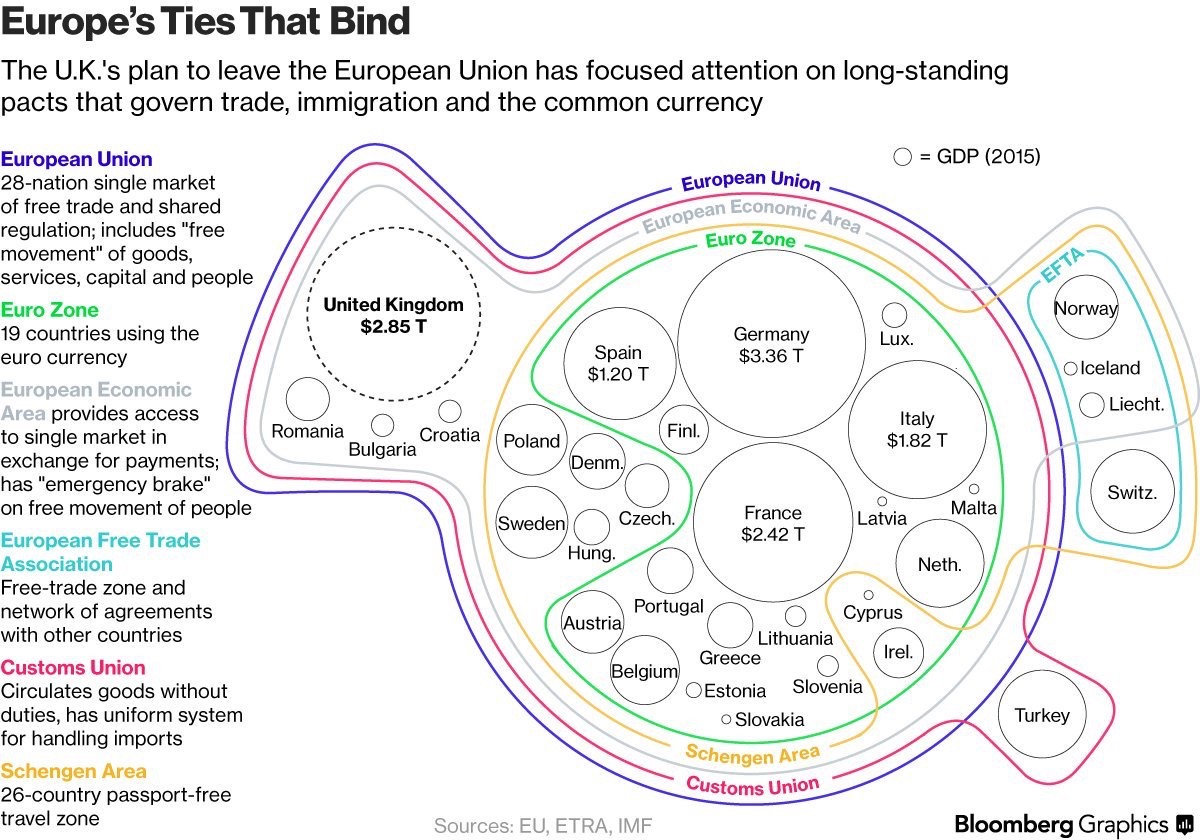
There are six different “European Unions”

We are re-posting this informative pre-Brexit European Union chart for our loyal followers. (My wife and I are spending the weekend in Venice, so we will be blogging less frequently these days.)

F. E. Guerra-Pujol's avatarprior probability

As the map below shows, the E.U. is not a single transnational entity but rather is composed of six separate European alliances.

View original post

Posted in Uncategorized | Leave a comment

Nous allons a Paris …

We will be attending some lectures on “realist jurisprudence and its competitors” by Dr Brian Leiter at the EHESS in Paris, so we will be blogging much less frequently during the next few weeks.

Posted in Uncategorized | Leave a comment

Our wait is over …

The oracles of SCOTUS decided Gamble v. U.S. today (17 June), upholding the nefarious “separate sovereigns” exception by a 7-2 margin. Here are three of our previous posts about this fascinating case:

1. Be like Bayes (part 3) (30 December 2018), in which we build a simple Bayesian model to predict whether the Supreme Court will overturn the “separate sovereigns” exception to the Double Jeopardy Clause when it decides Gamble v. U.S. (Our prediction turned out to be wrong.)

2. Be like Bayes (part 2) (29 December 2018), in which we estimate the base rate or the historical frequency in which a precedent is overturned by the Supreme Court in those cases in which a party is asking the Court to take such an action.

3. Forecasting the forecasts (31 December 2018), in which we describe a method for scoring the accuracy of our Gamble v. U.S. forecast via a simple scoring method that was first proposed by Glenn Wilson Brier, an early advocate of probability forecasting and the use of probability forecasts in decision making.

To my friends–law professor colleagues and students alike–beware! All three of the above posts are somewhat technical and mathematical in nature. In short, instead of focusing on the legal arguments in Gamble v. U.S. or the “merits” of the case (we agree with Brian Leiter, Richard Posner, and other legal realists that law in close cases is indeterminate), we attempt to build a simple Bayesian forecasting model based on the number of amicus briefs submitted by third parties to the Supreme Court.

Image result for gamble v us

The wait is over …

Posted in Uncategorized | Leave a comment

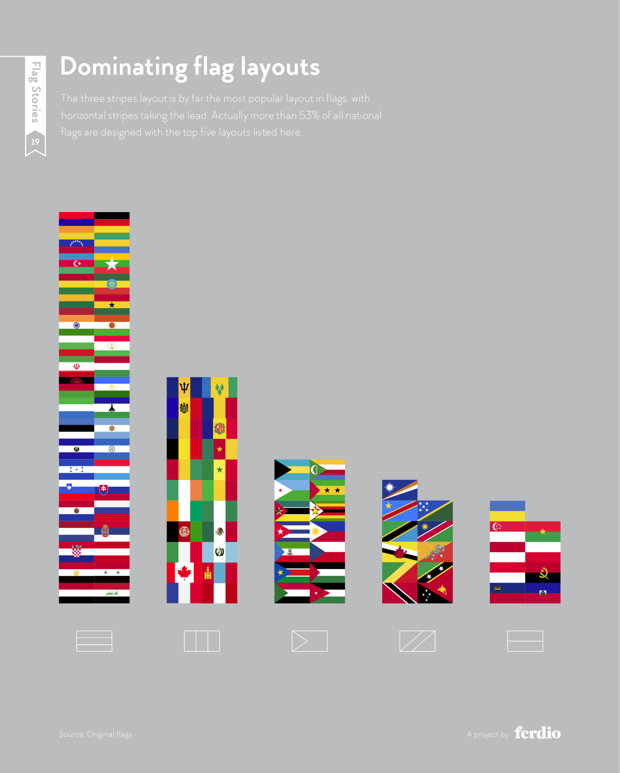
The geometry of national flags

More flag day fun, and Happy Father’s Day to all our family and friends …

F. E. Guerra-Pujol's avatarprior probability

Image credit: Jeppe and Birger Morgenstjerne

View original post

Posted in Uncategorized | Leave a comment

A flag for Mars

In honor of Flag Day (14 June), we are reposting our “Flag for Mars” blog post of 5 September 2017.

F. E. Guerra-Pujol's avatarprior probability

Why don’t any of the planets or moons in our solar system have their own flags? Calder Hansen proposes a new flag for Mars. More information about this proposed Martian flag is available here. Hat tip: kottke. [Update (14 June 2019): There is some controversy as to the actual origins of the design for the flag for Mars. See the comments section and here.]

Credit: Calder Hansen

View original post

Posted in Uncategorized | 3 Comments