In defense of the Mark Zuckerbergs of the world

We have been highly critical of Zuckerberg in the past, but Peggy Noonan, an influential political pundit, takes anti-Zuckerberg “mood affiliation” bias to a whole new level in this mostly incoherent and anecdotal op-ed for The Wall Street Journal. The main problem with Peggy Noonan’s diatribe is that it focuses only on the “bad” aspects of Facebook:

Facebook’s famous sins and failings include the abuse of private data, selling space to Russian propagandists in the 2016 presidential campaign, monopolistically acquiring competitors, political mischief, and turning users into the unknowing product.

Let’s put aside the fact that Facebook has taken steps to remedy its privacy abuses, that the Russians did not sway a single vote, and that there are no barriers to entry into the social media market. As our friend and colleague Tyler Cowen, an economist and hyper-blogger with pro-business mood affiliation biases of his own, makes clear, one must also be willing to weigh the “good” aspects of Facebook, Google, and other Big Tech firms:

I would like to speak up for the tech companies, especially the big ones. They have brought human beings into closer contact with each other than ever before … mostly through social media. They also have placed so much of the world’s information at our fingertips, and more often than not it is accessible within minutes or even seconds. Whatever problems these developments may have brought in their wake, they are unparalleled achievements and arguably the greatest advances of the contemporary world.

So, what happens when competing mood affiliation biases collide? If you are a consequentialist, isn’t it obvious …?
Posted in Uncategorized | Leave a comment

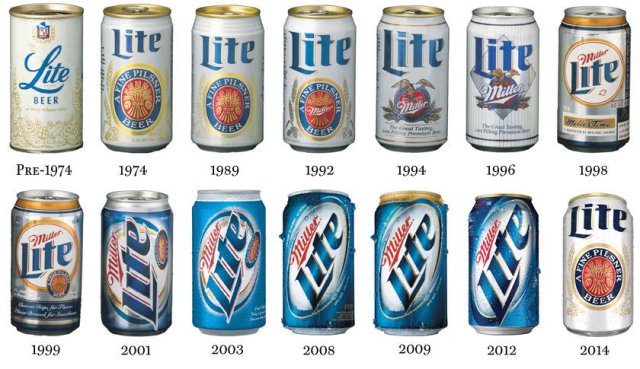
The evolution of the Miller Lite beer can

F1BB20E0-B9EC-43BC-BBB0-94245496FE5B

Hat tip: @BrandonMagner

Posted in Uncategorized | 2 Comments

Motor Scooter Nation

Posted in Uncategorized | Leave a comment

More permits, less safety?

A paternalistic attempt to make Yosemite National Park’s Half Dome rock formation safer for hikers may have paradoxically backfired. In 2010, Yosemite began to issue permits through a random lottery to visitors who wanted to scale the famed 2700-meter-high Half Dome. Park officials hoped the permit process would improve safety by limiting the number of climbers. But according to this report, the permits may have made matters worse: “When researchers analyzed search-and-rescue data on and around Half Dome from 2005 to 2015, they found no significant difference in the number of deaths and injuries after Yosemite began to issue permits. But because the permitting halved the number of visitors who hike the trail, the number of serious incidents per person effectively doubled.” (Here is a link to the full research article.) For my part, I just have one question for these researchers: permits or no permits, were the hikers allowed to carry selfie sticks?

Image result for permits
Posted in Uncategorized | Leave a comment

Abolish E-Verify!

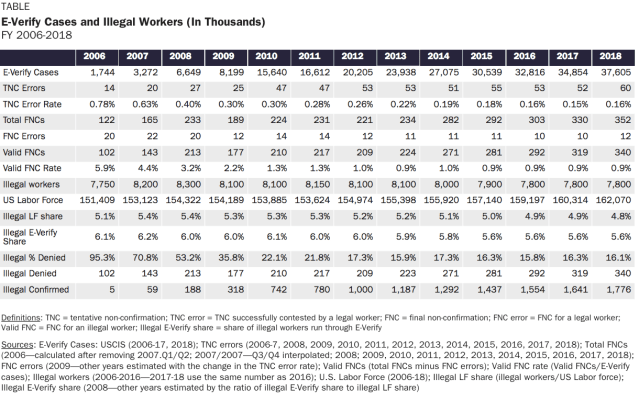
There have been many calls to abolish the U.S. Immigration and Customs Enforcement (ICE) agency. But what if, instead of abolishing ICE, we considered a more modest political proposal? What if we just abolished E-Verify instead, a costly and ineffective program that generates significant false positives (over 80% of “illegal” workers are able to circumvent the system) and a non-trivial amount false negatives (some 64,000 legal workers per year are erroneously flagged as illegal)? Also, even if E-Verify were costless and 100% accurate, why should we tolerate this direct interference with liberty of contract, our natural right to enter into contracts with whoever (whomever?) we wish? In any case, a complete E-Verify dataset is presented below:

Screen Shot 2019-06-05 at 5.02.50 PM

Posted in Uncategorized | Leave a comment

Strategic public intellectuals

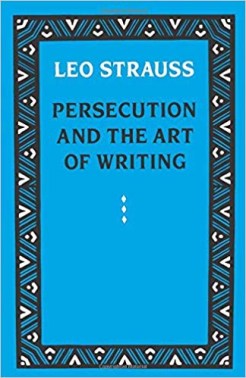
Check out this excellent essay by Anastasia Berg and Jon Baskin. (Hat tip: The Amazing Tyler Cowen.) This essay hit close to home, for it explores the moral amd strategic dimensions of intellectual and scholarly discourse, exposes the sheer hypocrisy of most academics and public intellectuals, and explains the relevance of the ideas of Leo Strauss to our contemporary political landscape. Here is the first paragraph of their thought-provoking essay:

Nobody shares all their private complaints with an audience, but how do we know how much to share and with whom? Certainly, in the name of various kinds of shared commitments, it seems best to hash out your differences in private: a team of magazine editors need not disclose every editorial dispute to an article’s author; a couple’s well-being is usually best served by avoiding arguments in the presence of the in-laws. But how far does the strategic logic behind these decisions extend into public intellectual life? Should we attempt to publicly air disagreements with those who are, broadly speaking, on the same “side” of a political, social or spiritual debate as we are, or should we shelter those disagreements from public view in the name of some greater good?

Posted in Uncategorized | Leave a comment

Is taxation forced labor?

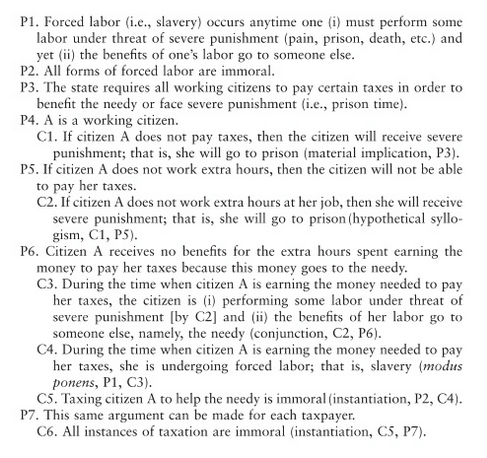
Our colleague Jason Waller, who teaches philosophy at Eastern Illinois University, provides a detailed description of and step-by-step guide to Robert Nozick’s influential “taxation is forced labor” argument in this fascinating book by Michael Bruce and Steven Barbone, editors, Just the arguments: 100 of the most important arguments in Western philosophy, Wiley-Blackwell (1st edition, 2011), pp. 242-243. (We reproduce Professor Waller’s reformulation of Nozick’s reasoning below.) Is the chain of Nozick’s reasoning plausible, or do you reject any of Nozick’s seven premises? For my part, Premise #6 looks debatable, but even if that premise were false, would Nozick’s overall conclusion still be sound? More generally, when is state coercion or public paternalism ever justified?

Screen Shot 2019-06-03 at 6.14.34 AM

Source: Jason Waller (2011)

Posted in Uncategorized | Leave a comment

The Law and Economics of Literary Fan Art

That is the title of my most recent work-in-progress, and it is available here via SSRN. Inspired by my friend and colleague Brian Frye’s frontal attack on plagiarism norms, especially his thought-provoking paper “Plagiarism is not a crime,” my work explores the related problem of “literary fan art,” i.e. unauthorized derivative works by third parties that are based on someone else’s literary work product. Literary fan art poses a difficult legal and economic puzzle: how far should property rights extend in the domain of literature? That is, because copyright laws extend to derivative works, the legal question often boils down to this: when does fan art constitute “fair use”? To motivate the paper, I present some notable examples of contemporary literary fan art inspired by Ernest Hemingway’s classic novella “The Old Man and the Sea.” Next, I show why the traditional fair use standard is utterly unhelpful in solving the fan art puzzle, and then I sketch an alternative Coasean solution to the problem of fan art: the law should assign property rights in fan art to the fans.

Image result for ssrn
Posted in Uncategorized | 1 Comment

Visualization of the world’s forests

Check out this visualization of the world’s forests, courtesy of Esri (the Environmental Systems Research Institute), a supplier of geographic information system software and geodatabase management applications. There are no forests in Australia! More details here. (Hat tip: u/ochang1980.) (Happy 18th Birthday, Aritzia!)

Posted in Uncategorized | Leave a comment

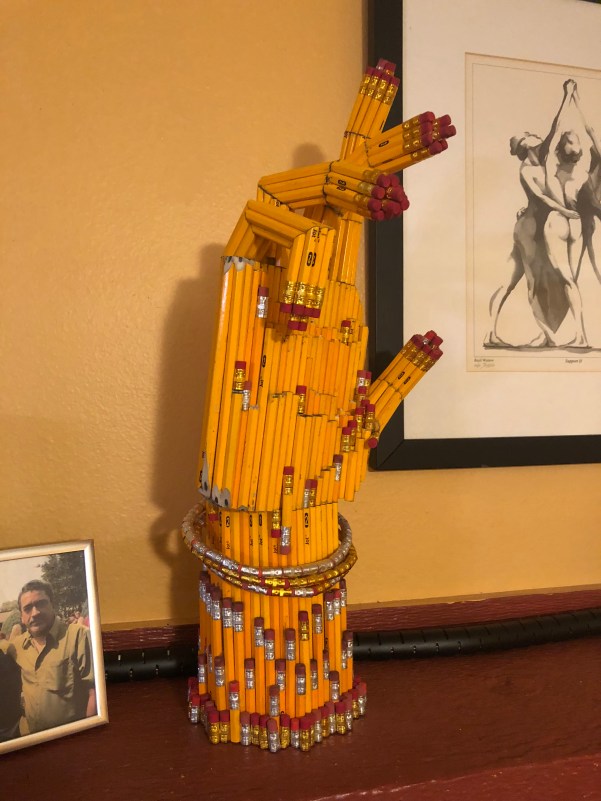
Pencil sculpture

Image credit: Jennifer Gordon-Martin

Posted in Uncategorized | Leave a comment