I’m interrupting my self-imposed one-week exile from blogging to pose three questions to Dan Ariely, a professor of psychology and “behavioral economics” at Duke University (You see, we finally got around to reading the revised and expanded edition of his 2008 book “Predictably irrational: the hidden forces that shape our decisions.”) Stated bluntly, Professor Ariely’s smug and self-refuting thesis is that people are not only stupid; we are stupid in predictable ways, so here are our three questions:
1. What is the “optimal level” of stupidity? Why isn’t it not zero? Sorry for the double negative, but economists of all stripes will understand the spirit of my first question. When we are making choices in real time, we don’t have infinite amounts of time and cognitive resources to measure all the potential pros and cons of our choices. Simply put, we don’t live an ideal world, a world with zero transaction costs, so some level of stupidity might, in fact, be optimal!
2. What are the sample sizes of each of your experiments? (And what is the average age of the participants?) For example, on page 92 of your book you mention in passing that one of your social science experiments had only 25 participants. Need I say more …?
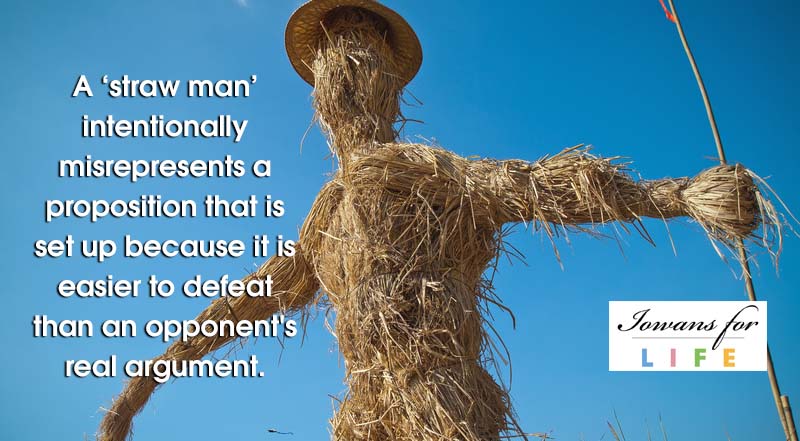
3. Why don’t you address any of Steve Levitt and John List’s criticisms of your methods, especially their point about the paltry financial stakes of most of your experiments? Although you mention in passing Levitt and List’s powerful critique of social science lab experiments at the beginning of your book, at no point do you actually respond to their specific and well-reasoned criticisms. Why not? (Your caricature of and fictional dialogue with your “Mr. Logic” straw man doesn’t count!)
Alas, we still have a long ways to go, as we’re only up to page 538. Also, please note: we will take the rest of May off and resume our blogging duties on Monday, June 3rd.
In our previous post we reframed copyright disputes in general–and the problem of literary fan art specifically–in economic or Coasean terms: under what conditions do copyright owners get to have veto rights over fan art, and by the same reciprocal token, when do fans get to veto the veto rights of copyright owners when they revisualize or reimagine their literary works? Or, stated in plain and simple and jargon-free English, who gets to harm whom?
Once the question of fair use is reformulated this way–in terms of competing and reciprocal harms–, the fan art conundrum becomes soluble; the optimal level of fair use becomes a tractable problem: we should choose that rule or course of action that minimizes the overall level of harm. In the case of literary fan art, for example, my lawyerly intuition is that a narrow reading of the fair use doctrine would do more harm than a broad reading would. That is, courts would produce a greater degree of harm if they granted copyright owners unlimited veto rights over fan art than if they allowed fans greater leeway in reimagining and reinterpreting established works of art. And I would further venture to speculate that–to the extent that fan art rekindles interest in the underlying literary works that are being depicted or introduces those original works to new audiences–fan art will very likely generate new sales and expand the market for those underlying works.
But you don’t need to take my word for it or accept my mere mortal speculations as gospel. The various revisualizations of Hemingway’s novella that we have featured on this blog are paradigm cases of the main point I am trying to make here. Imagine a world without Olympia Le-Tan’s “Old Man and the Sea” clutch bags, or a world without Guy Harvey’s collection of “Old Man and the Sea” watercolors, or a world without Jodi Harvey-Brown’s “Old Man and the Sea” book sculptures. Aside from the fact that that is not a world I would want to live in, none of these pieces of fan art syphon off sales of Hemingway’s book or dissuade us from reading the novella. On the contrary, these sundry pieces breath new life into Hemingway’s story; they invite us to read or reread the old Cuban fisherman’s futile battle with the giant blue marlin. So, three cheers for fan art … for expanding markets, for rousing our collective imagination, and for creating new worlds of beauty!
In my previous post we saw how utterly unhelpful the fair use standard is–how trying to predict ahead of time whether a particular derivative work or piece of fan art constitutes “fair use” or not is almost like the inscrutable task of an ancient augur, who must somehow divine the future by the minute inspection of the entrails of a goose. Here, I will explain why this level of uncertainty in the domain of copyright law might actually be a good thing.
So, to cut to the chase, why is uncertainty a virtue in the domain of fan art and other types of derivative works? Because, from a purely economic perspective, fair use is about finding the optimal level of copyright theft or piracy (to put it bluntly!), and in most cases it’s really hard to figure out what this optimal level of theft is. Wait! Hold on! How can theft or piracy ever be optimal? This is not a trick question, but to answer it, we must first take morality out of the copyright equation. From an economic or Coasean perspective, copyright disputes are not really about right and wrong. (That is, by the way, why I disdain such judgmental terms like “piracy” and “theft” in this area of law.) Ok, if fair use is not about morality, then what is it about?
In a word, fair use is about creating or finding the best (i.e. optimal) balance between creators and copiers, between innovators and imitators, between intellectual owners and intellectual squatters!
Although the outer contours of the fair use defense are fuzzy at best, the fact that fair use even exists at all tells us something very important about the law. It tells us that creators, innovators, and owners are not the only ones who are morally worthy or legally deserving of copyright protection; so are copiers, imitators, and squatters! To see why, let’s set aside the problem of literary fan art for the time being in order to focus instead on a more extreme example involving an original creator/innovator on the one hand and a mere copier/imitator on the other–like one of Melania Trump’s plagiarized speeches. (See video below.) Even in such a crass and clear-cut case of plagiarism, as the late Ronald Coase once wrote in another context, disputes between creators and copiers are ultimately “reciprocal in nature.”
Coase made this counter-intuitive observation in two papers, one on the FCC (1959) and another on “The Problem of Social Cost” (1961). In both papers he reframed legal disputes, such as traditional common law cases involving nuisances, as reciprocal problems. The social cost paper, for example, begins by considering a “standard example” in economics and law, the problem of factory smoke. In brief, a factory emits smoke and pollutes the air. Neighbors who live downwind from the factory are harmed (e.g. foul air, quality of life, decrease in property values, etc.), so they decide to sue the owners of the factory for the harm thus caused.
But if we were to take a step back from this situation, we will see that the factory smoke problem is, in fact, a reciprocal one for two reasons. One is that the problem is caused not just by the factory smoke; it is also caused by the neighbors’ decision to live next to factory! The other reason is that someone is going to be harmed no matter how the case is decided. If the court decides to dismiss the case or to rule in favor of the factory, then the neighbors are going to continue to be harmed, but vice versa, if the court rules for the neighbors, then it is the owners of the factory who are going to be harmed, since they will have to shut down the factory, relocate it somewhere else, or pay the neighbors money damages. For Coase, then, the key question is not, Who is harmed? Both sides are. The key question is, How do we decide which side to harm?
(Before proceeding, allow me to make an additional clarification regarding Coase’s idea of reciprocal harms. When people think of harms, we often think of John Stuart Mill’s famous harm principle: “The only purpose for which power [i.e. law] can be rightfully exercised over any member of a civilized community, against his will, is to prevent harm to others.” But in reality, Mill’s harm principle is incoherent. It is just empty rhetoric, meaningless banter. Why? Because as Coase has taught us, harm is unavoidable. So, to say “do no harm” or “your right to swing your fist ends where my nose begins” is totally unhelpful. Instead, we should ask, what legal rule or course of action produces less harm.)
Now, let’s fast forward to fan art. From an economic perspective, Coase’s reciprocal analysis of the factory smoke case also applies to fan art! If we define fair use too broadly, making it easy for fans to produce any and all derivative works, then original creators will be harmed. But at the same time, if we define fair use too narrowly, making it easy for copyright owners to veto fan art, then it is the fans who are going to be harmed! The question here thus is analytically identical to the question in the factory smoke case: which group should we harm? Suffice it to say that we will consider this $64 question in our next post …
We are exploring the law and economics of “literary fan art,” i.e. creative works of art that reimagine someone’s else literary work product, such as the various visualizations of the characters and story in Ernest Hemingway’s “Old Man and the Sea.” Because copyright laws extend to so-called “derivative works,” the legal question boils down to this: when does literary fan art constitute “fair use”? Alas, this inquiry is almost like that of ancient augurs, who (to paraphrase the late Ronald Coase) must somehow divine the future by the minute inspection of the entrails of a goose, for the fair use doctrine is one of the most nebulous areas of the law.
Simply put, as unbelievable as what I am about to tell you may sound, there is often no way of knowing ahead of time with any degree of certainty whether any particular derivative work constitutes fair use or not! Why is the fair use test shrouded in so much fog? Because this test does not consist of a simple, clear-cut, bright-line rule, e.g. you may use up to 10% of another person’s work. Instead, fair use is a standard consisting of a set of general guidelines. (For a good overview of the difference between “rules” and “standards” in law, check out this helpful introduction by our friend and colleague, the legal theory wizard Larry Solum.) Specifically, when a court is deciding whether a work of fan art or some other type of derivative work constitutes fair use, it is supposed to apply four general factors. What are these factors? In a case involving literary fan art, we can restate them as four separate questions:
How “transformative” is the fan art?
Is the fan art based on an original work of fiction (like a play or novel) or on an original work of non-fiction (like a biography), and in either case, has that original work been published yet?
How much material is the creator of the fan art stealing or borrowing, as the case may be, from the original work?
Does the fan art help to increase or decrease sales of the original work?
What weights should be attached to each factor, i.e. which factor is the most important one? Or, if the factors are to be equally weighted, what happens when two of the factors point in one direction and the other two point in the other direction? Courts are coy when it comes to fair use; they refuse to say! (As an aside, if I were declared “copyright law emperor” for a day, I would eliminate the first three factors and tell courts to focus on the last one, or to be even more precise, I would reformulate and simplify the fair use test as follows: no infringement unless the owner of the original work can produce evidence of lost sales.) As a practical matter, then, the scope of the fair use defense is fuzzy at best, or in the words of one copyright lawyer (shout out to Rich Stim): “Unfortunately, the only way to get a definitive answer on whether a particular use is a fair use is to have it resolved in federal court.” As a result, most questions of fair use never get answered, which might be a good thing! I will explain why in my next post …
Image credit: the University of Minnesota Libraries Copyright Program
In our previous post we featured a beautiful canvas clutch bag by Olivia Le-Tan (pictured below, right) patterned after a previous edition of Ernest Hemingway’s popular novella “The Old Man and the Sea.” Olivia Le-Tan made a limited number of these beautiful Hemingway-inspired bags, and they are all sold out now, but I am still left wondering to what extent a Hemingway fan can create her own “Old Man and the Sea” fan art–whether it be a book cover, a wall tapestry, a graphic novel, or a book sculpture–or whether she needs permission from whoever (whomever?) owns the legal rights to Hemingway’s story to do so, especially if she plans on selling her Hemingway-inspired pieces to third parties.
Before proceeding any further, let me make an important clarification at the outset of this mini-research project. My focus here is on creative works of fan art that are based on someone else’s literary work product, whether it be a poem by Sylvia Plath or a short story by Junot Diaz or a novel by J. K. Rowling, just to name a few notable examples. Let’s stick with Olivia Le-Tan’s book clutch for now, since it features her own unique version of Hemingway’s book cover. By way of comparison, the cover illustration of the most recent paperback edition of “The Old Man and the Sea” (pictured below, middle) is by Alexandre Petrov, who directed a feature film with the same title in 1999, while the very first hardcover edition of Hemingway’s novella published by Charles Scribner’s Sons in 1952 contains a dust jacket (the book cover pictured below, right) that portrays a small fishing village, several skiffs along the shore, and an expanse of blue sea. I do not know who painted this sublime scene for the original edition, but the inside flap of the book’s dust jacket informs us that the cover was designed by “A.”
In either case–the 2003 paperback version or the 1952 hardcover one–, what happens when someone like Olivia Le-Tan adorns a book clutch with her own version of Hemingway’s book cover? Or when someone like Guy Harvey, a successful contemporary wildlife artist in his own right, creates an entire series of watercolors and oil paintings reimagining the characters and plot of Hemingway’s timeless story? Or when someone like Jodi Harvey-Brown buys old copies of the book and then creates a unique and beautiful book sculpture out of its pages?
Well, it turns out that copyright laws not only apply to new works; these rules also protect “derivative works” as well. But this statement of black-letter law begs the key question, how far does this derivative protection extend? In particular, should the owner of the legal rights to a story retain an absolute or more limited set of “veto rights” over how the plot and the main characters of the story are visualized? Put another way, when does a derivative work, such as the sundry pieces and depictions described above–constitute “fair use”? Rest assured, we will explore this all-important fair use question in my next post …
Check out the beautiful Olympia Le-Tan clutch bag pictured below. (Shout out to Sydjia Guerra for bringing this lovely canvas bag to my attention.) This “book clutch” reimagines the cover art for Ernest Hemingway’s timeless novella “Old Man and The Sea.” Earlier this year, I featured many other works of art dedicated to Hemingway’s timeless novella, such as this beautiful book sculpture and this gorgeous graphic novel. The art lover in me appreciates these whimsical works of fan art for their own sake, but the business law professor in me is perplexed and puzzled: what is the legal status of these works? As I mentioned in some of my previous posts (see here and here), the original U.S. and British publishers of “The Old Man and the Sea” had commissioned various drawings and paintings to illustrate Hemingway’s story when it first came out. Assuming these publishers still own the legal rights to the story, do they have any “veto rights” over subsequent visualizations of the story? If so, what about “fair use”? More broadly, how far should property rights extend in the domain of art? I will interrupt my extended review of Finnis’s common good theory of law to explore these thorny questions over the holiday weekend and to catch up on my reading of “Infinite Jest” …
We are now ready to discuss James Madison’s most ingenious and counter-intuitive solution to the problem of factions. With the possible exception of Adam Smith’s invisible hand theory, Madison’s solution has to be one of the most original ideas in the annals of political economy. (And as an added bonus, no magic philosophical wands or other bullshit fictional devices like “practical reasonableness” or the “original position” are called for.) Instead, this solution is simple, pragmatic, and testable: extend the geographic sphere of politics in order to encompass a wide range of sects, interests, and people. Simply put, let a thousand factions bloom, to paraphrase Chairman Mao; the more factions the better!
Say what? Aren’t factions supposed to be dangerous? Aren’t they “mortal diseases”? Why is increasing the number of factions the best way of reducing the dangers of faction? There are at least three reasons why. The first is based on simple arithmetic: the more factions there are, the more difficult it will be for any individual faction to dominate the lawmaking process or form a simple majority in the legislative arena. Or, in the immortal words of James Madison in paragraph 20 of Federalist #10 (emphasis added by us):
The smaller the society, the fewer probably will be the distinct parties and interests composing it; the fewer the distinct parties and interests, the more frequently will a majority be found of the same party; and the smaller the number of individuals composing a majority, and the smaller the compass within which they are placed, the more easily will they concert and execute their plans of oppression. Extend the sphere, and you take in a greater variety of parties and interests; you make it less probable that a majority of the whole will have a common motive to invade the rights of other citizens; or if such a common motive exists, it will be more difficult for all who feel it to discover their own strength, and to act in unison with each other.
The second reason is based on the ruthless and remorseless logic of economics: the more factions there are, the greater the costs of coordination among the various factions will be. This point about the costs of coordination is key. Even if the various factions are able to coordinate among themselves to secure a majority in the legislature, by increasing the number of factions we also increase the level of horse-trading that such factions will have to engage in to get the necessary votes to accomplish their nefarious and selfish ends. So, why is horse-trading such an effective solution to the dangers of faction? Because horse-trading among competing factions will most likely lead to concessions and compromises. That is, in order to accomplish its goals, a faction will need to form a legislative coalition with other factions, a coalition that is large enough to secure a majority. But in order to form a coalition that is sufficiently large, the members of the coalition will most likely have to compromise with each other and make concessions moderating their selfish desires.
But the third and best reason in favor of more factions is moral. In a word: liberty. Factions thrive only when people are free to pursue their interests and form voluntary associations with like-minded individuals. A world with large numbers of factions thus presupposes a political system in which we are free to form and join any faction we wish and to refuse to join groups we don’t like. That is why I can’t praise Madison’s ingenious solution enough: extending the sphere to increase the number of factions not only makes it more difficult for these factions to get anything done unless they are able coordinate with each other and willing to horse trade and make compromises; extending the sphere to let a thousand factions bloom also promotes liberty!
Now that we have discussed the dangers of factions and presented Madison’s method of counteracting this danger, I will conclude this digression into Federalist #10 by asking two questions. First and foremost, who presents a more accurate picture of law and politics, Finnis or Madison? And secondly, who presents a more promising mechanism for furthering the common good, i.e. for stimulating human cooperation and solving collective action problems? For my part, the answer to both questions is clear. That said, I must concede that Madison’s theory of factions is just a starting point. To better understand the role of law and politics in promoting (or retarding) the common good, we will need to review the work of two more of my intellectual heroes, Mancur Olson and Robert Axelrod. Professor Olson is best known for explaining the “the logic of collective action,” while Professor Axelrod gets credit for explaining “the evolution of cooperation.” Rest assured, we will revisit these themes and the work of professors Olson and Axelrod after the Memorial Day Weekend …
Before we present James Madison’s novel and surprising solution to the mischief of factions, I want to digress from Federalist #10 to respond to a possible objection to my harsh treatment of Finnis’s common good theory of law. In short, although I agree with Finnis’s ultimate conclusion about the practical purposes of law–the main aims of law are to promote cooperation and solve collective action problems–, I have nevertheless been thrashing Finnis’s theory of law since I began my extended review of “Natural Law and Natural Rights” (NLNR) and contrasting his theory with Madison’s more realistic picture of law and politics in essay ten. In reply, one could argue in Finnis’s defense that his theory is a purely normative one. Put another way, Finnis is not trying to describe the world as it is. Instead, his purpose in writing a book like NLNR is to provide a better picture of what the world should be.
Alas, that defense is pure bullshit. (After all, all work in law, economics, and political philosophy is ultimately normative, even Federalist #10.) So, don’t get me wrong. My objection to Finnis’s conception of law as “practical reasonableness” is not that it has zero chance of ever becoming a reality. That is what esoteric scholarship is for, the more esoteric and unfathomable the better: to provide us with new ways of looking at the world. Rather, my main objection to Finnis and to most legal, moral, and political philosophers, for that matter, is their utter inability to think at the margin. (See image below for what I mean by “thinking at the margin.”) Philosphers tend to engage in magical instead of marginal thinking, but as Madison invites us to consider in essay ten, will your normative vision produce more harm than good–either in total or at the margin?
Any proposed normative prescription or set of prescriptions is going to have costs and produce trade offs. That is one of the most important lessons I have learned from such scholars as Richard Epstein and Ronald Coase, and that is the main reason why I have such little patience with such philosophical fictions or fantasies as the “common good” or the “general will” or the “original position” or “practical reasonableness” or the “social contract” (take your pick!). Because such fictions tend to operate as philosophical magic wands authorizing us to magically waive these costs away! Instead of grappling with these trade offs, these magic philosophical wands often create a false sense of hope, attempting to justify a preconceived vision for how the world should be with no consideration of the total or marginal costs of achieving such an ideal world! I reject such magical thinking.









 prior probability