Spoiler alerts

Hat tip: ?who? (via flickr)

Posted in Uncategorized | Leave a comment

Carpox?

Why are the exteriors of most cars just one color? Why don’t we see more cars with stripes or plaid paint jobs, or even polka dots?

Posted in Uncategorized | Leave a comment

Inca Barbie

My daughters Adys Ann and Aritzia and I surveyed a remarkable and motley collection of Barbie dolls, including the two beautiful dolls pictured above, at the Expo Barbie at Les Cours Mont Royal in Montreal. See more below the fold: Continue reading →

Posted in Uncategorized | Leave a comment

Video book reviews

Did you know that book reviews on YouTube are a thing? By way of example, check out the video review (posted below) of one of Mateusz Urbanowicz‘s beautiful picture books. (This particular tome, which is titled Tokyo Storefronts, is available here and on Amazon.) In addition to Mr Urbanowicz’s lovely watercolors of storefronts, what most called my attention to Teoh Yi Chie’s page-by-page review is that it is in the form of a YouTube video! (Hat tip: @kottke.)

Posted in Uncategorized | Leave a comment

Using AI to detect text generated by an AI

According to this recent report in The MIT Technology Review, researchers from Harvard and MIT have developed a new method for spotting text that has been generated using AI. Their method, which is called the “Giant Language Model Test Room” (GLTR), exploits the fact that AI text generators rely on statistical patterns in text, as opposed to the actual meaning of words and sentences. “In other words, the tool can tell if the words you’re reading seem too predictable to have been written by a human hand.” Ok, but is there an AI for identifying an AI that is able to detect text generated by an AI?

Happy Birthday, Adys Ann (Rose)!

Posted in Uncategorized | 4 Comments

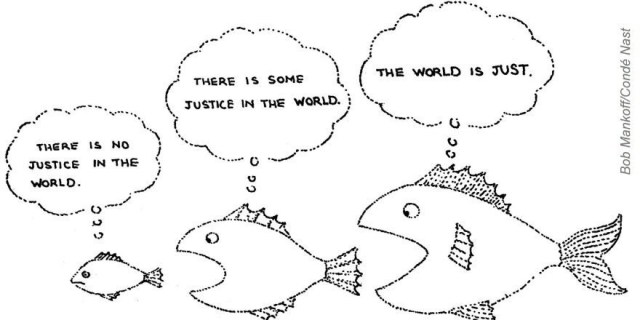
A visualization of a theory of justice

In all seriousness, when political philosophers write about justice, they rarely rely on any figures, images, or other forms of visualization to make their points. Plato’s Republic, for example, consists of over 500 pages of dense philosophical argumentation (or an extended prank), yet one of the most memorable parts of his work is the allegory of the cave. So, why don’t the great academic philosophers of our day, like the late Derek Parfit or the late John Rawls, include more images or visualizations of their ideas in their works?

Posted in Uncategorized | 4 Comments

Posted in Uncategorized | 2 Comments

Colonial Africa (circa 1914)

https://i.redd.it/4l8jdqrujtd31.jpg

Hat tip: u/Mooshguy2, via Reddit

Posted in Uncategorized | 1 Comment

The pathologies of contemporary political liberalism

We want to bring to your attention this strange yet fascinating essay by our colleague and friend Adrian Vermeule, a professor at Harvard Law School. Among other things, his essay explores several “pathologies” of contemporary political liberalism, including the following three puzzles:

Puzzle #1: our fetish for “change”–or in the words of Professor Vermeule: “Why … is it possible to encounter people … who say patently incoherent things like ‘I’m working for change’—as though change by itself were good? By the same token, why are the heroes and canonized saints of liberalism invariably agents who have produced social or political ‘change,’ rather than those who have, say, fended off ‘change’?”

Puzzle #2: the futility of change; in other words, no matter how much progress we might make eradicating racism or sexism or homophobia or whatever, there is always more work to do, or as Professor Vermeule himself puts it: “Whatever the question, whether race relations, women’s rights, gender identity, or what have you, the good liberal says ‘we have made some progress, but there is a long way to go.’ But of course, even after more progress is made, the goal never seems to have come any closer.”

Puzzle #3: change for me but not for thee, or the selective amnesia problem–or, again, in Professor Vermeule’s own words: “why do liberal institutions and intellectuals react so much more aggressively towards Poland, Hungary, and Brexit than to Saudi Arabia or China, when the latter must be far worse on any measurable dimensions of interest to liberalism?” Latin America provides another textbook example of this liberal selective amnesia: General Pinochet in Chile is condemned by the liberal crowd, while Comandante Fidel in Cuba is considered woke and gets a pass.

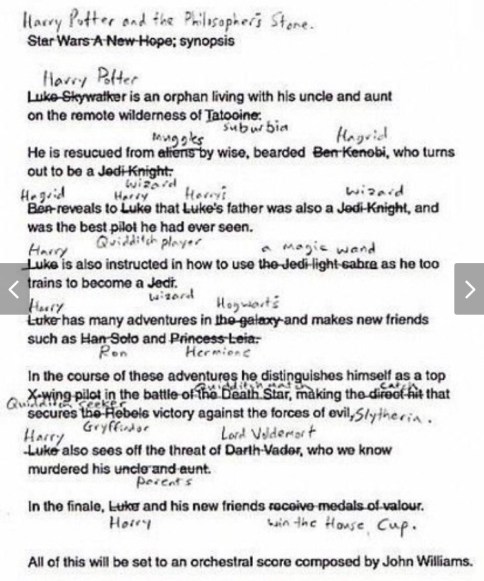
Image result for change meme
Posted in Uncategorized | 1 Comment

True or false? (dangerous demagogues edition)

A signifciant fraction of persons, i.e. greater than 10%, who voted for socialist Bernie Sanders in the Democratic Party primaries voted for Donald J. Trump in the 2016 general election? Samuel Scheffler writes in The Boston Review: “… some of the people who voted for Sanders in the primaries—12 percent according to two surveys—voted for Trump in the general election, and their influence was especially significant in the crucial states of Pennsylvania, Wisconsin, and Michigan. Trump was, one might almost say, Bernie Sanders’s evil twin.” Mr Scheffler, however, does not provide links to the “surveys,” so we have no way of assessing their reliability. In any case, given Trump’s not unprecedented electoral success (cf. Silvio Berlusconi’s rise and fall in Italian politics), will the number of dangerous demagogues in the USA continue to rise, or will this number level off or even decline?

Image result for the squad
Posted in Uncategorized | Leave a comment