Happy Birthday, CNN

CNN, the first television channel to provide 24-hour news coverage, went on the air on this day in 1980. At the time, CNN’s format was a radical innovation. Today, with the rise of the Internet, CNN–and cable TV generally–seem so antiquated …

Posted in Uncategorized | Leave a comment

Relative plausibility (review of Allen and Pardo, part 1)

We recently discovered Ron Allen and Mike Pardo’s new paper on “Relative plausibility and its critics” via Larry Solum’s Legal Theory Blog. Because of our fascination with all things Bayesian and with the role of probability theory in legal trials, this 71-page, single-spaced paper is a must-read for us. In their paper, Allen (pictured below, left) and Pardo (right) criticize probabilistic theories of juridical proof and then present an alternative “relative plausibility” theory of legal proof. In this post, we will summarize Allen and Pardo’s main criticisms of probability theory in law: Continue reading

Posted in Uncategorized | 3 Comments

Tayyab Mahmud on the politics of scholarship

In addition to Frank Valdes and Margaret Montoya, our friend and colleague Tayyab Mahmud (Seattle University School of Law) also attended the first annual Margaret Montoya Legal Scholarship Retreat at Campo Sano in Central Florida. Here are a few things we learned from Professor Mahmud, who shared his thoughts on the politics of scholarship:

  1. Academia’s Golden Rule. Among many other pearls of wisdom, Professor Mahmud shared one of the most important bits of scholarly advice we have ever received: “To be taken seriously, one must take the work of others seriously.”
  2. Every law has an exception. Beginning with the famous Roman law maxim necessitas non habet legem (“necessity knows no law”), every legal doctrine, rule, or principle always has an exception or outer limit. Indeed, not only does every rule have an exception; it is the exceptions that tell you what the rule really is!
  3. What metaphorical Kool-Aid are you drinking? According to Wikipedia, the phrase “drinking the Kool-Aid” is an idiom or popular expression that refers to a person or group who goes along with a doomed or dangerous idea because of peer pressure. (The quote below by actress Kat Dennings captures this idea perfectly.) In Academia, the “Kool-Aid” might refer to one’s theoretical paradigm or to the hidden assumptions that one simply accepts as true instead of subjecting to rigorous examination.

Image result for drinking the kool aid

Posted in Uncategorized | Leave a comment

Frank Valdes on the craft of scholarly writing

Our friend and colleague Frank Valdes (University of Miami) also attended the first annual Margaret Montoya Legal Scholarship Retreat. He shared his thoughts on the craft of scholarly writing during the retreat. Here are a few things that we learned from Professor Valdes:

  1. There are puzzles, and then are Puzzles. Most scholarship is problem-solving. Some problems consist of puzzles (small p), problems that we have already solved in our minds. Our solution might be a tentative one, or it might be fully-developed. In either case, the purpose of our scholarly writing is to share our pre-arranged solutions with our readers. Other problems, by contrast, consist of Puzzles (capital P), problems we have no idea how to solve ahead of time. In these cases, writing is a form of discovery.
  2. Cultivate your scholarly garden every single day. There is no algorithm for deciding what problems or puzzles/Puzzles are worth working on, but you must work on your problems every single day. This work might consist of studying the existing literature on one of your problems. Or it might consist of writing a paragraph or an entire page about some aspect of one of your problems. Or it might consist of editing a passage or page you have already written. Whatever the case, there are no short cuts. One must allocate sufficient time each day to one’s scholarly projects and problems. (This will be the time when you close your door, shut off your email, and just work.)
  3. It doesn’t have to be perfect; it just has to be done. When do you know a particular project of yours is done? Ideally, it’s when you feel you have said something original or novel about the problem you are working on …
Image result for kuhn puzzle solving

<<Under normal conditions the [legal scholar] is not an innovator but a solver of puzzles, and the puzzles upon which he concentrates are just those [that] he believes can be both stated and solved with the existing [legal] tradition.>>

Posted in Uncategorized | 1 Comment

In memory of our heroes …

We will continue blogging about the Margaret Montoya Legal Scholarship Retreat in the next few days.

Posted in Uncategorized | Leave a comment

Montoya Retreat Update

As we mentioned in our previous post a few days ago, we have been attending the first annual Margaret Montoya Legal Scholarship Retreat at “Campo Sano” in a rural part of Volusia County, Florida. The WiFi connection was pretty bad out there, so we decided to disconnect from the Internet during our visit to Campo Sano. In this post, we will share three new things/insights that we learned from Professor Margaret Montoya during the retreat:

  1. Lawyers, judges, and law professors are storytellers, so what stories do you want to tell? When a lawyer argues a case, or when a judge decides a case, or when a law professor writes a scholarly paper, they all usually begin by telling a story, such as the facts of the case under discussion. There are many types of stories and many ways of telling the same story. Good legal scholars are not only good storytellers; they are also able to find deeper meaning and connections between law and these stories.
  2. Always ask yourself ahead of time, Who are you writing for? If you are a pre-tenure law professor, one of your audiences is going to be your tenure committee! How much this brute fact constrains the type of scholarship you want to engage in or the types of stories you want to tell may vary from university to university, but it’s always a good idea to consider ahead of time the scholarly reputation you want to develop.
  3. Who did you leave out of your footnotes or end notes? In legal scholarship, who you don’t cite says as much about your scholarship as who is cited in your work. Whatever the specific legal field you are writing in, it is essential to acknowledge those who came before you …
Image result for storytelling

Credit: Jane Hope

Posted in Uncategorized | 2 Comments

#MontoyaRetreat #LatCrit

We are attending the first annual Margaret Montoya Legal Scholarship Retreat at “Campo Sano” (see image below) in Volusia County, close to Deland, Florida. More details to follow …

Posted in Uncategorized | 1 Comment

Vintage Map of the Italian Peninsula

https://i.imgur.com/5jkX3a8.jpg

Source: Jakub Marian (hat tip: AJgloe, via Reddit)

Posted in Uncategorized | Leave a comment

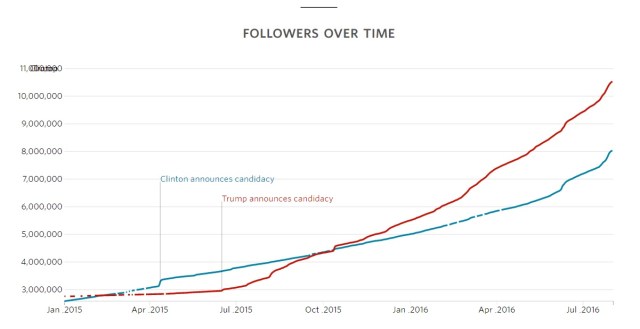
Bayes to the rescue (again)

Source: FiveThirtyEight

Posted in Uncategorized | Leave a comment

May Readings (Part 2)

Like our fellow literary blogger Luanne Castle, we love blog titles with the word “May” in them. (Check out Ms Castle beautiful blog here.) So, here is Part 2 of our reading list for the rest of the month of May (and for June):

  1. The book “Inadequate Equilibria” by Eliezer Yudkowsky, one of our favorite contemporary intellectuals. (Indeed, one of our previous papers, Visualizing Probabilistic Proof, was inspired in large part by Yudkowsky’s Bayesian approach to evidence.)
  2. Emotional Sentiments” by Emma Rothschild. This book reinterprets the ideas of Adam Smith and the Marquis de Condorcet (two of our favorite figures from the Enlightenment era), so it is a must-read for us.
  3. John Earman’s powerful defense and critique of Bayesian methods in “Bayes or Bust?“. In the introduction to his classic book, he writes: “I confess that I am a Bayesian–at least on Mondays, Wednesdays, and Fridays. *** On Tuesdays, Thursdays, and Saturdays, however, I have my doubts not only about the imperialistic ambitions of Bayesianism but also about its viability as a basis for … scientific inference. (On Sundays I try not to think about the matter.)” How could we not read this tome?
Posted in Uncategorized | 2 Comments