What is “research”?

We interrupt our year-end review of Anarchy, State, and Utopia to share this story with our loyal followers: “When someone asked mathematician Richard Bellman how to tell the difference between an excercise and a research problem, he replied if you can solve it, it’s an exercise, otherwise it’s a research problem.” (Hat tip: @mathematicsprof, via Twitter.) Bonus material: Check out the TEDx video by Quique Bassat below on “Why research is cool.”

Posted in Uncategorized | 2 Comments

Nozick’s candor

Before we jump into Chapter 1 of “Anarchy, State, and Utopia”, we want to return to Nozick’s preface one last time. The preface not only summarizes the main conclusions and methods of his book; it also calls out the intellectual dishonesty of most philosophical work. According to Nozick, when philosophers consider the great questions of philosophy, many pretend that their writings are the absolute final word on their subjects. But in reality, philosophers know that their works are full of “bulges” or unanswered questions, so (in Nozick’s words) the creation of a philosophical essay or book often “feels like pushing and shoving things to fit into some fixed perimeter of specified shape.” Worse yet, the bulges are masked or the cause of the bulge is thrown far away so that no one will notice. Nozick then conjures up a photographic metaphor to explain this form of philosophical dishonesty: “Quickly, you find an angle from which everything appears to fit perfectly and take a snapshot, at a fast shutter speed before something else bulges out too noticeably.” After a trip to the darkroom for touching up: “All that remains is to publish the photograph as a representation of exactly how things are, and to note how nothing fits properly into any other shape.” Nozick, by contrast, promises not to hide the bulges or weaknesses of his work. What a refreshing dose of candor!

Posted in Uncategorized | Leave a comment

Nozick’s minimal state

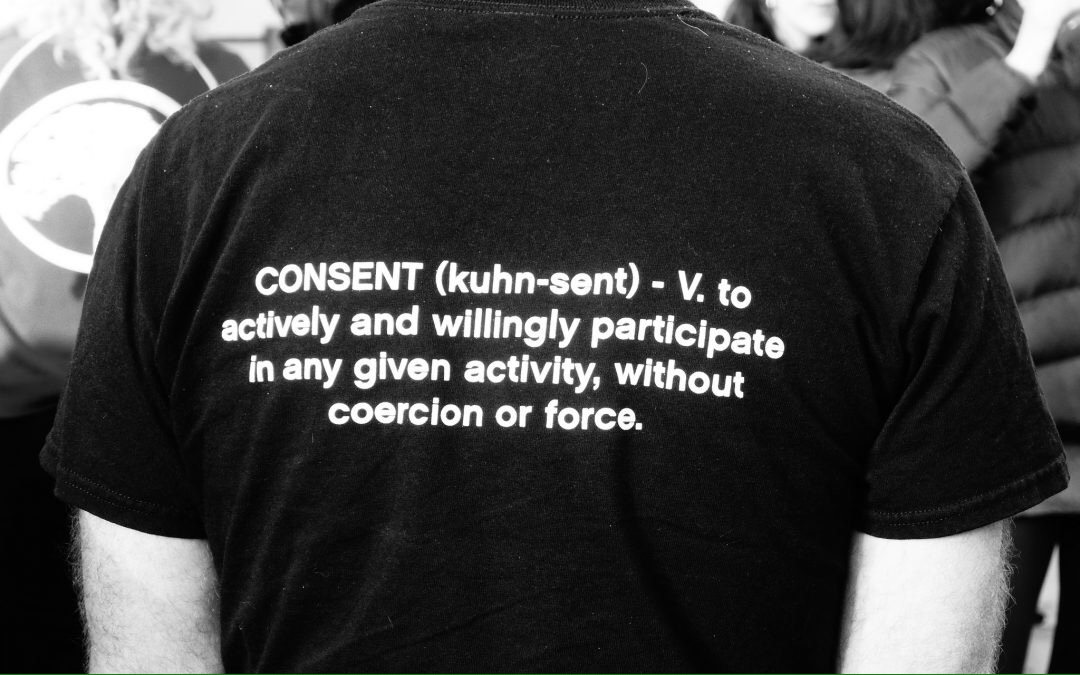
Nozick’s preface sets forth his main conclusion: only a “minimal state”–i.e. a collective “limited to the narrow functions of protection against force, theft, fraud, enforcement of contracts, and so on”–is consistent with the principle of individual rights. Nozick further concludes that a collective may not use coercion to promote distributive justice (reduction of income inequality) without violating individual rights, and he also tells us that he arrived at these libertarian conclusions “with reluctance.” Be that as it may, these conclusions raise a new set of difficult (and perhaps unanswerable) questions. At what point, for example, does a state stop being “minimal”, and further, what rights do people have? Yet, as we mentioned in our previous post, Nozick’s makes no attempt (so far) to identify what these sacrosanct individual rights consist of. By all accounts, it looks like Nozick is against coercion and that respect for individual rights must entail the total absence of coercion, unless coercion is necessary to counteract prior acts of coercion. So, we are going to need a theory of coercion/consent and a method for distinguishing between justified acts of coercion from unjustified ones. We will thus jump into Chapter 1 of Nozick’s tome in our next post.

Posted in Uncategorized | 1 Comment

Nozick’s premise

Let’s begin our review of Robert Nozick’s book Anarchy, State, and Utopia. Nozick opens his preface with this famous sentence: “Individuals have rights and there are things no person or group may do to them (without violating their rights).” This Kantian premise is an attractive and appealing one, but at a minimum, Nozick will at some point have to explain to us (1) what these rights are and (2) why violations of such rights are wrong (and if there are any exceptions to these two general rules). Otherwise, Nozick’s opening gambit is simply a sophisticated case of circular reasoning or question begging. After all, why do we have rights and who gave them to us? We will review the rest of Nozick’s thought-provoking preface in our next post.

Image result for nozick state of nature

Image credit: Christina Mendoza, via Pinterest

Posted in Uncategorized | 2 Comments

Coming soon …

… A page by page, chapter by chapter review of Nozick’s classic work Anarchy, State, and Utopia. (Here is a PDF of Nozick’s book for your reference.) Fasten your seat belts, this project will take up the rest of November and all of December.

Posted in Uncategorized | Leave a comment

Feliz Dia de Accion de Gracias 

We haven’t forgotten our family, friends, and fellow citizens in the beautiful Island of Puerto Rico.

Posted in Uncategorized | Leave a comment

International Criminal Tribunal for the former Yugoslavia (ICTY) Infographic

Missing from this infographic: What is the average (median) sentence imposed on the 83 convicted war criminals?

Posted in Uncategorized | Leave a comment

Bayesian updating (net neutrality edition)

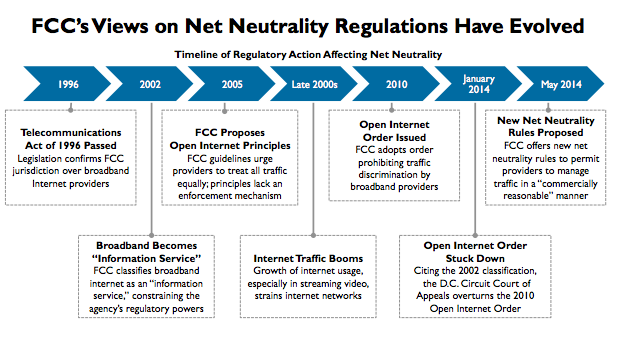
Remember the Y2K Problem? Looks like we can add “the lack of net neutrality” to the list of terrible worries that were overblown or never materialized. Back in 2006, for example, our libertarian friend and colleague Tyler Cowen supported the policy of net neutrality: “Without neutrality, Comcast and Verizon would use differential pricing schemes to extract more revenue and thus diminish some forms of Net output, including Google, Amazon, ebay, and possibly blogs.” (See here, for a full list of Prof Cowen’s reasons in support of net neutrality.) Today (2017), however, after examining some evidence, Prof Cowen has now concluded that net neutrality is no longer a necessary evil: “we’re at the point where we’ll do just fine without it.” For our part, our position is that antitrust law, not telecommunications law, should be used to police Internet markets.

Related image

Source: @nationaljournal

Posted in Uncategorized | Leave a comment

U.S. Death Roads

Most Dangerous Roads in America - TeletracNavman.com Infographic
Posted in Uncategorized | 5 Comments

A Bayesian approach to the trolley problem? (mini-thought experiment)

Note: This is a follow-up to our Nov. 14 post titled “A Bayesian defense of the Hadley rule.”

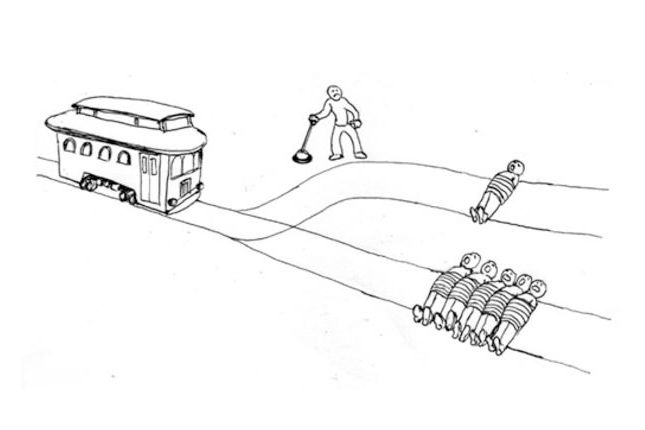
In our 2014 paper Trolley Problems, we wrote (footnotes omitted): “Consider the [standard] version of the trolley problem [pictured below]. There are seven parties to this conflict. On the one side of this moral equation is the person at the switch, who must make the difficult decision whether to leave the trolley on the main track where five workers will be harmed or divert it to a side track where only one worker will be harmed. On the other side of this moral balance are a total of six workers who are all potentially at risk from the runaway trolley, depending on whether the switch is pulled. But because of the veil of ignorance, none of the players knows their role ahead of time. Given this counterfactual world, imagine what would occur if these seven unfortunate souls could call a Coasean time-out to take part in a Coasean auction behind a veil of ignorance. In truth, since this a second-order thought experiment, the outcome of such a hypothetical auction is not obvious, unless a probabilistic approach to the trolley problem is taken.”

In place of a hypothetical Coasean auction, however, what if we imagined a “diabolical trolley lottery” instead? In the original position, there is a 0.714 probability that you will be one of the five workers trapped on the main track (5 ÷ 7), a 0.143 probability that you will be the worker on the side track (1 ÷ 7), and a 0.143 probability that you will be the person at the switch (1 ÷ 7). Accordingly, we can now imagine a negative lottery corresponding with these same probabilities and ask, How much would we pay to avoid having to play this diabolical lottery? Or in the alternative, would we prefer to pay nothing and take our chances? After all, in the original position there is a high probability (71.4%) that we will be one of the five workers trapped on the main track, and likewise, isn’t there a high (but unknown) probability that the person at the switch is a Humean consequentialist who will divert the trolley to the side track to save the five lives?

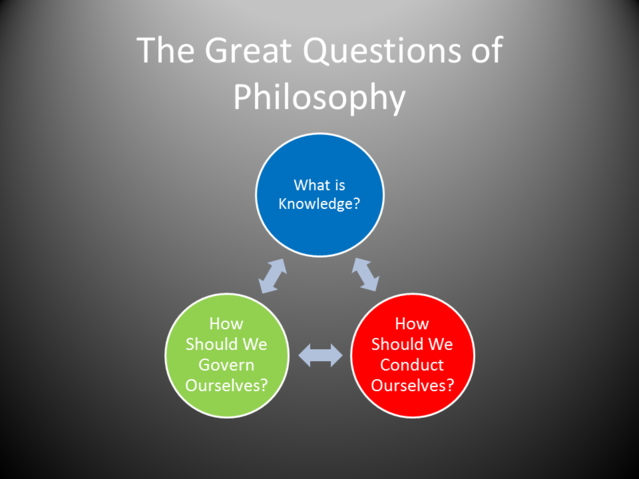
Image result for trolley problem


Posted in Uncategorized | Leave a comment