Can we make interpersonal comparisons of utility?

Or to be more precise: can we measure absolute levels of interpersonal utility or just relative differences of utility between individuals? (More fundamentally, what the heck is “utility”?) Either way, these are fundamental questions in theoretical economics, and they have always puzzled us. Depending on how the ultimate question is framed, some economists say yes; most say no. (If economists are right that the answer is no, it would mean that most, if not all, social science studies relying on surveys and other subjective tests are totally bogus. By the way, it was this post regarding the Implicit Association Test that motivated us to pose this question about interpersonal comparisons.) For your reference, here are some assorted links on this question: Eric Angner; Ken Binmore; Peter Hammond; John Harsanyi; Nicholas Kaldor.

Image result for interpersonal comparisons of utility

True or false?

Posted in Uncategorized | Leave a comment

Visualization of the logic of multiplication

Image result for multiplication table the griddle

Credit: David Millar

Posted in Uncategorized | Leave a comment

Hypothetical Question of the Day

Should the Internet be free and open to all? If so, how likely is it that President Trump would order the U.S. Cyber Command to take down China’s Great Firewall? (According to this report titled Cybersecurity: the cold war online by Steven Aftergood, published in Nature, Vol. 547, (6 July 2017), pp. 30-31: “China’s ‘Great Firewall’ employs more people than serve in the country’s armed forces.” Hat tip: Robin Hanson, via Twitter.)

Image result for great firewall
Posted in Uncategorized | Leave a comment

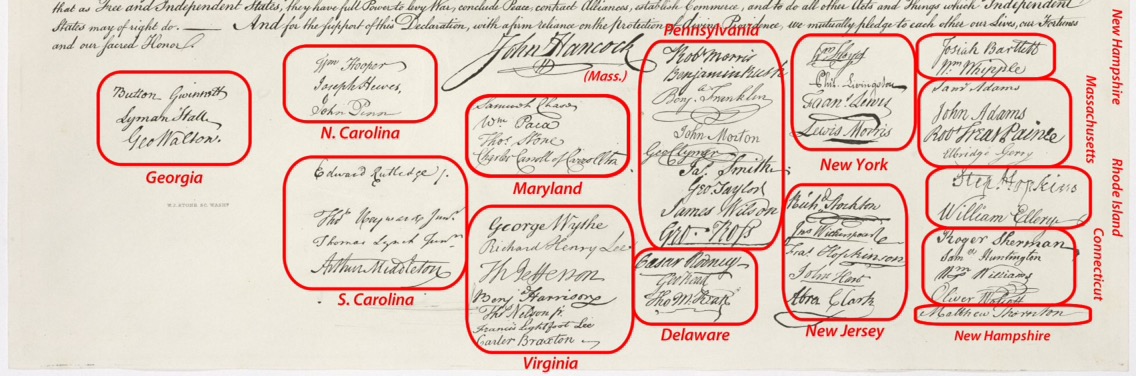
Independence Day Counterfactual

My favorite part of the Declaration of Independence is its concluding sentence: “And for the support of this Declaration, with a firm reliance on the protection of divine Providence, we mutually pledge to each other our Lives, our Fortunes and our sacred Honor.” But what would the world be like today if the original 13 colonies had not declared their independence from Great Britain or if the American Revolution had failed? (Fourth of July Fun Fact: The largest number of colonial delegates who signed the Declaration of Independence on 4 July 1776 were from the Commonwealth of Pennsylvania.)

Posted in Uncategorized | 1 Comment

Visualization of bitcoin’s market capitalization

Is bitcoin a bubble or the future of electronic currency? For competing answers to this question, check out this recent report, via HowMuch.net, and this essay by Sue Chang, via Market Watch.

Credit: Raul, via HowMuch.net

Posted in Uncategorized | Leave a comment

Some scholarly summer reading

We are in the process of building a simple range voting or bayesian voting model of appellate judging as well as a separate model of legal evasion behavior (e.g. why do so many drivers on the road routinely exceed the speed limit), so this is what we’ve been reading during the 4th of July holiday:

1. Alex Raskolnikov, Probabilistic compliance, to be published in The Yale Journal of Regulation. This paper presents a simple model of legal uncertainty and explores some important questions, such as what effect does legal uncertainty (i.e. the use of vague standards instead of bright-line rules) have on the compliance behavior of business firms and on the market for legal advice? Weakness of the paper: the model assumes perfect detection.

2. Eric A. Posner & Adrian Vermeule, The votes of other judges, The Georgetown Law Journal, Vol. 105 (2016), pp. 159-190. This theoretical paper explores some intriguing questions about judicial disagreement and judicial voting, such as why do judges disagree about the proper outcome of many close cases and should a judge take into account such disagreement when it occurs? Weakness of the paper: the authors’ two-step approach is too simplistic and doesn’t distinguish between conciliation and non-conciliation views of disagreement among epistemic peers.

3. Jeremy Waldron, Five to four: why do bare majorities rule on courts?, published in The Yale Law Journal, Vol. 123, no. 6 (2014), pp. 1692-1730. This fascinating paper poses a fundamental yet under-theorized question in the judicial context: why do judges on multi-member appellate courts use majority voting–assigning equal weight to each judge’s vote–to settle their differences? Weakness of the paper: the normative part of the author’s analysis is incomplete. Specifically, why does ethics supposedly require that each person’s vote be weighted equally, regardless of the voter’s intensity?

4. Philip Pettit, When to defer to majority testimony, and when not, Analysis, Vol. 66, no. 3 (2006), pp. 179-187. This paper is part of a much broader literature; it explores some intricate theoretical questions about Condorcet’s jury theorem.

5. Robert Schlaifer, Probability and statistics for business decisions, McGraw-Hill (1959). We keep finding references to Schlaifer’s book in the work of two of our intellectual heroes, the bayesian decision theorist Howard Raiffa (pictured below, left side) and the bayesian mathematician Jimmie Savage (pictured below, right side), so we decided to order a copy of this book and begin reading …

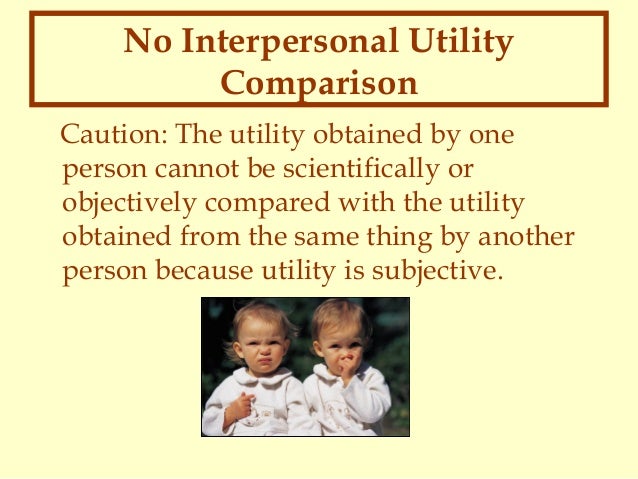
Image result for howard raiffa     Related image
Posted in Uncategorized | Leave a comment

Happy Holidays

1 July 1867: Canada Day 🇨🇦 

2 July 1823: Bahia Independence Day 🇧🇷

3 July 1952: Congress approves the Puerto Rico Constitution 🇵🇷

4 July 1776: USA Independence Day 🇺🇸

5 July 2013: Prior Probability’s first blog post 🎲

Posted in Uncategorized | 1 Comment

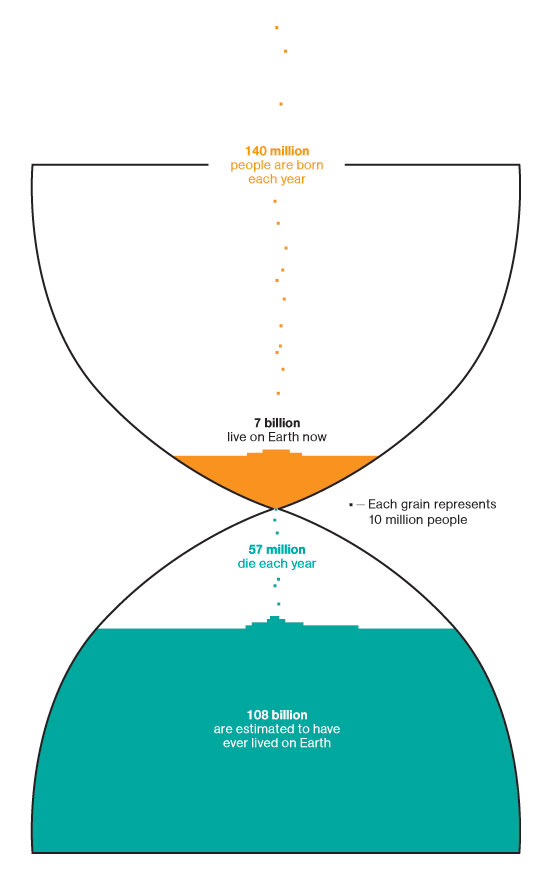
Population ratios

Hat tip: Cliff Pickover

Posted in Uncategorized | Leave a comment

Assorted links (Apple iPhone edition)

Although we’re a day late, 29 June 2017 marks the 10th anniversary of the launching of the original Apple iPhone.* To honor this occasion, here are some useful links:

1. Tyler Cowen’s essay in praise of the iPhone: Put down the iPhone and appreciate its genius.

2. Adam Greenfield’s critique: A sociology of the smartphone.

3. Steve Jobs’s original iPhone presentation from January 2007.

* Full disclosure: I drafted this blog post on my Apple iPhone 5s. That I was able to access the Internet, link to various sources, and track down and post a picture — in a matter of minutes and on such a small and portable device — is remarkable.

Posted in Uncategorized | 1 Comment

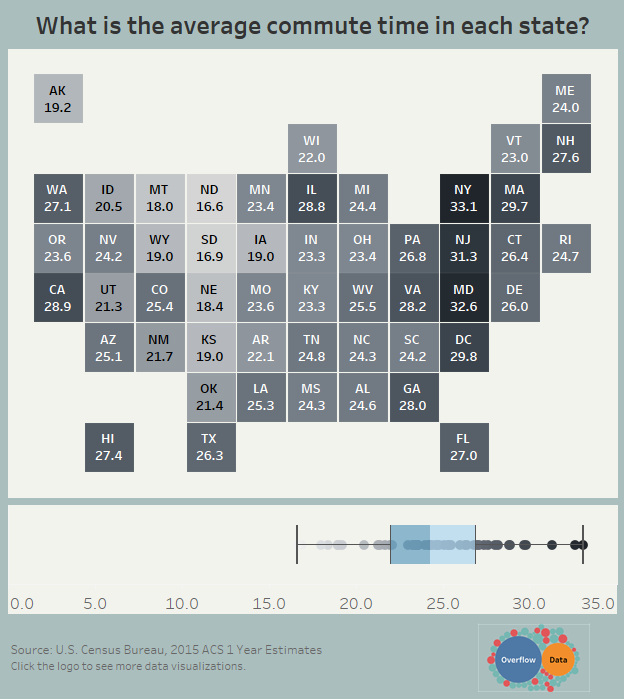
Map of average commute times

Via digg. It would intriguing to see if there is any correlation between commute times and accident rates.

Posted in Uncategorized | Leave a comment