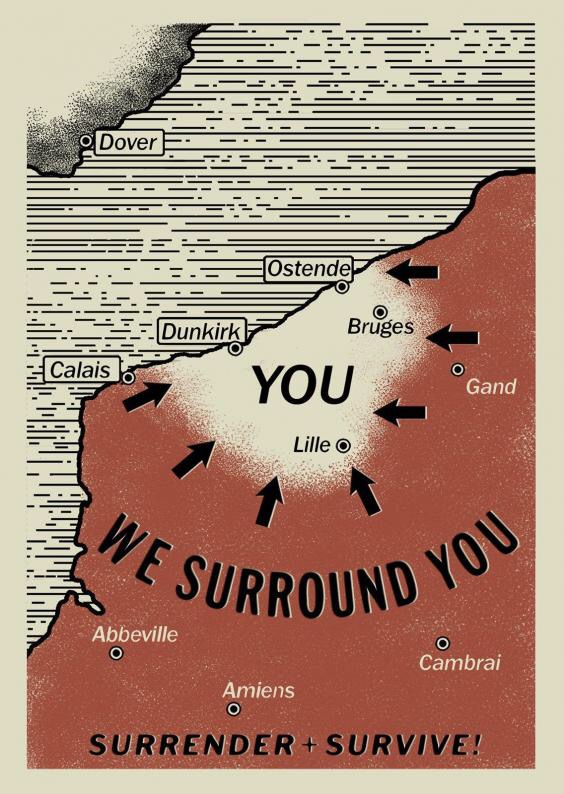
Arpanet map (circa 1970)

Hat tip: The Amazing Cliff Pickover

Posted in Uncategorized | 1 Comment

Markets and morality (final post, for now)

Note: This is the last installment of our series of blog posts reviewing Nathan B. Oman’s new book The Dignity of Commerce.

Nate Oman concludes his beautiful book on The Dignity of the Commerce by drawing a fundamental distinction between “pernicious markets” and “well-functioning markets.” This distinction is essential to Oman’s theory of contracts. According to Oman, contracts should only be enforced when they support healthy or well-functioning markets. To this end, Professor Oman identifies three types of pathological markets: (1) markets that produce harm, like the market in slaves in the antebellum south, (2) noncommercial markets, such as markets in human organs, and (3) malum in se markets or inherently bad commercial transactions. Imagine, for example, a judge conducting an auction instead of delivering a well-reasoned verdict in accordance with law. (As an aside, it’s worth noting all three of these markets are illegal under existing law, although the slave trade was once legal.)

Here, however, is where we part ways with Professor Oman. At the end of the day, Oman’s tidy distinction between “well-functioning markets” and “pernicious markets” is unsatisfying and unhelpful. Why? Because once we draw a distinction between moral commercial practices and immoral commercial practices, then Oman’s commercial theory of contracts completely falls apart: the commercial nature of a particular promise becomes totally irrelevant to its legal enforceability. Instead, what ultimately matters is whether the contract is consistent with morality. But this conclusion brings us back to square one: why should the law enforce only “moral” promises and not “immoral” ones (a topic we explore in detail in this paper), especially when morality is almost always in the eye of the beholder? Was Shakespeare’s Shylock, to borrow Oman’s own example, acting morally or immorally when he demanded a pound of Antonio’s flesh as per their agreement?

Moreover, as a matter of logic, we could do without the qualifiers “well-functioning,” “healthy,” etc. to describe markets. Such qualifiers are totally superfluous, since any actual market is, by definition, well-functioning; otherwise, it would not exist. Right? Despite these objections, let us conclude by confessing that we really enjoyed reading Oman’s book. His work forced us to clarify our thinking about the relation between markets and morality.

Image result for slave trade
Posted in Economics, Ethics, Law | Leave a comment

The problem with so-called public meaning originalism

President Trump’s nomination of Judge Gorsuch to the Supreme Court has reignited the longstanding constitutional battle between defenders of the Living Constitution and backers of Originalism. (If this never-ending normative debate were a baseball game, it would be in the 57th inning by now.) The latest scholar to enter this theoretical fray is Jonathan Gienapp, a historian at Stanford. Professor Gienapp recently wrote up this helpful essay explaining the origins and finer points of “public meaning originalism,” an influential theory of constitutional interpretation espoused by many conservative jurists. In brief, this theory of constitutional interpretation purports to discover the “public meaning” of the words of the original Constitution, that is, how the words of the original Constitution would have been understood by a competent speaker of the language when the Constitution was first drafted. In his essay, Professor Gienapp goes on to criticize this theory in his capacity as a professional historian, arguing that public meaning originalism is not about history but rather about linguistics. In the words of Professor Gienapp:

“…originalists have stopped trying to beat historians at their own game—by rewriting the very rules by which that game is played. They seem to have realized that they will never know as much as historians about the Constitution’s origins or historical development, so instead of fighting a losing empirical battle why not stake out different conceptual foundations altogether? That way, most disputes can turn on philosophy of language, interpretive method, and legal doctrine (as they now do) without dwelling on the details of the historical past. And if historians wish to object, they dare not mention the Framers’ thoughts or agendas or the broader political, social, or intellectual contexts of the late eighteenth century; they must, instead, offer a series of methodological and philosophical arguments targeting originalists’ conceptual formulations.”

Prof. Gienapp’s critique of originalism, however, is way too narrow and parochial. After all, history can be just as contested as language, so the work of history does not get us any closer to truth than the study of linguistics does. As such, the problem with public meaning originalism is not that it neglects the methods of historians. Rather, the main problem with originalism as a theory is that there often is no single or obvious public meaning of open-textured words and phrases like “equal protection” or “due process of law.” In reality, the public meaning of such words can still be open to interpretation because there were so many possible readers of the Constitution at the time the words of the founding charter were drafted and ratified. Those same words could have many public meanings, depending on the identity of who was reading them …

Posted in Academia, Bayesian Reasoning, Current Affairs, History, Law, Philosophy, Politics | 4 Comments

For sale: knot pillows; never untied

Credit: Ragnheiður Ösp Sigurðardóttir

Posted in Uncategorized | 3 Comments

Exit, voice, and boilerplate

Note: This is the fifth of six blog posts on Nate Oman’s new book The Dignity of Commerce: Markets and the Moral Foundation of Contract Law.

Now that we have surveyed Professor Oman’s chapter on contract remedies (see our 3/21 blog post) as well as his chapter on the doctrine of consideration (see our 3/19 post), it’s time to turn our attention to his pièce de résistance–his chapter on boilerplate agreements (Chapter 7), arguably the most important and original chapter in his book. In his boilerplate chapter, Professor Oman bravely leaves behind the commercial hustle and bustle and Old World charm of the Rialto (as portrayed by the great Bard of Avon) and delves instead into the coldest and most inhospitable corners of the World Wide Web. Specifically, he swaps Shylock’s immortal contract in Shakespeare’s Merchant of Venice with those unreadable and hideous drop down “Terms of Use” and “Terms of Service” tucked away in the inner recesses of the Internet. Continue reading

Posted in Economics, Ethics, Law, Literature | Leave a comment

Self-correcting contracts?

Note: This is the fourth of six blog posts in which we review Nate Oman’s new book The Dignity of Commerce: Markets and the Moral Foundation of Contract Law.

After tackling the legal doctrine of consideration in Chapter 5 (see our 3/19 blog post), Professor Oman turns his gaze to the structure of contract remedies in Chapter 6. He pays particular attention to two fundamental features of contract remedies–private standing and bilateralism–and argues that autonomy-based theories and efficiency theories of contract law are unable to explain or justify these twin features of contract remedies. (FYI: Although we agree with Prof. Oman that these traditional theories of promising are totally lacking, we would point out that his market theory of contract law also does not fully explain the remedial features of private standing and bilateralism.) Continue reading

Posted in Economics, Ethics, Law, Literature, Philosophy | 1 Comment

Class No. 9 (meet the interns)

Welcome back from Spring Break! For our next class, we’re going to go back in time, back to the summer of ’04. That’s when Mark Zuckerberg relocated his new company to Northern California and brought along Facebook’s first two interns, Stephen Dawson-Haggerty and Erik Schultink, for the ride. Legally speaking, what do James Bond, Rich Paul, and Facebook’s interns have in common? In a word, they’re all “agents,” i.e. persons who are authorized to work on behalf of another, the principal. (FYI: Rich Paul works for LeBron James as his sports agent, while the fictional James Bond works for MI6, the British Secret Intelligence Service.) Principal-agent relationships are very common in the business world, so we will spend an entire lecture on the law of agency in our next class. Why? Because whenever a principal-agent relationship exists, the following fundamental legal question often arises: When is the principal legally liable for the acts committed by its agents? Under the doctrine of respondeat superior, the answer to this question depends in large part on whether the agents are employees or independent contractors (see chart below). Accordingly, although we have been focusing mostly on the founding of Facebook this semester, we will take a time out from the movie The Social Network and focus on the fictional world of secret agent #007 James Bond instead. In particular, we will debate whether Mr Bond is an employee or an independent contractor.

Image result for bond james bond

Continue reading

Posted in Economics, Ethics, Law | Leave a comment

The superfluous legal doctrine of consideration?

Note: This is the third of a series of blog posts in which we review Nate Oman’s new book The Dignity of Commerce: Markets and the Moral Foundation of Contract Law.

As we mentioned in a previous post, Part I of Nate Oman’s book on “The Dignity of Commerce” considers the close relationship between markets and morality, while Part II surveys such specific areas of contract law as the doctrine of consideration, remedies for breach, and contracts of adhesion (i.e. boilerplate contracts). Here, we review Oman’s chapter on the doctrine of consideration, which we consider (pun intended) to be one of the best chapters in the book. Continue reading

Posted in Economics, Ethics, Law, Literature | 2 Comments

Old meets new

We’re soooo late to the La La Land party, but my dear wife and I finally saw this whimsical musical and we absolutely loved it.

Posted in Uncategorized | 1 Comment

Morality distribution channels

Note: This is the second of several blog posts in which we review The Dignity of Commerce: Markets and the Moral Foundation of Contract Law, by Nathan B. Oman.

In our previous post, we introduced Nate Oman’s book on “The Dignity of Commerce.” Professor Oman’s beautiful book is divided into two parts. Part I explores the relationship between markets and morality. Part II then delves into specific areas of contract law, such as the doctrine of consideration, remedies for breach, and boilerplate contracts. We shall review each chapter in Part II in future posts, so here we shall focus on the main idea in Part I: the moral nature of markets. Continue reading

Posted in Economics, Ethics, Law | 1 Comment