Why don’t any of the planets or moons in our solar system have their own flags? Calder Hansen proposes a new flag for Mars. More information about this proposed Martian flag is available here. Hat tip: kottke. [Update (14 June 2019): There is some controversy as to the actual origins of the design for the flag for Mars. See the comments section and here.]
Katie Holten’s tree alphabet

Credit: Katie Holten
More information about Katie Holten’s project is available here (h/t: kottke).
Assorted Links (Judge Posner edition)
We just heard (via Tyler Cowen) that Judge Richard Posner has decided to retire from the bench, though we hope he will continue to write and teach. In his honor, here are a just few links relating to Judge Posner’s theories of judging:
- Posner’s unimpeachable honesty (Glenn Reynolds)
- Posner criticizes legal jargon (via ABA Journal)
- Posner/Rakoff dialogue (via Slate)
- The incoherence of Antonin Scalia (Richard Posner)
- What do judges maximize? (Richard Posner)
- Cass Sunstein’s eulogy of Posner (via Bloomberg)
Update (3 Sep 2017): My wife and I binged-watched all 10 episodes of the third season of Narcos this Labor Day weekend. To avoid spoilers, all we will say are two things: (1) the show paints a compelling picture of corruption permeating all levels of Colombia’s government, and (2) the show’s main protagonist, Agent Javier Pena (played by Pedro Pascal), personifies the utter futility of the war on drugs.
“Numerically balanced dice”
That is the title of this theoretical paper by Robert Bosch, Robert Fathauer, and Henry Segerman. Here is the 32-word abstract: “We discuss what it might mean for a die to be numerically balanced, explore connections with magic squares, and present integer programming models that can be used to design numerically balanced dice.” (H/t: Cliff Pickover, via Twitter.)
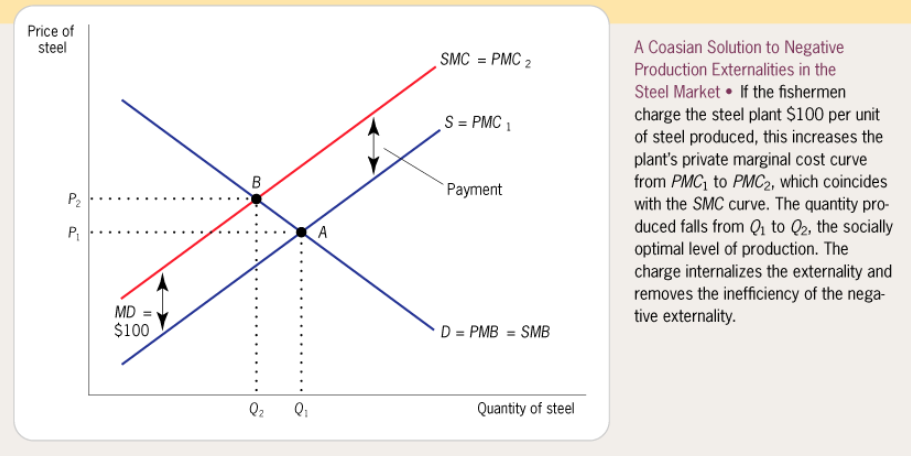
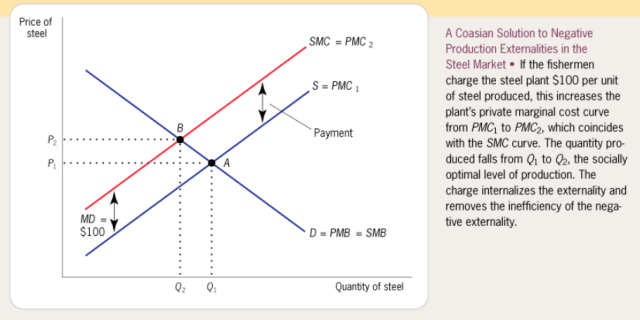
The Coase theorem and moral externalities
The Coase theorem applies to situations involving economic externalities, i.e. activities that produce harmful effects. It states that bargaining will lead to an economically efficient outcome, regardless of the initial allocation of property rights, when three conditions are met: (1) when property rights are well-defined, (2) when trade in the externality is not prohibited by law, and (3) when the costs of trading are low relative to the value of the right being traded.
Traditionally, economists and lawyers have used the Coase theorem to study such prosaic problems as cattle trespass and pollution. But could this theorem apply to moral externalities or other intangible types of harmful effects, such as late-term abortions? By way of example, according to this report in The Washington Post: “A Maryland abortion clinic, one of only a few that provides late-term abortions to women in the United States, plans to close its doors and is under contract to be purchased by an antiabortion group that has worked for many years to shut it down, according to an official with the coalition that has plans to buy it. If the sale goes through this fall, the new owners of the Germantown clinic will soon be owned by the Maryland Coalition for Life, a grass-roots organization that has staged regular protests at the clinic and, in 2011, opened up a crisis pregnancy center across the parking lot to counsel women against choosing abortion.” Is this not an example of the Coase theorem in action?
Paper clip art
Zachary Abel’s work (pictured below) is a hollow sphere of 720 interwoven paperclips in the shape of a snub soccer ball. (Hat tip: Cliff Pickover.)