Throwback Thursday: *The Most Senile Justice?*

That is the title of my four-page 2007 paper on “judicial decrepitude” — a term coined by historian David Garrow. In brief, building on Garrow’s work, my paper attempts to measure the true extent of the problem of judicial decrepitude among the members of the U.S. Supreme Court since the high court’s inception in 1789. After presenting the relevant data, I conclude (contra Garrow and others) that the incidence of judicial decrepitude is relatively infrequent and rare.

Posted in Uncategorized | Leave a comment

*Adam Smith’s blind spot?*

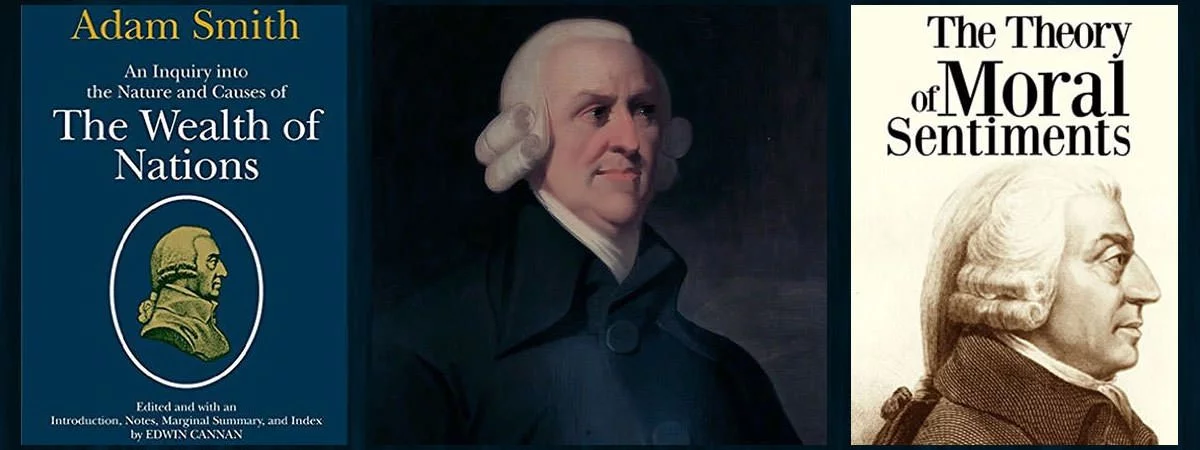
That is the title of my contribution (in press) to the next issue of the Journal of Public Finance and Public Choice. Among other things, my refereed research article extends Geoffrey Brennan and James Buchanan’s public-choice critique of the “optimal taxation” literature to Adam Smith’s maxims of taxation — see here or here, for example, or better yet, check out Book V, Chapter 2 of The Wealth of Nations! — and inspired by Brennan & Buchanan’s powerful critique, I identify two new “meta-maxims” of taxation:

  1. Meta-maxim #1: What is one’s baseline assumption about government power? That is, are benevolent patriarchs or wicked despots the norm?
  2. Meta-maxim #2: What are the constitutional rules or outer limits of government power? Put another way, how much authority does the government have, and what remedies exist (if any) if it exceeds those powers?
Adam Smith quote: Every tax ought to be so contrived as both to...
Posted in Uncategorized | Leave a comment

My sabbatical with Homer et al.

That is the title of my most recent work, which I have just posted to SSRN. In summary, to make the best use of my sabbatical, last summer I enrolled in a Classics seminar at Rollins College in Orlando, Florida. Among the many immortal works I read in this graduate-level, semester-long survey course, my favorites were Homer’s Iliad, Hesiod’s Works and Days, Plato’s Apology, and Ovid’s Metamorphoses. In my paper, I present some new interpretations of these four classics.

Picture of the painting _School of Athens_ by Raphael.
Raphael, “School of Athens”

Posted in Uncategorized | Leave a comment

Monday music: Areia Branca

Posted in Uncategorized | Leave a comment

Adam Smith in Switzerland

… there remain opportunities, even at this late date, for remedying the present meagre knowledge of Adam Smith’s life. [W. R. Scott, “Studies relating to Adam Smith in the last fifty years”, Proceedings of the British Academy (1940), Appendix II, p. 273]

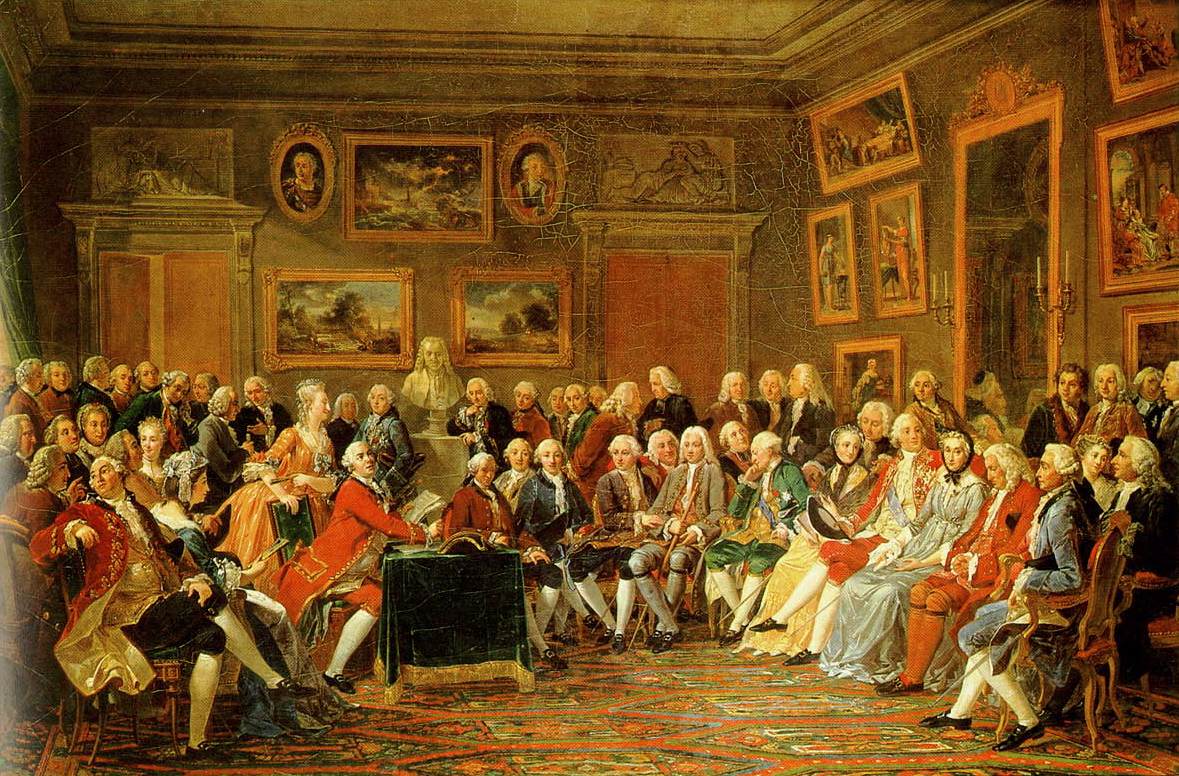
My colleague and friend Alain Alcouffe and I have been researching Adam Smith’s extended residency in the Republic of Geneva. Suffice it to say that this visit was no mere stopover but rather one of the highpoints of Smith’s grand tour years (1764-66), for it was during this time that Smith met the legendary literary figure Voltaire and befriended one of the most beautiful and influential salonnières of the Enlightenment era: Louise Elisabeth de La Rochefoucauld, the duchesse d’Enville (pictured below). For your reference, below is a compilation of our previous posts on “Adam Smith in Switzerland” (organized thematically):

I. Adam Smith’s Arrival and Departure

  1. Adam Smith in Geneva: arrival
  2. Adam Smith’s departure from Geneva
  3. Bonus: Six sols (Geneva, 1765)

II. Why Geneva? Reasons for Visiting the Swiss City-State

  1. Prologue: Adam Smith in Geneva
  2. Adam Smith in Geneva: Voltaire versus Rousseau
  3. Adam Smith and Rousseau the fugitive
  4. Adam Smith in Switzerland: the Smith-Tronchin Connection
  5. Adam Smith, J-J Rousseau, and the Geneva theater question
  6. The Voltaire conspiracy
  7. The Voltaire conspiracy: revealing Rousseau’s dark secret

III. Adam Smith and Voltaire

  1. Adam Smith and the Fracas at Ferney
  2. Fracas at Ferney, part 2: the case of Dillon’s dead dog
  3. Fracas at Ferney, part 3: the Adam Smith connection
  4. Adam Smith and the Voltaire-Needham Affair
  5. Preview: Voltaire’s vendetta
  6. Origins of Voltaire’s vendetta
  7. Voltaire-Adam Smith Postscript

IV. Adam Smith and the Syndics

  1. The Scottish moral philosopher and the Swiss statesman: Adam Smith and the Syndic Turretin
  2. The Scottish moral philosopher and the Swiss statesman, part 2
  3. Rousseau versus the Republic of Geneva
  4. Rousseau against the world
  5. Geneva, November 1765
  6. Geneva, December 1765: the political plot thickens
  7. January 1766: the Banana Republic of Geneva?

V. Adam Smith and the Duchesse d’Enville

  1. Bonnyman on Adam Smith and the Duchesse d’Enville
  2. Ross on Adam Smith and the Duchesse d’Enville
  3. John Rae and Dugald Stewart on Adam Smith and the Duchesse d’Enville
  4. Abbé Colbert on Adam Smith and the Duchesse d’Enville
  5. A conjecture re: Adam Smith and the duchesse d’Enville

VI. Switzerland in The Wealth of Nations

  1. Switzerland in *The Wealth of Nations*
  2. Switzerland in *The Wealth of Nations*, part 2
  3. Jean-Jacques Rousseau and Adam Smith on watchmaker apprenticeships
  4. Bonus: Some additional topics of discussion re: Adam Smith in Switzerland
File:Nattier - La duchesse Danville (1740).jpg
Posted in Uncategorized | 1 Comment

A conjecture re: Adam Smith and the duchesse d’Enville

James Currie (physician) - Wikipedia

Who was the duchesse d’Enville, and what was Adam Smith’s relation to her? Today, Alain Alcouffe and I wish to conclude our series by bringing to your attention an additional primary source that may — or may not — shed light on these enigmas: a piece of correspondence dated 14 July 1794 from Dr James Currie (1756–1805; pictured above), a Scottish physician best known for his biography and anthology of the works of the celebrated poet Robert Burns.

Curries’s letter is addressed to Smith’s first biographer Dugald Stewart (1753–1828), and among other things, it contains a second-hand report of “a French Marquise, a woman of talents and esprit, [who] was smitten, or thought herself smitten, with the Doctor [Smith], and made violent attempts to obtain his friendship” (Currie 1831, pp. 317-318, cited in Guerra-Pujol 2021, pp. 133-134). Currie’s letter further reports that the French Marquise “was just come from Paris … [and] was determined to obtain his [Smith’s] friendship; but after various attempts was obliged to give the matter up. Dr. Smith …. could not endure this French woman, and was, besides, dying for another” (ibid., emphasis added).

So, who is the “French Marquise” referred to in this passage? Could she, in fact, be the duchesse d’Enville? (And if so, why was she mistaken for a marquise?) Also, who is the other woman Smith was allegedly “dying” for?

In the bygone world of European nobility in pre-revolutionary France, a duchesse held a higher rank than a marquise, for a “duchesse” was a wife of a “duc” (duke), while a “marquise” refers to the wife of a “marquis”. [See generally Guy Chaussinand-Nogaret, The French Nobility in the Eighteenth Century, Cambridge University Press (1985).] For her part, the duchesse d’Enville had obtained her noble title of “duchesse” when she married her cousin Jean-Baptiste de La Rochefoucauld de Roye (1709–1746), Duke of Enville, on 28 February 1732 at the age of 15. [See generally Daniel Vaugelade, Tricentenaire de la naissance de la duchesse d’Enville, 1716-1797, Journée d’études organisée au château de La Roche-Guyon le 24 septembre 2016, Éditions de l’œil (2020).] But at the same time, it is possible that Currie, who is reporting at one remove what an old military man by the name of “Captain Lloyd” had told him (see Guerra-Pujol 2021, p. 132-133), may have confused or mixed up his noble titles.

Regardless whether the Scottish philosopher and the French salonnière were involved in romantic relationship or not, the duchesse d’Enville was one of the most accomplished women of the Age of Enlightenment who deserves recognition in her own right. As it happens, Alain Alcouffe are I are researching the life and influence of this remarkable woman of letters, and we hope to write up a scholarly paper in her honor later this year.

Posted in Uncategorized | 1 Comment

Abbé Colbert on Adam Smith and the Duchesse d’Enville

Seignelay Colbert de Castlehill — Wikipédia

Who was the duchesse d’Enville, and what was Adam Smith’s relation to her? Thus far this week, Alain Alcouffe and I have explored this enigmatic relationship by surveying the secondary literature on Smith. But of all the works we have consulted during our months of scholarly research, it is a primary source that has caught our attention the most, a piece of correspondence that establishes a possible link between the Scottish philosopher and the French salonnière. (See generally Guerra-Pujol 2021, pp. 135-136.) This source is a personal letter addressed to Smith, dated 18 Sept 1766, from one “Grand Viccaire Eccossois,” who most likely was Seignelay Colbert de Castle-Hill (1736-1811), the Abbé Colbert (pictured above via Wikimedia Commons; ibid.).

Before proceeding to Colbert’s intriguing letter, it is worth explaining why Colbert is worth taking seriously, for he is a highly credible source. To the point, the Abbé Colbert became Adam Smith’s closest companion and confidant during Smith’s time in Toulouse (March 1764 to October 1765); in fact, he even travelled with Smith and Duke Henry to Bagnères, Bordeaux, and many other places in the South of France during this 18-month period (Alcouffe and Massot-Bordenave 2020, pp. 216–217; see also Rae 1895, p. 179). Colbert thus got to know Smith the man, not just Smith the scholar or man of letters. With these background facts in mind, one passage in particular in Colbert’s Sept. 1766 letter to Smith is especially tantalizing:

Et tu, Adam Smith, philosophe de Glasgow, heros et idole des high-broad Ladys, que fais tu, mon cher ami? Comment gouvernes tu La duchesse d’Anville [d’Enville] et Mad. de Boufflers, ou ton coeur est il toujours epris des charms de Mad. Nicol et des apparent apparens que laches de cette autre dame de Fife, que vous aimees tant? [National Archives of Scotland, GD224/2040/62/3, quoted in Alcouffe and Moore 2018, emphasis added]

In English:

And you, Adam Smith, Glasgow philosopher, high-broad Ladies’ hero and idol, what are you doing my dear friend? How do you govern the Duchess of Anville [d’Enville] and Madame de Boufflers, where your heart is always in love with Madame Nicol and with the attractions as apparent as hidden of this lady of Fife that you loved. [as translated in Alcouffe and Massot-Bordenave 2020, p. 260, emphasis added; for slightly different translations of Abbé Colbert’s letter of September 18, 1766, see Ross 2010, p. 227; Buchan 2006, p. 77; Mossner & Ross 1987, p. 111]

The jocular and intimate tone of this particular passage suggests camaraderie and close connections — or in the words of Alain Alcouffe and Philippe Massot-Bordenave (2020, p. 217), the letter “is probably a private correspondence between friends who have established trust” — but what does it mean? More specifically, why does Colbert refer to the duchesse d’Enville by name in this passage, and what does he really mean when he writes, “Comment gouvernes tu La duchesse d’Anville ….”? Did Smith and d’Enville fall in love? And if so, how did Colbert find out about Smith’s trysts or his sundry romantic attachments? Alas, these amorous secrets are buried with Smith, for the Scottish philosopher-economist insisted on the destruction of his private papers, manuscripts, and letters upon his death (cf. Guerra-Pujol 2021, p. 149).

Not all is lost, however. Building on the work of Guerra-Pujol (2021), Alain Alcouffe and I will present our own interpretation of Colbert’s curious letter in our next post …

Works cited

Alcouffe, Alain, and Andrew Moore. (2018) Smith’s Networks in Occitania—March 1764–October 1765. Presented at the 31st Annual Conference of Eighteenth- Century Scottish Studies Society, July 17–21, 2018 (Glasgow).

Alcouffe, Alain, and Philippe Massot-Bordenave. (2020) Adam Smith in Toulouse and Occitania: The Unknown Years. London: Palgrave Macmillan.

Buchan, James. (2006) The Authentic Adam Smith: His Life and Ideas. New York: Norton.

Guerra-Pujol, F. E. (2021) Adam Smith in Love. Econ Journal Watch, Vol. 18, No. 1, pp. 127–155.

Mossner, Ernest C., and Ian Simpson Ross, editors. (1987) The Correspondence of Adam Smith, 2nd ed. Oxford: Oxford University Press.

Rae, John. (1895) Life of Adam Smith. London: Macmillan.

Ross, Ian Simpson. (2010) The Life of Adam Smith, 2nd ed. Oxford: Oxford University Press.

Wikimedia Commons. (Not dated) File:Seignelay Colbert de Castlehill.jpg.

Posted in Uncategorized | 1 Comment

John Rae and Dugald Stewart on Adam Smith and the Duchesse d’Enville

Who was the Duchesse d’Enville, and what was Adam Smith’s relation to her? Among other things, according to Smith’s biographer John Rae, she “was a woman of great ability”, a “devoted friend of Turgot”, as well as a highly-educated and consummate hostess, for the Scottish philosopher was a “steady guest” at her house during his sojourn in Geneva:

The Duchesse d’Enville, at whose house Smith seems to have been so steady a guest, was herself a Rochefoucauld by blood, a grand daughter of the famous author of the Maxims, and was a woman of great ability, who was popularly supposed to be the inspirer of all Turgot’s political and social ideas, the chief of the “three Maries” who were alleged to guide his doings. Stewart tells us that Smith used to speak with very particular pleasure and gratitude of the many civilities he received from this interesting woman and her son, and they seem on their part to have cherished the same lively recollection of him. When Adam Ferguson was in Paris in 1774 she asked him much about Smith, and often complained, says Ferguson in a letter to Smith himself, “of your French as she did of mine, but said that before you left Paris she had the happiness to learn your language.” After two and a half years’ residence in France, Smith seems then to have been just succeeding in making himself intelligible to the more intelligent inhabitants in their own language …. The young Due de la Rochefoucauld, who, like his mother, was a devoted friend of Turgot, became presently a declared disciple of Quesnay, and sat regularly with the rest of the economist sect at the economic dinners of Mirabeau, the “Friend of Man.” When Samuel Rogers met him in Paris shortly after the outbreak of the Revolution, he expressed to Rogers the highest admiration for Smith, then recently dead, of whom he had seen much in Paris as well as Geneva, and he had at one time begun to translate the Theory of Moral Sentiments into French, abandoning the task only when he found his work anticipated by the Abbe Blavet’s translation in 1774. The only surviving memorial of their intercourse is a letter from the Duke … and in which he begs Smith to modify the opinion pronounced in the Theory on the writer’s ancestor, the author of the Maxims. (Rae 1895, pp. 192-193, footnote omitted.)

The reference to Stewart in the passage above is to Professor Dugald Stewart (pictured below), a Scottish philosopher and mathematician who not only knew Adam Smith personally; he also wrote the very first biography of the philosopher-economist. [See Dugald Stewart, “Account of the Life and Writings of Adam Smith, LL.D.”, in W. P. D. Wightman, editor, Essays on Philosophical Subjects, Liberty Fund (1982), pp. 263-351, available here.] But the only thing Stewart has to say about the duchesse’s relationship to Smith is this: “From Madam d’Anville, the respectable mother of the late excellent and much lamented Duke of La Rochefoucauld, he [Smith] received many attentions, which he always recollected with particular gratitude.” (Stewart 1982, p. 303, footnote omitted.)

What did these “many attentions” that Smith received from the Duchesse d’Enville consist of? Could some of these attentions have been romantic or amorous in nature? According to one historical source — a primary source no less — this intriguing possibility cannot be dismissed out of hand! Alain Alcouffe and I will introduce this source in our next post …

Professor Dugald Stewart, 1753 - 1828. Philosopher by Charles Turner |  National Galleries of Scotland
Posted in Uncategorized | 1 Comment

Ross on Adam Smith and the Duchesse d’Enville

Who was the duchesse d’Enville, and what was Adam Smith’s relation to her? The one scholar who has the most to say about these enigmas is the late great historian Ian Simpson Ross. [See I. S. Ross, The Life of Adam Smith, Oxford U Press, 2nd edition (2010).] Among other things, Ross writes:

Genevan society was opened to Smith through Dr Théodore Tronchin, whose son Francois Louis had been a pupil in Glasgow from 1761 to 1763, and about whose education the father and Smith corresponded …. One of Tronchin’s patients at this time was the comtesse Rohan Chabot, who was accompanied in Geneva by her brother the duc de La Rochefoucauld and their mother, the duchesse d’Enville. This great lady of France was passionately interested in the newest advances in the sciences and humanities, and the range of possibilities for human improvement. The friend and confidante of Turgot, Intendant of Limoges from 1761, she encouraged him to study the Physiocratic writers carefully (Ruwet et al., 1976). Thus she is a possible channel for Smith’s awareness of the teaching and personalities of the Physiocrats, in addition to what he may have learned from articles by Quesnay and Turgot in the Encyclopédie, such as those on Epingle, Fermiers, Grain, and Foires et Marchés, in the volumes he bought for Glasgow University Library in 1759 (Ross, 1984a: 178-9, 183). [Ross 2010, p. 221]

According to Ross, the duchesse d’Enville also introduced Smith to many other Enlightenment intellectuals in addition to Turgot, including the the mathematician 2nd Earl Stanhope, the naturalist Charles Bonnet, and the physicist Georges-Louis Le Sage:

It was in the circle of the duchesse d’Enville that Smith met the mathematician 2nd Earl Stanhope. Smith came to be on such good terms with him that he acted as a go-between in 1774, when Stanhope secured the services of Adam Ferguson as travelling tutor to his ward, Lord Chesterfield (Corr. Nos. 138-42, also app. E, c-0; Raphael et al., 1990; Raphael, 1994). Genevan scientists with philosophical interests whom Smith met in the d’Enville circle were the naturalist, Charles Bonnet (1720-93), and the mathematical physicist, Georges-Louis Le Sage (1724-1803). [Ross 2010, p. 221]

Furthermore, Ross reports that “Smith attended the salons of the duchesse d’Enville in Paris, also those of Julie de L’Espinasse, a little further off, in rooms at No. 6 rue Saint Dominique, where d’Alembert was installed…. There was the difficulty that Smith spoke French very badly, a point that Mme d’Enville corroborated, though she claimed that she had learned English before Smith left Paris (Corr. No. 142).” [Ross 2010, p. 223] Although Ross cites a number of sources in support of his observations, he fails to mention in these passages his scholarly precursor John Rae, who wrote the most complete account of Smith’s sojourn in Switzerland. So, what does Rae have to say about about Adam Smith and the Duchesse d’Enville? (To be continued…)

The Life of Adam Smith by Ross Ian Simpson (2010-11-19) Hardcover
Posted in Uncategorized | 1 Comment

Bonnyman on Adam Smith and the Duchesse d’Enville

Who was the duchesse d’Enville, and what was Adam Smith’s relation to her? In his excellent contribution to the secondary literature on the Scottish philosopher-economist [see “Adam Smith in Geneva” in Valérie Cossy, Béla Kapossy, & Richard Whatmore, editors, Genève, lieu d’Angleterre, Slatkine (2009), pp. 153-167], historian Brian Bonnyman describes the duchesse’s network of “visiting and local literati” in Geneva and reports that Smith was introduced to her circle during his time in the Swiss city-state:

… Smith was introduced to the circle of the duchesse d’Enville, who had accompanied her daughter, the comtesse Rohan-Chabot, to Geneva to be treated by Tronchin. As a keen advocate of the new learning in the sciences and literature, d’Enville had gathered round her both visiting and local literati, with several of whom Smith was to make lasting friendships. These included the eminent English mathematician Philip Stanhope, the 2d Earl of Stanhope, who had edited the works of Smith’s old professor at Glasgow, Robert Simson, and whom Smith would later help with the arrangements for the appointment of a tutor to his charge, the Earl of Chester. Also frequenting d’Enville’s circle were the natural philosopher Charles Bonnet, who would later refer to Smith as « the sage of Glasgow », and the physicist Georges-Louis Le Sage, both of whom were Professors at the University of Geneva. It has also been suggested by Smith’s latest biographer that the duchesse d’Enville, as a keen advocate of Physiocratic thought, and as a close friend of Turgot, may have been an important conduit for Smith’s awareness of the French economists ideas. And certainly, Smith would meet the main proponents of the Physiocratic « school » at the duchess’s salon in Paris, which he would frequent later during his tour. (Bonnyman 2009, p. 164, footnotes omitted.)

The reference to “Smith’s latest biographer” in the passage above is to the late great historian Ian Simpson Ross (1930-2015), who as it happens has a lot to say about the duchesse d’Enville, for she is mentioned by name no less than 10 times in his meticulous and sweeping biography of Adam Smith … (To be continued)

Posted in Uncategorized | 1 Comment