Sunday song: *Take me*

This catchy song was recorded by Winny, a Nigerian singer-songwriter, and features Thutmose, a Nigerian-American hip-hop artist based in Brooklyn.

Posted in Uncategorized | 1 Comment

Regulation versus markets: outer space edition

Did you know the Federal Communications Commission has jurisdiction over the orbits of communication satellites launched from the United States? Satellites are flying radio antennas, or in the words of space lawyer Payton Alexander: “If you’re putting anything in space–be it a communications satellite, a weather satellite, even a human being–you’re going to be communicating with it” (Alexander 2022). As a result, although the FCC was originally established by Congress in 1934 to regulate wire and radio communications (Coase 1959), today the FCC has become the primary space regulator of the U.S. commercial space industry (ibid.). With this background in mind, I just noticed this recent report published in the September 2024 issue of “Space News” and highlighting some recent developments regarding the FCC’s regulatory authority in outer space. [See Jason Rainbow, “FCC’s space sustainability authority in question as need grows”, Space News (September 16, 2024).] The following passages from Mr Rainbow’s report especially caught my attention (emphasis added):

Pressure is mounting on the Federal Communications Commission to do more to protect the environment from rising [satellite] megaconstellations …. The U.S. Public Interest Research Group (PIRG) Education Fund, a research and advocacy nonprofit, launched a public petition in early August to pause low-Earth orbit (LEO) satellite internet launches until the FCC reviews their environmental impact. **** Specifically, [PIRG’s] petition calls for satellite plans to require reviews under the National Environmental Policy Act (NEPA), a 1969 law mandating federal agencies assess the environmental impacts of their actions.

The petition comes two years after a U.S. appeals court shot down Viasat’s attempt to force an environmental review on the expansion plans of broadband rival SpaceX, which now has more than 6,300 satellites in LEO and counting.

These passages pose two further questions for me–one “legal”; the other “policy”. The legal question, for example, is: Does the FCC have the legal authority to require rocket companies like SpaceX, Boeing, and ULA to submit environmental impact statements before they can launch spacecraft into outer space? But it is the policy question that I am more interested: Should regulatory agencies like FCC or the FAA impose additional costly and time-consuming regulatory requirements (such as NEPA) on the commercial space industry? More to the point, why not create a competitive market for access to outer space instead?

This policy question is part of the larger “regulation versus markets” debate that Ronald Coase, George Stigler, Richard Posner, and many others have contributed to. In any case, as it happens my colleague and friend Justin Evans and I are researching and writing a new paper addressing both of these questions, and we will report back soon …

Posted in Uncategorized | Tagged , , , , , , , | Leave a comment

Friday funnies: 1993 New Yorker cartoon

I have been meaning to blog about this iconic cartoon by Peter Steiner after the original drawing was sold at an art auction in October 2023 to an anonymous bidder (see here), but somehow I never got around to it! In any case, according to this report by Julia Binswanger in Smithsonian Magazine, Steiner’s single-panel comic of two dogs sitting in front of a desktop computer not only fetched (pun intended) $175,000 at the auction; it is also the most reprinted New Yorker cartoon of all time.

Posted in Uncategorized | 2 Comments

Gödel’s Loophole update

It’s official! My paper “Gödel’s Loophole: A Prequel” was just published as one of five “Selected Pieces from the 2024 ClassCrits Symposium” in the Southwestern Journal of International Law (Vol. 30, no. 2, pp. 613-631); see here.

Kurt Gödel: God, mathematics, and the paranormal
Posted in Uncategorized | 1 Comment

Reciprocal harms, part 3

A History of Ideas: John Stuart Mill's Harm Principle — Cognitive

Traditionally, the law addressed [the problem of harmful effects] by asking such questions as … who caused the harm [and] who acted reasonably. Coase, however, emphasized the reciprocal nature of the problem ….” [Stewart Schwab, “Coase Defends Coase: Why Lawyers Listen and Economists Do Not”, Michigan Law Review, Vol. 87 (1989), p. 1173]

As I mentioned in my previous two posts, Ronald Coase’s “cattle trespass parable” and his resulting conception of reciprocal harms have deep and troubling implications for moral philosophy and politics, for unlike Coase most (if not all) moral and political philosophers conceive of harm as flowing in just one direction, or in the eloquent words of Coase himself: “The question is commonly thought of as one in which A inflicts harm on B and what has to be decided is: how should we restrain A?” [See R. H. Coase, “The Problem of Social Cost”, Journal of Law & Economics, Vol. 3 (1960), at p. 2.]

Consider, for example, John Stuart Mill’s formulation of the harm principle in his influential 1859 essay “On Liberty”: “The only purpose for which power [i.e., law] can be rightfully exercised over any member of a civilized community, against his will, is to prevent harm to others.” [J. S. Mill, On Liberty (Kitchener, ed. 2001) (1859), at p. 13. For an overview of Mill’s harm principle, see David Brink, “Mill’s Moral and Political Philosophy”, Stanford Encyclopedia of Philosophy, § 3.1 (2022).] The logic of Mill’s harm principle can be restated as follows: “Your personal liberty to swing your fist ends just where my nose begins.” [As an aside, the source of this popular refrain has been traced back to an oration delivered in 1882 by John B. Finch, who was the Chairman of the Prohibition National Committee in the 1880s. SeeGarson O’Toole, “Your Liberty to Swing Your Fist Ends Just Where My Nose Begins”, Quote Investigator (2011), https://perma.cc/6S9G-UPJ8 (https://quoteinvestigator.com/2011/10/15/liberty-fist-nose/).]

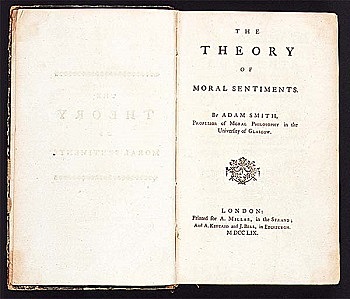
Moreover, Mill’s harm principle can, in turn, be traced to Adam Smith, who defines “justice” as restraint from harming others in his 1759 treatise The Theory of Moral Sentiments: “Mere justice is, upon most occasions, but a negative virtue, and only hinders us from harming our neighbor.” [For a survey of Smith’s conception of justice, see James R. Otteson, “Adam Smith on Justice, Social Justice, and Ultimate Justice”, Social Philosophy & Policy, Vol. 34 (2017).] But if Coase’s conception of harms is correct–if harms are indeed a reciprocal problem–then Smith’s conception of justice and Mill’s formulation of the harm principle are both incoherent, or (again) in the words of Coase: “We are dealing with a problem of a reciprocal nature. To avoid the harm to B would inflict harm on A.” [Coase 1960, p. 2.]

Is it possible to separate Coase’s economic analysis of reciprocal harms from morality and politics? Although the primary concerns of Coase’s original “cattle trespass parable” are the definition and allocation of property rights [cf. Elodie Bertrand, “The Three Roles of the ‘Coase Theorem’ in Coase’s Works”, European Journal of the History of Economic Thought, Vol. 17 (2010), at p. 979: “Coase … clearly distinguishes the ethical problem of responsibility [i.e., moral blame] from the economic one”], at the same time property rights also have an inescapable moral dimension. [See, e.g. Lawrence C. Becker, “The Moral Basis of Property Rights”, Nomos, Vol. 22 (1980).] As a result, Coase’s picture of reciprocal harms does indeed have radical implications not only for economics and law but also for ethics and politics.

What are these implications? As my mentor Guido Calabresi taught me many years ago, instead of trying to assign blame or adjudicate who the wrongdoer of any given harm is, moral and political philosophers (and law professors like me!) should turn to economics and try to figure out who the “cheaper cost avoider” is.

Posted in Uncategorized | Leave a comment

Reciprocal harms, part 2

Is most of the economy transaction costs? » Joshua Spodek

I mentioned in my previous post that harms might be a “reciprocal” problem, a simple but counter-intuitive idea with revolutionary implications that can be traced back to the work of the late great Anglo-American economist Ronald Coase, and I also referred to Coase’s original “cattle trespass” exemplar or paradigm case to illustrate this reciprocal conception of harms. In fact, much of my scholarly work has been devoted to Coase’s reciprocal harm idea; by way of illustration, below are some links (in reverse chronological order) to my previous work on this topic:

  1. The reciprocal nature of noise disputes: “Noise versus quiet” (2024).
  2. The reciprocal nature of Amerigo Bonasera’s plea for justice in the original Godfather movie: “Coase and the Corleones” (2022).
  3. The reciprocal nature of accidents at the Tour de France: “Ronald Coase and the Tour de France” (2021).
  4. Nozick on reciprocal risks: “Nozick on reciprocal risks” (2021).
  5. The reciprocal nature of pandemic risks: “Lockdowns as takings” (2020).
  6. The reciprocal nature of copyright disputes: “Of Coase and copyrights: the law and economics of literary fan art” (2019).
  7. The reciprocal nature of disputes over reclining airline seats: “The airplane seat dilemma” (2014).
  8. The reciprocal nature of economic externalities: “Modelling the Coase Theorem” (2012).
  9. The reciprocal nature of “the battle of the replicants” in the original Blade Runner movie: “Clones and the Coase Theorem” (2011).
  10. The reciprocal nature of many domestic disputes: “Domestic violence, strategic behavior, and ideological rent-seeking” (2006).

In my next post, I will explore what effects Coase’s reciprocal conception of harms might have on our moral intuitions about right and wrong.

Posted in Uncategorized | Leave a comment

A Coasian critique of Kurt Gray’s harm thesis: part 1 of 3

Yesterday, I read Elizabeth Kolbert’s review (see here) of Kurt Gray’s new book Outraged: Why We Fight about Morality and Politics and How to Find Common Ground on pp. 63-65 of the January 20th issue of The New Yorker. Among other things, Professor Gray claims that our ethical and political judgments boil down to one overriding emotion–the perception of harm–and that most moral and political disagreements are due to our different perceptions of who is harmed in any given scenario. According to Gray, “If you want to know what someone sees as wrong, your best bet is to figure out what they see as harmful.” Gray further claims that these moral and political divides can be overcome through narratives and “harm-based storytelling.”

Although Gray’s thesis is an intriguing one, it is radically incomplete in one important respect, for he fails to consider the possibility that harms are a reciprocal problem, i.e. that victims are oftentimes just as responsible as wrongdoers for their plight, a counter-intuitive proposition that can be traced back to Ronald Coase’s classic paper “The Problem of Social Cost.” Researching and writing in the late 1950s and early 1960s, Coase was an obscure middle-aged English economist at the time. Many years later, however, he would be awarded a Nobel for his contributions to the field of “law and economics,” and one of the most intriguing intellectual contributions Coase made is to challenge the standard victim-wrongdoer story in most law books.

Specifically, Coase conceptualizes harm as a “reciprocal” problem: whenever one party accuses another party of harming them, it is almost always the case that both parties are jointly responsible for the harm. And the most famous example Coase gives to illustrate the reciprocal nature of harm is his cattle trespass parable. In brief, the protagonists in Coase’s parable are next-door neighbors–one is a cattle rancher; the other, a crop farmer–and the conflict between them is a bucolic one: straying cattle who wander off the rancher’s land, invade the farmer’s neighboring land, and trample his crops.

But what makes Coase’s pastoral parable so original from a moral and legal perspective is that the victim and the wrongdoer are the same person! Both the rancher and the farmer are jointly responsible for the trampled crops because, as Coase correctly notes, either of them could have taken preventative measures ahead of time to avoid the harm. To the point, the rancher could have “fenced in” his cattle, while the farmer could have fenced the cattle out or planted cattle-resistant crops. For Coase, instead of asking which party is the wrongdoer here, we should ask, Who should pay for the fence … (To be continued)

Posted in Uncategorized | Tagged , , , , , | 1 Comment

Sunday song: *Bom Dia Rio*

Posted in Uncategorized | Leave a comment

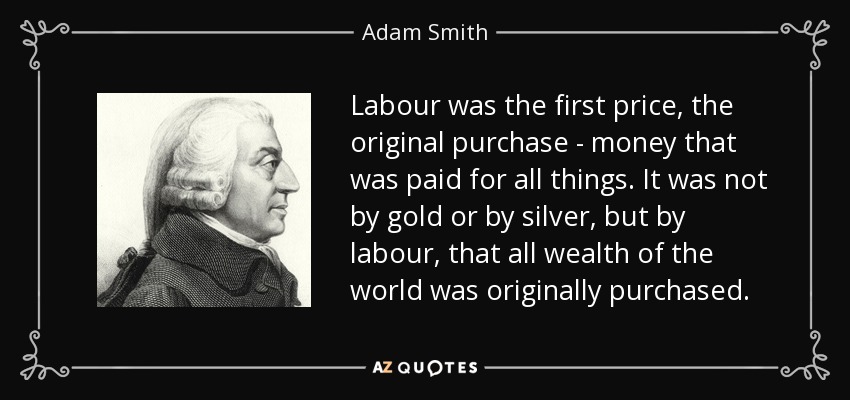
Ronald Coase on *The Wealth of Nations*

I recently stumbled upon this thoughtful commentary on Adam Smith’s Wealth of Nations by the late great Ronald Coase. Considering that Coase is one of my intellectual heroes (see here, for example), how did I not discover his beautiful essay earlier? Below is an excerpt:

The Wealth of Nations is a masterpiece. With its interrelated themes, its careful observations on economic life, and its powerful ideas — clearly expressed and beautifully illustrated – it cannot fail to work its magic. But the very richness of the book means that each of us will see it in a somewhat different way. It is not like a multiplication table, or a modern textbook with a few simple messages which, once absorbed, makes a rereading unnecessary. The Wealth of Nations has many ideas from which to choose and many problems to ponder. Though the time may come when we will have nothing more to learn from the Wealth of Nations or, more accurately, when what we would learn would be irrelevant to our problems, that time has not yet been reached, nor will it, in my view, for a long time to come.

Bonus video: Below is Michael Sugrue’s talk on The Wealth of Nations from his 1992 lecture series on “Great Minds of the Western Intellectual Tradition”:

Posted in Uncategorized | 2 Comments

Friday funnies: *Kant on Evidence*

How well do you know Kant? - Zeitgeister - The Cultural Magazine of the  Goethe-Institut
Starkie on Evidence"

That is the title of my very brief “Hypothetical Reply to Professor Orin Kerr“, which I have also cut-and-pasted below:

“Some years ago my colleague Orin S. Kerr concluded in these pages that ‘it appears very likely that [Immanuel] Kant had no influence on evidentiary approaches in 18th-century Bulgaria,’ 18 Green Bag 2d 251, 253 (2015). This judgment has troubled me for years. Although I do not call into question Kerr’s meticulous historical research, I would propose the following Kantian thought experiment: What if Immanuel Kant had been an 18th- century Bulgarian law professor?

“Some readers might object that my Kantian thought experiment is capricious or contrived. Be that as it may, thought experiments, especially improbable or outrageous ones, can be useful devices for detecting hidden anomalies and producing new or surprising insights. In any case, the leap of imagination required to conjure up an 18th-century Bulgarian Kant is no more implausible than a cat that is simultaneously dead and alive or a mischievous demon who manipulates microscopic molecules or an imaginary ‘utility monster’ who gains an ungodly amount of pleasure from doing evil deeds.

“My point being, if Kant had been an 18th-century Bulgarian law professor, it is very likely indeed that he would have made lasting contributions to the theory of evidence. Perhaps he would have developed a novel moral approach to the law of evidence or shed light on the relation between truth and hearsay. One can only begin to imagine the infinite possibilities and intriguing new ideas our Kantian thought experiment might engender.”

Posted in Uncategorized | Tagged , , , | Leave a comment