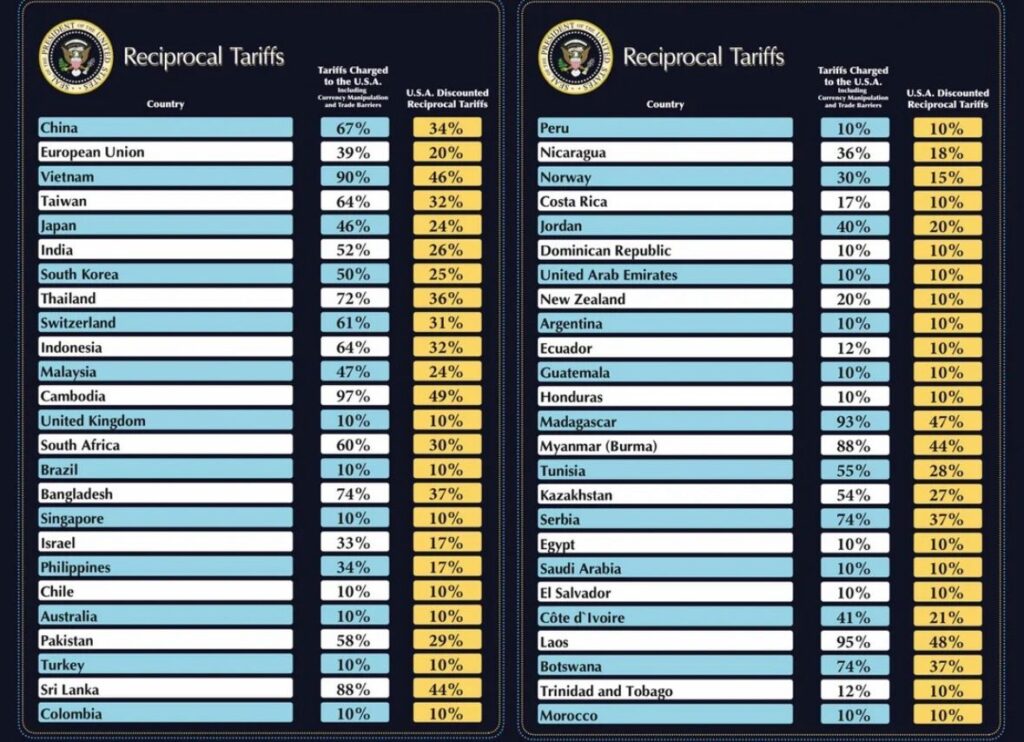
Monday map: max speed limits

Posted in Uncategorized | Leave a comment

Sunday song by Fall Out Boy

This catchy song is from 2007 (see here), so how come I heard it for the first time last week? In any case, thanks Shazam (again!).

Posted in Uncategorized | Leave a comment

*Adam Smith, David Hume, and the ‘Balliol College Conspiracy’*

This weekend, I will be reading the last few chapters of The Iliad as well as revising my paper “Smith in the City” about Adam Smith’s adventures in the City of Light. (Thanks to my referees for their detailed criticisms and excellent feedback.) In the meantime, my paper “Adam Smith, David Hume, and the ‘Balliol College Conspiracy'” was finally published in the History of Economic Ideas; here is an ungated version.

Posted in Uncategorized | Leave a comment

Friday funnies: *sampling bias*

Sampling bias: a presenter proudly shows the conclusion of a bar chart of responses from people who were asked if they love responding to surveys. A resounding 'yes'.
Source: https://sketchplanations.com/sampling-bias
Posted in Uncategorized | Leave a comment

Food culture in The Iliad

Another aspect of The Iliad that has intrigued me are the many feasts and ritual sacrifices of various animals in Homer’s great epic, so I did a little scholarly digging, and it turns out a lot of ink has been spilled on this topic. Below is a just small sample of this fascinating literature in alphabetical order, by author:

1. Daisy Dunn, “Food of the Gods“, Idler Magazine (2006).

2. Tamara Neal, “Blood and Hunger in the Iliad“, Classical Philology, Vol. 101, No. 1 (2006), pp. 15-33.

3. Erik Robinson, “The Homeric Diet – ‘Equal Meals’“, Sententiae Antiquae (2019).

4. Susan Sherratt, “Feasting in Homeric Epic“, Hesperia, Vol. 73 (2004), pp. 301-317.

5. Valerie Stiver, “Grilling with Homer“, The Paris Review (2018).

6. Marek Wecowski, “Homer, the ‘Heroic Feast’, and the Symposion“, Chapter 4 in The Rise of the Greek Aristocratic Banquet (2014), pp. 191-248.

7. Erin Welty, “Emblematic Eating: Reading the Feasts of the Iliad as Models for Emblematic Eating: Reading the Feasts of the Iliad as Models for Social Order“, University of South Carolina, Senior Thesis (2018).

Bonus link: Wikipedia, Ancient Greek Cuisine.

Hecamede preparing kykeon for Nestor, kylix by the Brygos Painter, ca. 490 BCE, Louvre
Posted in Uncategorized | Leave a comment

Wikipedia Wednesday: Helen of Troy

Via Wikipedia (links in the original): “Paris, a Trojan prince, came to Sparta to claim Helen, in the guise of a supposed diplomatic mission. Before this journey, Paris had been appointed by Zeus to judge the most beautiful goddess; Hera, Athena, or Aphrodite. In order to earn his favour, Aphrodite promised Paris the most beautiful woman in the world. Swayed by Aphrodite’s offer, Paris chose her as the most beautiful of the goddesses, earning the wrath of Athena and Hera. Although Helen is sometimes depicted as being raped (i.e. abducted) by Paris, Ancient Greek sources are often elliptical and contradictory.” See also: Judgement of Paris.

Meeting between Paris and Helen. Antique fresco in Pompeii, the House of the Golden Cupids
Posted in Uncategorized | Leave a comment

Timeless questions about The Iliad

As I mentioned in a previous post, I spent most of my holiday weekend reading–and listening to–The Iliad. Now that I am two-thirds of the way through (16 out of 24 chapters), I want to pause to pose some select questions about this great epic:

  1. Homer’s paradox. First off is the age-old question: Why did Homer compose The Iliad? To celebrate the heroes of the Trojan War or to condemn their mortal combat? To quote the legendary North American general, William Sherman: War is Hell. But had the Trojans and the Achaeans never fought on the plains and shores of Ilion, the names of Achilles, Hector, Paris, and Odysseus, just to name a few, would have been lost to us forever. We remember their names and still read The Iliad today, however, precisely because of their extraordinary feats of courage in wartime!
  2. Fate versus free will. There are many instances in The Iliad in which the men on both sides of the war feel duty-bound to continue fighting even when the tide of battle is turning against them, but if the outcome of the Trojan War has already been decided by the immortal gods, why do the men on the losing side bother fighting at all?
  3. Partisan gods. Lastly, for now: Why do the gods take sides in the Trojan War? On this note, one episode in particular caught my attention (specifically, pp. 314-315 of the Caroline Alexander translation), where Zeus sends a messenger (Iris) to Poseidon imploring–nay, ordering–the sea god “to desist from war and battle” (Book 15, line 160). Poseidon, however, rejects his brother’s command outright (Book 15, lines 181-190). Are the immortal gods also “duty-bound” to fight?
Posted in Uncategorized | Leave a comment

Similes in The Iliad

One of the most mesmerizing qualities of The Iliad are the many vivid similes and captivating asides on each page of this great epic. By way of example, below is one featuring the tragic Trojan warrior Hector:

As when a horse confined to a stall, fed on barley at the manger,

breaking his tether runs with pounding feet across the plain,

to immerse himself in the fair-flowing waters of his accustomed river,

triumphant, and he holds his head high, his mane

streaming about his shoulders …

so did Hector lightly move his feet and knees, urging on the horsemen, since he heeded the gods’ voice.

The Iliad, ch. 15, lines 264-272 (Caroline Alexander translation)

For a complete listing of Homeric similes, see here. (Bonus link: “Similes in the Iliad: The Horrors of War“.)

Posted in Uncategorized | Leave a comment

Sunday song: *Slow Down*

I was tempted to post this song, but I already did so back on January 1st.

Posted in Uncategorized | Leave a comment

Sabbatical update #4

I mentioned in a previous post that I am using my sabbatical to pursue a graduate degree in “Liberal Studies” at Rollins College. This semester, I am enrolled in three classes: a 15-week seminar on ancient Greek and Roman literature led by Dr Scott Rubarth and two mini-courses (seven weeks each), including one on religion taught by Dr Todd French. Among the first batch of readings for Professor French’s class, which is titled “Saints and Sinners”, three passages grabbed my attention:

  1. “It is not difficult to notice from the history of asceticism that it involves the performance of certain acts: fasting, withdrawal from society, silence, physical prayer, and manual labor, to name just a few.” (Richard Valantasis 1995, p. 548, emphasis added)
  2. “… even a woman, a saint, or a street beggar could be a saint.” (Susan Ashbrook Harvey 2008, p. 615)
  3. “People do what they want to believe.” (David Morgan 2010, p. 11)

I have to get back to The Iliad for my other seminar (my first discussion post is due on Sunday night), but I hope to expand on the ideas contained in these three passages in the next day or two: saints as artists, the democratisation of sainthood, and what it means to believe in something or in someone.

Posted in Uncategorized | Leave a comment