Should Tom Brady mow his own lawn?

For the next 12 days I will be attending the 29th LEC Economics Institute for Law Professors in Avon, Colorado. In preparation for this institute, I have been dutifully reading N. Gregory Mankiw’s textbook on price theory (“Principles of Microeconomics”), which, I might add, has a lot of helpful diagrams and real-life case studies, like “Should Tom Brady Mow His Own Lawn?”  What do you think?

P.S.: The latest edition of Mankiw’s textbook is available on here on amazon, if you want to sneak a peek.

(Mankiw’s answer to the Tom Brady Question is on pp. 57-58 of the textbook.)

P.P.S.: For a different answer to the Tom Brady question, see here.

Posted in Uncategorized | Tagged , , , | Leave a comment

Should there be a market in streets and parking spaces?

Alex Tabarrok posted the following yesterday on Marginal Revolution:

Here from Alain Bertaud and the Urbanization Project is another way of thinking not just about the high cost of free parking but also the opportunity cost of streets. In New York City, a place with some of the most valuable real estate in the world, 26.6% of the land is devoted to unpriced streets (and an even larger percentage once we include parking). In Manhattan we go to great expense and effort to make it possible for hundreds of people to use the same 10*10 square feet of land, we build skyscrapers, and yet at the same time similar quantities of land are being taken up by a few people and their cars.

NYC land use 1 Hat tip: Brandon Fuller.

– See more at: http://marginalrevolution.com/marginalrevolution/2013/07/the-opportunity-cost-of-streets.html#sthash.3t9mw4yd.dpuf

My question, however, is this:

Since streets are a public good, should we expect  governments to provide too many streets or too few?

Posted in Uncategorized | 1 Comment

A case of mistaken identity … Medema on Stigler on Coase

If you are interested in learning how the famous Coase theorem got its name, let me recommend  the following paper by Stephen Medema, “A case of mistaken identity: George Stigler, ‘The problem of social cost,’ and the Coase theorem”. You can find an ungated version of Medema’s paper here: http://papers.ssrn.com/sol3/papers.cfm?abstract_id=1650649

Posted in Uncategorized | Tagged , , , | Leave a comment

Model Thinking

prior probability has enrolled in Scott Page’s 10-week course on “Model Thinking” at Coursera … we really recommend his lectures on non-linear models and Markov processes … you can find the syllabus for the course here.

Posted in Uncategorized | Tagged , | Leave a comment

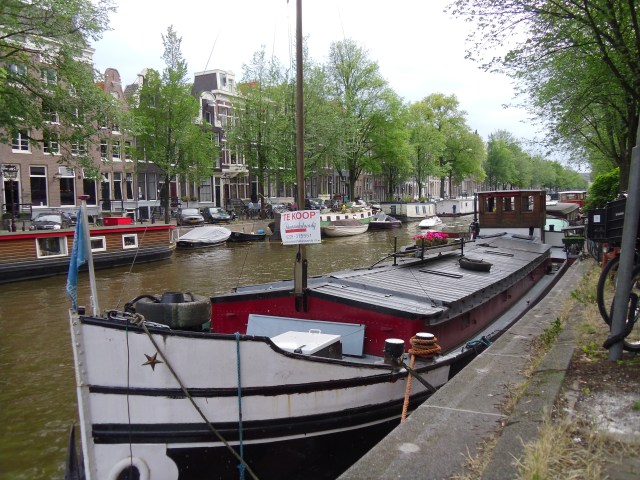
Te Koop

Te Koop

“For sale”

Posted in Uncategorized | Tagged , | Leave a comment

Visualizing ideas … images instead of words

This is prior probability‘s second blog post … we wanted our first post to be something visual because lawyers and law professors often tend to express our ideas solely in words, but sometimes, ideas can be communicated more directly and more powerfully through visual images. For example, prior probability is currently writing a paper in which we try to visualize the problem of “probabilistic proof” in law. See http://papers.ssrn.com/sol3/papers.cfm?abstract_id=2271870

So what idea or ideas does the picture below convey?

Posted in Uncategorized | Leave a comment

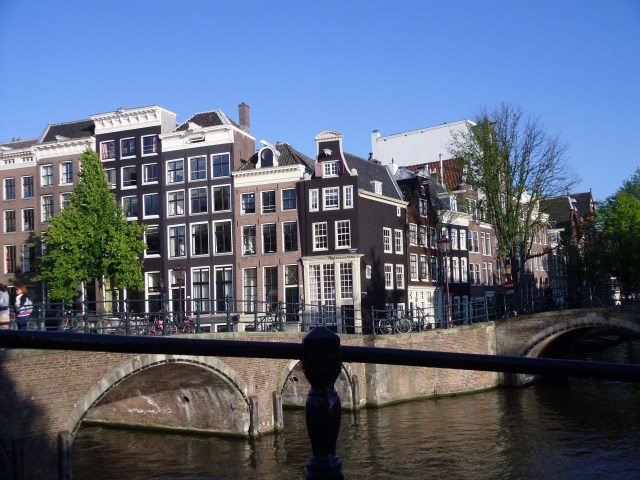
Summer in Amsterdam

Summer in Amsterdam

My first blog post

Posted in Uncategorized | 2 Comments