Don’t throw out your Christmas tree just yet: today (6 January) is the Feast of Epiphany or “Three Kings Day”! (See also here.) For my part, I will spend the first part of the day attending a special extended session on “The Uses and Misuses of History” at the annual meeting of the Association of American Law Schools in Washington, D.C. — not just any ol’ run-of-the-mill academic panel, mind you, but a four-hour marathon discussion featuring (among others) professors Jack Balkin (Yale) and Randy Barnett (Georgetown), both of whom I greatly respect and admire. Come to think of it, since most of my own scholarly work is of a historical nature, I can’t think of a better early morning Three Kings Day gift to myself. I will report back in the next day or two.
What is Gödel’s loophole, and why is this puzzle relevant to our times? I will be addressing these questions when I present my work-in-progress Gödel’s Interbellum at the annual meeting of the Association of American Law Schools in Washington, D.C. later today (#AALS2024). My colleague Jayanth Krishnan, a law professor at Indiana University, will be commenting on my paper; in the meantime, for a summary of my work see my post “Prequel to Gödel Loophole”, which I am reblogging below:
For your refernce, below are links to my five-part review of Paul Sagar’s Adam Smith Reconsidered: History, Liberty, and the Foundations of Modern Politics (Princeton University Press, 2022):
Alternate title: “The $64 Question: Part 2” (FYI: here is part 1)
Note: Thus far, I have reviewed the first four chapters of Paul Sagar’s Adam Smith Reconsidered; today, I will conclude my review with Chapter 5 (“The Conspiracy of the Merchants”), the last and best chapter of this excellent and well-researched book.
Previously (see here), I wrote about the so-called “Das Adam Smith Problem”: the supposed contradiction between the famous “invisible hand” of Smith’s Wealth of Nations and the “impartial spectator” of his Theory of Moral Sentiments. (In short, one is a cold-and-calculating self-regardingcreature, homo economicus; the other is altruistic and full of fellow feeling.) I also mentioned the inherent tension between markets and morality more generally. Paul Sagar, however, identifies a further possible “Adam Smith problem” — perhaps the greatest Smithian paradox of all — in Chapter 5 of Adam Smith Reconsidered.
In brief, Chapter 5 begins with one of my favorite Adam Smith quotes of all time: “People of the same trade seldom meet together, even for merriment and diversion, but the conversation ends in a conspiracy against the publick, or in some contrivance to raise prices” (Smith, Wealth of Nations, I.x.c.27, quoted in Sagar 2022, p. 187). Worse yet, using the example of the East India Company, Professor Sagar further adds that these merchant conspiracies not only harm the public; they also threaten a nation’s economic prosperity writ large: “the most pressing dangers to modern commercial societies arose not from the alleged impacts of markets upon morals” but rather from these self-serving and rapacious merchant conspiracies (Sagar, p. 188).
Although it is easy to see why such collusion among the merchant classes is problematic — since they are simply enriching themelves at the expense of consumers — why do I describe the conspiracy of the merchants as “paradoxical”? The paradox is this: on the one hand, the merchant classes “are dangerous to a modern commercial society” (since they will raise prices, obtain ill-gotten subsidies, and bend the rules in their favor), but at the same time, they are also “entirely necessary to [a modern commercial society’s] continued operation and flourishing” (Sagar 2022, p. 207). (As a further aside, I would only add that Smith’s conspiracy of the merchants — and of today’s large corporations, I might add — not only harms consumers and threatens economic growth and prosperity writ large; it can also destabilize the rule of law — and rule of law is an essential ingredient of markets and of a successful commercial society, as Sagar himself correctly notes in Chapter 2 of his book; see here.)
But how can the merchant classes be both necessary and dangerous, or good and bad, at the same time? In a nutshell, they are good when they are pursuing legitimate commercial activities and playing by a fair set of rules that equally apply to all firms, yet they are bad when they try to bend these rules or conspire to raise prices or obtain subsidies or other special favors from those in power at the expense of the general welfare of the public. And this delicate dichotomy, in turn, poses an even deeper and more fundamental Smithian challenge: how can we ever hope to constrain the self-serving rent-seeking activities of merchants (and of large corporations) without stifling their wealth-maximizing commercial activities?
That, in a nutshell, is what I am calling the “Real Adam Smith Problem”, and however this dilemma is solved, Adam Smith deserves to be considered the first public choice theorist as well as the first scholar to diagnose the problem of rent-seeking.
Update: since I missed my morning flight to DCA (thanks TSA and CLEAR; see below), I will head off to Zaza’s in Terminal B to finish reading and reviewing Paul Sagar’s Adam Smith Reconsidered. In the meantime, I just have to say: it’s 2024, so why are we still being required to remove our shoes at the airport?
I found this thread on Twitter to be helpful (see below). PS: I absolutely positively refuse to call Twitter “X”, and I dislike hate everything that Elon Musk has done to this once glorious platform. I have even muted that megalomaniac’s tweets from my feed.
Here, I will review the next two chapters of Paul Sagar’s 2022 book Adam Smith Reconsidered, beginning with Chapter 3, which is titled “Smith and Rousseau, after Hume and Mandeville” — four of my favorite 18th-century figures! The main subject of this chapter is one of Adam Smith’s earliest published works: a short essay that the young Scottish professor published in the Edinburgh Review in 1755 (available here via Google Books; see pp. 121-135). Among other things, Smith, who was 32 years old at the time he wrote his essay, reviews J. J. Rousseau’s Discourse on Inequality, an English translation of which is available here.
So, what did Smith think of Rousseau, and what influence did this reclusive Swiss author have on Smith’s intellectual development? In summary, the academic literature is sizable (see, for example, the collection of essays in this book, the cover of which is pictured below), and according to Sagar, the scholarly consensus is that Smith considered the Swiss scholar “a major intellectual interlocutor and challenger” (Sagar 2022, p. 116). Some scholars have even concluded that Smith wrote his first great work, The Theory of Moral Sentiments, in direct response to Rousseau’s Discourse.
Professor Sagar, however, claims this consensus is wrong: Smith would have considered Rousseau’s ideas either obsolete or unpersuasive! According to Sagar, Smith’s Theory of Moral Sentiments was more influenced by David Hume, Bernard Mandeville, and others than by Rousseau. For my part, I won’t rehash the particulars of Sagar’s meticulous, if not tedious, line of reasoning. Instead, it suffices to say that by the end of Chapter 3 Sagar concludes that “the influence of Rousseau upon Smith is at best minimal and secondary” (Sagar, p. 141).
So, is Professor Sagar’s contrarian assessment correct? I hate to be that guy (again!), but there is one question that Sagar himself admits he is unable to answer. (On this note, see Sagar, p. 126.) Specifically, if the influence of the Swiss author on Smith really were de minimus, if Adam Smith viewed Rousseau’s ideas as “obsolete, or without force” (Sagar, p. 117), then why did the Scottish philosopher choose to review Rousseau’s Discourse on Inequality in the first place? Alas, Prof Sagar’s own response to this query is telling: “we simply do not know why Smith reviewed Rousseau for his Scottish audience” (p. 126), it being “doubtful [that] we will ever have an entirely satisfactory answer” (ibid.).
The most plausible answer to the above question, however, is staring us in the face: the Scottish philosopher-professor reviewed Rousseau’s Discourse precisely because he (Smith) indeed took it seriously, at least in 1754 or 1755 when he first read Rousseau’s work. (The Discourse on Inequality was first published in Geneva in 1754.) After all, however feeble his arguments in the Discourse, Rousseau was a leading light of the great Enlightenment movement sweeping Western Europe, and Smith himself devotes half of his 1755 essay to one person: Rousseau! (See pp. 130-135 of this issue of the Edinburgh Review.) That said, it is entirely possible that Smith may have at some point later changed his mind about the Swiss scholar — and for the various reasons set forth in Chapters 3 and 4 of Sagar’s book.
Pause. Why does any of this matter? Because according to Professor Sagar’s revisionist reading of Smith and Rousseau in Chapters 3 and 4 of his book, these great Enlightenment thinkers have radically different views about the moral implications of markets. For Rousseau, it is the pursuit of luxury goods — and the concomitant growth of commercial society more generally — that is the main source of man’s moral corruption, while Sagar’s version of Adam Smith is less troubled by commerce, luxury goods, etc. and more worried about inequality, or in the words of Sagar himself, “it is inequality, and not mere riches …, that makes the real difference for Smith” (Sagar, p. 161). Wait … say what?!
To make his revisionist interpretation of Adam Smith’s “egalitarian impulses” (p. 65) make sense, Sagar devotes most of Chapter 4 (“Whose corruption, which polity?”) to a close reading — and tedious reinterpretation — of the poor son’s paragraph in Smith’s Theory of Moral Sentiments. Alas, although I am willing to concede that Sagar’s interpretation of the poor son’s paragraph is persuasive (see especially pp. 173-176), his larger point about Smith’s diagnosis of the source of moral corruption is way off the mark. Yes, Smith was a champion of equality before the law, i.e. the classical liberal idea that everyone, including the lawmakers themselves, are bound by the law, but Smith was also a champion of markets, and markets by definition generate economic inequality.
As it happens, Sagar himself grudgingly concedes this point in a footnote: “We can agree with [Smith scholar István Hont] that Smith [sided] with Locke, and against a thinker like Rousseau, in judging that economic inequality is on balance justified if the result is an absolute and massive improvement in the condition of the poor” (Sagar p. 171, n.39). But back to the topic at hand: Smith versus Rousseau. The real difference between these two intellectual giants is that one was a critic of markets and private property; the other, their greatest defender. Sagar’s revisionist reinterpretation of Smith is a textbook example of a scholar from the present forcing a figure from the past to conform to the scholar’s normative priors.
Note: I will resume my review of Adam Smith Reconsidered sometime next week. (We still have Chapter 5, plus the Conclusion, to discuss.) In the meantime, weather permitting, I will be in Washington, D.C. during the remainder of this week to attend the 25th Annual Federalist Society Faculty Conference (see here) and present my prequel to Gödel’s Loophole (here) at the annual meeting of the American Association of Law Schools (AALS).
Happy New Year! Today, I will review Chapter 2 of Paul Sagar’s 2022 book Adam Smith Reconsidered. This chapter — titled “Domination, Liberty, and the Rule of Law” — is the most lengthy part of Sagar’s work, but it is an intellectual tour de force and should be required reading among Smith scholars. Among many other things, Professor Sagar explores the relation between law and liberty from a Smithian perspective and presents a novel but compelling reading of The Wealth of Nations — and of the larger “classical liberal” tradition that the Scottish philosopher-economist founded. To the point, Sagar concludes that Adam Smith should not only be seen as a great classical liberal champion of free trade and economic freedom; he should also be considered “a theorist of liberty as [political] nondomination” (p. 60).
For starters, what does Adam Smith have to say about the relation between law and liberty? Alas, this question is not an easy one to answer, for as I mentioned in my previous post, Smith never published his promised book on law, and furthermore as Professor Sagar correctly notes, the Scottish scholar does not bother to define the concept of liberty in his magnum opus The Wealth of Nations (see, e.g., Sagar 2022, p. 56). Instead, Sagar shows how Smith prefers historical case studies over abstract or philosophical definitions of liberty and how, as a result, Smith ends up concluding that “the normal condition of politics is not likely to be equality based on the mutual recognition of the equal worth of each person … but [rather] the tyrannic domination of the many by [the] few …” (ibid., p. 67).
Or to put it even more bluntly, according to Sagar’s reading of Smith “law was originally an invention of the rich to secure themselves [and their riches] against the depredations of the poor …” (Sagar 2022, p. 59), or better yet, in the immortal words of Adam Smith himself: “Laws and government … [are] a combination of the rich to oppress the poor …” (see Smith, Lectures on Jurisprudence (A), iv.22-23, quoted in Sagar, p. 69). Let’s put aside my standing objection that the “Lectures on Jurisprudence” (quoted above and repeatedly in Sagar’s book) must be taken with a grain of salt, since as I explained in my previous post, Smith never published them. The key point that Professor Sagar is trying to make here is that, for Smith, the historical or actual relation between law and liberty has almost always been an inverse one. (I shall hereafter call this insight — i.e. the historical reality that law and liberty are inversely related — the “law as domination” paradigm for reference.)
At the same time, Adam Smith rejects this oppressive status quo, for as Sagar shows (see especially pp. 83-85 in chapter 2), The Wealth of Nations not only touts the benefits of free markets at home and abroad; it also contains a devastating critique of both economic oppression and political domination. Furthermore, Smith was in many ways ahead of his times, since he was opposed to all forms of unjust domination on both economic and moral grounds, including the institution of slavery. (On this important note, see Sagar, pp. 62-67.) But this observation begs the key question: how do we escape the “law as domination” paradigm? Put another way, how is modern liberty possible when law is just a conspiracy of the rich to exploit the poor?
Professor Sagar’s attempt to reconstruct Adam Smith’s jurisprudential answer to this question was music to my law professor ears. Spoiler alert: the answer is not democracy, for as Professor Sagar correctly notes, Smith was skeptical of civic republicanism (see, e.g., Sagar 2022, pp. 99-100). Instead, according to Sagar’s close reading of Smith’s Wealth of Nations, there can be no liberty — no end to the “law as domination” paradigm — until “those who [hold] political power [are] themselves meaningfully subject to law …” (Sagar, p. 79). For Smith, then, the secret ingredient for modern liberty is the “rule of law”: the few who make and enforce the law must themselves be bound by their own laws. Simply put, without rule of law, there can be no modern liberty.
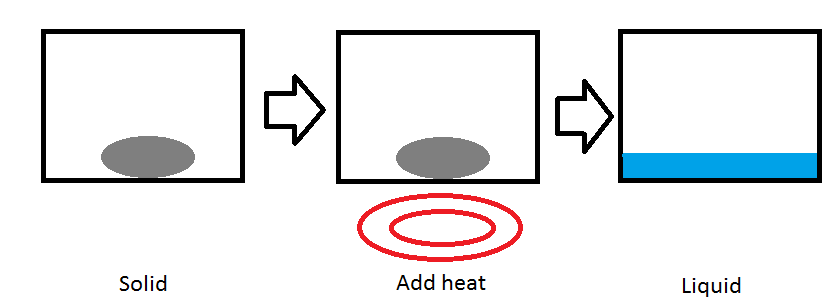
Alas, I hate to be that guy (especially considering how much I enjoyed reading this chapter), but there is one big blind spot in Sagar’s — and Adam Smith’s — analysis of modern liberty. If State A represents the “law as domination” paradigm and State B the “rule of law” ideal, then how does the transition from A to B occur? By way of analogy, consider the phase transition from a solid state to a liquid state (pictured below). If heat converts a solid into a liquid, what must be added (or taken away) from State A to create State B? How do we get from “law as domination” in which the few use the law to oppress the many to the “rule of law” in which the people in power are themselves bound by law? That is the $64 question!
Let’s keep this key question in mind when I resume my review on Tuesday, January 2.












 prior probability