
Still a great song! Happy New Year!!
Bonus ballad below the fold:
Continue readingHappy New Year! Today, I will review Chapter 2 of Paul Sagar’s 2022 book Adam Smith Reconsidered. This chapter — titled “Domination, Liberty, and the Rule of Law” — is the most lengthy part of Sagar’s work, but it is an intellectual tour de force and should be required reading among Smith scholars. Among many other things, Professor Sagar explores the relation between law and liberty from a Smithian perspective and presents a novel but compelling reading of The Wealth of Nations — and of the larger “classical liberal” tradition that the Scottish philosopher-economist founded. To the point, Sagar concludes that Adam Smith should not only be seen as a great classical liberal champion of free trade and economic freedom; he should also be considered “a theorist of liberty as [political] nondomination” (p. 60).
For starters, what does Adam Smith have to say about the relation between law and liberty? Alas, this question is not an easy one to answer, for as I mentioned in my previous post, Smith never published his promised book on law, and furthermore as Professor Sagar correctly notes, the Scottish scholar does not bother to define the concept of liberty in his magnum opus The Wealth of Nations (see, e.g., Sagar 2022, p. 56). Instead, Sagar shows how Smith prefers historical case studies over abstract or philosophical definitions of liberty and how, as a result, Smith ends up concluding that “the normal condition of politics is not likely to be equality based on the mutual recognition of the equal worth of each person … but [rather] the tyrannic domination of the many by [the] few …” (ibid., p. 67).
Or to put it even more bluntly, according to Sagar’s reading of Smith “law was originally an invention of the rich to secure themselves [and their riches] against the depredations of the poor …” (Sagar 2022, p. 59), or better yet, in the immortal words of Adam Smith himself: “Laws and government … [are] a combination of the rich to oppress the poor …” (see Smith, Lectures on Jurisprudence (A), iv.22-23, quoted in Sagar, p. 69). Let’s put aside my standing objection that the “Lectures on Jurisprudence” (quoted above and repeatedly in Sagar’s book) must be taken with a grain of salt, since as I explained in my previous post, Smith never published them. The key point that Professor Sagar is trying to make here is that, for Smith, the historical or actual relation between law and liberty has almost always been an inverse one. (I shall hereafter call this insight — i.e. the historical reality that law and liberty are inversely related — the “law as domination” paradigm for reference.)
At the same time, Adam Smith rejects this oppressive status quo, for as Sagar shows (see especially pp. 83-85 in chapter 2), The Wealth of Nations not only touts the benefits of free markets at home and abroad; it also contains a devastating critique of both economic oppression and political domination. Furthermore, Smith was in many ways ahead of his times, since he was opposed to all forms of unjust domination on both economic and moral grounds, including the institution of slavery. (On this important note, see Sagar, pp. 62-67.) But this observation begs the key question: how do we escape the “law as domination” paradigm? Put another way, how is modern liberty possible when law is just a conspiracy of the rich to exploit the poor?
Professor Sagar’s attempt to reconstruct Adam Smith’s jurisprudential answer to this question was music to my law professor ears. Spoiler alert: the answer is not democracy, for as Professor Sagar correctly notes, Smith was skeptical of civic republicanism (see, e.g., Sagar 2022, pp. 99-100). Instead, according to Sagar’s close reading of Smith’s Wealth of Nations, there can be no liberty — no end to the “law as domination” paradigm — until “those who [hold] political power [are] themselves meaningfully subject to law …” (Sagar, p. 79). For Smith, then, the secret ingredient for modern liberty is the “rule of law”: the few who make and enforce the law must themselves be bound by their own laws. Simply put, without rule of law, there can be no modern liberty.
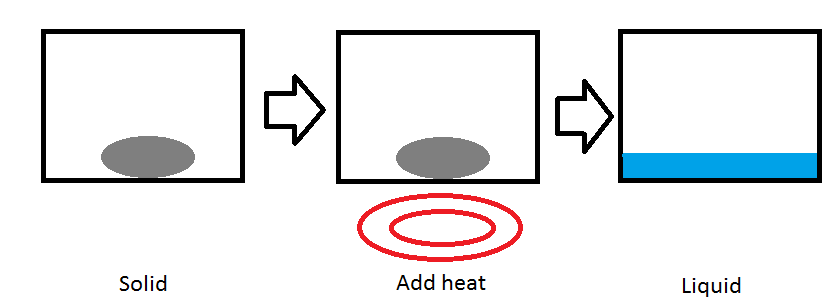
Alas, I hate to be that guy (especially considering how much I enjoyed reading this chapter), but there is one big blind spot in Sagar’s — and Adam Smith’s — analysis of modern liberty. If State A represents the “law as domination” paradigm and State B the “rule of law” ideal, then how does the transition from A to B occur? By way of analogy, consider the phase transition from a solid state to a liquid state (pictured below). If heat converts a solid into a liquid, what must be added (or taken away) from State A to create State B? How do we get from “law as domination” in which the few use the law to oppress the many to the “rule of law” in which the people in power are themselves bound by law? That is the $64 question!
Let’s keep this key question in mind when I resume my review on Tuesday, January 2.
For once, I agree with Antonio Brown! See also here. (Or are the conspiracy theories true, i.e. are the outcomes of pro games scripted?)
Happy New Year’s Eve, loyal readers! Here, I will review Chapter 1 of Adam Smith Reconsidered, which is titled “Commercial Society, History, and the Four Stages Theory”. In brief, from what I can tell, Professor Sagar has two goals in this early chapter. One is to clarify the true meaning of the term “commercial society” in Smith’s works; the other is to put Adam Smith’s so-called “four stages” model of economic development into context. As it happens, Sagar devotes most of Chapter 1 to Smith’s theory of history, so let’s begin there.
By way of background, the “four stages” is a simple model that Smith himself first presented to his students when he was still a full-time professor at the University of Glasgow in the 1750s and early 1760s. (Specifically, see Smith’s “Lectures on Jurisprudence”, which are available here.) In summary, Smith divides economic history into four separate stages: “1st, the Age of Hunters; 2dly, the Age of Shepherds; 3dly, the Age of Agriculture; and 4thly, the Age of Commerce” (see Smith, Lectures on Jurisprudence (A), i.27; see also the infographic pictured below.) So, what should we make of this model?
For his part, Professor Sagar explains why most Smith scholars have for various reasons misinterpreted Smith’s simple model, believing it to represent a “stadial” or deterministic account of economic history, with commercial society representing the culmination of economic progress. Although Sagar’s meticulous critique of this common-sense reading of Smith’s historical theory is the most tedious part of his entire tome, it suffices to say that, according to Sagar, Smith’s four-stages model is just a thought experiment, not a “conjectural history”, let alone an historical account, “of how things ever actually happened” (Sagar, p. 20, internal quotation marks omitted). So, who’s right?
Alas, I don’t think the answer to this question matters too much, for as Sagar himself correctly notes, Adam Smith makes no mention of his four-stages model in The Wealth of Nations (ibid., p. 40). Also, for what it’s worth, I would further add that this simple model — as well as anything else in the “Lectures on Jurisprudence” for that matter — must be taken with a large grain of salt. Why? Because Smith never published those Glasgow-era law lectures. (The Lectures on Jurisprudence are a series of class notes taken by one of his students.) Although Adam Smith was writing a book on jurisprudence — something Smith reveals to his readers as early as 1759 in the last paragraph of his first great work, The Theory of Moral Sentiments — he not only never finished writing that promised law book; he specifically instructed his literary executors to destroy the unpublished manuscript upon his death, which they did!
What about the meaning of the term “commercial society” in Smith’s works? Here, Sagar makes two important points, both of which I readily concede as correct. One is that Smith himself used the words “commercial society” only twice (p. 52). The other is that, for Smith, there are many different types of commercial society, such as those of ancient Athens and Rome, that of Imperial China, and that of post-feudal Europe. Having now dispensed with Smith’s four-stages model and having also established that “commercial society” can have multifarious meanings, we will proceed to Chapter 2 in my next post.

This is part 1 of my review of Adam Smith Reconsidered. To begin, two things about the Introduction to Paul Sagar’s beautiful book caught my attention: (1) Professor Sagar’s striking but simple solution to something called “Das Adam Smith Problem” and (2) his formulation of what he considers to be the “real” Adam Smith problem. So, let’s start off with the so-called Das Adam Smith Problem, a longstanding academic controversy originating in the 19th century. What is it? Why does this obscure scholarly conundrum matter? And how does Sagar solve it?
In brief, the original “Adam Smith Problem” refers to a possible internal contradiction between Smith the political economist and Smith the moral philosopher — a deep paradox that arises when his two great works are read as a whole — namely, the possible contradiction between the invisible hand of self-interest in Smith’s Wealth of Nations, where the Scottish philosopher develops a testable theory of political economy based on “self-regarding” or wealth-maximizing behavior on the one hand, and the impartial spectator of Smith’s Theory of Moral Sentiments, where he develops a more complex and convoluted pro-social theory of ethics based on mutual “fellow feeling” and “other-regarding” behavior on the other. Or in the eloquent words of Paul Sagar himself, “How could the same man have written both books?” (Sagar 2022, p. 1, footnote omitted).
For his part, Professor Sagar waves away this scholarly Smithian dilemma as a faux problem. Simply put, for Sagar there is no “Adam Smith Problem” because both of Smith’s great works are operating at “differing levels of analysis” (p. 2). Specifically, The Theory of Moral Sentiments is about “individual-level morality”, while The Wealth of Nations is about “societal level systemic analysis” (ibid.). As an aside, Sagar’s simple solution to this centuries-old Smithian conundrum is so potent and compelling that I wish I had thought of it first!
But as they say on late-night TV infomercials: wait, there’s more! Much, much more. In addition to solving the so-called Das Adam Smith Problem, Sagar’s Introduction makes another significant contribution to the literature. In a word, he identifies what he consider to be the “Real Das Adam Smith Problem” (p. 3). For Sagar, the true or “real” Adam Smith problem is the inherent tension between markets and morality, or in Sagar’s own words: “How could a first-rate moral philosopher like Smith think that morality was not fatally compromised by the existence of the kind of market-reliant society that he set out not only to understand and explain, but in various ways to suggest could be improved?” (ibid.).
Although this particular query might appear to be of interest only to a handful of historians and a few other esoteric academics, it turns out that it concerns each and every one of us, especially in our times, i.e. “consumer-driven postindustrial capitalism” (ibid.). After all, how can one reconcile self love and love of others, capitalism and Christianity, the urge to accumulate material goods and the desire be a good person at the same time? Like the catchy Nicki Minaj rap battle song “No Frauds” (featuring hip hop legends Drake and Lil Wayne), do we have to pick a side? Or can the pursuit of material wealth (e.g. “get yours”) be compatible with higher moral standards such as those embodied in the Sermon on the Mount or the Golden Rule (“love thy neighbor as thyself”)?
It suffices to say (for now) that the rest of Sagar’s book, to which I shall turn in my next few posts, is devoted to the painstaking task of reconstructing Adam Smith’s responses to these larger economic/ethical questions.

Thus far this week I have written up and posted several short reviews (i.e. “micro reviews”) of some of the works that I have been reading this holiday season. The last book on my list, however — Paul Sagar’s new work Adam Smith Reconsidered, pictured below — is so good and so dense (in the good sense of the word) that it deserves an in-depth, multi-part review of its own. Starting tomorrow, then, we will begin reviewing each of the chapters in Sagar’s excellent book, one-by-one, beginning with the Introduction. I can’t think of a better way of ending the old year and starting off the new one.
Given my previous work on Adam Smith and his extended visit to the City of Light in 1766 (see especially here and here), I decided to give Robert Darnton’s new book The Revolutionary Temper: Paris, 1748-1789 a go. Darnton, a history professor at Harvard University, purports to narrate the history of the “collective consciousness” or “frame of mind” of the people of Paris during the four decades preceding the great Revolution of 1789. Alas, although this beautiful book is well-researched and written, Professor Darnton’s project is doomed from the start for three reasons:
Nevertheless, although the plural of anecdote is not data (or is it?), Darnton’s collection of amusing 18th-century anecdotes is still worth reading, for he covers all the major events in French history that in one way or another may have contributed to the eventual downfall of the old regime. (Indeed, a better title for this book would be Vignettes of the Ancien Régime.) By way of illustration, I will limit this micro review to my favorite of these old regime vignettes: the commotion caused by the publication of Richesse de l’Etat in 1763, a political pamphlet that “took Paris by storm and stirred up an enormous debate about royal finances” (p. 72). In Darton’s telling, the anonymous author of this pamphlet proposed nothing less than an end to France’s “unjust system of taxation”, to be replaced with a new and simple single tax system, “which would be apportioned among the top two million property owners according to a graduated scale” (ibid.).
For my part, I wonder whether Adam Smith was aware of Richesse de l’Etat and other similar political pamphlets during his travels in France (early February 1764 to late October 1766), and if so, to what extent did these works and the larger political debate over taxation in France influence his subsequent magnum opus on The Wealth of Nations, especially Book V? These are questions that I shall explore in a future post, but in the meantime, speaking of the great Scottish philosopher-economist, I will conclude my series of “micro reviews” in the next day or two with Paul Sagar’s excellent 2022 tome Reconsidering Adam Smith.

Yesterday, my colleague and friend Orin Kerr (@OrinKerr), a law professor at U.C. Berkeley, posted a series of melancholic tweets in honor of my intellectual mentor Richard Posner. As it happens, yours truly had the honor of meeting Judge Posner, who I consider to be the greatest legal scholar of our time, on several occasions. (The most recent time was on 6 November 2015 at the annual Loyola Chicago Constitutional Law Colloquium; see picture below.) In any case, one of Professor Kerr’s tweets (see here) has inspired me to share below the links to my multi-part tribute to some of Posner’s works and ideas, which I wrote up and posted on this blog earlier this year.

PS: I will have much more to say about Judge Posner and his legacy, including his magnum opus Economic Analysis of Law, in 2024. In the meantime, I will post my review of Richard Darnton’s latest book, The Revolutionary Temper: Paris, 1748-1789, in my next post.
I concluded my previous post with a reference to two important probability puzzles: one is called the lottery paradox; the other, the paradox of the preface. What are these logical problems? Why are they important? And can they be solved?
Let’s roll up our metaphorical sleeves and start with the lottery paradox. Imagine a fair and honest lottery or raffle consisting of 100 raffle tickets. One of the tickets is guaranteed to win, since the lottery is a fair and honest one, but you don’t know which one. All you “know” ahead of time is that each ticket has a mere 1% chance of being the winning ticket. This scenario thus poses a logical paradox because it is rational for you to “believe” in the truth of two contradictory propositions at the same time: (1) you know or believe that one of the tickets will be a winning ticket even though (2) you also believe that none of the individual tickets is likely to win, since each individual ticket only has a 1% chance of winning.
Next up, let’s consider the preface paradox or what I like to call the “reverse lottery” problem. Have you ever noticed how most scholarly works often contain a statement up front along the following lines: “… any errors that remain are mine alone …”? Alas, once again we have a contradiction! On the one hand, an honest author of a scholarly work must generally believe each and every assertion in his academic book to be true and correct, especially if he did the research and checked his work for accuracy, and in any case, no self-respecting author would knowingly make a false assertion. But at the same time, he must also believe that at least one of the assertions in his book might very well be mistaken. After all, nobody’s perfect; we all make mistakes!
So, why are these probability puzzles worth worrying about? Simply put, because both the lottery and preface paradoxes potentially undermine the logical foundations of the subjective approach to probability (an approach that good Bayesians like yours truly are supposed to espouse), much like a lethal pincer movement in which two divisions of a powerful army simultaneously attack both flanks of an enemy formation. Or in the eloquent words of one scholar (philosopher Richard Foley; see generally here): “The lottery seems to show that no rational degree of [belief] less than 1.0 can be sufficient for rational belief, while the preface seems to show that a rational degree of [belief] greater than 0.5 is not even necessary for rational belief.”
Is it possible to solve either paradox? As it happens, many workarounds have been made, but each of these solutions has significant drawbacks. (See, e.g., Foley’s 1992 paper above or Huber’s excellent survey of the degrees of belief literature, which I reviewed in my previous post.) For my part, instead of going into the technical details of these purported solutions, for now it suffices to say that these paradoxes are “pseudo problems” — i.e. mere philosophical wordplay — and that both can easily be solved with a little creativity and common sense. Not every assertion in an academic book is well-researched, for example, and even when they are, more often than not new evidence may emerge that falsifies a previously well-settled assertion. Likewise, the lottery paradox goes away if you buy all 100 tickets.
Rest assured, I will present a more general and formal solution to the lottery and preface paradoxes in a future post; in the meantime, I will return to the task at hand and conclude my series of “micro reviews” with the recent works of Robert Darnton (The Revolutionary Temper) and Paul Sagar (Reconsidering Adam Smith).

By way of background, I should disclose off the bat that I am a huge fan of the subjective approach to probability pioneered by Bruno de Finetti and Frank Ramsey, especially the idea that a person’s “priors” about the world are almost always derived from his own personal intuition and the related insight that one’s beliefs about the world don’t have to be “all or nothing” but can come in degrees or shades of grey. So this Yuletide I finally got around to reading Franz Huber’s 2009 survey of subjective probability, which is titled “Belief and Degrees of Belief“, and although this work is super-technical — filled with formal notation and a smattering of equations — I am glad I did for three reasons:
First off, Section 3 of Huber’s survey not only contains an excellent introduction to the standard betting model of subjective probability, i.e. the idea that a person’s probability estimate for a given proposition can be measured by “the highest price she is willing to pay for a bet that returns 1 Euro if [the proposition is true] and 0 otherwise” (Huber 2009, p. 6); Huber also explores two alternative theories of subjective probability, including one called the “transferable belief model” (pp. 13-15) and another based on “fuzzy set theory” (pp. 16-18).
Secondly, Huber identifies and discusses a deep and difficult foundational question in the probability literature, one that I had not given much thought to before. In a word, what is the relation between “belief” and “degrees of belief”? That is, what is the relation between one’s quantitative degree of belief about the truth value of a given proposition, which is supposed to be a real number from the interval [0, 1], and one’s qualitative belief about that proposition, which can only consist of one of three states: belief, disbelief, and suspension of judgement? At best, the betting model described above can only measure one’s degree of belief; it cannot, however, tell us what a degree of belief actually is; nor can it tell us when a degree of belief is strong or weak enough to be converted into belief or disbelief.
Third and last (and perhaps most importantly for me, given my own pro-subjective-probability priors!), Huber also explores two important logical problems in the literature: the so-called “lottery” and “preface” paradoxes. As it happens, both of these problems pose an existential challenge to the subjective approach to probability, so both deserve blog posts of their own. Stay tuned: I will address the the lottery paradox and preface paradox in a separate blog post, before proceeding to the works of Robert Darnton on the French Revolution and Paul Sagar on Adam Smith.








Welcome to the online home of the IASS
Hopefully It’s Interesting.
In Conversation with Legal and Moral Philosophers
Relitigating Our Favorite Disputes
PhD, Jagiellonian University
Inquiry and opinion
Life is all about being curious, asking questions, and discovering your passion. And it can be fun!
Books, papers, and other jurisprudential things
Ramblings of a retiree in France
BY GRACE THROUGH FAITH
Natalia's space
hoping we know we're living the dream
Lover of math. Bad at drawing.
We hike, bike, and discover Central Florida and beyond
Making it big in business after age 40
Reasoning about reasoning, mathematically.
I don't mean to sound critical, but I am; so that's how it comes across
remember the good old days...
"Let me live, love and say it well in good sentences." - Sylvia Plath
a personal view of the theory of computation
Submitted For Your Perusal is a weblog wherein Matt Thomas shares and writes about things he thinks are interesting.
Logic at Columbia University
Just like the Thesis Whisperer - but with more money
the sky is no longer the limit
Technology, Culture, and Ethics
Just like the horse whisperer - but with more pages
Poetry, Other Words, and Cats

 prior probability