
Moonlight #1 [Dept (뎁트), featuring Sonny Zero (오넷) and OoOo]:
Moonlight #2 (Kali Uchis):
Moonlight #3 (Ludwig van Beethoven, featuring Anastasia Huppman on the piano):
Moonlight #1 [Dept (뎁트), featuring Sonny Zero (오넷) and OoOo]:
Moonlight #2 (Kali Uchis):
Moonlight #3 (Ludwig van Beethoven, featuring Anastasia Huppman on the piano):
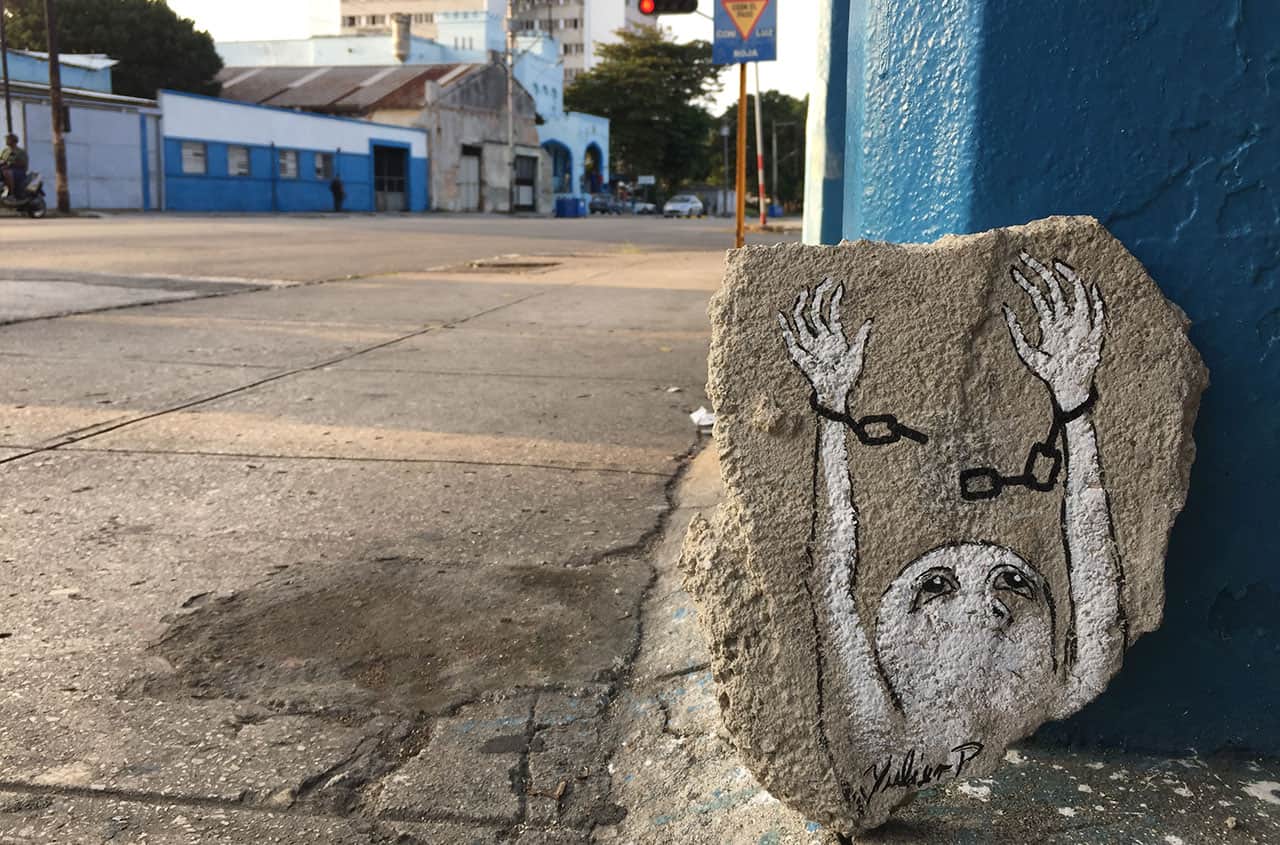
I have featured Cuban surrealist street artist Yulier Rodríguez (a/k/a Yulier P.) on this blog several times before. Now, I just discovered his Instagram page; in addition, award-winning Cuban author and blogger Yoani Sánchez interviewed the grafitti artist in August of 2023. Her interview is in Spanish and is available here. (Bonus link: a 2020 profile of Yulier P., which is also in Spanish.)
Yesterday (17 November), the board of directors of OpenAI unceremoniously fired Silicon Valley legend and ChatGPT boy wonder Sam Altman. According to the official announcement, Mr Altman was fired for his deceit and chicanery: “A deliberative review process by the board […] concluded that he was not consistently candid in his communications with the board …” Wait, what?! Everybody lies (see here, for example), and OpenAI is the third most valuable startup in the world, so what is the real reason why evil genius Sam Altman was fired? Was it about money or “politics“, or was it the result of a bona fide dispute over A.I. safety? Alas, I wish there were a truth market for days like these! File under “truth is stranger than fiction” (hat tip: Mark Twain.)

I am now in the Twin Cities to attend the Journal of Law & Public Policy‘s fall symposium on “Free Speech and the U.S. Constitution” and present my work-in-progress “Solving the Free Speech Dilemma.” Note: Although the symposium will take place in person at the University of St Thomas School of Law in downtown Minneapolis, it will also be telecast for free (register here). The full program is below the fold (all times Central):


That is the new title of my newly revised work-in-progress, which I will be presenting this Friday (17 November) at a daylong symposium on “Free Speech and the U.S. Constitution” (see here) at the University of St. Thomas School of Law in Minneapolis. Below is an excerpt from the introduction to my paper; my footnotes are below the fold:
What is the free speech dilemma? On the one hand, if we adopt a laissez faire attitude toward speech, how do we screen out disinformation or lies?[1] If, on the other hand, we attempt to screen out bad information via content moderation policies or other forms of censorship, how do we distinguish falsehoods from truth?[2] Was Lee Harvey Oswald, for example, part of a conspiracy to assassinate JFK?[3] Did COVID-19 originate from a lab in Wuhan, China?[4] Were the 2020 U.S. presidential elections stolen.[5]
In principle, three types of responses to this dilemma are possible: hardcore government censorship (the Communist China model), soft censorship or content moderation (the Mark Zuckerberg model), and absolute free speech (the Elon Musk model).[6] Under the Chinese model, the government strictly monitors Internet access and blocks website content,[7] while the Zuckerberg or soft censorship approach consists of some combination of content moderation, deplatforming, shadow-banning, and other forms of speech suppression.[8] Free speech absolutism, by contrast, is the most permissive or laissez faire approach to the problem of disinformation: everyone is free to post whatever information they want as long as no laws are being violated.[9]
Alas, none of these “solutions” is capable of distinguishing truth from lies in a reliable or consistent manner. The main problem with the Chinese model—and with any type of content moderation approach more generally—is that one cannot always determine ahead of time which conspiracy theories or disputed news stories are true and which are false.[10] By the same token, with free speech absolutism there is no real disincentive for posting false information on the Internet, since the marginal cost of Internet speech is virtually costless.[11] Also, to the extent many Internet users are engaged in “motivated reasoning,”[12] free speech absolutism might exacerbate the problem of false information.
So, what is to be done? What if we promoted a “truth market model” instead of censorship, content moderation, or costless speech? As explained in the remainder of this Article, a truth market would operate as a retrodiction market and would specialize in conspiracy theories, fake news, urban legends, and other forms of disputed information. On this market, people could buy or sell belief contracts, allowing them to bet on the truth values of their favorite conspiracy theories. With enough bettors representing a wide variety of views, the price of each belief contract should reflect the truth value of the conspiracy theory being bet on.
Continue reading
Below is the next-to-last excerpt from my new work “Gödel’s Interbellum”; footnotes are below the fold:

Following the Anschluss–Nazi Germany’s annexation of the Republic of Austria in March 1938–German law displaced Austrian law and the position of Privatdozent–Gödel’s official position at the University of Vienna since March 1933–was officially abolished.[1] Former “private lecturers” like Gödel were now required to apply for the position of “Lecturer of the New Order” (Dozent neuer Ordnung) if they wished to maintain their academic careers under the new regime.[2] This new requirement was not directed at Gödel personally; instead, it was part of a general reorganization of educational institutions in the wake of Hitler’s rise to power. (As an aside, the main reason why the Nazis abolished the position of Privatdozent was that, although the state had exercised administrative control of the universities in Germany and Austria prior to Hitler’s rise to power, it did not have any direct control over private lecturers.)
Did the ex post revocation of Gödel’s lectureship inform his subsequent discovery of a loophole in the U.S. Constitution? In the case of the Anschluss, one country’s laws and constitution swallowed up or displaced the laws and constitution of another country. For the mathematical logician, this meant the rules that applied to his lectureship were replaced wholesale with a new set of rules, and by all accounts, Gödel himself was “outraged” and “incensed” when his position was revoked by university officials in the spring of 1938.[3] Karl Menger, who knew Gödel personally from their days at the University of Vienna and who was co-teaching a course with Gödel at the University of Notre Dame during the spring of 1939 (one year after Gödel’s position was abolished),[4] describes Gödel’s reaction to the revocation of his lectureship thus:
In the second half of the semester, Gödel also, who until then had been his usual dispassionate self, appeared to be restless. Remarks of his indicated longing for his family. For this and other reasons he wanted to return to Vienna at the end of the semester. Even earlier he had complained about the revocation of dozentship in the university by the Nazi regime and had spoken about violated rights.[5]
Menger had tried to reason with Gödel, asking him: “‘How can one speak of rights in the present situation? … And what practical value can even rights at the University of Vienna have for you under such circumstances’,”[6] but to no avail. Although Gödel had requested a leave of absence for the 1938-1939 academic year (he visited the IAS in the fall of 1938 and then co-taught a course with Menger at the University of Notre Dame in the spring of 1939), he had every intention of returning to the University of Vienna and resuming his academic career there.[7]
The handling of Gödel’s leave of absence request, however, represents an almost comic case of bureaucratic bungling and ineptitude. To begin with, Gödel had submitted his request for a leave of absence to the University of Vienna in a letter dated October 31, 1938.[8] In response, the dean of the School of Philosophy forwarded Gödel’s request to the Ministry of Instruction, which in turn forwarded the matter to the Ministry of Internal and Cultural Affairs.[9] According to John Dawson, “no further action was taken [on Gödel’s request for a leave of absence] until 4 July [1939].”[10] On that date, an official at Ministry of Internal and Cultural Affairs wrote back to the rector of the University of Vienna to inquire about Gödel’s reasons for requesting a leave of absence. The rector, in turn, forwarded this matter back to the dean (!), who “proposed that Gödel’s Lehrbefugnis (his official authorization to teach) be rescinded since Gödel had not requested a leave of absence for the summer semester.”[11] The dean’s harsh recommendation was sent back to the Ministry of Internal and Cultural Affairs, where yet another official then advised the rector that the dean’s recommendation was moot because “Gödel’s Lehrbefugnis … was already in abeyance [since April 1938], and it would officially expire on 1 October unless Gödel submitted an application in the meantime to be named Dozent neuer Ordnung.”[12]
Although it is unclear whether Gödel himself was aware of this bureaucratic back-and-forth,[13] the evidence suggests that at a minimum he must have known that his lectureship had now lapsed and that he would lose the right to lecture permanently unless he applied for the new position of Dozent neuer Ordnung before the October 1st deadline, for as it happens, Gödel not only returned to Austria in June 1939;[14] he apparently he had every intention of remaining in his home country and continuing his scholarly endeavors at the University of Vienna. In fact, according to his biographer John Dawson, Gödel still did not seriously expect to emigrate as late as November 1939.[15] Among other things, Gödel closed out his bank account in Princeton, New Jersey,[16] moved into a new apartment in the center of Vienna,[17] and signed a new lease on his old apartment in the suburb of Grinzing.[18] In addition, Gödel finally applied on September 25, 1939 for the new position of Dozent neuer Ordnung,[19] less than one week before the October 1st deadline.
Political reality, however, would derail Gödel’s aspirations. Germany had invaded Poland on September 1, 1939, and Gödel himself was declared fit for military service in the German Army shortly thereafter.[20] All the while, Gödel’s academic status at the University of Vienna was still in limbo, since his previous position of private lecturer had been suspended and his application to become a Dozent neuer Ordnung was still under review by the relevant university and ministry officials by the time Gödel and his wife Adele decided to flee their beloved Vienna in January 1940, resettling in Princeton, New Jersey, where they would live the rest of their lives.[21]
Ironically, Gödel was finally awarded the title of Dozent neuer Ordnung in June 1940,[22] and the University continued to keep his name in its records until 1945, accompanied by a terse announcement that “Dozent Gödel shall not lecture.”[23]
Continue readingI will resume my prequel to Gödel’s loophole in my next post, but in the meantime, following up on one my previous posts (see below) I recently discovered this comprehensive database of legal actions by activist groups and others trying to get Donald J. Trump disqualified from running for office. (This excellent database was compiled by Hyemin Han and Caleb Benjamin for the Lawfare website.) In all, 18 of these explosive cases are still pending; the irony, however, of trying to exclude a candidate from the ballot in the name of democracy is not lost on me! (Also, so much for Section 3 being self-executing. Told ya, as I explained here to anyone who would listen.)
As promised, here is another excerpt from my new work “Gödel’s Interbellum”; the footnotes are below the fold:
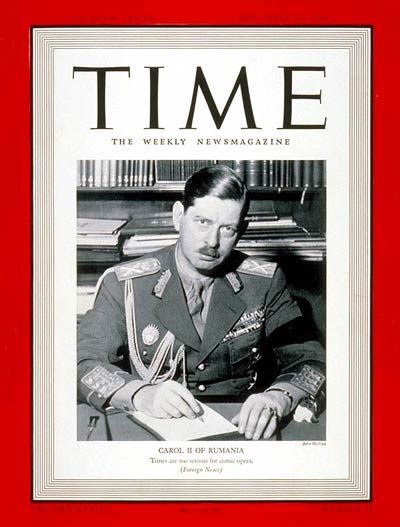
Romania not only went from a constitutional monarchy to a constitutional dictatorship on February 10, 1938, when King Carol II unilaterally suspended his country’s interwar constitution (the Constitution of 1923), proclaimed martial law, and established a de facto royal dictatorship.[1] King Carol’s “self-coup” also provides a textbook example of what this article refers to as a recursive transfer of power–a coup within a coup–for Carol himself had assumed the throne in June of 1930 via a parliamentary coup d’etat, when Romania’s parliament had proclaimed him the king of Greater Romania, a country consisting of 295,000 sq. km. and a population of over 18,000,000 persons.[2]
In summary, the coup in 1930 was carried out within the confines of the 1923 Constitution, since it was approved by the legislature; the 1938 coup, however, was not. King Carol’s self-coup thus poses a deep constitutional conundrum or paradox: was his proclamation suspending the constitution itself constitutional? What about the new constitution that his government promulgated in the days after the self-coup: was the new constitution unconstitutional? Does it matter that the new constitution was approved by the electorate in a constitutional referendum held on February 24, 1938,[3] just two weeks after the coup?
There are at least two ways of answering this question in the affirmative. On the one hand, one could argue that the successor constitution–although drafted in secret and hastily approved two weeks later under dubious circumstances–expressly, though retroactively, legitimized the king’s abrogation of the 1923 constitution. In the alternative, one could argue that the king’s proclamation was inherently or impliedly constitutional because supreme power ultimately resides in the person of the king. By analogy, for example, one could also argue that the king’s wartime decree of September 5, 1940 suspending the 1938 Constitution and investing full powers on General Ion Antonescu was a constitutional act, since the 1938 Constitution explicitly enshrined the supremacy of the king.
In either case, this constitutional contradiction presents two important theoretical queries, two paradoxical questions that might throw light on Gödel’s subsequent discovery of a loophole in the U.S. Constitution. First and foremost, when a constitution confers supreme power on a given ruler, either by implication (as in the case of the Romania’s 1923 Constitution after the 1930 coup) or explicitly (as with her 1938 Constitution), does that ruler also have the power to disregard the constitution itself? If the answer to this question is no, then can an action that occurred outside the constitutional process, such King Carol’s self-coup of February 10, 1938, be converted into a constitutional act by a subsequent act, such as the popular plebiscite of February 24?
For his part, where was Kurt Gödel in February 1938, and was he aware of King Carol’s self-coup in Romania? Although he would spend the 1938-39 academic year in the United States, Gödel was still living in Vienna in February of 1938. According to his biographer John Dawson, “In mid-November 1937 Gödel [had] moved out of the building on Josefstädterstrasse and took up residence in a third-floor apartment at Himmelstrasse 43/5 in the Viennese suburb of Grinzing.”[4] In addition, “Gödel managed over the next three months [i.e. starting in December 1937] to fill three notebooks on the Continuum Hypothesis.”[5]
In the fall of 1937, Edgar Zilsel, a philosopher of science and a former student of Heinrich Gomperz (who, in turn, was also one of Gödel’s former professors), had re-established a philosophical discussion group and had invited Gödel to join his circle.[6] “It was agreed the group would meet every other Saturday, and Zilsel suggested to Gödel that he report at an upcoming meeting on the status of consistency questions in logic …”[7] As fate would have it, Gödel eventually accepted Zilsel’s invitation and agreed to a lead a discussion on the question of consistency in logic. He presented a paper on this subject on 29 January 1938, and “so far as is known his lecture to the Zilsel circle on January 29, 1938 was his last presentation to a Viennese audience.”[8]
So, was Gödel aware of the dramatic events unfolding in Romania in the winter of 1938? Perhaps, for after his lecture of January 29, 1938, Gödel may have had extra time to reflect on the events unfolding in Central Europe. According to his biographer John Dawson, “Presumably, Gödel devoted the winter and spring of 1938 to the preparation of his manuscript and to making arrangement for his upcoming year abroad,”[9] since with Hans Hahn and Karl Menger gone, “there was little in the way of seminars or colloquia for Gödel to take part in.”[10] Presumably, too, Gödel also read about the events unfolding simultaneously in Greater Romania. Ten years later, as Gödel was preparing for U.S. citizenship exam in December of 1947, perhaps he asked himself whether a self-coup in the United States was theoretically possible.
Regardless of whether he was aware of King Carol’s self-coup, one of the most traumatic and unjust events in Kurt Gödel’s professional life was about to occur, when his authorization to teach would officially lapse and his academic position at the University of Vienna, abolished. This ugly experience, perhaps more than any other, may shed the most light on Gödel’s loophole.
Continue readingI “shazamed” this song by the San Diego-based pop trio almost monday while I was in Chicago this weekend; enjoy!
PS: I will resume my “interwar prequel” to Gödel’s loophole in the next day or two.
Vicki C. Jackson, the Laurence H. Tribe Professor of Constitutional Law at Harvard Law School, delivered the keynote address at this year’s Constitutional Law Colloquium at Loyola Law School in Chicago. In summary, Professor Jackson’s talk, which was titled “Protecting knowledge institutions in constitutional democracies,” was based on a paper she published in 2021 (see here) and a blog post she wrote in 2019 (here). Her talk, however, was underwhelming, for her two paradigm examples of a “knowledge institution” are universities and the press. Put aside the fact that these two institutions are often the enemies of knowledge: the mainstream media stokes outrage and promotes biased or superficial narratives, while our elite universities have now become exclusionary and faddish guilds devoted not to knowledge but to “diversity, inclusion, and equity” or DIE (see here and here, for example). The main problem with Professor Jackson’s keynote address is that she failed to mention one of the most important knowledge institutions of all time: the price mechanism. Simply put, an important ingredient in the dish of democracy are decentralized markets. Paging F. A. Hayek! Alas, there is not even a single reference to Hayek in her 2021 paper or in her 2019 blog post.







Welcome to the online home of the IASS
Hopefully It’s Interesting.
In Conversation with Legal and Moral Philosophers
Relitigating Our Favorite Disputes
PhD, Jagiellonian University
Inquiry and opinion
Life is all about being curious, asking questions, and discovering your passion. And it can be fun!
Books, papers, and other jurisprudential things
Ramblings of a retiree in France
BY GRACE THROUGH FAITH
Natalia's space
hoping we know we're living the dream
Lover of math. Bad at drawing.
We hike, bike, and discover Central Florida and beyond
Making it big in business after age 40
Reasoning about reasoning, mathematically.
I don't mean to sound critical, but I am; so that's how it comes across
remember the good old days...
"Let me live, love and say it well in good sentences." - Sylvia Plath
a personal view of the theory of computation
Submitted For Your Perusal is a weblog wherein Matt Thomas shares and writes about things he thinks are interesting.
Logic at Columbia University
Just like the Thesis Whisperer - but with more money
the sky is no longer the limit
Technology, Culture, and Ethics
Just like the horse whisperer - but with more pages
Poetry, Other Words, and Cats

 prior probability