
A strong case can be made that “ethnic cleansing” began in the USA. Exhibit A: The Indian Removal Act of 1830.
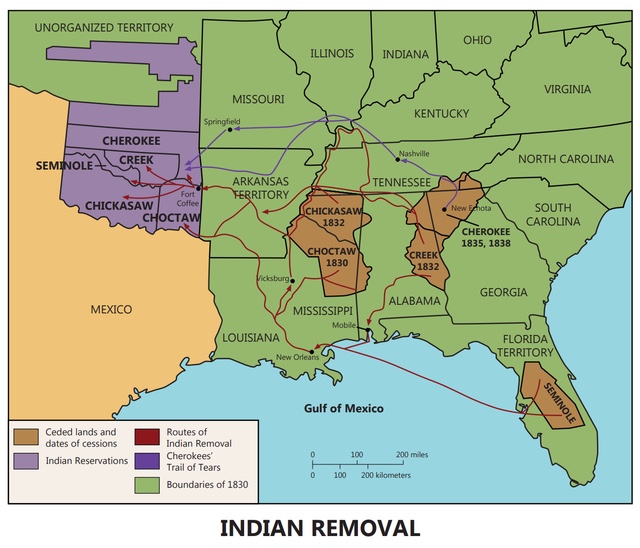
A strong case can be made that “ethnic cleansing” began in the USA. Exhibit A: The Indian Removal Act of 1830.







Welcome to the online home of the IASS
Hopefully It’s Interesting.
In Conversation with Legal and Moral Philosophers
Relitigating Our Favorite Disputes
PhD, Jagiellonian University
Inquiry and opinion
Life is all about being curious, asking questions, and discovering your passion. And it can be fun!
Books, papers, and other jurisprudential things
Ramblings of a retiree in France
BY GRACE THROUGH FAITH
Natalia's space
hoping we know we're living the dream
Lover of math. Bad at drawing.
We hike, bike, and discover Central Florida and beyond
Making it big in business after age 40
Reasoning about reasoning, mathematically.
I don't mean to sound critical, but I am; so that's how it comes across
remember the good old days...
"Let me live, love and say it well in good sentences." - Sylvia Plath
a personal view of the theory of computation
Submitted For Your Perusal is a weblog wherein Matt Thomas shares and writes about things he thinks are interesting.
Logic at Columbia University
Just like the Thesis Whisperer - but with more money
the sky is no longer the limit
Technology, Culture, and Ethics
Just like the horse whisperer - but with more pages
Poetry, Other Words, and Cats

 prior probability
That’s one thing that many who advocate for social justice get wrong. You can use the same apparatus that is used to coercively discriminate to fix the problem.
The impetus of this whole action was after all a law. That’s why I am always confused why so many seeking using government as a platform to correct injustice
Excellent point!
I just finished read Coase’s “lighthouse” paper earlier today.
If my understanding is correct:
* It is possible for lighthouses to be privately owned and operated. The U.K.’s history of lighthouse ownership is proof.
* Contrary to the assumptions of Pigou, Samuelson, and Mill, etc. they are not exclusively public goods.
* The only fixed role government must have in the enterprise of maintaining and operating a lighthouse is protecting the property rights of owners/operators.
.* That paying “light dues” to utilize the lighthouse’s service is superior to having maintenance and operations funded through taxes.
A.) Treasury funding would reduce efficiency.
B) I would personally add, it also provides a sense of ownership. If you are paying for a service you have more skin in the game. You will be less apt to abuse services or infrastructure if there is direct and evident cost. Especially when taking such liberties could lead to exclusion from services or higher future rates. (Best handled as private club good).
This is another reason why Coase was such a great economist!
So I would assume I have an accurate understanding of his paper?
💯
Perfect. Then I will apply this theory of public goods accordingly.